
What happened here
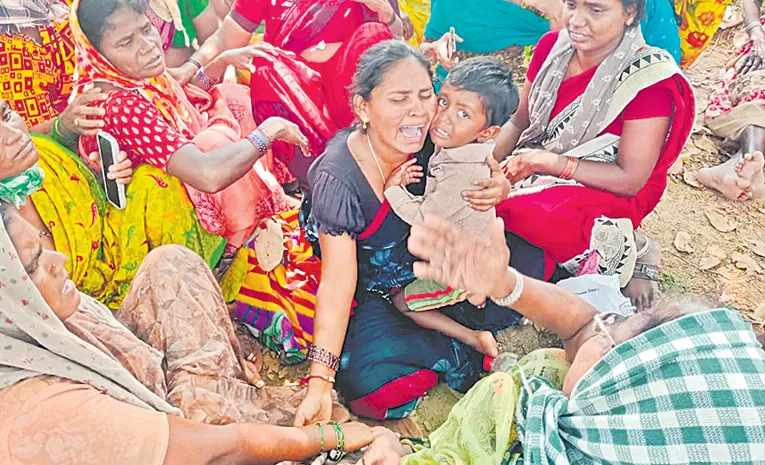
Six students died during Ganesh idol immersion at a lake near Pedda Kanjerla, Telangana, on 16 September 2026. Reports agree on the death toll but differ on how many entered the water, the time and early supervision accounts. This case separates verified reporting, investigation allegations and practical prevention.
A celebration becomes a water emergency
Six students drowned during Ganesh idol immersion near Pedda Kanjerla in the Patancheru area of Sangareddy district, Telangana, on 16 September 2026. The waterbody is described using Neredu and Neruducherla spellings. Telangana Today, PTI reporting carried by Onmanorama and The New Indian Express corroborate the six deaths. The precise sequence remains less certain than that central fact.
What the reporting establishes
A group associated with a hostel or trust went to the lake for immersion. Students entered the water, several became distressed, and police and local people took part in recovery efforts. Reports describe bodies being taken to the government hospital in Patancheru. These are accounts of an emergency response; they do not provide a reliable emergency-call timestamp, arrival interval or complete clinical record. Published descriptions of an underwater pit and soft mud are possible mechanisms reported by witnesses or police. They should not be presented as a completed engineering finding. An apparently shallow approach can give a group confidence that the entire route is safe, but this case does not establish the measured depth, lakebed profile or precise point at which each student lost footing.
Why the numbers need care
One account says nine entered and three escaped; PTI says eight entered and two escaped. Later reporting describes fifteen people arriving with the group. Arrivals, water entrants and survivors are different populations. None should be combined into a fatality percentage. The supported toll is six deaths; a complete injury total is unavailable.
Investigation and accountability
Later reporting describes the hostel warden’s arrest and remand. Police allegations that he led the group and directed entry qualify earlier claims that no responsible adult was present. An arrest is not a conviction, and this publication does not determine criminal responsibility. A defensible investigation would establish the authorised site arrangements, who made the entry decision, supervision responsibilities and the actual water conditions.
The lesson for another group
The prevention decision belongs before water entry. A group needs a confirmed operating site, an identified person responsible for its participants and a clear handover to site staff. Children and accompanying spectators should remain in the protected waiting area. If the expected staff, barriers or safe route are absent, the group should pause and seek an authorised alternative. For an active emergency, alert trained rescuers and call 112. Do not turn companions into additional casualties by entering uncertain water or forming an improvised human chain. The American Red Cross learning collection explains safer reaching or throwing assistance. Its general demonstrations are learning material, not footage of Sangareddy.
Reading the evidence panels
The panels retain disputed details explicitly and separate incident news from learning videos. Source matching confirms the apparent incident and publisher; it does not mean every clip has been watched in full or will embed on every device. The cover is labelled as an AI illustration. Actual incident photographs require separate source and rights checks.
- Group attended the lake for immersion. Sources give differing clock times; no precise time is adopted.
- Several students became distressed. Pit and mud descriptions are reported explanations, not a measured final finding.
- Police and local people participated in recovery; hospital transfer reported. Call, dispatch and arrival times are unavailable.
- Newsrooms reported arrest/remand and announced assistance; supervision allegations developed beyond the earliest accounts.
- Six-death toll retained; denominator, timing and mechanism conflicts remain visible pending authoritative records.
Why consequences escalated
- The stable finding is a six-person fatal outcome during immersion. Agreement among several newsrooms supports that outcome, while differences elsewhere require restraint. Multiple reports may share police information, so their number is not equivalent to independent forensic examinations.
- The site-selection decision is a central prevention issue. Police-attributed reporting that the waterbody was not a notified immersion point warrants checking the local list, responsibility for directing groups and the information actually available to organisers that evening.
- Entry control and supervision must be examined separately. Knowing who accompanied the group does not establish whether an effective barrier, staff handover or instruction against public water entry existed. Early absence claims cannot be repeated as settled facts after later allegations of the warden’s involvement.
- Mud and abrupt changes in depth are reported possibilities. No reviewed source provides a survey, excavation record or final investigation establishing the exact mechanism. These details support questions for investigators rather than a definitive reconstruction.
Failures and risk multipliers
- Do not convert a reported underwater pit into a proven engineering cause.
- Do not use six deaths divided by fifteen arrivals as a fatality rate among water entrants.
- Do not describe the announced family assistance as compensation already received or total loss.
- Do not treat an arrest as proof of guilt, or an early supervision account as the final account.
- Do not present regional plans for later festival dates as the rescue resources actually deployed to this incident.
Actions that reduce risk
- For local organisers, confirm the named operating immersion location with the responsible authority before departure. Record the contact and opening arrangements; a familiar lake or last year’s practice does not confirm this year’s arrangements.
- For a group leader, establish who is responsible for each participant, where spectators wait and how the group returns together. Keep the headcount separate from the number of people authorised to handle the idol.
- At the site, request a staff handover and keep spectators away from the water-entry area. Pause if the intended route is unstaffed, visibility is poor or the waiting area cannot contain the group safely.
- If someone is in difficulty, alert site rescuers and call 112 with the waterbody name, access point and last-seen position. Avoid entering uncertain water. Keep emergency access clear and follow dispatcher instructions.
- For the investigation, preserve site photographs, notifications and witness accounts with dates and provenance. Reconcile the group list, water-entry count and medical outcomes before calculating rates or attributing fault.

Leave a comment