
What happened here
 1 / 4
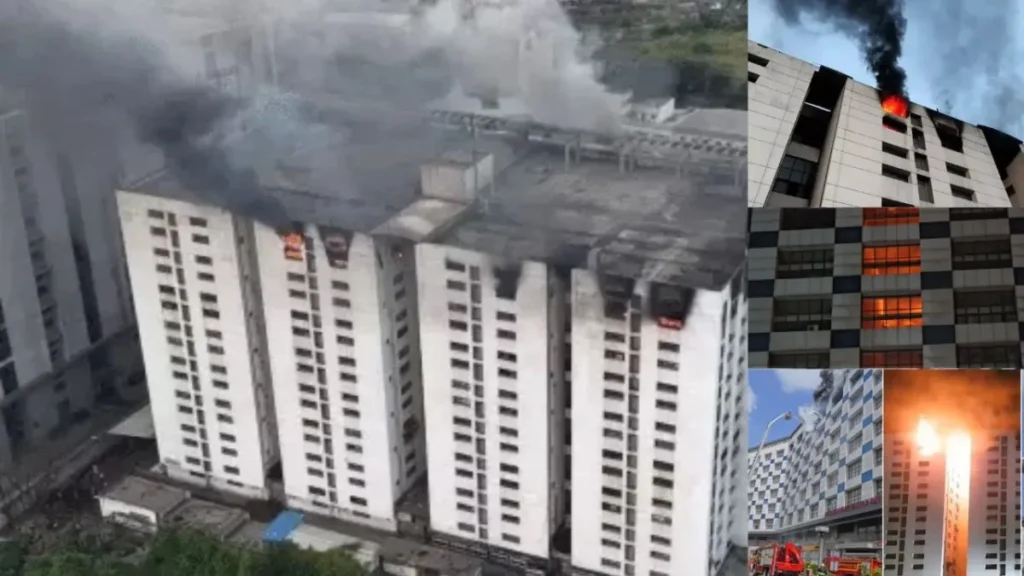
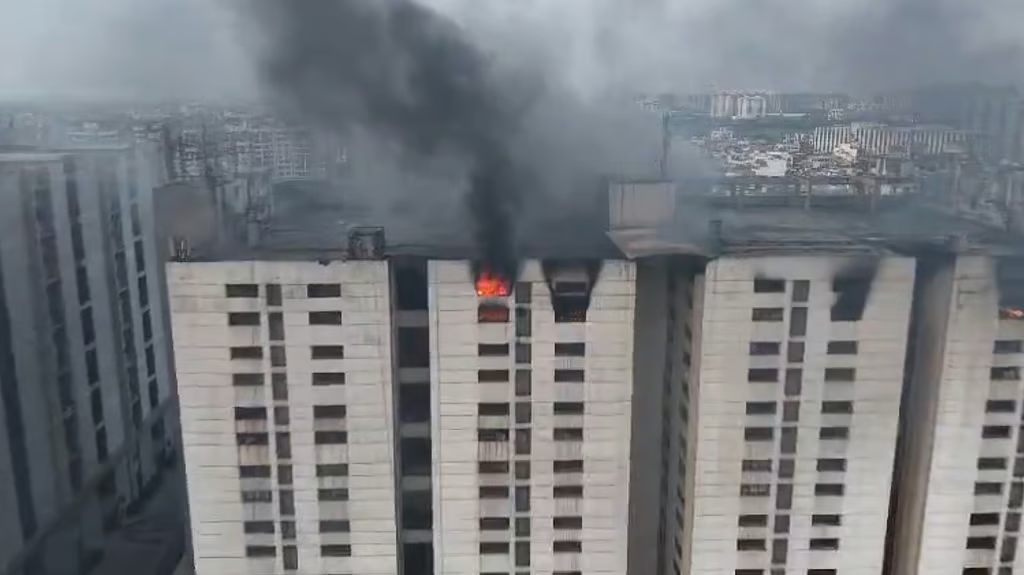
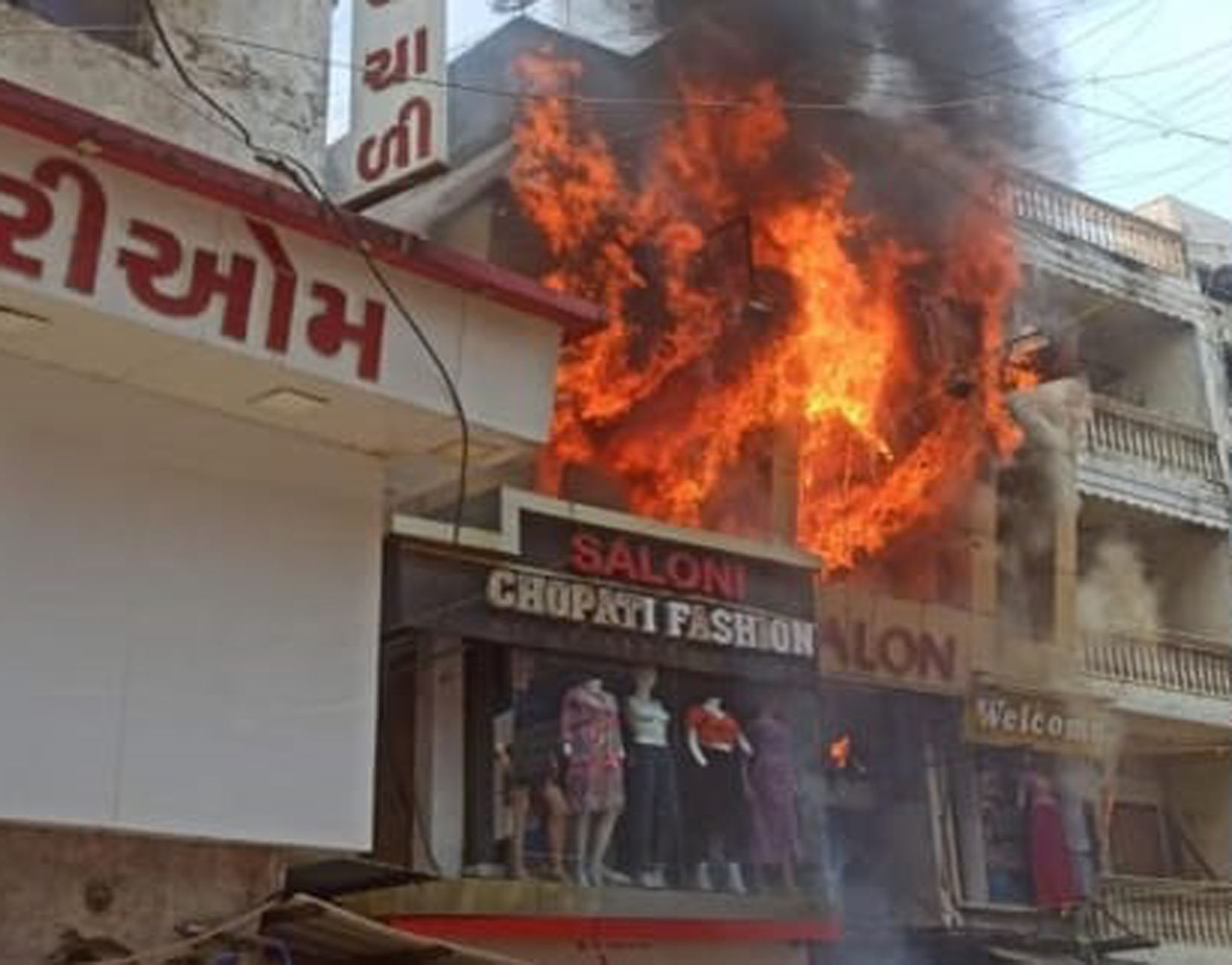
1 / 4 A major upper-floor textile-market fire in Surat damaged at least 16 shops, injured a firefighter and later prompted a police investigation into suspected deliberate ignition.
Quick answers
What happened at the Shyam Sangini Textile Market fire in Surat?
A major fire was reported at about 12:52 am on 9 September 2026 at Shyam Sangini Textile Market in Saroli, Surat, mainly on the sixth floor. No civilian death was reported, one firefighter was taken to hospital and police later reported at least 16 shops gutted.
Was the Surat textile market fire arson?
Police registered an FIR against an unidentified person after CCTV reportedly showed a face-covered man entering the sixth floor shortly before the fire. In September 2026 the Crime Branch arrested a former accountant of a market shop, alleging he set the fire over unpaid salary. Guilt has not been decided by a court.
Why did the Surat market fire take so long to put out?
Officials and traders described large quantities of synthetic textiles, plastic and cardboard, and later reports cited goods stored in common passages. The fire was controlled after roughly seven to eight hours, while cooling and hotspot work continued much longer.
What should shopkeepers do if a fire breaks out in a market building?
Raise the alarm, use the designated safe exit, leave stock behind and follow responder instructions. Do not use lifts, go back for goods or block fire-service access, and call 112 in India.
What happened
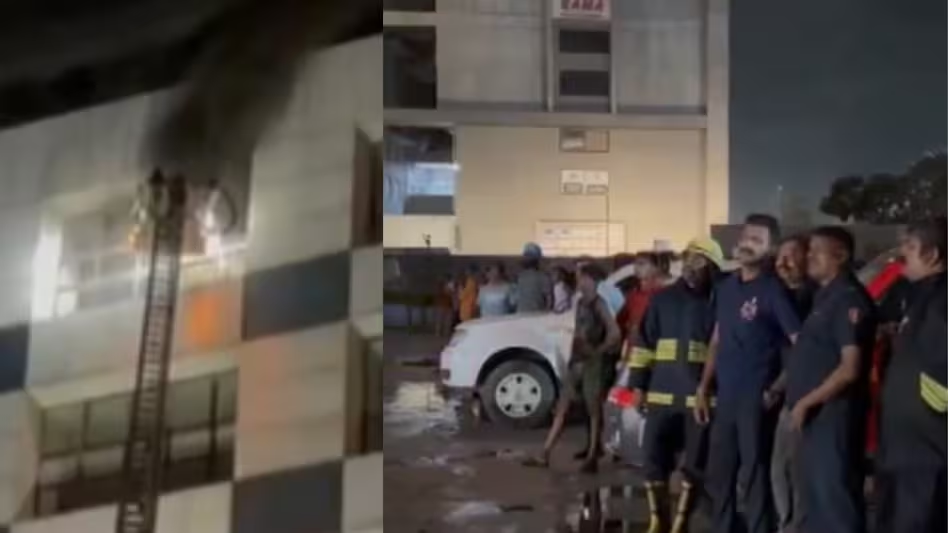
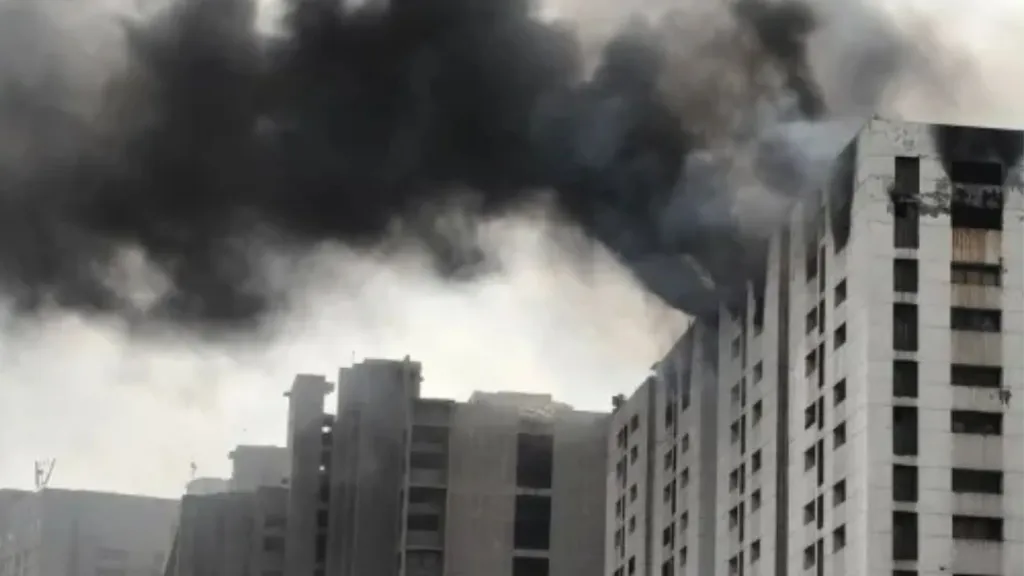
A major fire was reported at about 12:52 am on 9 September 2026 at Shyam Sangini Textile Market in Saroli, Surat. Reporting placed the main fire on the market’s sixth floor, with fire and smoke affecting adjoining upper-floor areas. Surat fire authorities deployed a large multi-station response using fire engines, hydraulic platforms and turntable ladders. PTI report carried by The Economic Times.
Casualties, damage and response
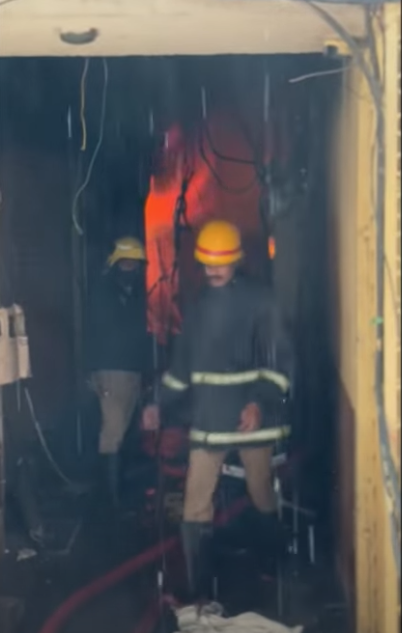
No civilian death was reported in the reviewed coverage. One firefighter became unwell or was injured during the operation and was taken to hospital. Initial reports described more than a dozen damaged shops; a later police report said at least 16 shops were gutted and cited traders’ estimated losses of about ₹24 crore. Such commercial loss figures are claims recorded during an active investigation, not an audited final total. The Indian Express follow-up.
Why the duration figures differ
The fire was described as brought under control after roughly seven to eight hours, while continued firefighting, cooling and hotspot work extended much longer. Local reporting described a 12-hour operation, nearly 20 hours of fire activity, and cooling continuing into the following day. These figures refer to different operational milestones and should not be treated as direct contradictions.
Cause: what changed after the first reports
Early reports said the cause was not established. Police later registered an FIR against an unidentified person after CCTV reportedly showed a face-covered man entering the sixth floor shortly before the fire with a bag and suspected inflammable material. On about 21–22 September, the Surat Crime Branch arrested Vinod Savle, 33, a former accountant at a sixth-floor shop. Police allege he set the fire over ₹10,000 in unpaid salary. This is an arrest and an allegation, not a finding of guilt. Times of India police follow-up.
Fire-spread and access questions
Officials and traders described large quantities of synthetic textiles, plastic and cardboard. Later reporting also cited combustible goods stored in common passages and concerns about the building firefighting system. A final technical investigation is still needed before assigning the extent of spread to any single factor. For other textile markets, the practical review questions are whether common routes remain clear, whether stock arrangements match the approved fire plan, whether systems are inspected and operable, and whether responders can reach every upper-floor area.
What occupants should do
Raise smoke or fire immediately, use the designated safe exit, leave stock behind and follow responder instructions. Do not use lifts, re-enter for goods or obstruct fire-service access. In India, call 112 for emergency assistance. Building owners and market associations should obtain site-specific advice from the local fire authority rather than treating this case study as a compliance certificate.
Media boundary
The cover is an AI-generated editorial illustration of a fictional textile-market response and is not documentary evidence of the Surat incident. Real incident photographs remain separately sourced for manual editorial selection and crediting.
More on Surat: see our Surat fire and emergency safety guide for fire brigade numbers, every fire station and the local risks to know.
- Fire-service control room receives call
- Major multi-station firefighting operation
- Extended cooling and hotspot work
- Police/FIR follow-up reports suspected deliberate ignition
- Crime Branch arrests a former accountant of a market shop; police allege arson over unpaid salary
Why consequences escalated
- Synthetic textile stock and other combustibles can sustain fire and complicate upper-floor operations.
- Operational milestones must be separated when reporting duration.
Failures and risk multipliers
- Do not report suspected arson as a conviction.
- Do not combine control time with the full cooling-operation duration.
- Do not present traders' loss estimates as an audited total.
People closest to the evidence
““25 firefighting vehicles and nearly 150 personnel were deployed.””
Basant Pareek, Chief Fire Officer · Operational figures reported by PTI · Source ↗
Actions that reduce risk
- Keep common passages and designated exits clear.
- Verify that installed firefighting systems are inspected and operable.
- Maintain responder access around the market.
- Escalate stock-storage and fire-system deficiencies to responsible management and the local authority.
Leave a comment