
Quick answers
What happened at the Mogar saw mill fire?
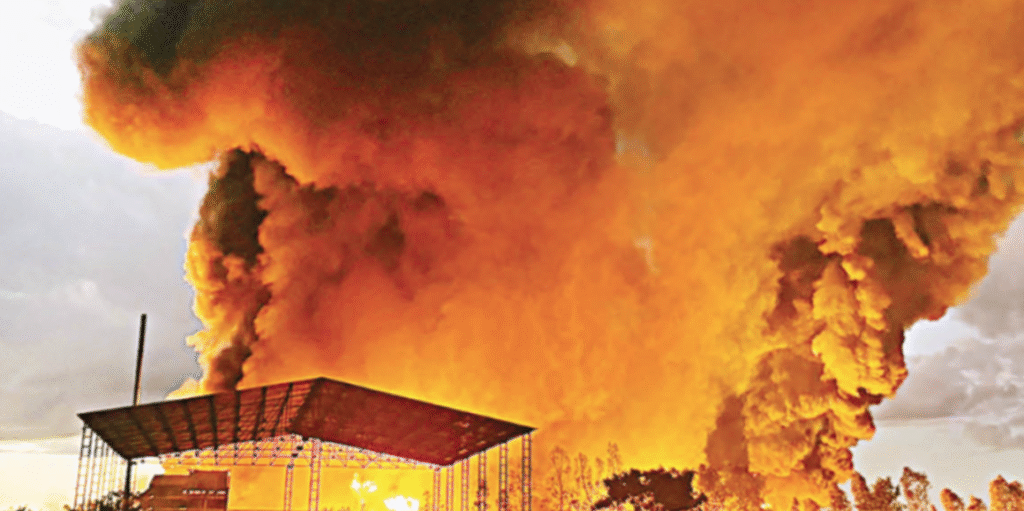
A Gujarati Instagram caption from Zee 24 Kalak dated 20 October 2026 reports a severe fire in a wood saw mill in Mogar village, Anand, with dry wood spreading it and an Anand fire brigade team on the spot. We found no second source, so the time, duration, injuries, loss and cause are not known.
Why do saw mills catch fire so easily?
They hold dry timber, sawdust and offcuts, and they have motors, cables and sometimes welding or hot machine parts that can spark. Fine dust can also explode when it is stirred into the air.
What does the National Building Code say about saw mills?
NBC 2016 Part 4 names saw mills as an example of industrial buildings and lists them in its high-hazard class. It also asks for dust collection and exhaust on machinery that gives off combustible dust. We found no stack-spacing figure in Part 4.
Does the Gujarat fire safety Act apply to saw mills?
The Act puts the duty on the owner or occupier to provide and maintain fire prevention and life safety measures for buildings classified by the regulations. We could not confirm from the sources we opened whether a given saw mill needs a certificate, so ask the Chief Fire Officer or the Regional Fire Officer.
How can an owner reduce the risk?
Keep wiring checked, clear dust and offcuts daily, control hot work, stack timber with lanes, keep tested water and suitable extinguishers, and keep a watchman and a night round.
What should I do if a timber yard catches fire?
Get everyone out, call 112 or 101 and give the place and a landmark, use an extinguisher only on a very small fire, and keep clear of burning stacks and the road for engines.
Which numbers should I call?
112 for any emergency, 101 for the fire brigade and 108 for an ambulance. These are national numbers; if one does not connect, try another, and keep the nearest fire station number written down.
On 20 October 2026 a Gujarati news channel put out a short video of a fire at a wood saw mill in Mogar village, Anand district, Gujarat. The caption says dry wood let the flames spread fast and that a fire brigade team from Anand reached the spot. That is all we could confirm, and it comes from one caption. We found no written news report or official statement to back it up, so this page treats Mogar as a single-source lead, not as a case study. What we can do with confidence is set out what other saw mill and timber fires in India have shown, what the national building code says about this kind of unit, and what an owner, a worker or a neighbour can do. Last checked: 21 October 2026, about 10 pm IST.
In short
- Mogar, Anand, Gujarat (20 October 2026): one Instagram reel by Zee 24 Kalak, Gujarati caption only. A severe fire at a wood saw mill, dry wood spreading it quickly, a fire brigade team from Anand on the spot. Time, duration, loss, injuries and cause are not known to us.
- Five other Indian timber fires we could read, from 2019 to 2026, all with stacked wood or timber stock, and in two of them an electrical or machine fault was suspected.
- The national code treats saw mills as a high-hazard industry. NBC 2016 Part 4 lists saw mills in its high-hazard class.
- Wood dust is its own danger. Fine dust that settles on beams and then gets stirred up can explode, not just burn.
- 112 is the national emergency number, 101 the fire brigade and 108 an ambulance.
What we know about Mogar, and what we do not
The reel was posted by Zee 24 Kalak on 20 October 2026. We read the caption in Gujarati and translated it ourselves. It says there was a severe fire in a wood saw mill in Mogar village of Anand, that dry timber made the fire spread quickly, and that the fire brigade team from Anand rushed to the spot with two fire-fighting units and began to bring it under control. The wording can be read as two fire engines or as two firefighters, so we do not state a number. We could not watch the video itself in a way that gives facts beyond the caption.
We searched in English, Gujarati and Hindi for the village name with saw mill, wood and fire, and found no news report, municipal or district statement or second source. Two large outlets (Divya Bhaskar and The Times of India) could not be searched by our tool, so a report may exist there. Until one turns up, we do not know the time, how long the fire lasted, how many fire engines or stations came, whether anyone was hurt, what it cost or what started it. Nothing here should be read as saying any of those things.
Other saw mill and timber fires, as reported
These are the fires we could open and read. Where only one report exists we say so. Figures are as each paper gave them.
Lakadganj, Nagpur, Thursday 17 September 2020. The Hitavada reported that a fire in a cluster of five saw mills began with a first call to the control room at 6.27 am. Thirteen fire engines from nine fire stations were used, the fire was brought under control only around 9.30 pm, and smouldering in the ruins went on until Friday afternoon, partly because of stacked wood and collapsed tin sheds. Timber, machinery and other material worth over Rs 2 crore were gutted, and two timber merchants who were injured and trapped inside one mill were rescued by firefighters. A report from The Times of India, as reprinted on the Asia Fire News site, describes it differently: four saw mills and one door-making unit, a start around 6 am, two engines from the Lakadganj station and 11 more from three other stations (13 in all), control in about three hours, one worker with minor burns and losses of lakhs of rupees. The two accounts agree on 13 engines and on an undetermined cause. They differ on the number of units, how long the fight lasted, the injuries and the loss.
Kalamna, Nagpur, Tuesday 5 May 2026. The Hitavada (6 May) reported, for a fire on Tuesday morning, that teak wood and cutting machines were destroyed at two timber units in Chikhli Layout. The call reached the fire brigade at about 1.20 am, engines from seven stations were sent, and firefighters needed nearly four hours to put out the flames, with cooling going on into the early morning. The owners put their loss at Rs 1.25 crore in the body of the story; the headline says Rs 1.5 crore. No cause or injury is mentioned. One source only.
Garha, Ganga Sagar area, reported Monday 13 April 2026. The Hitavada reported a fire at about 3 am at a timber and plywood unit, which spread quickly through stacked dry wood. A short circuit in a CNC machine was suspected, and about five fire engines took nearly three hours to bring it under control. Timber and materials worth about Rs 10 lakh were lost. Workers got out after noticing the fire, no injury was reported, and residents panicked and tried to control the fire before the crews came. An inquiry was ordered. The report does not name the city, and it is the only report we found.
Salem district, Tamil Nadu, night of Wednesday 20 November 2024. A fire at a saw mill in Kitchipalayam, near Sanniyasigundu, destroyed the mill and the timber depot, and the logs stored there were burnt. DT Next, in a report dated 22 November, said an electrical short circuit was the purported cause and police put the loss at about Rs 50 lakh. No loss of life was reported. A Deccan Herald (PTI) report of 21 November carries the same details; its page refused our request, so we read it only as a search excerpt.
Toph Sherkhaniyan, Jammu, Tuesday 11 June 2019. The Tribune reported a fire at a timber factory on the Jammu-Akhnoor road. Fire engines from Jammu started with two and added 15, making 17, with more called in from other towns to stop the spread. Timber worth crores was destroyed and no injury had been reported. The Divisional Fire Officer said the saw mill was running in violation of the law and had no fire-fighting equipment and no water source. That is an official statement as reported; the cause was not given. One source only.
What these fires have in common
- Fuel stacked and dry. Garha and Mogar reports both point to dry wood. At Lakadganj stacked wood kept smouldering for hours after the main fire was beaten.
- An electrical or machine fault, where a cause was given. A CNC machine short circuit at Garha, an electrical short circuit at Salem. In neither case is it a confirmed finding.
- Long fights. Nearly three hours at Garha, nearly four at Kalamna, and at Lakadganj either three hours or most of a day depending on the report. Engines came from several stations each time.
- No water or equipment on site. This is stated for the Jammu mill by the fire officer. For the others we do not know.
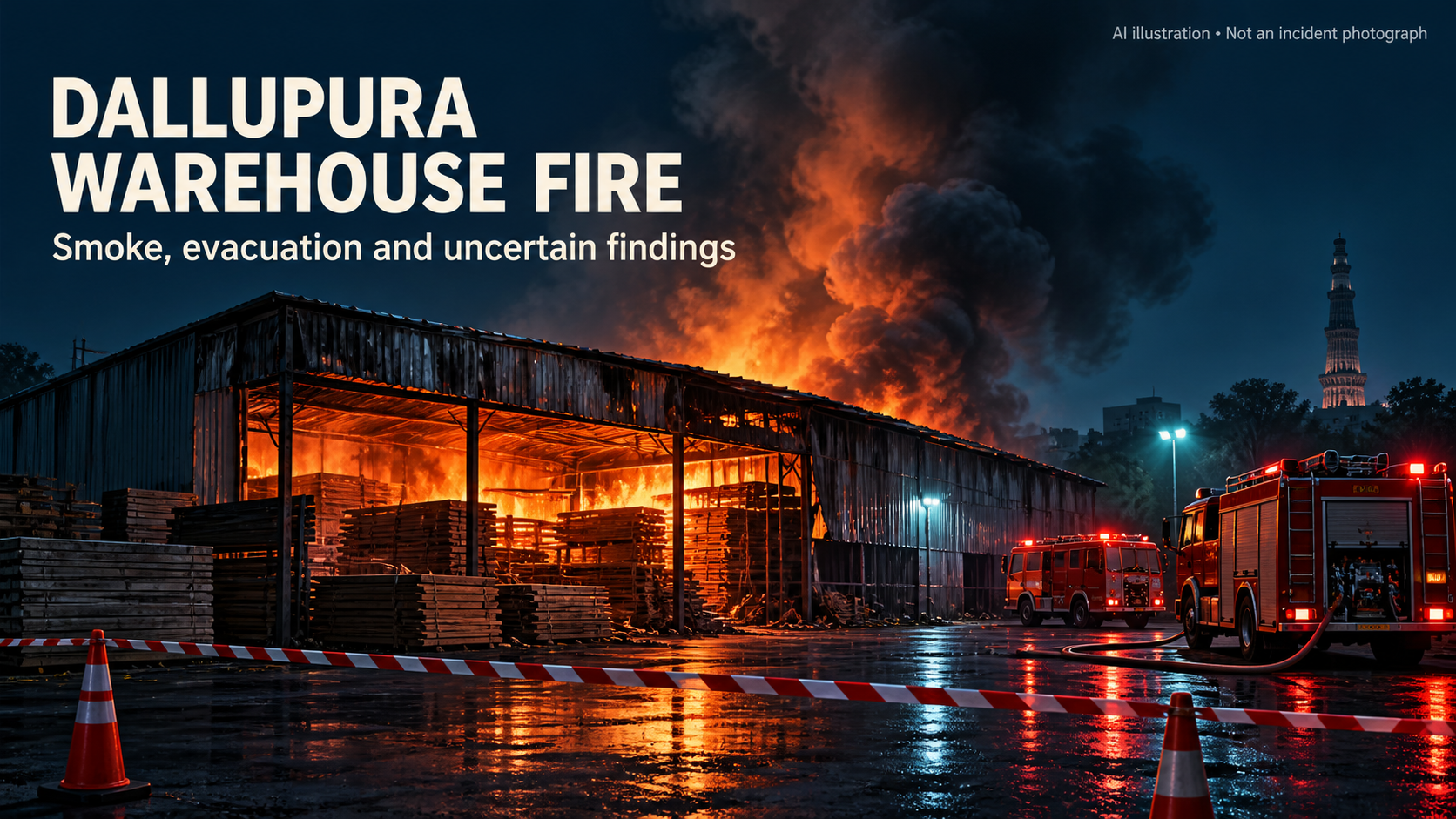
- People close by. Workers fled at Garha, residents tried to put the fire out, and two merchants were trapped at Lakadganj. Our own Dallupura wooden goods godown fire in Delhi in September is another example of timber stock burning in a built-up area.
Why a saw mill burns so fast
Timber, sawdust, wood chips and offcuts are all fuel, and a cutting yard is full of them. Sparks come from motors, switches, extension cables, welding done for machine repair, hot bearings and belts, a cigarette or a lamp. In the open there is plenty of air. Once a stack catches, the heat dries and ignites the stack next to it, and burning pieces can be carried by wind.
Dust adds a second danger. A Washington State labour department hazard alert for sawmills lists five things a dust explosion needs: a build-up of fine combustible dust, that dust thrown into the air, a closed space, oxygen, and an ignition source such as a flame, hot work, spark or static. It warns that one blast can shake loose dust from beams and ceilings and cause a second, bigger one. This is American guidance, and it refers to NFPA 664, a US standard for wood processing, which we did not read. It is useful here because the mechanism is the same in any wood-cutting shed.
What the rules say
National Building Code of India 2016, Part 4 (Fire and Life Safety). We read a copy of the Part 4 text. It names saw mills as an example of Group G industrial buildings. Its Annex B lists saw mills in the high-hazard class, while carpenters, wood wool and furniture making, and plywood and wood veneering factories, are in the moderate class. Group J (hazardous buildings) covers materials that give explosive mixtures of dust, and Part 4 asks for an adequate dust collecting and exhaust system on machinery that gives off combustible or explosive dust. It also sets out tables of extinguishers, hose reels, yard hydrants and static water storage by occupancy, and it allows local fire services to consider exemptions in a case of practical difficulty. We did not find a fixed stack-to-stack distance for timber in Part 4, so we do not quote one; ask your fire officer. The copy we read came from a private site, so check the current BIS text.
Gujarat Fire Prevention and Life Safety Measures Act, 2013. As summarised on Legitquest, section 18 puts the duty on the owner, or the occupier if the owner cannot be traced, to provide the fire prevention and life safety measures required for a building as classified by the regulations, to install the minimum fire-fighting and life safety equipment, and to keep it working at all times. Section 21 deals with the fire safety certificate, and section 39 sets out penalties for failing to maintain equipment, among other things. Which buildings the regulations cover, and whether a given saw mill or timber yard needs a certificate, we could not find in the sources we opened. Ask the Chief Fire Officer of your municipal corporation or the Regional Fire Officer. We also do not know which fire service covers Mogar.
In Jammu the fire officer said a mill was running in violation of the law with no equipment or water. Whether a mill is licensed and equipped is therefore a fair question to ask of any unit near your home.
Checklist for owners
The first six items follow the OSHA and Washington guidance and the NBC points above. The rest are our own suggestions from the fires reported; they are not quoted from any rule.
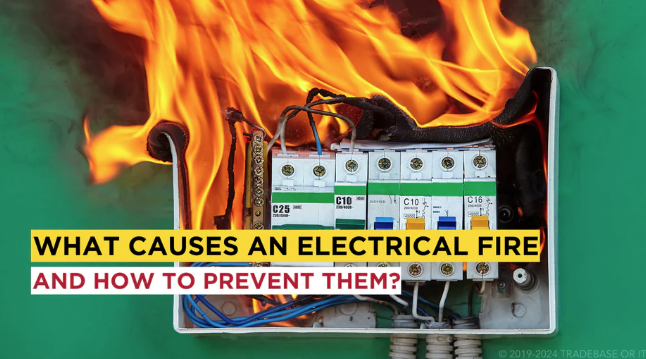
- Electrics. Have wiring, switchboards, motors and cables checked by a licensed electrician at fixed intervals. Remove joints, loose wires and overloaded extension boards. Keep dust off motors and switchgear. Our guide on small electrical faults and big fires lists the warning signs.
- Dust. Capture dust at the machine with a proper extraction system, and keep the collector away from the main shed where possible. Clean beams, ledges and machine tops on a routine. Do not blow dust down with compressed air, because that makes the dust cloud OSHA warns about. Use a vacuum made for dusty places, not a household one.
- Static and friction. Earth the machines and ducts. Fix jammed belts and bearings and never let a machine run hot.
- Hot work. No welding or gas cutting near stock or dust. If it must be done, clear and wet the area, keep an extinguisher and a person watching, and check the spot for a while after the work ends.
- No smoking and no open flame in the yard or the shed. Keep it enforced, with a clear notice.
- Housekeeping. Sweep up sawdust, bark and offcuts every day and keep them in a separate place away from the main stack. Do not let shavings pile against walls or machines.
- Stacks. Stack timber in blocks with lanes between them wide enough for a hose line and for people to walk out, keep stacks away from the boundary wall, electrical poles and the shed, and keep the road to the yard open for a fire engine. We do not have a code figure for the gap, so settle it with your fire officer.
- Water. The Jammu report is a warning: no water source meant a long fight. Keep a tank or other reserve, a pump that you test, hydrant points and hose that reach every stack. Check them. Our guide to fire hydrant systems and why they fail explains what to test.
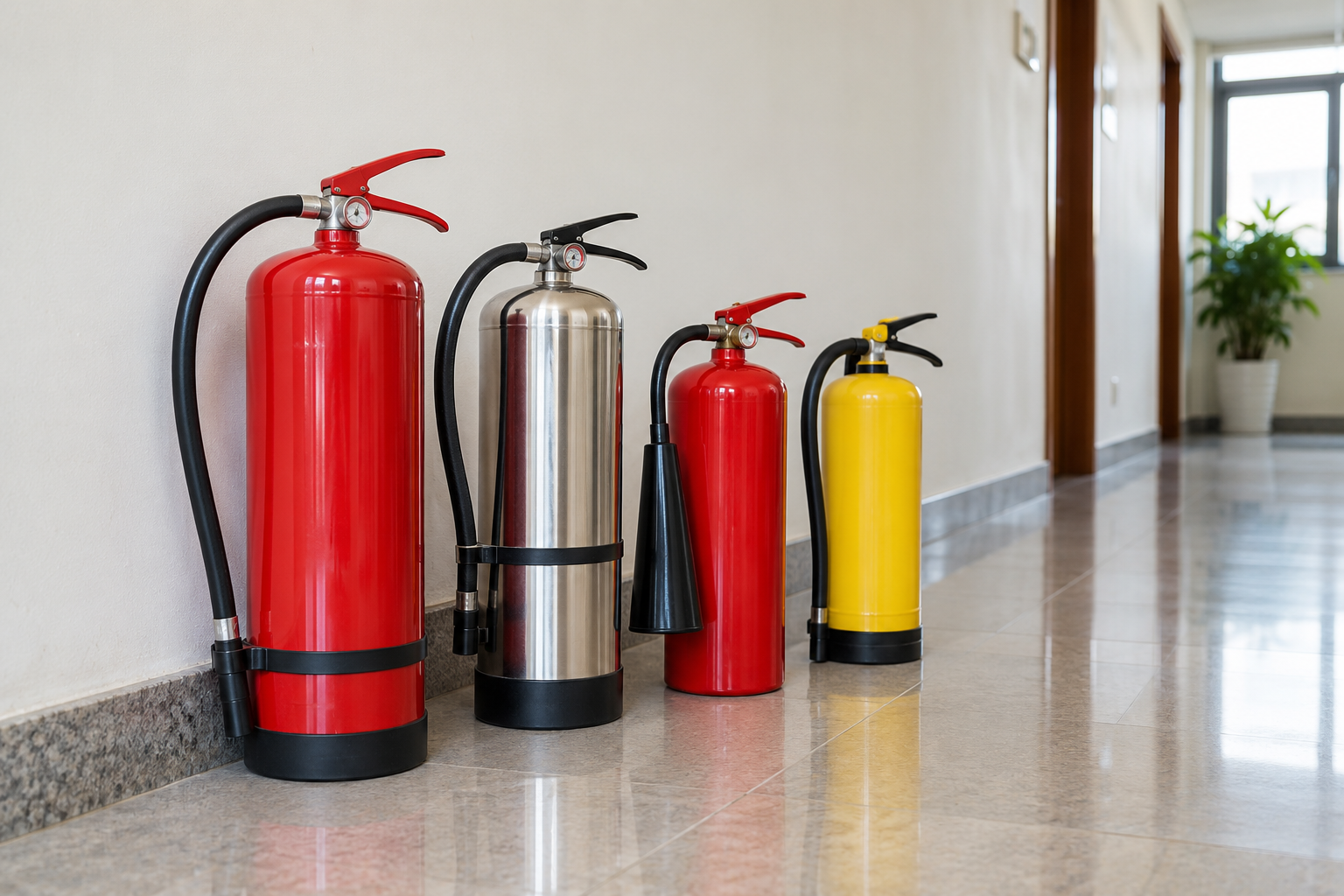
- Extinguishers. Wood, paper and sawdust are ordinary combustibles. Keep extinguishers suited to them, within easy reach of every machine and every stack, and service them on time. See which extinguisher works on which fire. Extinguishers are for a small fire only.
- Night. A fire at 1.20 am and one at 3 am are both in the reports above. Keep a watchman, a night round and a phone with the fire number and the unit address written beside it. Lights and a working alarm help.
- Approvals. Ask your fire officer which licence, fire certificate and inspection apply to your unit, and keep the papers on site.
For workers
- Know the nearest exit from each machine, and keep it clear of stock.
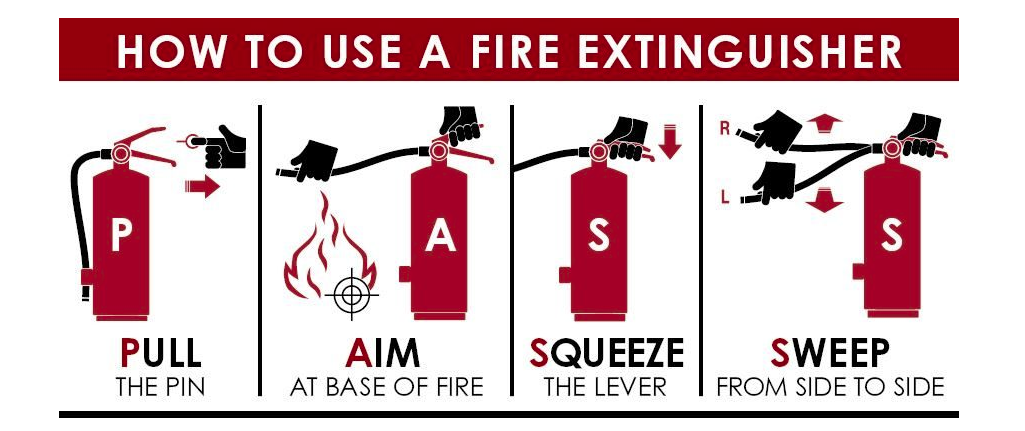
- Learn where the extinguishers and the water point are, and how to use one. Our PASS method guide shows the steps.
- Report loose wires, hot motors, smoking and dust build-up to the owner. Do not wait for the next shift.
- If the fire is more than a small one, leave, raise the alarm and call for help. Do not go back for tools, stock or a vehicle. Count who is outside.
If a fire starts
Raise the alarm and get everyone out first. Call the fire brigade at once, because a stack fire grows fast and these fires take hours. Say the name of the place, the village or locality, the road and a landmark, and that it is a saw mill or timber yard, and stay on the line. Use an extinguisher only on a very small fire and only if your back is to an exit. Keep people back from burning stacks, which can fall and throw sparks. Keep the road clear for the engines and keep onlookers and vehicles off it.
Call 112 for any emergency, 101 for the fire brigade and 108 for an ambulance. These are national numbers. How a call is routed can differ by state, and mobile signal can fail, so if one number does not connect, try another, and keep the number of the nearest fire station written down at the unit and at home.
When no fire brigade is near
A timber yard on the edge of a village may be far from the fire station. In the reports above, engines came from seven or nine stations, and at Garha residents tried to fight the fire before the crews arrived. Before there is a fire, agree on this with neighbours: who calls 112 and 101, who clears the lane, who brings water and sand, who takes children and the elderly away from the smoke, and who checks that everyone is out. Smoke from burning timber can drift over houses, so keep people upwind. Let trained fire crews fight a big stack fire; neighbours should help with the call, access, evacuation and water supply, not walk into the heat. A village or ward can ask the local administration for fire-safety training. Our guide on how to call 112, 101 or 108 explains what to say on the call.
What is still not known
- For Mogar: the time, how long the fire lasted, how many engines and stations came, any injury, the loss and the cause. We found no second source.
- Whether any of the fires above led to action against the owners.
- Whether Gujarat’s regulations require a fire certificate for a saw mill or timber yard of a given size.
- The correct figures for the Lakadganj fire, where the two reports differ.
We will update this page if a second source for Mogar appears. Last checked: 21 October 2026, about 10 pm IST.
What needs attention
- Stacked dry wood spreads fire quickly and keeps smouldering after the main fire is beaten, as at Lakadganj.
- Where a cause was reported it was an electrical or machine fault (Garha, Salem), always as a suspicion and not a finding.
- These fires took hours and engines from many stations, so help can arrive late, and the first response is the workers' and neighbours'.
- The Jammu fire officer's statement of no fire equipment and no water source shows what a missing water supply costs.
- Wood dust can explode as well as burn: the Washington State hazard alert lists build-up, dispersion, confinement, oxygen and ignition, and warns of a second, larger blast.
- NBC 2016 Part 4 places saw mills in the high-hazard class and asks for dust collection on dust-emitting machinery.
Controls that reduce risk
- Owner: have the wiring checked by a licensed electrician, and clean dust and offcuts every day.
- Owner: stop hot work near stock and dust unless the area is cleared, wetted and watched.
- Owner: keep stacks in blocks with lanes and an open road, and a tested water supply and extinguishers.
- Owner: ask your fire officer which licence, fire certificate and inspection apply to your unit.
- Worker: learn the exits and the extinguishers, and report loose wires, smoking and dust build-up.
- Neighbour: agree who calls 112 and 101, who clears the lane and who takes children and the elderly away from the smoke.
- Anyone: in a fire, get everyone out, call 112 or 101 and give the place and a landmark, and do not go back in.
Common unsafe practices
- Letting sawdust and shavings pile up on beams, machines and against walls.
- Cleaning dust off with compressed air.
- Welding or cutting near stock or dust without clearing, wetting and watching the spot.
- Leaving worn wiring, loose joints and overloaded extension boards in a dusty shed.
- Stacking timber tight with no lanes and no road for a fire engine.
- Having no water tank, pump or hydrant, or never testing them.
- Leaving the unit with no watchman or night round.
- Going back into a burning shed for stock or machines.

Leave a comment