
Quick answers
Is there one fire extinguisher that works on every type of fire?
No. The fuel, any energised electrical equipment and the manufacturer's label decide which extinguisher is suitable. Choosing an agent by colour alone is a mistake.
Can I use a water extinguisher on an electrical or cooking-oil fire?
No. Never assume an ordinary water extinguisher is safe on an energised electrical hazard or a cooking-oil fire.
When should I try to put out a fire with an extinguisher?
Only a trained person should tackle a small, early-stage fire with a clear escape path and no dangerous smoke. If the fire grows, the correct unit is uncertain or the exit may be lost, evacuate and call 112.
Which Indian standard covers selecting and maintaining fire extinguishers?
IS 2190:2024 is the Indian code of practice for selecting, installing and maintaining portable and mobile first-aid extinguishers. A competent site assessment and local requirements are also needed.
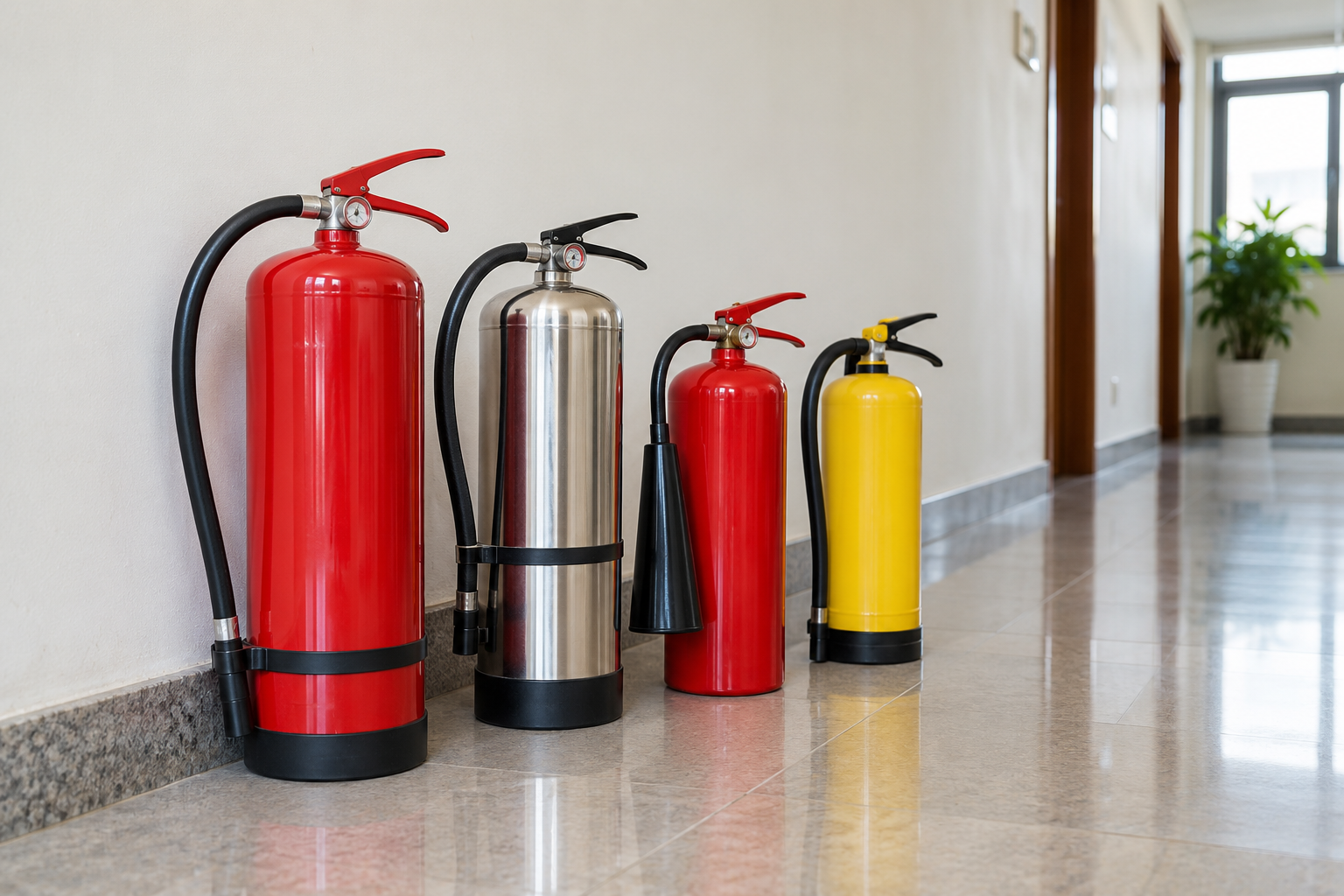
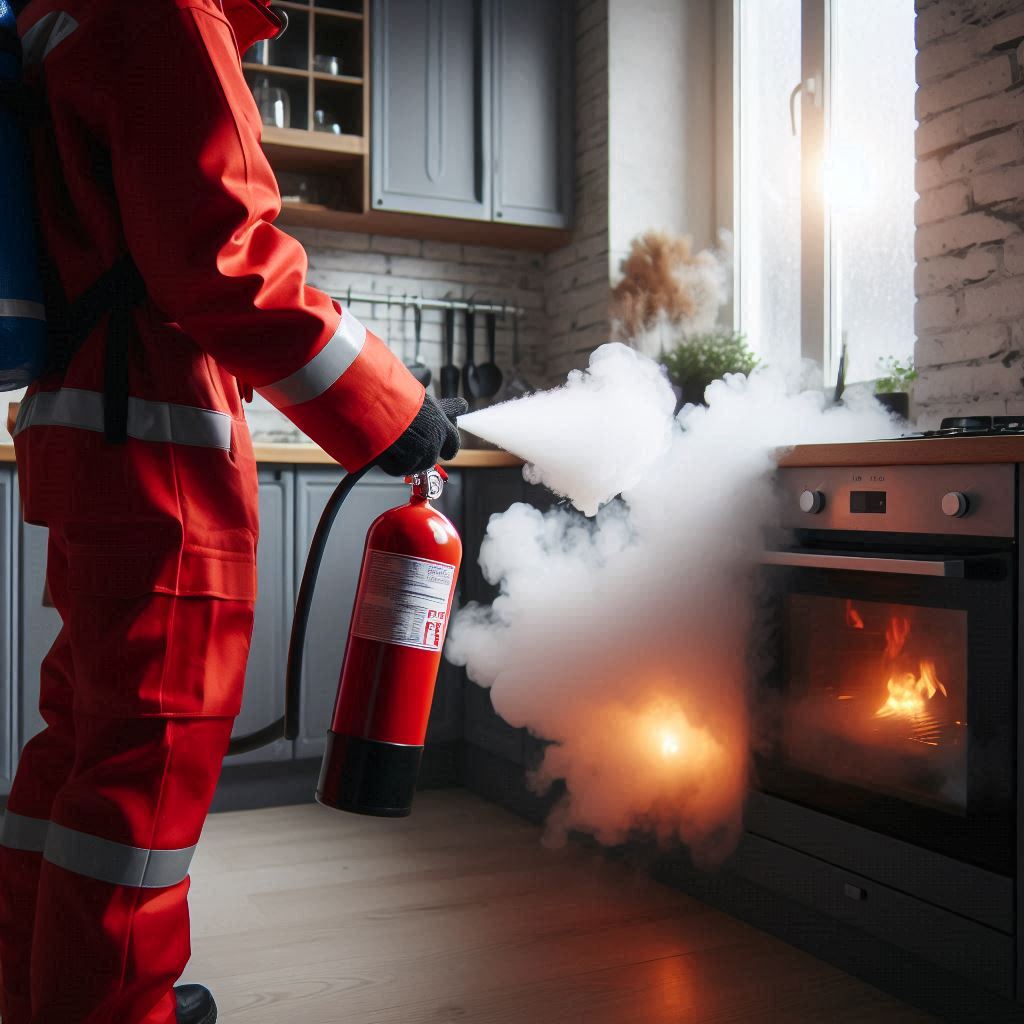
Cover image: AI-generated editorial illustration; the pictured equipment is not certified or suitable merely because it appears here.
Many Indian homes, shops and offices have a red cylinder hanging on the wall that nobody has ever read the label of. On the day of a fire, that is too late to start. Here is what you need to know before you buy one, and before you ever have to use it.
First, decide whether to fight or leave
Getting everyone out comes first. Raise the alarm, make sure people are leaving and call 101 or 112.
Use an extinguisher only if all of these are true:
- The fire is small and just starting, about the size of a waste-paper basket.
- You have the right extinguisher for that fire, and you know how to use it.
- Your way out is behind you and clear.
- The room is not filling with smoke.
If the fire grows, you are unsure which extinguisher is right, or your exit might be cut off, leave at once and close the door behind you.
Match the extinguisher to the fire
No single portable extinguisher is right for every fire. What is burning, whether live electrical equipment is involved and what the manufacturer’s label says decide the right choice. The Bureau of Indian Standards classifies fires like this:
| Class | What is burning | Suitable extinguishers |
|---|---|---|
| A | Ordinary solids: wood, paper, cloth, plastic, furniture, curtains | Water, foam, ABC dry powder |
| B | Flammable liquids: petrol, diesel, oil, paint, solvents | Foam, dry powder, clean agent, CO2 |
| C | Flammable gases: LPG, natural gas | Dry powder, clean agent, CO2 (and shut off the gas supply if you safely can) |
| D | Burning metals: magnesium, aluminium, sodium | Special dry powder for metal fires |
| F | Cooking oil and fat in a kadhai or fryer | Wet chemical extinguisher |
(Source: Bureau of Indian Standards, Learning Science via Standards: Fire Extinguisher.)
For fires involving live electrical equipment, BIS notes that CO2 extinguishers are commonly used because they leave no residue. Never use a water extinguisher, or water, on anything electrical that may still be live. Switch off the power at the main if you can.
The Indian code of practice for selecting, installing and maintaining portable and mobile first-aid extinguishers is IS 2190:2024, as listed in the Bureau of Indian Standards compendium. For a shop, office, factory or society, get a competent fire safety person to assess the site and check local fire department requirements before buying or placing extinguishers. Do not choose by colour alone. Read the class marking on the label.
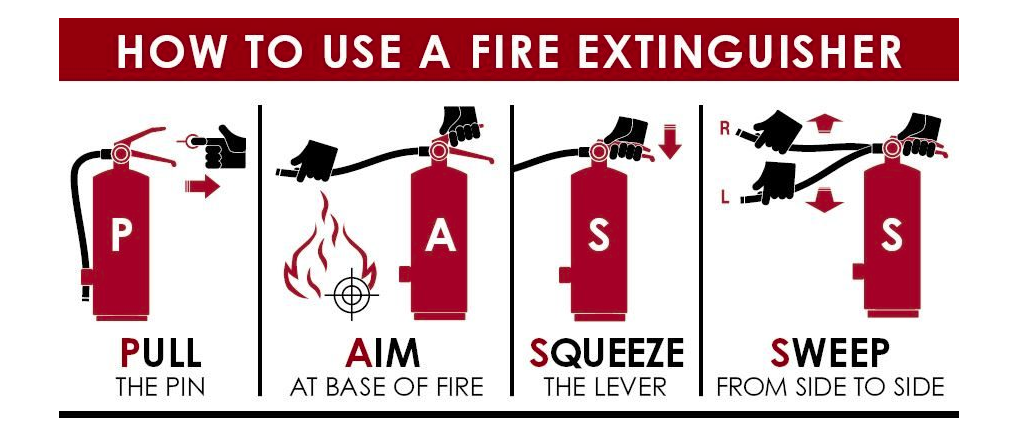
How to use an extinguisher: PASS
BIS describes the PASS technique that fire trainers teach:
- Pull the safety pin.
- Aim the nozzle at the base of the fire, not at the flames.
- Squeeze the handle.
- Sweep from side to side across the base of the fire.
Stand a few steps back, with your exit behind you. A small extinguisher empties in seconds, so do not waste it. If the fire does not go down quickly, stop and get out. Even if the fire seems to be out, call the fire brigade to check.
Keep it ready
- Hang it where people can reach it on the way out, not hidden behind the stove or locked in a cupboard.
- Check the pressure gauge regularly. The needle should be in the green zone.
- Get it inspected, refilled and serviced as the label and the manufacturer say, and always after any use.
- Buy only BIS-certified extinguishers from a reliable supplier.
- Make sure the people who will use it, including family members, staff or security guards, have practised with that exact model. A video is not a substitute for hands-on training.
Do this today
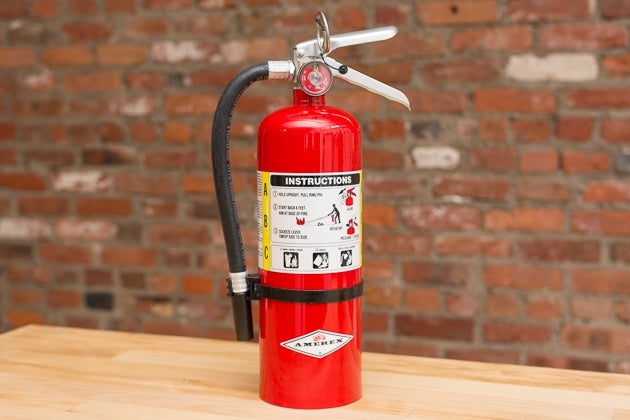
Find the extinguisher nearest your kitchen or your desk. Read its label: which fire classes is it marked for, and when is it due for service? If you do not have one at home, a small ABC dry powder extinguisher kept near the way out is a sensible start. Save 101 and 112 on your phone.
India emergency number: MHA ERSS confirms 112.
What needs attention
- No single extinguisher is right for every fire; the class marking on the label decides
- Water on live electrical equipment or burning cooking oil can make things far worse
- Extinguishers are for small, early fires only; escape always comes first
- An extinguisher nobody has practised with is of little use in a real fire
- Extinguishers must be serviced and refilled to stay usable
Controls that reduce risk
- Check the class marking on every extinguisher you own
- Get site-specific advice for shops, offices and societies, following IS 2190:2024 and local rules
- Keep extinguishers on the way out and easy to reach
- Get them inspected, serviced and refilled as the label says
- Give users hands-on practice with the exact model
Common unsafe practices
- Choosing an extinguisher by colour alone
- Using water on live electrical equipment or a cooking-oil fire
- Staying to fight a fire that is growing
- Fighting a fire with the exit in front of you instead of behind
- Aiming at the flames instead of the base of the fire
- Hanging the extinguisher behind the stove or locking it away


Leave a comment