
What happened here
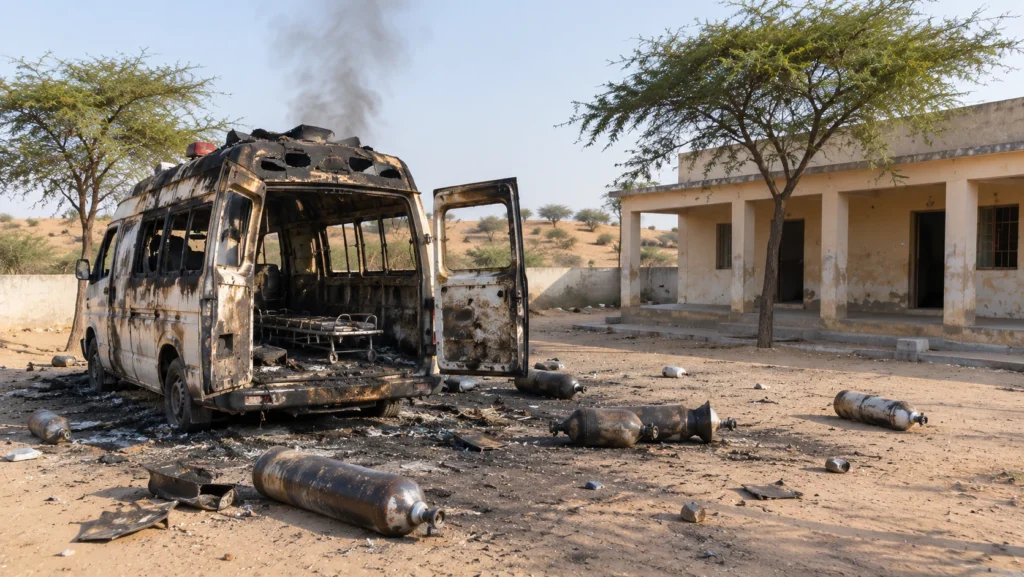
At about 10.40 pm on Wednesday, 28 October 2026, an oxygen cylinder exploded and set an ambulance on fire at a government-run basic health unit in Dano Dhandhal village, Nagarparkar taluka, Tharparkar district, Sindh, Pakistan. The ambulance, run by the People's Primary Healthcare Initiative, was completely destroyed. The toll differs by outlet: eight dead and five hurt per the Deputy Commissioner (ARY), nine per the Chief Minister's House (Minute Mirror, The News), and at least ten per police and the Associated Press (PTI quotes the SSP). The reports differ on the trigger: staff fitting a new cylinder with a woman patient still inside (The News), the driver moving a cylinder (PTI), or a patient being loaded (Minute Mirror). The Chief Minister ordered a transparent inquiry through the Health Department and announced Rs 2 million for each family; expert teams were called in. The cause is not established.
Quick answers
What happened at Tharparkar on 28 October 2026?
An oxygen cylinder exploded and set a parked ambulance on fire at a government-run health centre in Dano Dhandhal village, Nagarparkar taluka, at about 10.40 pm. The ambulance was completely destroyed.
How many people died?
Reports differ. ARY quoted eight from the Deputy Commissioner, the Chief Minister's House gave nine, and police and the Associated Press say at least ten. The toll rose as injured people died later.
What caused the explosion?
It is not established. Reports say staff were fitting a new cylinder, the driver was moving one, or a patient was being loaded. The Sindh government has ordered an inquiry.
Was a patient inside the ambulance?
The News quotes the hospital administration that a woman patient was still inside when the fitting began. PTI says the ambulance was taking a woman to the district hospital in Mithi. The inquiry has yet to confirm the sequence.
What has the government done?
The Chief Minister ordered a transparent inquiry through the Health Department and announced Rs 2 million for each family. Expert teams from Mirpurkhas and Karachi were called in.
Why does it matter in India?
Ambulances and hospitals across India carry and store oxygen cylinders. The handling, securing and storage of those cylinders, and where people stand while they are changed, are questions for every operator.
How should oxygen cylinders be kept in an ambulance?
Secured in a rack or strap so they cannot move, valve caps on, away from heat and flame, with clean and oil-free fittings and a working fire extinguisher on board. Follow your supplier's instructions.
What should I do if a cylinder catches fire?
Move everyone away from the vehicle at once and call 101, 108 or 112. Do not try to close the valve of a burning cylinder.
What happened
On the night of Wednesday, 28 October 2026, an oxygen cylinder exploded and set an ambulance on fire at a government-run basic health unit in Dano Dhandhal village, Nagarparkar taluka, Tharparkar district, in Pakistan’s Sindh province. Minute Mirror puts the time at about 10.40 pm. The ambulance belonged to the People’s Primary Healthcare Initiative (PPHI) and was completely destroyed. The dead include health staff, a patient and relatives who were around the vehicle. Nine people had died by the Sindh Chief Minister’s House count, and police and the Associated Press say at least ten. No cause has been officially established. As of 4 November 2026, no inquiry findings have been reported.
This happened in Pakistan, but it matters to Indian readers. Every day, 108 and private ambulances across India carry oxygen cylinders, and hospitals and clinics keep them in stores and corridors. The questions raised here, about who fits, moves and stores these cylinders, and where the patient is while they do it, apply on our roads as well. We have not named any person who died or was hurt.
How many died: what each report says
The toll changed through the day, and outlets still do not agree. Here is who says what.
- Seven: the early figure. The web address of The News story still says seven, though its headline and text now say nine. We do not use seven.
- Eight dead, five hurt: ARY News, quoting the Tharparkar Deputy Commissioner.
- Nine: Minute Mirror, citing the Chief Minister’s House, and The News, which says the toll rose to nine after an injured person died on the way to Karachi.
- Ten: Arab News Pakistan carrying the Associated Press, which says at least ten, and Daily Pioneer carrying PTI, which quotes the Tharparkar senior superintendent of police saying ten deaths were confirmed.
The differences probably reflect different times of counting, since some injured people died later in hospital or on the way. The Chief Minister’s House figure is the most official count available, but police and the AP say ten. That is why we write nine to ten, and not a single number. The number hurt is also unclear: five per ARY, and The News names two midwives and a female attendant, three people. The News says the dead included a dispenser, the driver, a watchman, another employee, a woman patient and two attendants, which adds up to seven, so even that report does not account for all nine.
What the reports say about the moments before
- Fitting a cylinder: The News says staff were fitting a new oxygen cylinder to the ambulance when it exploded, and quotes the hospital administration that a woman patient was still inside when the work began.
- Moving a cylinder: PTI says the cylinder exploded while the driver was moving it within the vehicle, and that the ambulance was taking a woman from the health centre to the district hospital in Mithi.
- Loading a patient: Minute Mirror says the fire broke out as health workers were moving a patient into the ambulance, and calls it a suspected cylinder explosion.
- Not specified: the Associated Press says only that patients were being transferred to another hospital and the ambulance was parked at the facility. ARY quotes police that a cylinder installed in the ambulance exploded.
These accounts are not necessarily in conflict, since fitting, moving and loading could all have been going on together. But no report says which step, if any, set it off, and we do not guess. The Chief Minister has asked the inquiry to find out the exact cause, including whether safety factors played a part.
The response
Minute Mirror says Rescue 1122 and local officials, including the Nagarparkar assistant commissioner, reached the spot. The injured were taken to Mithi and Nagarparkar, and one person died on the way to Karachi (The News). Expert teams from Mirpurkhas and Karachi were called in to examine the evidence. Sindh Chief Minister Murad Ali Shah announced Rs 2 million for the family of each person killed and ordered a transparent inquiry through the Health Department, with a detailed report through the chief secretary. President Asif Ali Zardari called for a prompt, transparent investigation and stronger safety measures. PPP chairman Bilawal Bhutto-Zardari asked for an impartial probe and accountability if negligence or a criminal act is found.
What is not known
- What exactly set off the blast: the fitting, the moving, the valve or regulator, a leak or something else.
- The condition of the cylinder, who supplied it, and when it was last checked.
- Whether the staff had training in handling cylinders, and whether there was a written procedure for changing them.
- The final number of dead and injured.
- The findings of the inquiry, and whether anyone will be held responsible.
What the incident teaches
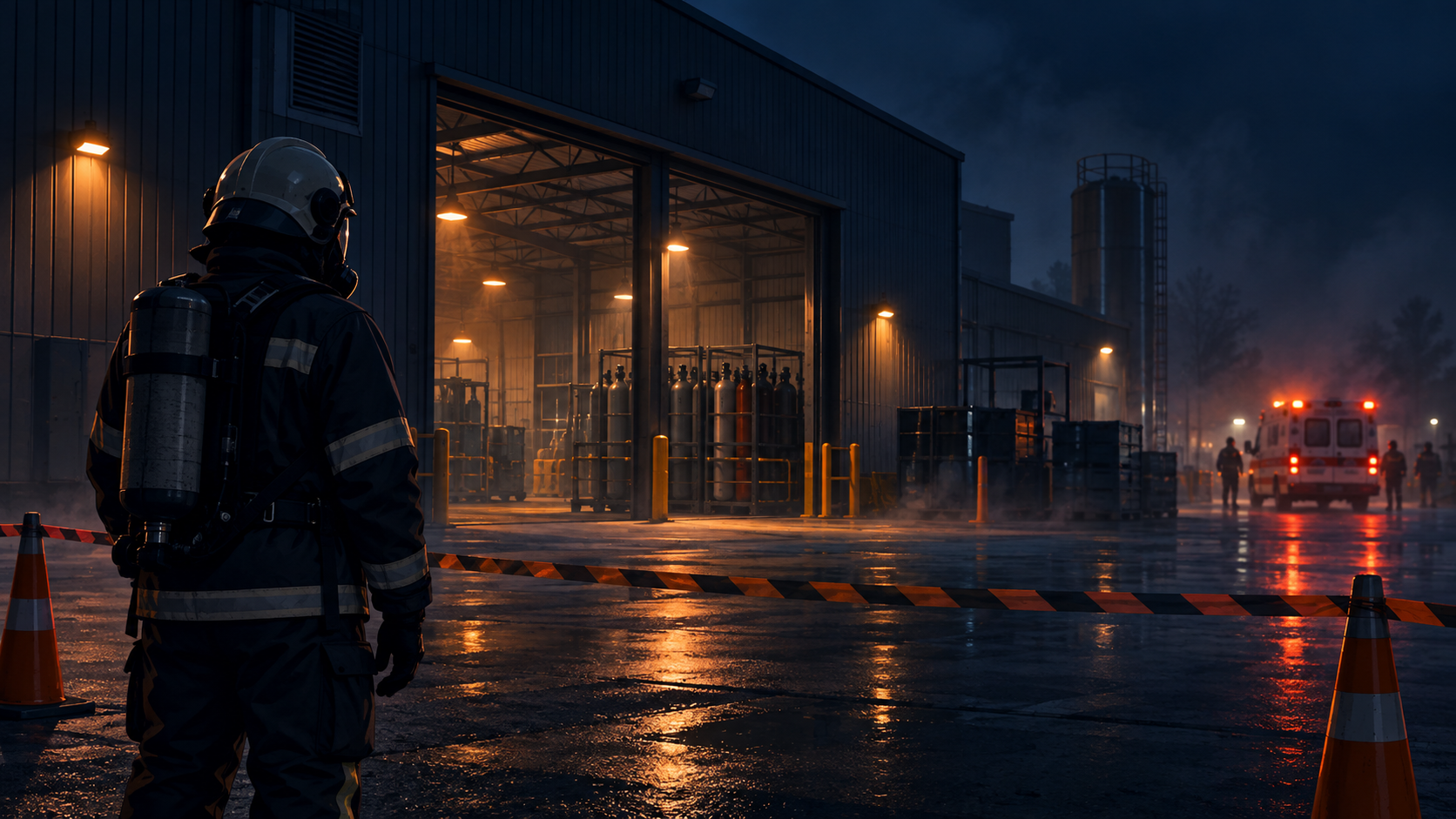
Whatever the inquiry finds, the reports describe a hazard we know well. Oxygen does not burn by itself, but it makes everything around it burn faster and hotter, from fabric and rubber to the plastic trim of a vehicle. A pressurised cylinder that fails or is mishandled inside a closed ambulance leaves very little time. If a patient or an attendant is standing close, the harm is greater. That is why the question of who is near the vehicle, and where the patient is, while a cylinder is being fitted or moved, deserves as much attention as the cylinder itself.
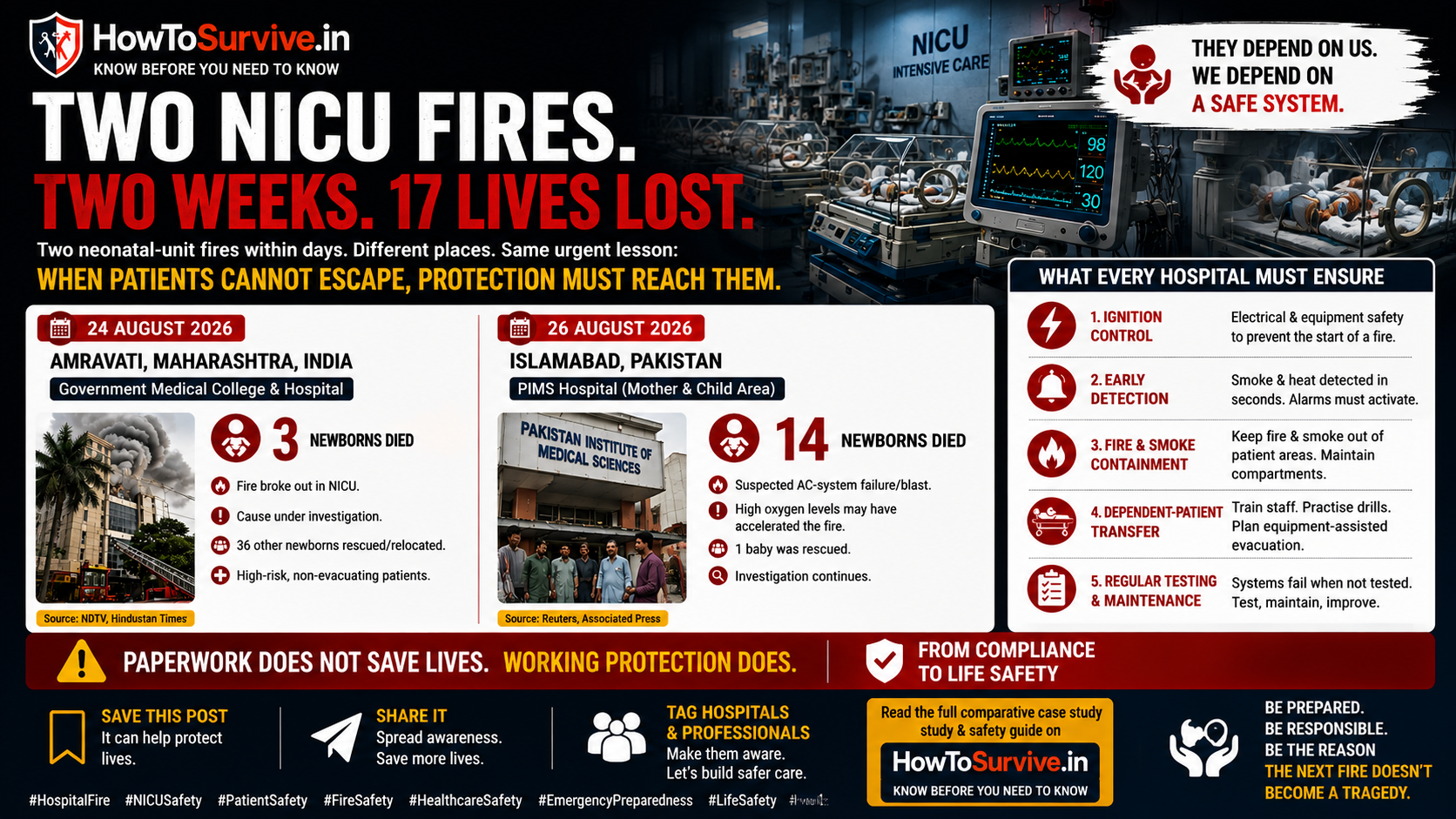
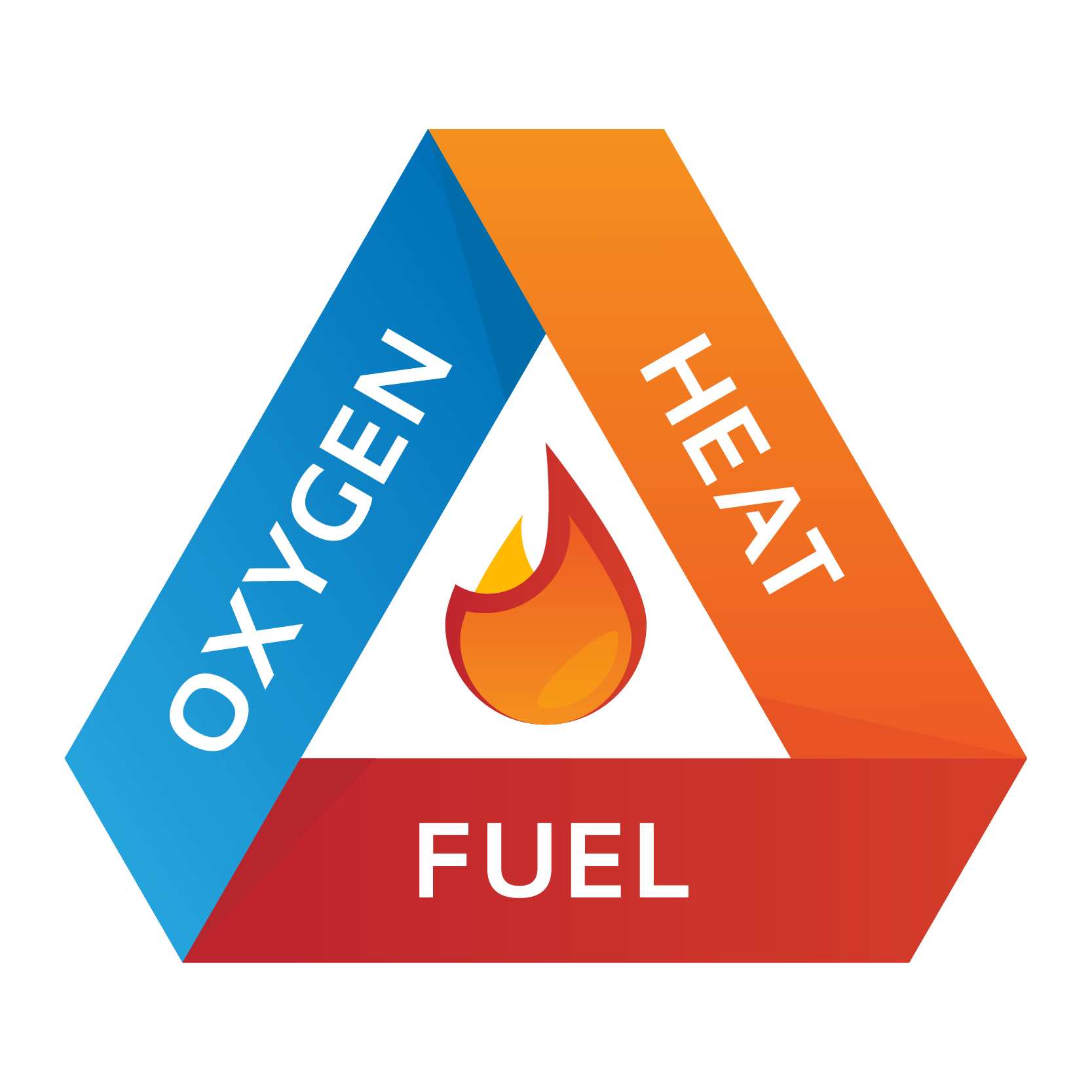
For hospital managers and ambulance operators in India, this is a good moment to look at the basics: a written procedure for changing cylinders, trained people doing it, a proper rack or strap inside the vehicle, a regular inspection routine, and a fire extinguisher that works. Our earlier post on the Okhla oxygen-cylinder blast in Delhi shows a similar question about handling and an unresolved technical cause. For hospital fire planning, read the NICU fire case study, our guide on causes of hospital fires in India and what patients’ families and staff can do. To understand why oxygen makes fire worse, see the fire triangle explained.
Safety steps for ambulance crews, clinics and families
These are general good practices, not findings about the Tharparkar blast. Always follow your cylinder supplier’s instructions and the rules that apply to you; if unsure, ask the supplier or the licensing authority.
- Keep people clear. Wherever possible, change or fit a cylinder when no patient is inside the vehicle, and ask relatives and attendants to stand well back. Do not let a crowd gather around the ambulance door.
- Train the people who handle cylinders. Drivers, attendants and clinic staff should be shown how to open and close a valve slowly, how to fit a regulator and how to check for leaks. A written step-by-step card kept in the vehicle helps.
- Keep oil and grease away. Never use oil, grease or hand cream on a cylinder valve, regulator or fitting, and keep your hands clean and dry. Oil in contact with high-pressure oxygen is a recognised ignition hazard. We do not say it happened here.
- Secure every cylinder. In the vehicle, keep it in a rack, strap or bracket so it cannot roll or fall. In stores, keep it upright and chained, with the valve cap on. Never carry a cylinder by its valve.
- Inspect before every shift. Look for dents, rust, damaged valves, hissing or a worn gauge. A suspect cylinder is taken out of service and returned to the supplier, not used.
- Keep heat and flame away. No smoking, no open flame, no sparking tools near oxygen, and do not store cylinders in direct sun or next to a heater or a kitchen.
- Give some ventilation. Do not store spare cylinders in a closed, cramped vehicle compartment or a small unventilated room.
- Carry a working fire extinguisher in every ambulance, and make sure the crew knows how to use it and when to simply move away.
- If a cylinder starts to burn or leak, get everyone away from the vehicle at once, and call 101 for the fire brigade and 108 for an ambulance, or 112 for any emergency. Do not go back for belongings, and do not try to close the valve of a burning cylinder.
- An oxygen cylinder explodes and the PPHI ambulance catches fire at the BHU Plus in Dano Dhandhal (Minute Mirror)
- Injured are taken to Mithi and Nagarparkar; Rescue 1122 and local officials reach the spot
- Early reports say seven or eight dead; the Deputy Commissioner gives eight dead and five hurt (ARY)
- An injured person dies on the way to Karachi and the toll reaches nine (The News); the Chief Minister's House gives nine (Minute Mirror)
- The SSP confirms ten deaths (PTI); AP reports at least ten
- The Chief Minister orders an inquiry and announces Rs 2 million per family; the President calls for a transparent investigation
- No inquiry findings or final toll reported by 4 November 2026
Why consequences escalated
- An oxygen cylinder exploded and set a parked ambulance on fire at a government-run health centre in Tharparkar on the night of 28 October 2026.
- The toll is nine to ten dead depending on the outlet: eight (ARY), nine (Chief Minister's House), at least ten (police, AP, PTI).
- Reports differ on what was happening: fitting a cylinder, moving it, or loading a patient. The trigger is not established.
- The Sindh government ordered an inquiry and announced Rs 2 million for each family; expert teams were called in.
- No inquiry findings have been published so far.
Failures and risk multipliers
- No finding of fault has been made and none is stated here.
- The cause is not established, and the technical trigger (valve, regulator, leak or something else) is not reported.
- One report says a woman patient was still inside the ambulance when the cylinder was being fitted; the hospital administration's statement has not been confirmed by an inquiry.
- Whether staff had training or a written procedure for handling cylinders is not reported.
- The condition, source and last inspection of the cylinder are not reported.
- The dead and injured included staff, a patient and attendants who were close to the vehicle, which shows how many people can be in range of a cylinder in an enclosed space.
Actions that reduce risk
- Change or fit oxygen cylinders when no patient is in the vehicle where possible, and keep attendants and relatives well back.
- Train drivers, attendants and clinic staff in handling cylinders and give them a written procedure.
- Never use oil, grease or hand cream on valves, regulators or fittings.
- Secure cylinders in a rack, strap or chain, valve caps on, and never carry one by its valve.
- Inspect cylinders before every shift and remove any that are dented, rusted or leaking.
- Keep flame, heat and smoking away from oxygen, and carry a working fire extinguisher in every ambulance.
- If a cylinder burns or leaks, move everyone away and call 101, 108 or 112.

Leave a comment