
What happened here
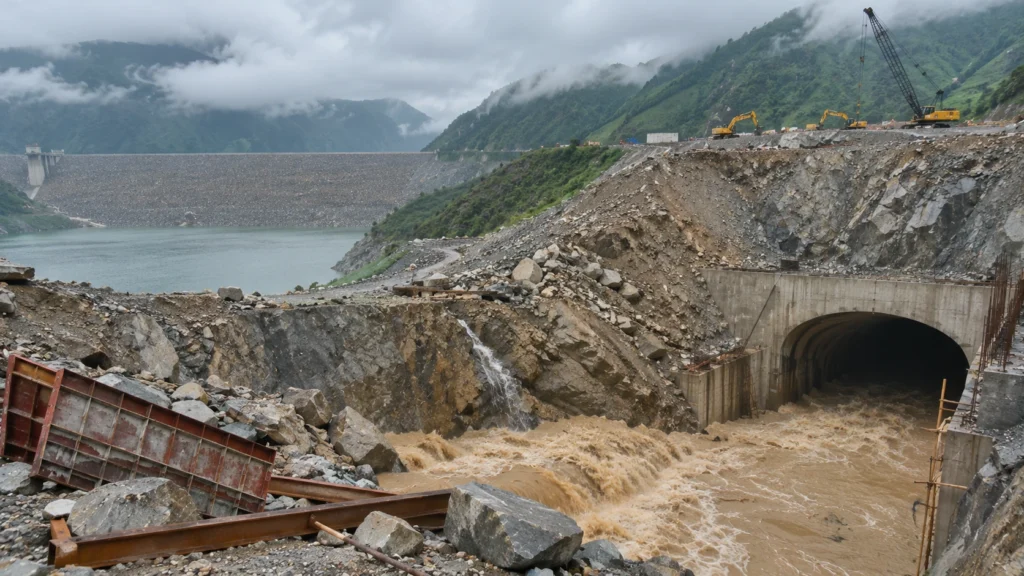
Cause under inquiry; WAPDA says a weak rock mass collapsed while the connecting tunnel was being excavated, while the Haripur deputy commissioner says a protective bund gave way after a girder fell, and an investigation has been reported. A rumour about a dam, or a construction site next to a full reservoir, needs its own failure plan and an official statement before it is shared. On Monday 9 November 2026, water from an intake pit entered a tunnel and the powerhouse area of the Tarbela 5th Extension (T-5) project at Tarbela Dam in Khyber Pakhtunkhwa, Pakistan. Social-media claims and some headlines said the dam collapsed; none of the reports we opened says the main dam failed, and WAPDA says the main tunnel, powerhouse, tailrace culvert and switchyard were not damaged. WAPDA says all workers were evacuated with no injuries or deaths; the deputy commissioner says one worker was in the water and was rescued. Work is suspended indefinitely. Downstream discharge figures differ by outlet and the 144,200 cusecs figure is from one outlet only.
Quick answers
Did Tarbela Dam collapse?
None of the reports we opened says the main dam failed. WAPDA says the main tunnel, the powerhouse under construction, the tailrace culvert and the switchyard were not damaged, and the Haripur deputy commissioner rejected claims that the dam had broken.
What happened at Tarbela on 9 November 2026?
Water entered a tunnel and the powerhouse area of the T-5 extension works. WAPDA says a weak rock mass collapsed during tunnel excavation and water from the intake pit flowed in. The deputy commissioner says a protective bund gave way after a girder fell.
Did anyone die?
WAPDA says no injuries or deaths. The deputy commissioner says one worker in the water was rescued; his condition is not reported.
What is the T-5 project?
The Tarbela 5th Extension is a 1,530 MW hydropower extension at Tunnel 5 of Tarbela Dam, with three units of 510 MW, financed by the World Bank and the Asian Infrastructure Investment Bank.
Was there flooding downstream?
None of the reports we opened describes it. WAPDA notified discharges above 150,000 cusecs and the provincial disaster authority told the Haripur, Swabi and Nowshera administrations to take precautions for 24 hours.
Why do reports say both rock collapse and bund breach?
WAPDA says rock collapse and the deputy commissioner says a protective bund broke after a girder fell. The cause is unconfirmed and an investigation is reported.
How do I check a dam claim before sharing it?
Look for the dam authority's own statement, the district administration's notice and at least two news outlets that say the same thing. Our guide on verifying disaster news explains the steps.
What happened
On Monday 9 November 2026, water entered a tunnel and the powerhouse area of the Tarbela 5th Extension hydropower project, known as T-5, which is being built at Tarbela Dam on the Indus in Khyber Pakhtunkhwa, Pakistan. Social-media claims and some headlines said the dam itself had collapsed. The reports we opened do not say that. WAPDA, Pakistan’s Water and Power Development Authority, said a weak rock mass collapsed while the second bench of the connecting tunnel was being excavated, and water from the intake pit then flowed into the tunnel and the under-construction powerhouse area.
WAPDA called reports that the T-5 tunnel had collapsed incorrect and said the main tunnel, the powerhouse under construction, the tailrace culvert and the switchyard were not damaged. The Haripur deputy commissioner, quoted by The Nation, rejected claims that the dam had broken. WAPDA said all workers were evacuated and that there were no injuries or deaths. Express Tribune reports that one Pakistani worker was swept into the water and rescued by emergency teams, and The News and Daily Times say he was pulled out by local people; WAPDA’s statement does not mention him. Work on T-5 has been suspended indefinitely, and Express Tribune reports that an investigation has been launched.
What is confirmed and what is not
- The dam: None of the reports we opened says the main dam failed. WAPDA says the main tunnel, the powerhouse under construction, the tailrace culvert and the switchyard were not damaged. The Haripur deputy commissioner rejected claims on social media that the dam had broken (The Nation). The incident was at the T-5 construction works, where an intake pit and the connecting tunnel were being built.
- The trigger: WAPDA says a weak rock mass collapsed during excavation of the second bench of the connecting tunnel and water from the intake pit entered the tunnel and the powerhouse area. The deputy commissioner says a protective bund or embankment at the T-5 intake gave way (Express Tribune, The News, Daily Times); The News and Daily Times add that a girder fell first, which Express Tribune does not mention. Some headlines say bund breach and the text of others says rock collapse.
- The workers: WAPDA says all workers were evacuated with no injuries or deaths. The deputy commissioner says one local worker who was in the water was rescued: Express Tribune says emergency teams rescued him and The News and Daily Times say local people pulled him out. His condition is not reported.
- The water: WAPDA says the intake pit was fully drained, no more water was entering the downstream work sites and dewatering of the powerhouse had started. The News reports that about 1,000 cusecs left the pit and was absorbed at Chashma Barrage.
- Downstream: WAPDA notified that discharges from Tarbela into the Indus would exceed 150,000 cusecs around the clock (The News, Daily Times, The Nation). The Nation, citing an unnamed official, says releases rose from 55,000 to 144,200 cusecs. The Nation reports a PDMA alert to the Haripur, Swabi and Nowshera administrations for 24 hours. The News reports IRSA lowering the reservoir by six feet as a precaution. None of the reports we opened describes flooding downstream.
- The project: T-5 is a 1,530 MW extension (three units of 510 MW) at Tunnel 5 of Tarbela Dam, financed by the World Bank and the Asian Infrastructure Investment Bank (Express Tribune, The Nation). Express Tribune says water entered the site in August 2025 after the reservoir rose, and work was suspended for a time. Daily Times describes an earlier cofferdam collapse and says a government inquiry in July 2026 blamed the contractor, the consultant and WAPDA.
Where reports differ and what we do not know
- Did the dam collapse?: No report we opened says so. Headline wording differs: Al Jazeera’s NewsFeed page is headed partial collapse of the dam, while its text says a protective barrier collapsed at the T-5 project; Business Recorder and Daily Pioneer headlines say embankment breach and protective barrier, while their text describes a rock collapse and water ingress.
- Rock collapse or bund breach: WAPDA says rock collapse. The Haripur deputy commissioner, quoted by Express Tribune, The News and Daily Times, says a protective bund or embankment broke; The News and Daily Times add that a girder fell first. The cause is unconfirmed and an investigation is reported.
- The worker in the water: WAPDA says no injuries. The deputy commissioner says one local worker was in the water and rescued, by emergency teams (Express Tribune) or by local people (The News, Daily Times). The Nation and Business Recorder do not mention him.
- Discharge figures: The 150,000 cusecs notification is reported by The News, Daily Times and The Nation. The 55,000 to 144,200 cusecs rise is from The Nation alone, from an unnamed official, and The News gives 55,000 as the current demand. The six-foot reservoir lowering (1,496 to 1,490 feet) is from The News alone.
- Project dates: Express Tribune gives September 2027 as the completion date, Daily Times says June 2028, and The News says the first unit was due in April 2027. These are background figures and not checked against WAPDA.
- Not known: The time of the collapse, what caused it, what damage the T-5 works have, how long dewatering and repair will take, whether any water reached populated areas downstream and what the inquiry will find.
What this case teaches
A rumour about a dam spreads faster than any official statement, and it can send people to the river or onto the road for no reason. Check the claim against WAPDA, the district administration and the provincial disaster authority before you share it, and see our guide on how to verify disaster news before sharing it. Equally, an incident at a dam’s construction works is not nothing: water did enter a tunnel, a worker was in the water and work has stopped.
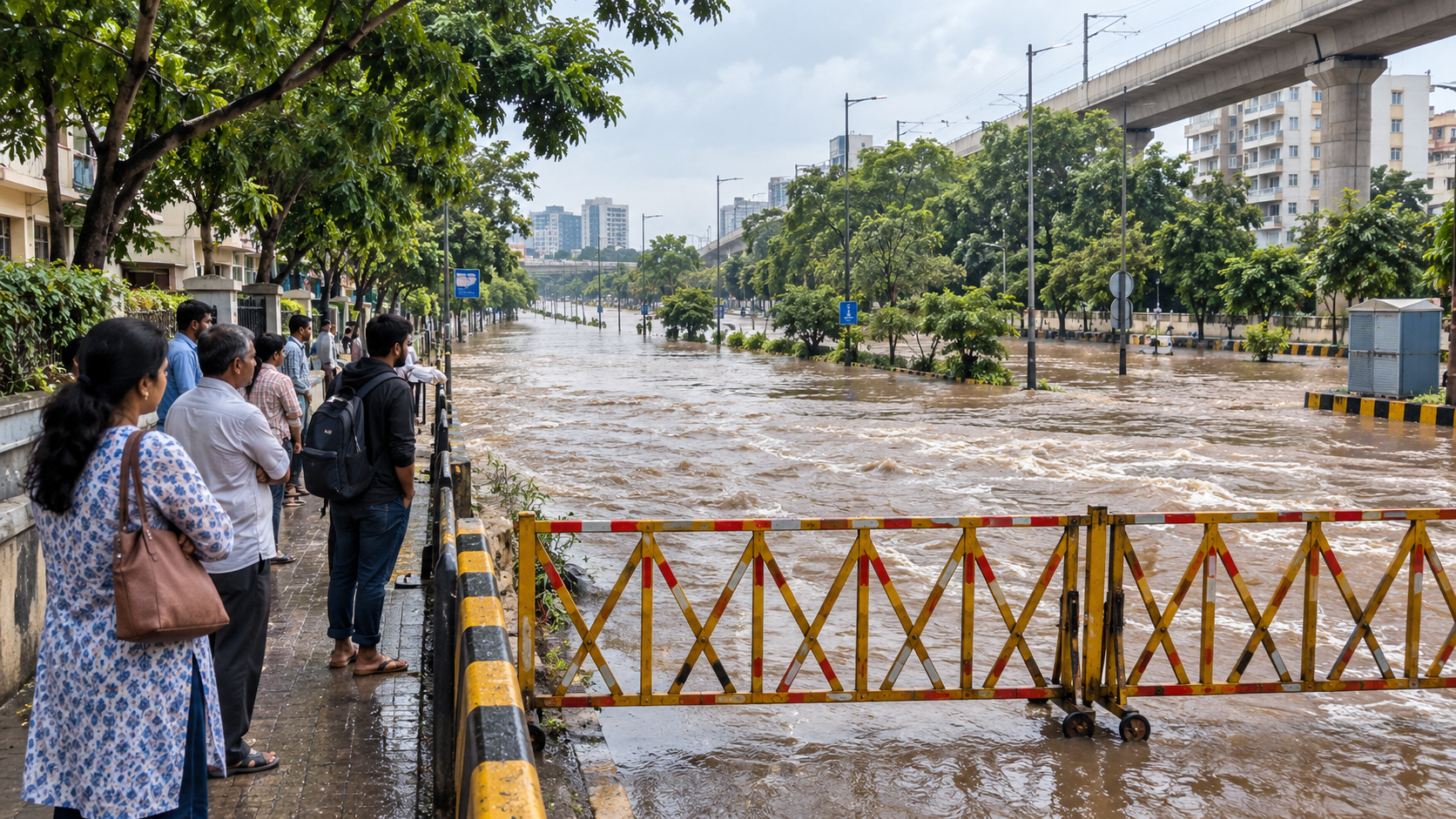
If you live or work near a river below a dam, follow the district administration’s and the disaster authority’s alerts, stay away from the bank and low ground when discharges are raised, and move early if told to. In Pakistan the provincial disaster authority in Khyber Pakhtunkhwa gave 1700 as its public helpline; emergency numbers differ by country and in India you should use 112. Our guides cover early warning systems and how to get alerts, flood safety before, during and after and why you should never walk or drive through floodwater.
For other river surges and floods see the Nilambur flash flood in Kerala and the Gorkha flash flood in Nepal. We checked again on 11 November 2026. No cause has been announced and no repair timeline has been given. Daily Times reports that the WAPDA Chairman has ordered a departmental inquiry, and says consultants, the contractor and WAPDA teams told his meeting that the main Tarbela Dam is not under threat. ARY News, citing unnamed sources, says the Prime Minister’s Office wants a high-level inquiry report within a week.
- A weak rock mass collapses during excavation of the second bench of the connecting tunnel at T-5; water from the intake pit enters the tunnel and powerhouse area; workers are evacuated (WAPDA)
- Daily Pioneer (11.10 am IST timestamp) and Al Jazeera's NewsFeed (9 November) publish the first reports we opened; headline wording differs from the text
- WAPDA says the intake pit is drained, dewatering of the powerhouse has begun and reports of a T-5 tunnel collapse are incorrect; WAPDA notifies discharges above 150,000 cusecs (The News, Business Recorder)
- Express Tribune reports work suspended indefinitely, the deputy commissioner's bund account, one worker rescued and an investigation
- The Nation, Business Recorder, Daily Times and The News report the PDMA alert to Haripur, Swabi and Nowshera, IRSA's planned lowering of the reservoir and the 144,200 cusecs figure
- Daily Times reports the WAPDA Chairman ordering a departmental inquiry and WAPDA teams saying the main dam is not under threat; ARY News, citing unnamed sources, reports a high-level inquiry within a week; no cause or repair timeline is announced
Why consequences escalated
- Water entered a tunnel and the powerhouse area of the Tarbela T-5 project on 9 November 2026 after a collapse during tunnel excavation.
- None of the reports we opened says the main dam failed; WAPDA says the main tunnel, powerhouse, tailrace culvert and switchyard were not damaged.
- WAPDA says all workers were evacuated with no injuries or deaths; the deputy commissioner says one worker in the water was rescued.
- WAPDA says rock collapse and the deputy commissioner says a protective bund gave way after a girder fell; the cause is unconfirmed and an investigation is reported.
- Discharges above 150,000 cusecs were notified; the 144,200 cusecs figure is from one outlet only.
- None of the reports describes flooding downstream, and the PDMA alert is a precaution.
Failures and risk multipliers
- No official finding exists. What the reports raise as questions:
- Why a weak rock section was excavated or left without support next to an intake pit, if that is what the inquiry finds.
- Whether a protective bund or embankment next to the pit held back the water as designed, and what a girder was doing at its edge.
- Why social-media posts spread a dam collapse claim before WAPDA's statement was out.
- Whether lessons from the August 2025 cofferdam collapse were applied at the T-5 works.
- These are open questions, not findings of fault.
Actions that reduce risk
- Readers: check a claim about a dam against WAPDA, the district administration and the disaster authority before sharing it.
- People living or working below the dam: follow district and PDMA alerts, keep off the riverbank and low ground when discharges are raised, and move early if told to.
- Contractors and project owners: keep the excavation, bunds and drainage under inspection when the reservoir is high, and keep an evacuation plan and alarm for every pit and tunnel.
- Authorities: publish the cause, the damage assessment, the discharge figures with their source, and the inquiry findings.


Leave a comment