
Quick answers
Is it safe to drive or walk through floodwater?
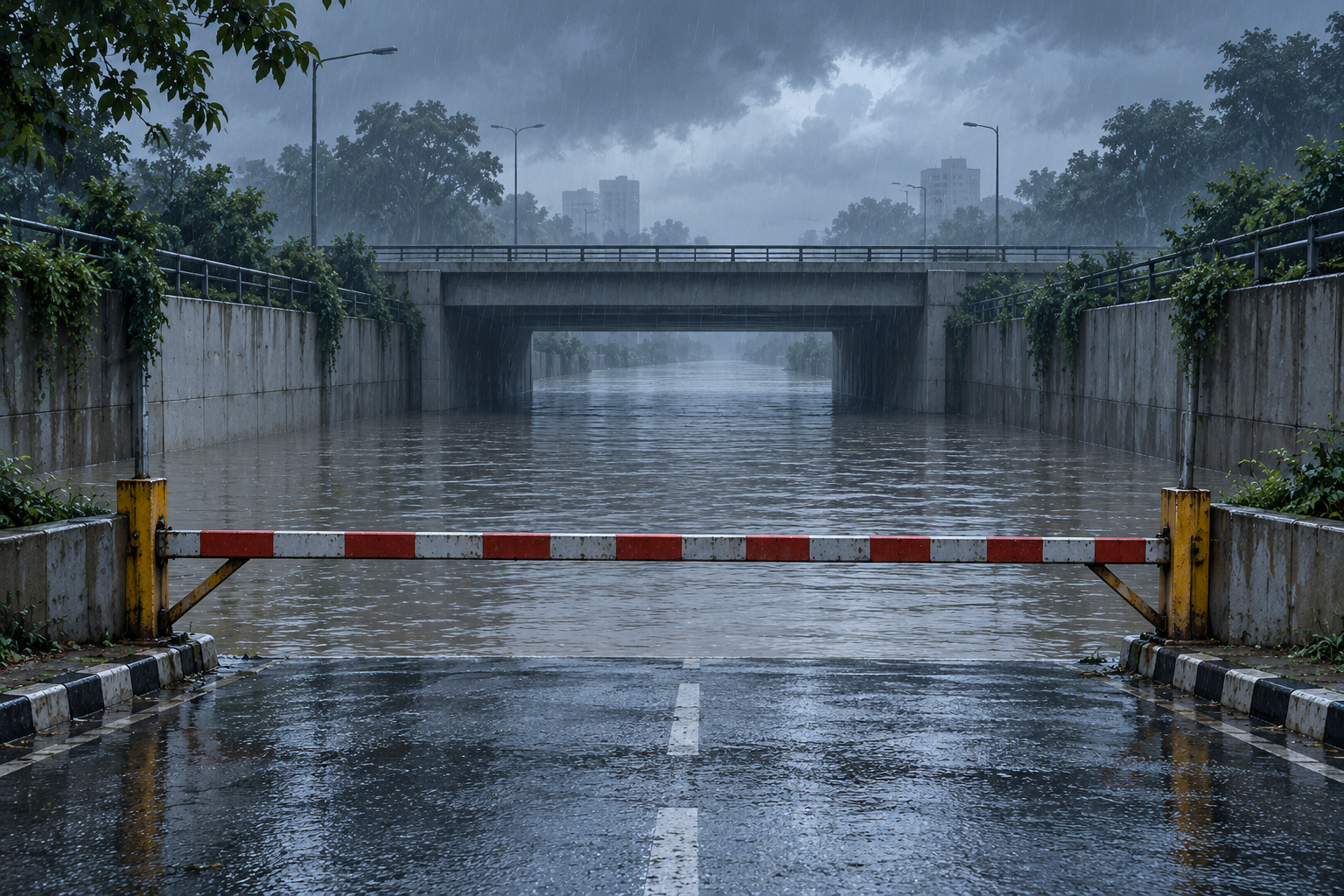
No. Floodwater can hide a strong current, potholes, debris, live wires and sewage. Knowing the road or driving a big vehicle does not make a flooded crossing safe.
When should I evacuate during a flood warning?
If an evacuation is ordered, leave by the advised route while it is still open. Do not wait to see whether a low-lying road stays passable. Keep watching local warnings and India's SACHET alert platform.
What should I do if someone is stuck in floodwater?
Call 112 and give the exact location. Do not go into the water and become another casualty. Help only from a safe spot, as far as you are able and as the responders tell you.
When is it safe to go back home after a flood?
Only when the authorities say so. The building, wiring, sewage and drinking water may still be unsafe, so follow local instructions on checking the house, cleaning up and using water.
Decide before the road disappears
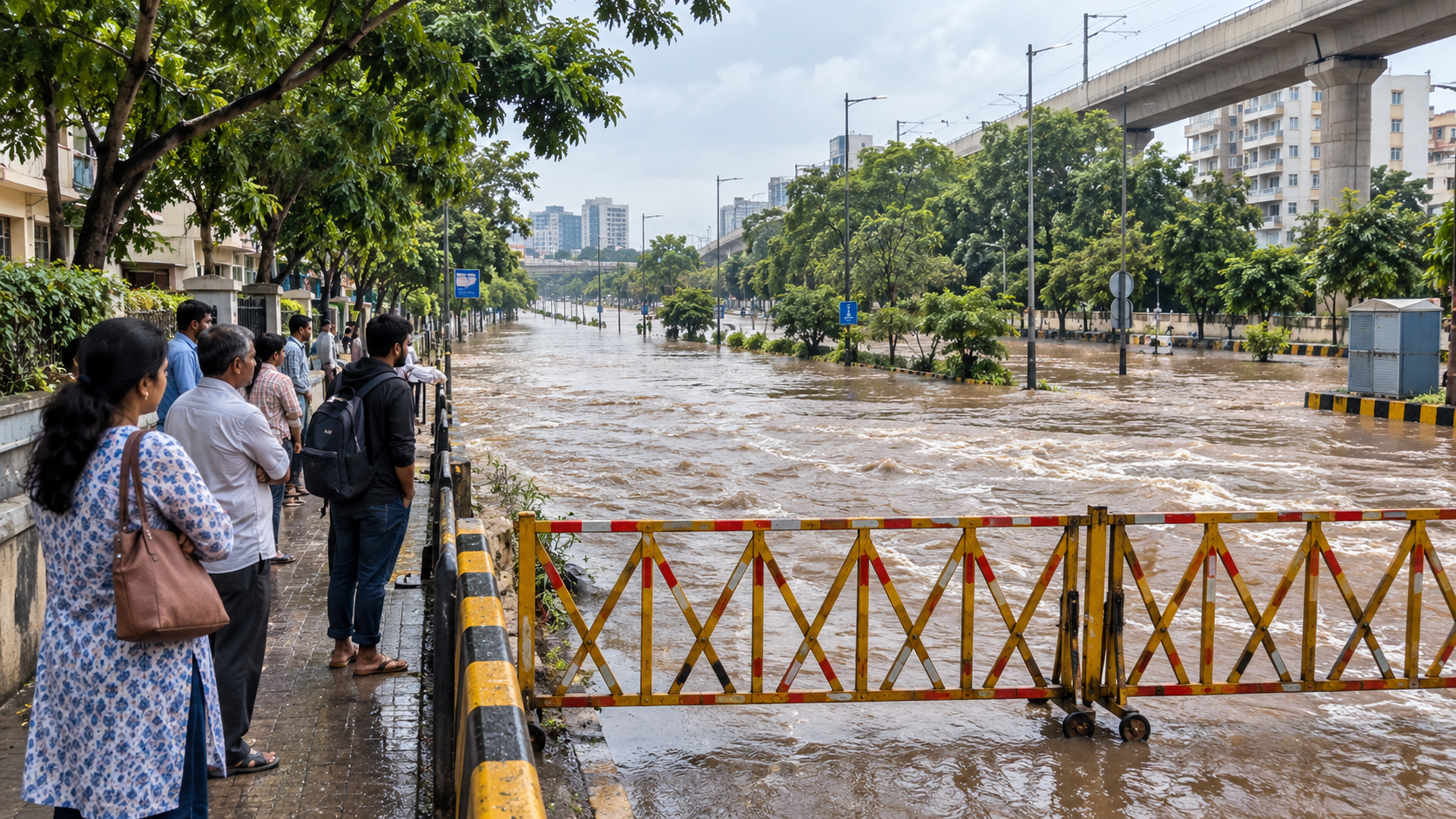
Floodwater can hide a fast current, potholes, debris, live wires and sewage. Knowing the road well, or driving a big vehicle, does not make a flooded crossing safe. Keep watching warnings from your local authority and India’s SACHET alert platform. If an evacuation is ordered, leave by the route you are told to use while it is still open. Do not wait to see whether the low-lying road stays passable.
Prepare a higher-ground route
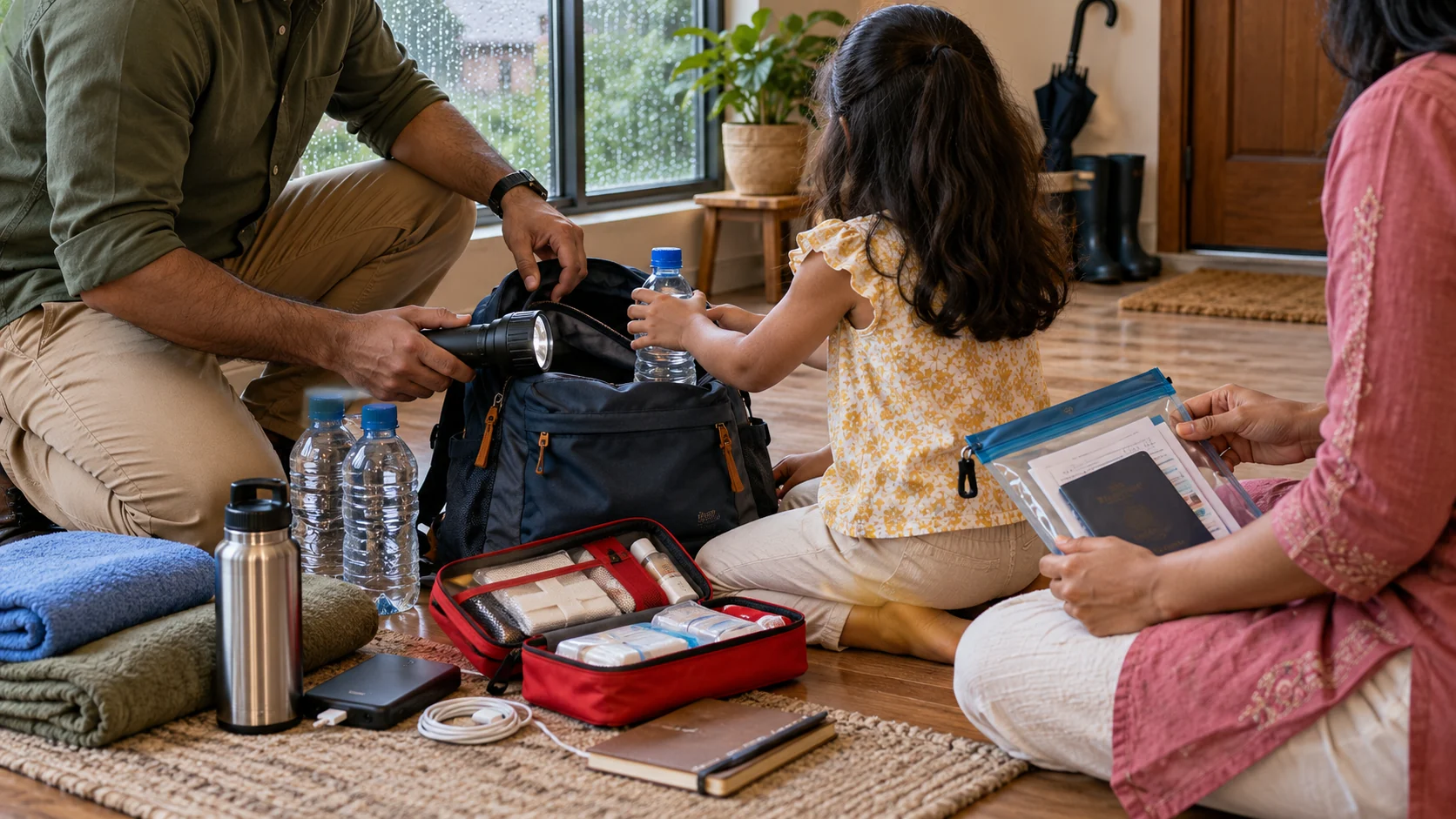
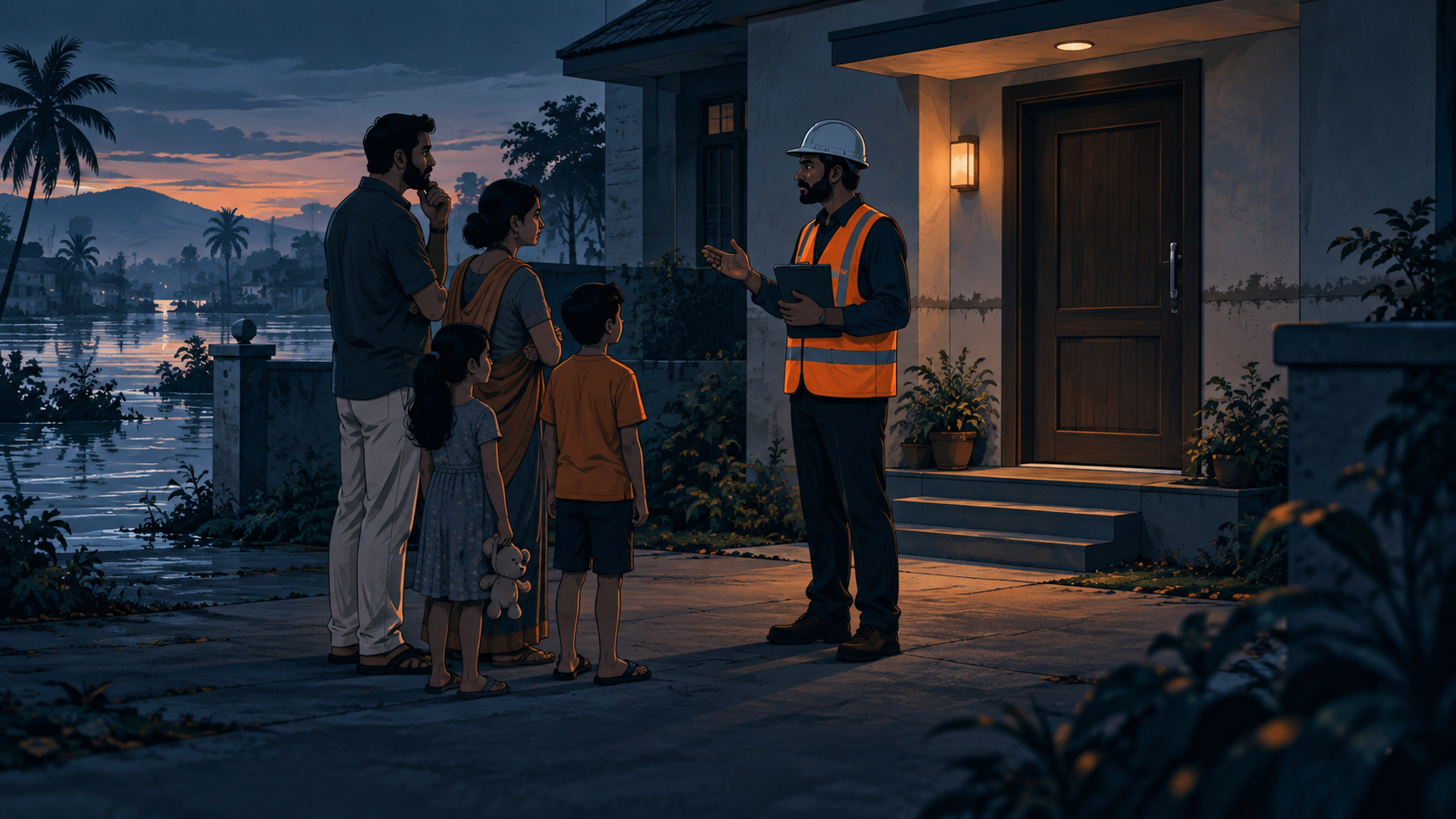
Know where you will go, a second way of getting there, and how you will help children, elderly family members and anyone who cannot move easily. Keep medicines, important documents, a charged phone and a family contact plan ready. A map, or an old social-media post, may not show today’s water level or whether a bridge is still open. Go by current official information, and do not drive or walk through floodwater.
During a flood
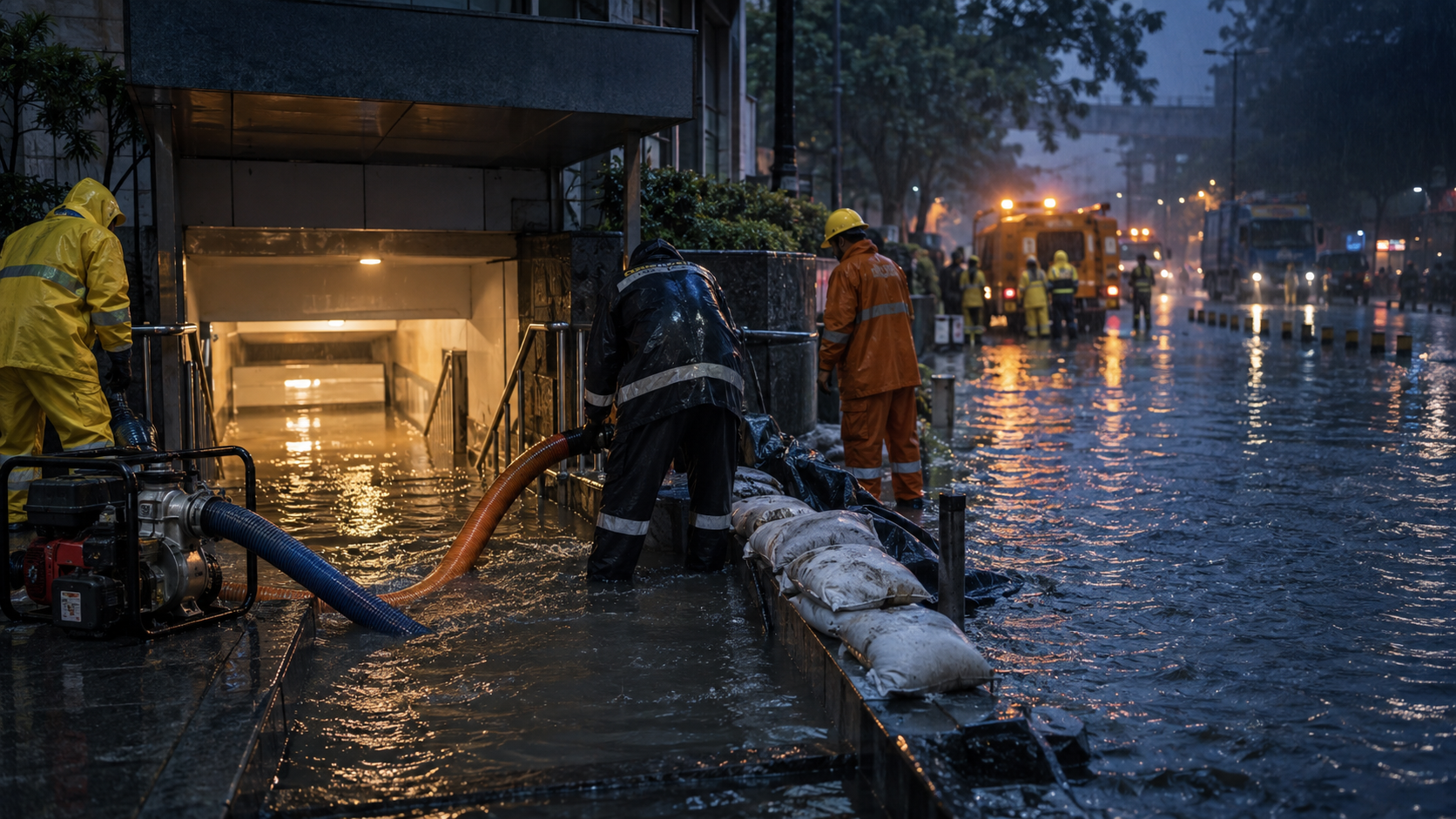
Move away from rising water and follow local instructions to evacuate or stay sheltered. Do not step into moving water or onto a flooded road, on foot or in a vehicle. Keep away from fallen wires and any electrical equipment standing in water. If someone is in the water, call 112 and give the exact location. Do not go in after them and become another casualty. Help from a safe spot, only as far as you are able and as the rescue team tells you.
After the water goes down
Go back only when the authorities say it is safe. The building may not be stable, the wiring may be unsafe, and sewage and drinking-water quality may still be a problem. Follow local instructions on checking the house, cleaning up and using water. This guide does not teach water rescue, and it does not say that any depth of moving water is safe to cross.
Cover note: AI-generated editorial illustration of a fictional flooded street; it is not a real incident photograph.
About the sources: SACHET carries Indian disaster alerts. US National Weather Service guidance backs the advice to stay off flooded crossings, but its US statistics are not Indian figures. MHA ERSS confirms 112.
What needs attention
- Depth, current, debris, live wires and dirty water cannot be judged reliably by eye. Being inside a vehicle does not protect you from floodwater.
Controls that reduce risk
- Know where official alerts come from, your route to higher ground, what medicines and documents to carry, and who in the family will need help to move.
Common unsafe practices
- Driving through floodwater.
- Going into the water to rescue someone without training.
- Relying on an old route map or post.
Leave a comment