What happened here
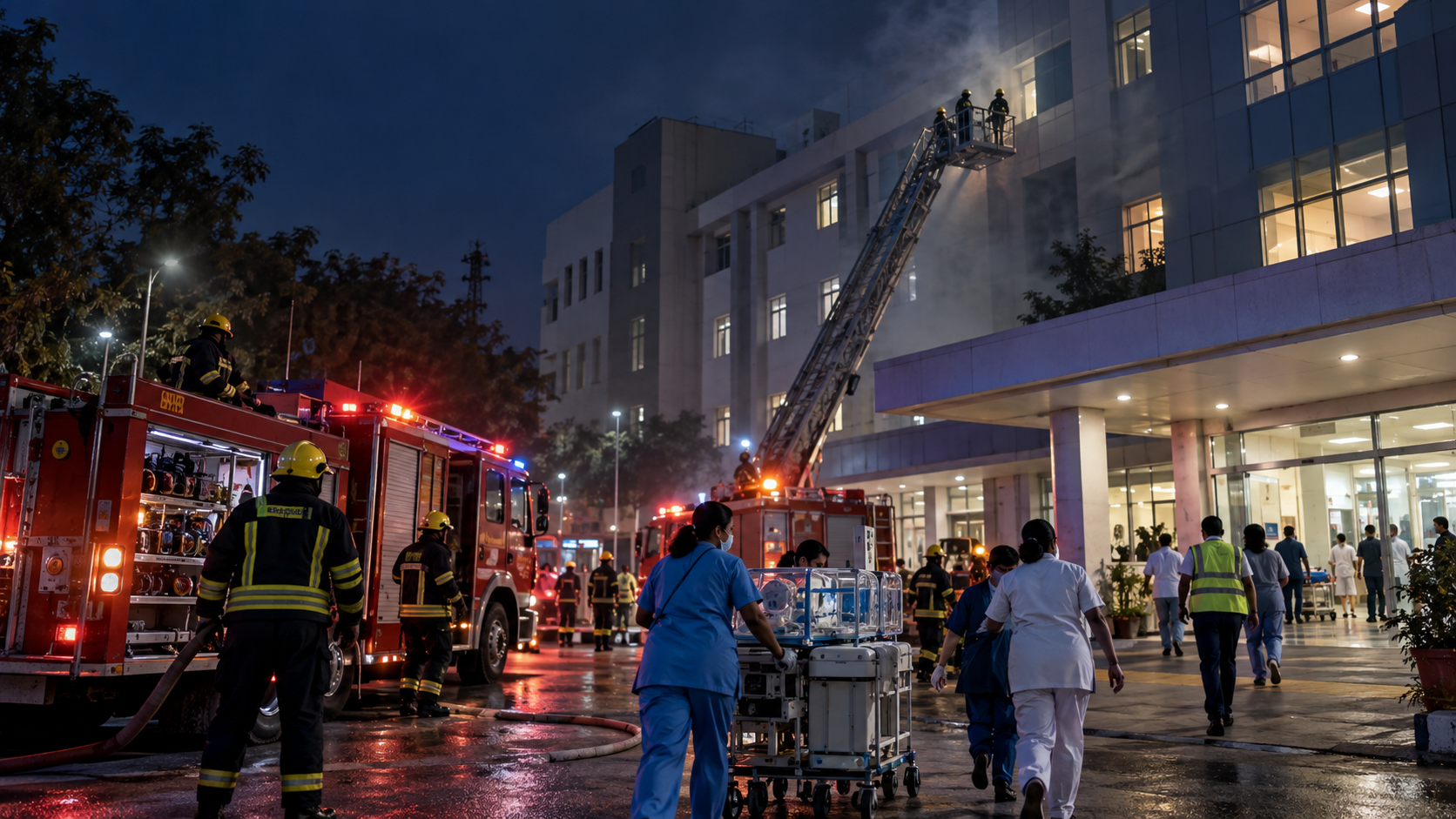
Fire and dense smoke affected the RIMS Adilabad newborn unit. Later reporting and the district collector's account put the death toll at five infants. Of 27 infants present, 13 had been discharged and nine remained under treatment in the 1 October account. The final technical cause has not been publicly confirmed in the sources reviewed.
Quick answers
What happened in the RIMS Adilabad newborn unit fire?
Late on 21 September 2026, fire and dense smoke affected the Special Newborn Care Unit at RIMS Adilabad, Telangana. Later reporting and the district collector's account put the death toll at five infants.
What caused the Adilabad hospital neonatal unit fire?
No final technical cause has been published. Reports discussing an air-conditioning or electrical fault remain provisional, and a six-member inquiry committee's findings were still awaited.
What should hospitals check to prevent fires in newborn care units?
Test fire detection and alarms, maintain electrical equipment and AC circuits, keep smoke separation and horizontal evacuation routes clear, and prepare neonatal evacuation kits with identification, thermal protection and respiratory support.
What should parents do if a fire breaks out in a hospital newborn ward?
Raise the alarm, call 112 or the hospital emergency number and follow trained staff and the hospital fire plan. Do not move a clinically dependent infant without staff unless immediate danger leaves no alternative, and do not use lifts unless the plan permits.
Fire at the newborn unit
Late on 21 September 2026, fire and dense smoke affected the Special Newborn Care Unit at the Rajiv Gandhi Institute of Medical Sciences (RIMS) in Adilabad, Telangana. Staff, relatives and responders moved infants from the affected area. Early reports differed on how many babies were present or evacuated and initially counted two, then three deaths. Those headlines are historical snapshots, not the current toll.
The death toll rose to five
On 23 September, The New Indian Express reported that two more infants died after the first three, bringing the total to five. The Times of India independently reported the revised toll. This is one incident with five reported deaths, not two separate sets of casualties.
Later accounting of the infants
According to district collector Rajarshi Shah, as reported by The New Indian Express on 1 October, 27 infants were present during the incident: five died, 13 had been discharged, eight were receiving treatment at hospitals in Hyderabad and one at RIMS. He said the eight in Hyderabad were stable at that time. These figures are a dated account of the same 27 infants, not a count of 27 additional rescues; their subsequent outcomes require fresh verification.
Inquiry and oversight
A six-member committee investigated the fire. Telangana Today reported on 29 September that its evidence-gathering had concluded. The report was sent to the government on 3 October; see the latest update below. The National Commission for Protection of Child Rights inspected the hospital on 30 September, according to The New Indian Express. The Telangana Human Rights Commission also sought a health-department report. No final public technical finding was located for this review. Reports discussing an air-conditioning or electrical fault remain provisional; neither a precise ignition sequence nor individual responsibility is established here.
What hospitals should check
Newborns cannot evacuate themselves. Hospital teams should test fire detection and alarms, electrical-equipment maintenance, smoke separation, clear horizontal evacuation routes, staffing roles, clinical handover, identification and continuity of respiratory and thermal support during transfers. These are general prevention and response priorities, not findings that a particular safeguard failed at RIMS. Families should follow trained staff and the hospital emergency plan; moving a critically dependent infant without clinical support can create another danger unless immediate fire or smoke leaves no safer option.
What remains unresolved
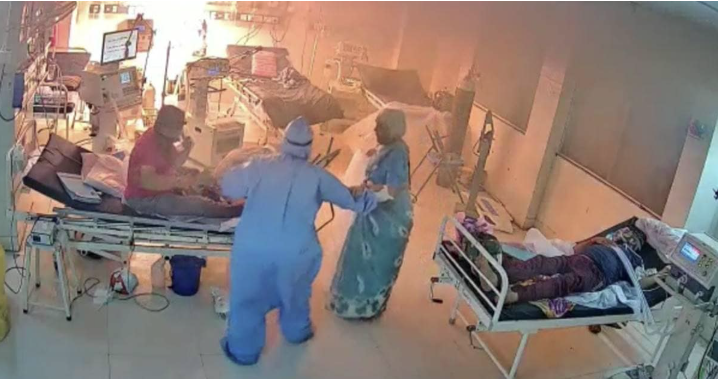
The final inquiry report, technical cause, performance of installed fire protection and later clinical outcomes were not independently verified by 1 October. Early reports using a two- or three-death figure are superseded by the later five-death account. The cover is an editorial illustration, not a photograph of this fire. The videos in Panel 2 depict other neonatal-unit fires or general fire-safety learning; none is presented as footage from Adilabad.
Latest update (16 October 2026)
District Collector Rajarshi Shah forwarded the six-member committee’s 50-page report to the state government on 3 October 2026. It has not been made public. Telangana Today, describing the report on 10 October, said it found rodent-damaged wiring causing a short circuit to be one major cause, along with faulty wiring, poor electrical maintenance, no dedicated AC technician and skipped quarterly inspections, and that it recommended transferring the director, superintendent and RMOs. This is one newspaper’s account, not an official release. Deccan Chronicle had earlier reported that the fire began in an air conditioner that had been malfunctioning for months.
On 23 September the Health Minister announced Rs 5 lakh ex gratia for each bereaved family and ordered electrical, fire and structural safety audits. The State Human Rights Commission has sought a detailed report and will hear the matter on 27 October 2026.
- Fire and dense smoke affected the RIMS Adilabad Special Newborn Care Unit; staff and others moved infants from the area. The precise ignition sequence remains unverified.
- Initial reports counted two and then three infant deaths and used differing patient/evacuation totals; these were preliminary snapshots.
- The New Indian Express and The Times of India reported that two further infants had died, bringing the reported total to five.
- A six-member government committee began its site investigation; hospital-safety checks were ordered or discussed.
- Telangana Today reported that the committee had completed evidence-gathering and was expected to submit a report; no final report was located for this update.
- National Commission for Protection of Child Rights representatives inspected the hospital and met staff and families.
- District collector Rajarshi Shah's account: 27 infants present; five died, 13 discharged, eight under treatment in Hyderabad and one at RIMS. The eight in Hyderabad were reported stable at that time.
- Health Minister announces Rs 5 lakh ex gratia per family and electrical, fire and structural safety audits; State Human Rights Commission seeks a report, hearing on 27 October (Siasat)
- Collector forwards the six-member committee's 50-page report to the government; contents confidential (Telangana Today)
- Telangana Today reports the committee found rodent-damaged wiring and poor electrical maintenance among the causes and recommended transferring senior officials (not officially released)
- Report not made public; no official cause announced
Why consequences escalated
- Dense smoke, not only flame, created an immediate threat to non-ambulatory neonatal patients.
- Evacuation depended on staff and family action because infants could not self-rescue.
- Transfers had to preserve oxygen, thermal support, identification and clinical accountability.
- The difference between an audit being completed and every defect being closed requires investigation.
- A suspected electrical cause should remain explicitly provisional until forensic findings are published.
Failures and risk multipliers
- Treating an annual fire certificate as proof that every system works today.
- Running high-load equipment without documented preventive maintenance and defect closure.
- Allowing corridors, doors or evacuation routes to become obstructed.
- Conducting drills that do not include neonatal transport, oxygen and patient identification.
- Repeating an early suspected cause as a confirmed technical finding.
Actions that reduce risk
- Inspect air-conditioning circuits, distribution boards, protective devices, cabling, earthing and thermal loading in critical-care areas.
- Test alarms, detection, fire doors, emergency lighting and communication on every shift pattern.
- Keep smoke compartments and horizontal evacuation routes usable at all times.
- Prepare neonatal evacuation kits with identification bands, transfer records, thermal protection and compatible respiratory support.
- Assign staff roles for alarm, clinical prioritisation, evacuation, receiving-area control and family communication.
- Track every fire-audit defect to named ownership, deadline, evidence of closure and independent re-test.
- Preserve CCTV, alarm logs, maintenance records and failed components for the inquiry.
Leave a comment