
What happened here
 1 / 3
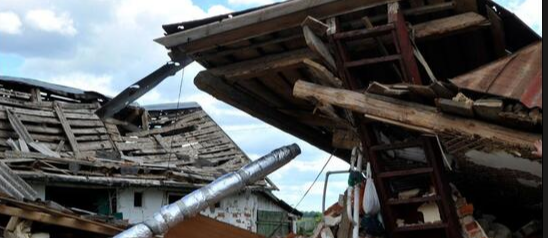
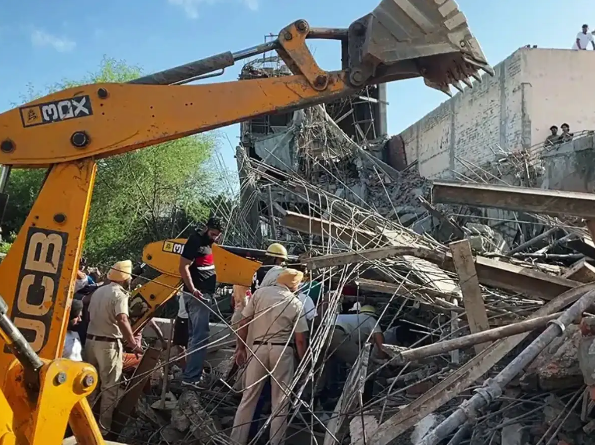
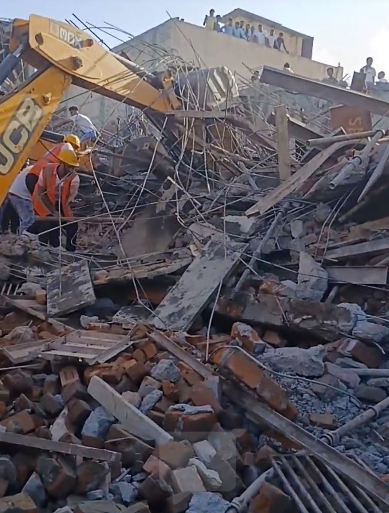
1 / 3 An unfinished building collapsed during concrete work. Six deaths and 12 injuries were reported by 28 September; the structural cause remains unproven.
Quick answers
What happened in the Ambala Dhulkot building collapse?
On the afternoon of 27 September 2026, an under-construction building collapsed at Dhulkot in Ambala, Haryana, while workers were doing concrete roof or slab work. By 28 September, six deaths and 12 injuries were reported.
What caused the Ambala under-construction building to collapse?
The cause is not established. Questions about construction quality, temporary support and approvals were raised, but no public engineering finding was found, and an FIR and special investigation team inquiry followed.
How can workers stay safe during slab or roof concrete pouring?
Ask who has approved the formwork and temporary supports, and report movement, cracking or unstable shores and leave the danger zone. Do not alter supports without competent approval.
What should I do if a building under construction collapses near me?
Move away from unstable structure and falling debris and warn others. Call 112 with the site access point, number of people believed trapped and hazards, and do not move heavy debris in an improvised rescue.
What happened at Dhulkot
On the afternoon of 27 September 2026, a building under construction collapsed at Dhulkot in Ambala, Haryana, while workers were engaged in concrete roof or slab work. Accounts differ on which level was being cast: The Tribune described a third-floor slab while another report described a first-floor slab. The consistent point is that workers were on or around an unfinished structure when part of it gave way. The exact failure sequence has not been established in the public record reviewed through 29 September.
The human toll and rescue
Early reports counted fewer deaths while rescue teams searched the debris. By 28 September, The Tribune and other reporting said six people had died. The Tribune’s later hospital account said 18 people were taken to Ambala Civil Hospital: six were brought dead and 12 were injured. Of the injured, three were still undergoing treatment and nine had been discharged as of the evening of 28 September. Those three are a subset of the 12, not an additional casualty group. Police said the search and rescue operation had ended early on 28 September. A later medical update may change the treatment figures.
Investigation, not a settled cause
Haryana minister Anil Vij directed a special investigation team inquiry, and an FIR was registered against the builder, owner and others. Later reporting said the team had been formed. News accounts and family members raised questions about construction quality, temporary support, work practices and approvals. These are matters for investigators and qualified engineers. An FIR or allegation is not a technical finding or proof of guilt. No public engineering report reviewed here conclusively identifies why the structure failed.
Questions that matter
Investigators should preserve drawings, formwork and shoring plans, inspection records, concrete-pour sequence, material records, photographs and worker accounts. They should establish where the loads were applied, how temporary supports were founded and braced, who approved the pour, and whether any supports had been changed. The answer cannot be inferred from video alone. Reporting also differs on one victim’s name, so this account does not publish a purported complete name list without a reconciled official record.
Lessons for a live construction site
Formwork and falsework are temporary structures, but they must safely carry fresh concrete, workers and equipment. Competent design, erection, inspection and control during pouring are essential. India’s Building and Other Construction Workers central rules address formwork, falsework and shoring. If supports move, tilt or crack, workers should leave the danger zone and alert the responsible supervisor or engineer. No one should re-enter or begin an improvised rescue beneath unstable debris. Call 112, give the exact access point and keep the area clear for trained responders.
What remains unknown
The exact collapse mechanism, the disputed slab level, any final enforcement or engineering findings, and later medical outcomes require further verified updates. The video reports below were made during the rescue; their references to an ongoing search are historical and should not be read as the current status.
- Building under construction collapsed during concrete work in Dhulkot
- Police, fire and disaster-response teams searched debris and transferred casualties
- Search and rescue reported concluded by police
- Death toll revised to six after additional recoveries
- Tribune hospital account: six brought dead; 12 injured, of whom three remained in treatment and nine were discharged
- FIR and special investigation team reported; technical cause still unresolved
Why consequences escalated
- The confirmed public toll in later reporting was six dead and 12 injured; earlier lower counts were incomplete rescue snapshots.
- Three people still in treatment were included in the 12 injured, not additional to them.
- Reports conflict on which floor was being cast and on one victim's name.
- Questions about temporary support, construction quality and approvals are allegations or investigation topics, not proven causes.
- No completed public engineering finding was found by 29 September.
Failures and risk multipliers
- Presenting an allegation about weak supports as the established cause.
- Combining early and later casualty figures as if they were separate groups.
- Re-entering unstable debris without trained rescue direction.
- Changing or stripping temporary supports without competent approval.
- Treating rescue-era video titles as a current status bulletin.
People closest to the evidence
“Six dead; hospital record of 12 injured, three in treatment and nine discharged; FIR and SIT direction”
The Tribune, reporting Ambala hospital and minister · 28 September 2026 · Source ↗
“Six deaths and investigation update”
Times of India · 29 September 2026 · Source ↗
Actions that reduce risk
- Publish any corrected official casualty and hospital status promptly.
- Preserve construction drawings, formwork and shoring designs, inspection logs and pour records.
- Have competent engineers determine the collapse mechanism before attributing blame.
- Review temporary-support inspection and stop-work procedures at active slab pours.
- Keep the damaged structure excluded until qualified authorities declare it safe.
Leave a comment