
What happened here
 1 / 4
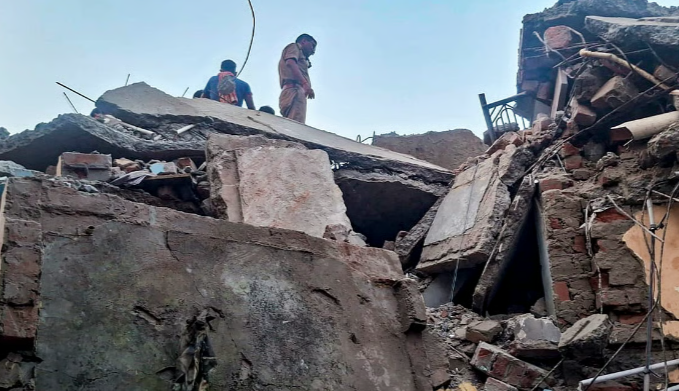
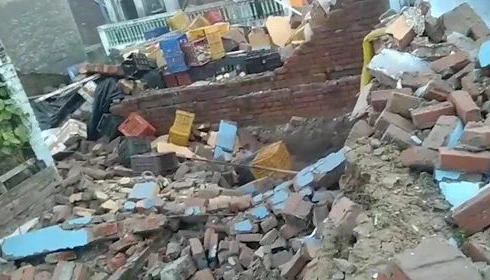
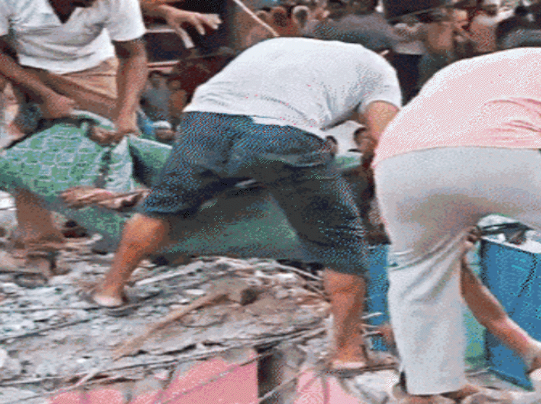
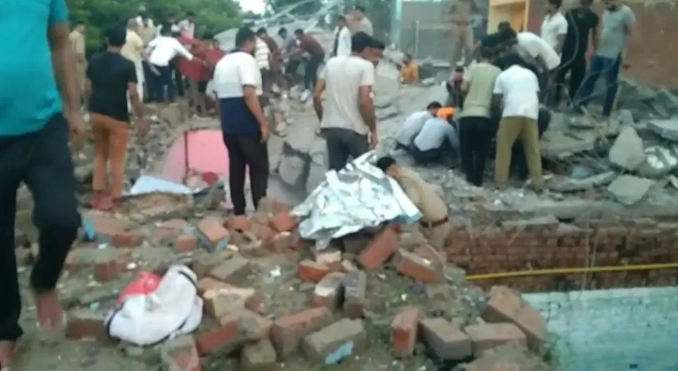
1 / 4 A blast collapsed a two-storey home. The later reported death toll was five. The cause and the latest condition of two surviving injured people remain unverified.
Quick answers
What happened in the Fatehpur Malwan house explosion?
On the evening of 28 September 2026, a powerful explosion brought down a two-storey home in Malwan town, Fatehpur district, Uttar Pradesh. Follow-up reports on 29 September put the death toll at five after an injured person died.
Was the Malwan house blast caused by an LPG cylinder?
Not confirmed. Early reports called it a cooking-gas cylinder explosion, but later reporting described an open forensic investigation, and a gas-agency team said it found no evidence of a burst cylinder.
Why does lane access matter in a house explosion or collapse?
Hindustan Times reported that a narrow lane prevented fire tenders from reaching the building directly. Knowing the nearest emergency-vehicle access point to a dense residential lane helps responders arrive.
What should I do after an explosion or building collapse nearby?
Move away from debris, unstable walls and suspected gas or utility hazards, and warn others without entering the collapse zone. Call 112 with the exact location and safest access route, and do not disturb load-bearing debris.
What happened in Malwan
On the evening of 28 September 2026, a powerful explosion brought down a two-storey home in Malwan town, Fatehpur district, Uttar Pradesh. Neighbouring property was also damaged. Police, firefighters, disaster-response personnel and local residents worked at the scene. Early news reports called this a cooking-gas cylinder explosion, but subsequent reporting described an open forensic investigation and disputed whether a cylinder had burst. The origin and mechanism must therefore remain unconfirmed here.
How the reported toll changed
Early 28 September reports counted four deaths and three injuries, with one injured person critically ill. On 29 September, UNI and other follow-up reporting said that person had died, raising the cumulative reported death toll to five. ABP described two surviving injured people still receiving care at its 29 September update. Their later medical outcomes were not located in the sources reviewed through 1 October. The four and five are successive snapshots, not separate groups. Reports conflict over victims’ exact ages and how many were children, so this article does not publish an unreconciled demographic breakdown.
Rescue and access
Responders searched the debris and transported injured people for care. Hindustan Times reported that a narrow lane prevented fire tenders from reaching the building directly. That account illustrates why street and lane access matters, but a precise delay or a quantified effect on survival cannot be established from the reviewed reports. People nearby should keep a route open, give responders a clear landmark and avoid standing in unstable debris or near damaged adjoining structures.
What investigators still need to establish
The 29 September Times of India follow-up described police, fire and forensic teams collecting and examining evidence. Jagran later reported a gas-agency team’s statement that it had found no evidence of a burst cylinder; other possibilities appeared in reporting as hypotheses. A hypothesis, an early police account and a completed technical finding are different things. This article assigns no LPG, firework, carbide, battery or other specific cause. Investigators need the scene evidence and a reconciled official report before such a conclusion is published.
Practical response if a building explodes or collapses
Move away from debris, unstable walls, shattered glass, exposed electrical equipment and any suspected gas or chemical hazard. Warn others without entering the collapse zone. Call India’s emergency number 112 and give the exact lane entrance, nearest landmark, hazards and number of people believed trapped if known. Do not light a flame, operate a switch near a suspected gas leak, disturb supports or move heavy rubble in an improvised rescue. Follow dispatcher and trained responder instructions. These are general protective actions, not evidence of what caused this blast.
What needs an update
The final cause, the official reconciled victim record, any later health outcome for the two surviving injured people, the full property-damage assessment and any inquiry findings were not established in sources reviewed through 1 October 2026. Video reports below were published during the news cycle; their headlines and narration may contain early casualty or cause claims that this article does not adopt.
Latest update (16 October 2026)
Police later narrowed their preliminary view. SP Abhimanyu Mangalik said more than 50 statements had been recorded and that post-mortems found four deaths from severe burns and one from being trapped under debris, with no gunpowder confirmed. The debris search turned up ruptured solar batteries, about 1 kg of carbide and firework wrappers.
On 2 October the SP said statements suggested children had been playing with fireworks and a spark may have reached acetylene gas formed from carbide stored to ripen fruit. Police estimated that more than 100 kg of carbide had been kept in the house. This is a preliminary police view, not a forensic finding, and no forensic report had been published by 16 October 2026.
Calcium carbide gives off acetylene, a highly flammable gas, when it gets damp. Storing it in bulk at home, near cooking gas or fireworks, is dangerous.
- Explosion and two-storey house collapse reported in Malwan
- Four deaths and three injuries reported; one injured person critical
- Critically injured person reported to have died, bringing cumulative reported deaths to five
- ABP reported two surviving injured people under medical care at that publication time
- Police, fire and forensic examination continued; cause remained disputed
- No later authoritative medical outcome or final cause located
- SP says more than 50 statements recorded; post-mortems show four deaths from burns and one under debris, no gunpowder confirmed (Amar Ujala)
- Debris search finds ruptured solar batteries, about 1 kg of carbide and firework wrappers (Amar Ujala)
- SP says children were playing with fireworks and a spark likely reached acetylene from over 100 kg of stored carbide; house owner discharged from hospital (Amar Ujala)
- Police say carbide is the main suspected cause; debris removal continues (Dynamite News)
- No forensic report or official finding published
Why consequences escalated
- Later reporting revised the cumulative death count from four to five after a hospital death.
- The two injured survivors described by ABP were a dated treatment snapshot, not a current hospital census.
- Early LPG-cylinder descriptions and later disputed physical-evidence accounts cannot be reconciled into a confirmed cause.
- Reports differ on victim ages and child/adult classification; a complete demographic list is withheld.
- The narrow-lane access issue is reported, but its exact delay and effect on outcomes are unproven.
Failures and risk multipliers
- Treating the first four-death count as final.
- Calling an LPG cylinder the proven cause before forensic findings.
- Adding four early deaths to five later deaths as if they were separate groups.
- Treating historical video narration or treatment status as a current update.
- Entering unstable debris or blocking emergency access.
People closest to the evidence
“Five deaths and forensic inquiry”
Times of India · 29 September 2026 · Source ↗
“Delayed death brought count to five”
UNI · 29 September 2026 · Source ↗
“Gas-agency investigators disputed a burst-cylinder explanation”
Dainik Jagran · 29–30 September 2026 · Source ↗
Actions that reduce risk
- Publish a corrected official casualty and injury-status update if obtained.
- Wait for a documented forensic conclusion before naming a cause.
- Preserve scene evidence and avoid speculative reconstruction from video.
- Review emergency vehicle access to narrow residential lanes.
- Keep unsafe structures excluded until competent authorities clear them.

Leave a comment