
Quick answers
What happened at the Kanpur Dussehra fair on 20 October 2026?
A balloon seller’s gas cylinder burst at the Ramlila ground fair at Dhariupurwa, Naubasta, at about 11.15 pm before the Ravan dahan. Four to six people were hurt, including a two-year-old girl; the seller was reported serious. The cause is not established.
Which gas was in the Kanpur cylinder?
No report we read names it. Some call it a carbide cylinder and some a balloon gas cylinder. Police, forensic and fire teams are examining it.
Is helium safe in balloons?
Helium does not burn, but the ILO and WHO safety card warns that heating raises the pressure of a cylinder with a risk of bursting. Hydrogen is extremely flammable and explosive with air. A balloon that floats is not proof of a safe gas.
Which Indian cases involved balloon-gas cylinders?
Mysuru Palace on 25 December 2025 (three dead), a village fair at Jaynagar, West Bengal on 12 February 2023 (four dead) and Malegaon on 26 January 2026 (five hurt). Reports disagree on the gas in each.
Is there a rule on what gas a balloon seller may use?
We found no PESO notice that says so, and after Mysuru the Home Minister said small vendors are not controlled. Ask the police or the organiser which order applies.
What should organisers do about balloon sellers?
Written police permission for each vendor, a separate zone at the edge of the fair away from exits, the effigy, fireworks and flames, no refilling or gas making inside, and an extinguisher, first-aid kit and free ambulance route nearby. These are our suggestions, not a quoted rule.
What should I do if a cylinder bursts near me?
Move away from the blast and the crowd, keep children by the hand, call 112 (108 ambulance, 101 fire), do not touch the cylinder, cool burns under running water for 20 minutes and rinse eyes with clean water.
Are carbide guns dangerous?
Yes. AIIMS Delhi reported 18 to 20 carbide-gun eye injuries among 190 Diwali firecracker eye injuries in 2025, and Madhya Pradesh districts banned them after many children were hurt.
On the night of Tuesday 20 October 2026, a few minutes before the Ravan dahan at a Dussehra fair in Kanpur, a gas cylinder that a balloon seller used to fill his balloons burst in the middle of a crowd of thousands. Four to six people were hurt, among them a two-year-old girl, and the seller was reported seriously injured. The cause is not established. It is not the first time. In the last three years balloon-gas cylinders have burst at a village fair in West Bengal, at the gate of the Mysuru Palace and near a Republic Day ceremony in Malegaon, and each time the people standing around the seller paid the price. This page tells you what we know about the Kanpur blast, what the earlier cases show, what the official chemical data says about the gases involved, and what a visitor, a parent and a fair organiser can do. For the rest of the Dussehra week, see our page on the fairs, Ravan dahan and immersion incidents of 19 to 21 October. Last checked: 22 October 2026, around 3 pm IST. Some details are still moving.
In short
- Kanpur, 20 October: a balloon seller’s cylinder burst at the Ramlila ground fair at Dhariupurwa, Naubasta, at about 11.15 pm (DCP South, as reported by ETV Bharat and India TV; Aaj Tak says about 11.30 pm). Four (DCP, Aaj Tak) to six (India TV, Punjab Kesari) injured, including a two-year-old girl. The seller was reported serious and referred to Hallet Hospital. The cause is not established, and we found no report of an FIR.
- Mysuru, 25 December 2025: a balloon cylinder blast at the Palace gate killed three people. Police later said it did not hold helium.
- Jaynagar, South 24 Parganas, 12 February 2023: four dead and about ten hurt at a village fair. Reports disagree on the gas.
- Malegaon, 26 January 2026: five hurt near a Republic Day ceremony. Reports disagree on whether the gas was nitrogen or helium.
- Hydrogen is explosive with air. Helium does not burn, but the official chemical card warns that heating a cylinder can make it burst. So “it is helium” is not a guarantee that a cylinder is safe.
Kanpur, 20 October 2026: what the reports say
The fair was on the Ramlila ground at Dhariupurwa in the Naubasta police station area. According to ETV Bharat and India TV, DCP (South) Dipendra Nath Chaudhary put the time at about 11.15 pm; Aaj Tak and Punjab Kesari say late Tuesday night, and Aaj Tak gives about 11.30. Four to six people were hurt, including a two-year-old girl and her father, and the people around ran in panic. Aaj Tak and Punjab Kesari describe CCTV footage of smoke and people running, and Aaj Tak says the situation could have turned into a larger stampede. The DCP said the injured, including the girl, were under treatment and out of danger. The seller was thrown by the blast; Aaj Tak and India TV call him seriously hurt and say he was first taken to a local hospital and then referred to LLR (Hallet) Hospital. We have no later update on him.
Reports differ on the details. India TV calls it a carbide cylinder used to generate gas for balloons, and says the seller had placed it inside the divider; ETV Bharat calls it a balloon gas cylinder and reports that police found it hidden in the soil of a road divider, with an early assessment that heat caused the blast; Aaj Tak and Punjab Kesari say only that a balloon cylinder exploded. No report we read names the gas, and the cause is not established. Forensic and fire department teams reached the spot. We found no report of an FIR or an arrest, and no report of any permission given to the seller.
Three earlier cases, and what they show
Mysuru Palace, 25 December 2025. At about 8.30 pm on Christmas night, a cylinder blew up near the Jayamarthanda Gate while a balloon seller was filling balloons, among the crowd that had come for the palace’s flower show (ETV Bharat, Outlook). The seller died on the spot. Two women died in hospital, which brought the toll to three (ETV Bharat, News Karnataka). Early reports said helium. Later, as reported by ETV Bharat and News Karnataka, police said the cylinder did not contain helium, and the district in-charge minister said the seller had made the gas himself by mixing caustic soda (sodium hydroxide) with water; officials said that gives hydrogen. That is the minister’s and police’s statement, and we found no published laboratory report. ETV Bharat reported that the Home Minister said there was no control over those selling small items and asked where the vendor got the cylinder.
Jaynagar, South 24 Parganas, 12 February 2023. At about 9.30 pm a balloon seller’s cylinder burst at a fair in Batra village. Four people died, among them the seller and two children, and about ten were hurt, four of them critical (ETV Bharat, LatestLY). The names and ages in the two reports differ, so we leave them out. LatestLY says helium; ETV Bharat does not name the gas; police said the cause was unclear. We have not found a published finding.
Malegaon, Maharashtra, 26 January 2026. At about 9.15 am on Republic Day, a cylinder burst while a balloon seller was filling balloons a few hundred metres from the flag-hoisting venue, with people gathered to buy (Amar Ujala, NavBharat Live). Amar Ujala’s headline says seven hurt while both texts name five; two were reported critical. Both say nitrogen; another report we saw says helium. Preliminary accounts point to a technical fault or too much pressure, and police were looking into whether safety rules were broken.
One older case, single source: in February 2018, a 60-year-old balloon seller was killed and eight people, seven of them children, were hurt when the cylinder he carried on his moped burst at a village fair near Chheharta, Amritsar (Hindustan Times). We found no second report.
What these cases share: the seller was at the edge of a crowd or in the middle of it, children were close, the gas was unclear or disputed in the reports, and none of the reports we read shows a permission. Kanpur and Jaynagar were fairs. The cause was not settled in any of them. The Kanpur cause is also not established, and we do not assume it matches the others.
Which gas is safe in a balloon?
The International Chemical Safety Cards, prepared for the ILO and WHO, say this. Hydrogen is extremely flammable, its mixtures with air are explosive, and a cylinder of it may explode if heated. The card says no open flames and no sparks, and not to handle cylinders with oily hands. Helium is not combustible and is lighter than air, so it is the lifting gas that does not burn; but its card also says heating will raise the pressure with a risk of bursting, and that on loss of containment it can lower the oxygen in a closed space. Acetylene, the gas that calcium carbide gives off on contact with water, is extremely flammable too; the calcium carbide card says the solid forms a flammable gas on contact with water or damp air.
So the simple rule for a buyer is: a balloon that floats is not proof of a safe gas, because hydrogen floats too. In Mumbai on 2 February 2026, a bunch of hydrogen-filled balloons burst into a fireball inside a lift in Goregaon and three people were burnt (Aaj Tak). Do not take gas balloons into a lift, a car or a closed room.
What is the law? What we could and could not verify
PESO, the Petroleum and Explosives Safety Organisation, lists the Gas Cylinders Rules, 2016, the Calcium Carbide Rules, 1987 and the Static and Mobile Pressure Vessels (Unfired) Rules, 2016 on its website, including a 2024 amendment to the Gas Cylinders Rules that is marked as covering hydrogen. We did not find a PESO notice that says what gas a balloon seller may use or who may fill the cylinder, so we do not state one. What the reports say is thinner: after Mysuru, the Home Minister said small vendors are not controlled. A fair needs the police’s and the local authority’s permission, and what is allowed there is for them to decide, so ask the organiser or the police station which order applies. If you are an organiser, make the permission for each vendor written, and ask for it to name the gas.
How to spot a dangerous vendor
These are our suggestions, built from the official chemical data above and from the cases; they are not quoted from a rule.
- Gas in a cylinder with no marking, or made on the spot from powder, a bucket or a pipe. In Mysuru the seller is reported to have made his own gas.
- A cylinder lying on its side, loose, tied to a cycle or moped, or hidden in the soil, a divider or a bag.
- A stall right in the crowd, next to the exit, the effigy, the crackers, a food stall or a flame.
- Nobody can say what gas it is, or the answer changes.
- A hissing, leaking valve, or a cylinder left in the sun.
- Children are made to stand close while the balloon is filled.
If you see this, do not buy; walk away and tell the organiser or the police.
What organisers must do
We could not verify any rule that sets the distance for a balloon vendor. What we can say is what the official crowd guide and the chemical data support. The NDMA’s 2014 guide on managing crowds asks, among much else, for only authorised vendors, fire extinguishers, first-aid kits, fire and electrical checks and clear emergency routes, and it lists fireworks sold or used in the wrong place among the fire-related causes of crowd disasters. On top of that, our suggestion for organisers is:
- Give the vendor a written permission from the police, and keep a list of vendors who use gas.
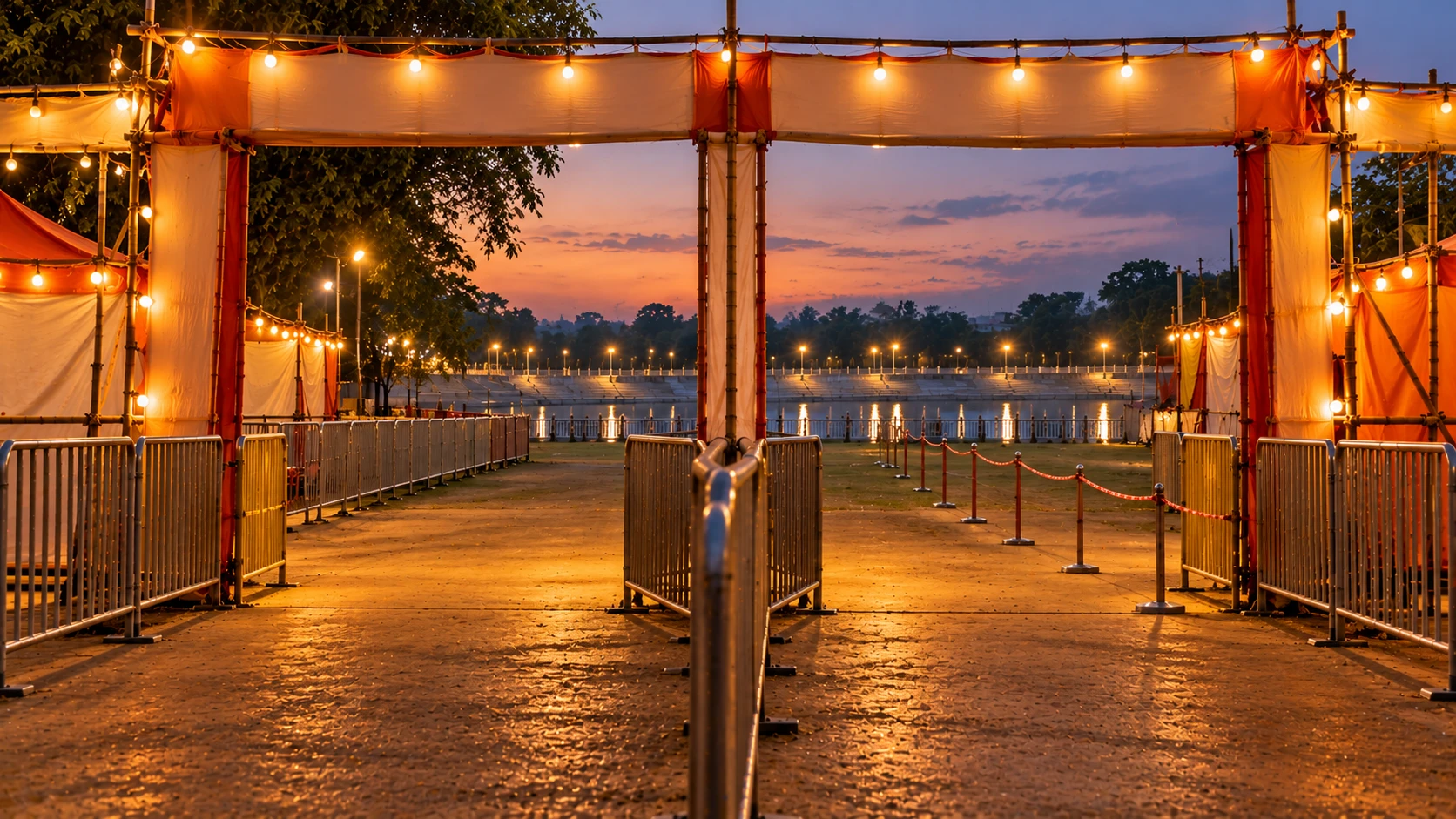
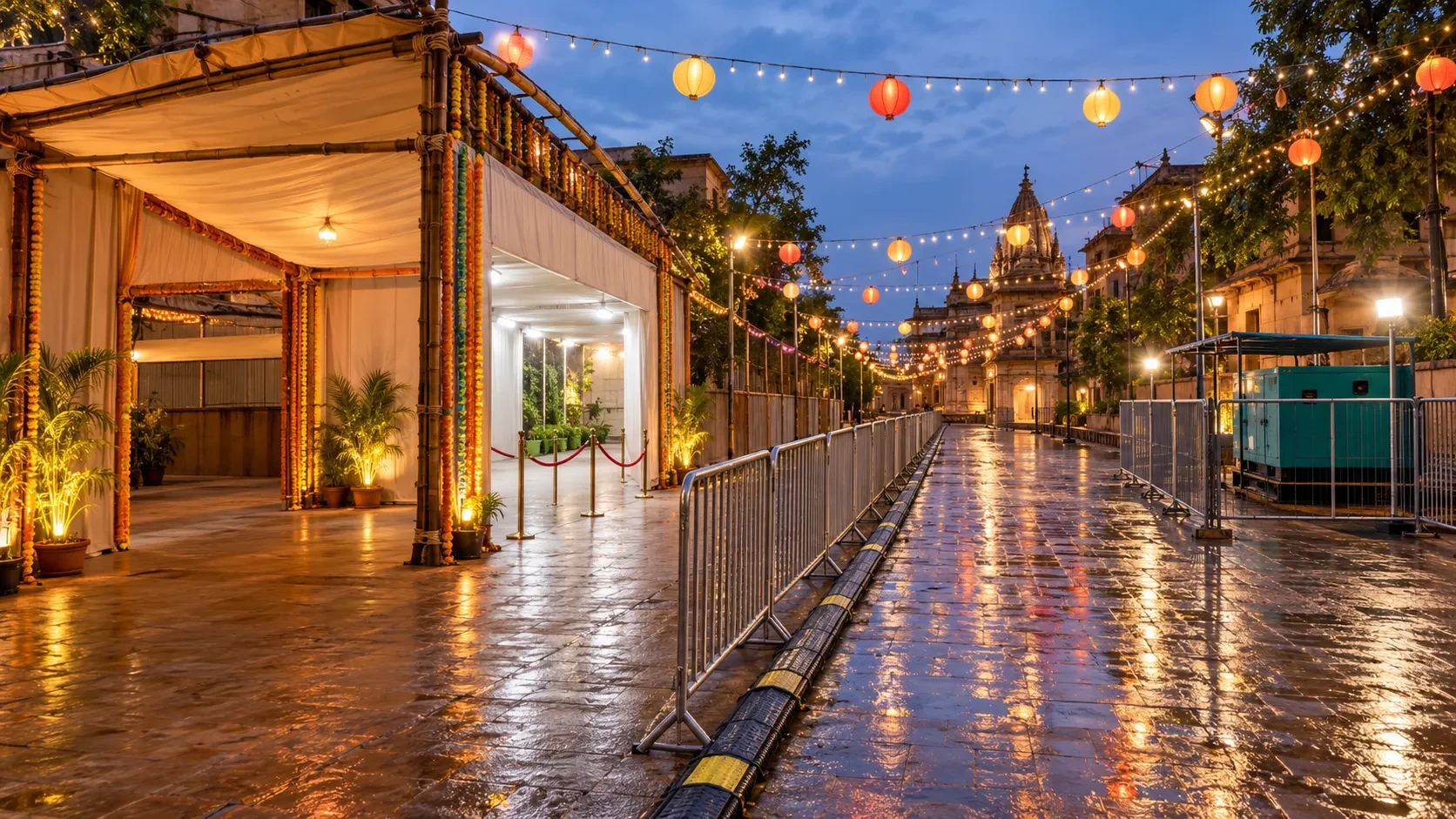
- Put gas-balloon sellers in a separate zone at the edge of the fair, away from the pandal, the effigy, the exits, fireworks, food stalls and any flame.
- Ask to see the cylinder and its marking, and the gas it holds. If it is unclear, do not allow it in.
- No refilling and no gas making inside the fair.
- One person to watch the gas zone, a fire extinguisher close by, a bucket of sand or water, a first-aid kit, and an ambulance with a route that stays free.
- Keep cylinders upright and tied, in shade, and never in a vehicle with a crowd around.
If a cylinder bursts near you
- Move away from the blast and from the crowd’s rush at once; do not stop to film. Do not run back to look.
- Keep children by the hand and carry the smallest. Go to the side and not into the main gate crush; our crowd-crush guide has the steps.
- Call 112, the national emergency number, 108 for an ambulance and 101 for the fire brigade. Say the name of the fair, the gate and a landmark. Numbers can vary by state or service, so keep the local police and ambulance numbers too.
- Do not touch the fallen cylinder or what lies around it: some of it may be hot, and a second burst is possible.
- For a burn: the NHS says hold the burn under cool running water for 20 minutes, as soon as possible and within three hours, and get urgent help for a burn that is large, deep, on the face, or caused by chemicals or electricity. A child under five with a burn needs advice. No ice, toothpaste or butter.
- For an eye injury, do not rub; rinse with clean water and go to a hospital eye department. See our Diwali firecracker safety and first-aid guide and basic first aid guide.
Carbide guns and “cannons” at festivals
A different carbide hazard has shown up at festivals: homemade carbide guns, a pipe with calcium carbide and water. AIIMS Delhi reported on 29 October 2025 that of 190 firecracker and carbide-gun eye injuries it saw in the Diwali period, 18 to 20 were from carbide guns; its doctors said these devices, often assembled at home, produce acetylene on reacting with water, and the blasts caused permanent damage to the surface of the eye in some patients (IANS). In Madhya Pradesh, PTI via Scroll reported more than 60 people, most of them children aged 8 to 14, hospitalised in Bhopal, and ETV Bharat reported nearly 300 hurt in the state with 186 in Bhopal. The figures differ because they come from different dates and sources; we give both. Bhopal, Gwalior and Indore banned the sale, purchase and storage of carbide pipe guns (ETV Bharat). We did not find a verified report of a carbide gun injury at a Dussehra fair this year.
- Do not buy, make or use a carbide gun or a pipe cannon. Keep children away from anyone who does.
- A person hit in the eye: do not rub it; rinse with clean water and go to an eye hospital immediately.
For parents
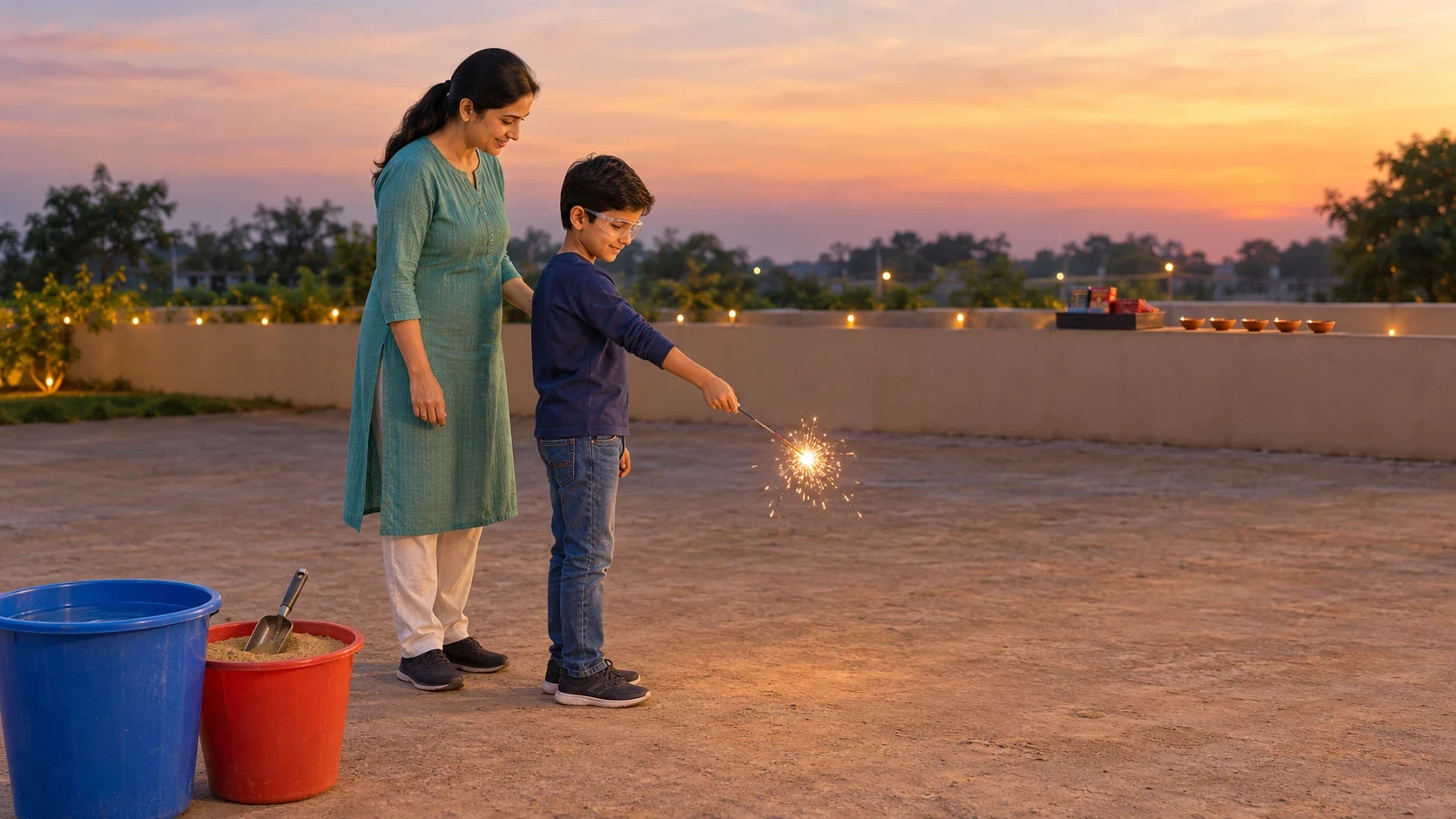
- Buy a balloon only from a stall at the edge of the fair, and stand back while it is filled.
- Do not hold a bunch of gas balloons near a flame, a diya, a cracker or in a lift.
- Teach children to walk away from a hissing cylinder and tell an adult.
What is still not known
- What gas was in the Kanpur cylinder, why it burst, and whether the seller had permission. No report names the gas.
- The final injured count in Kanpur and the seller’s condition.
- Whether any FIR has been filed in Kanpur.
- Whether a laboratory report on the Mysuru cylinder has been published.
- The gas in the Jaynagar and Malegaon cylinders: reports differ.
We will update this page when the picture changes. Last checked: 22 October 2026, around 3 pm IST. Related: Pandals, melas and festival crowds, the Chorbagan pandal crush in Kolkata, the Giridih LPG cylinder blast and the Khekra market shop fire.
What needs attention
- In each of the four Indian cases here the cylinder burst in or beside a crowd that had gathered for something else: a fair, a palace flower show, a flag-hoisting.
- The gas was unclear or disputed in every case we read, including Kanpur. Early reports said helium at Mysuru; police later said it was not.
- Hydrogen is explosive with air and floats like helium, so a balloon that floats is not proof of a safe gas.
- A helium cylinder is not risk-free: the ILO and WHO card says heating raises pressure with a risk of bursting.
- We found no published rule that says in plain words what gas a fair balloon seller may use. After Mysuru the Home Minister said small vendors are not controlled.
- Homemade carbide guns also cause serious eye injuries at festivals (AIIMS Delhi, Bhopal).
Controls that reduce risk
- Visitor: buy a balloon only from a stall at the edge of the fair and stand back while it is filled.
- Parent: keep children by the hand, away from cylinders, flames and crackers.
- Organiser: written police permission for each vendor, a separate gas zone at the edge, away from exits, the effigy and fireworks; no refilling or gas making inside the fair.
- Organiser: an extinguisher, first-aid kit and a free ambulance route next to the gas zone, and one person watching it.
- After a blast: move away, call 112 (108 ambulance, 101 fire), cool burns for 20 minutes, rinse eyes and go to hospital.
- Do not buy, make or use a carbide gun.
Common unsafe practices
- Placing a gas-balloon seller in the dense part of a fair or by an exit, effigy or fireworks.
- Allowing an unmarked cylinder, or gas made on the spot, into a fair.
- Keeping a cylinder loose, lying down, on a cycle or hidden in the soil or a divider.
- Letting children stand close while a balloon is filled.
- Taking gas balloons into a lift or a closed vehicle.
- Rubbing an injured eye or putting ice, toothpaste or butter on a burn.
- Stopping to film a blast instead of moving away.
Leave a comment