
Quick answers
What happened in Las Choapas, Veracruz?
Reports say six members of one family died early on 19 October 2026 after a generator was run during a cold-front power cut. Carbon monoxide poisoning is the preliminary finding and no necropsy result had been reported.
Why do the Veracruz death tolls differ?
The state government reported 10, then 11, deaths, while federal civil protection reported 4. The governor said only 5 were directly attributable to the weather. The reports do not explain how each count was made.
Why is carbon monoxide so dangerous?
It has no colour or smell, so you cannot sense it, and sleeping people may die before any symptom (CDC).
Where should I keep a generator?
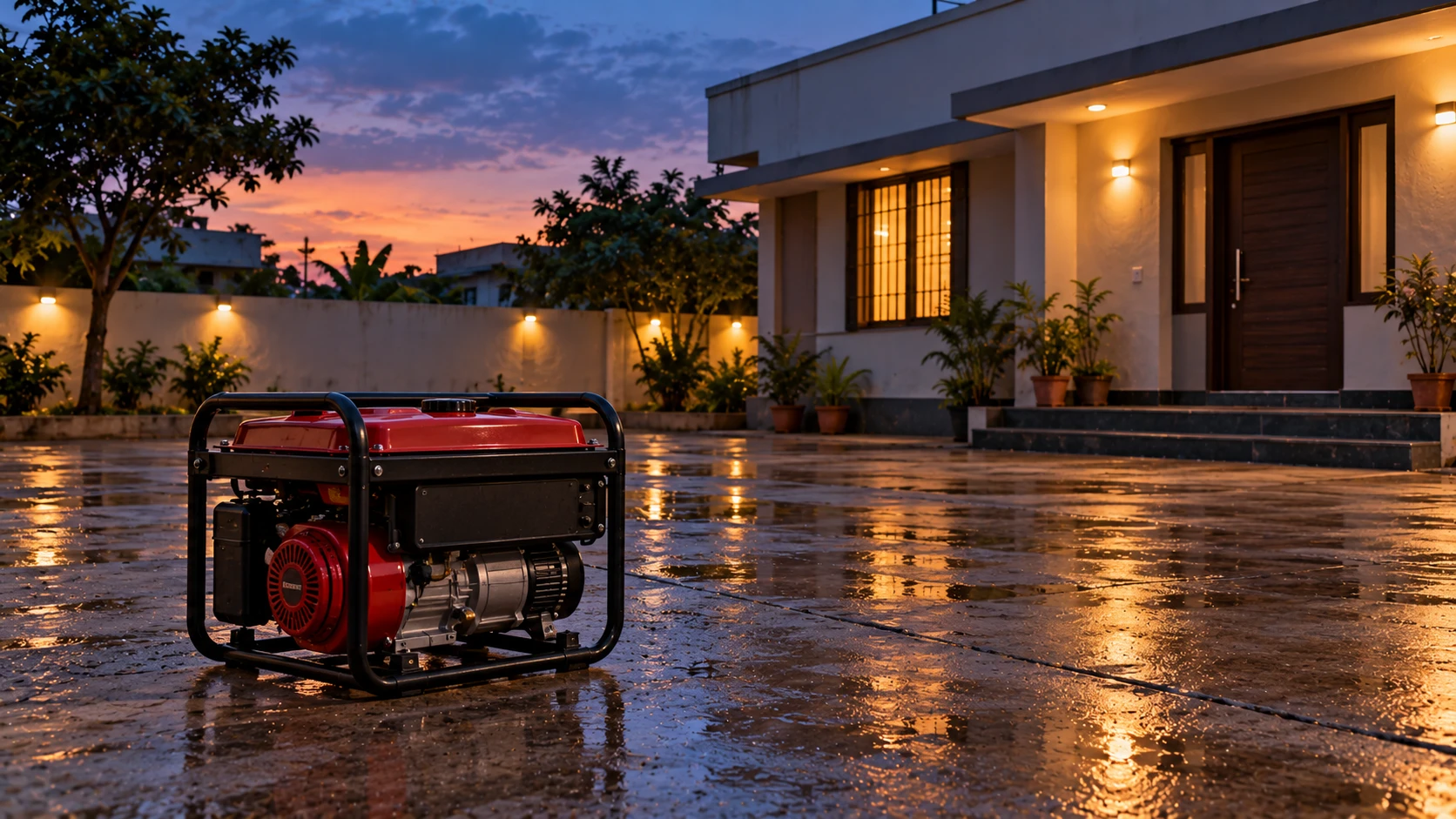
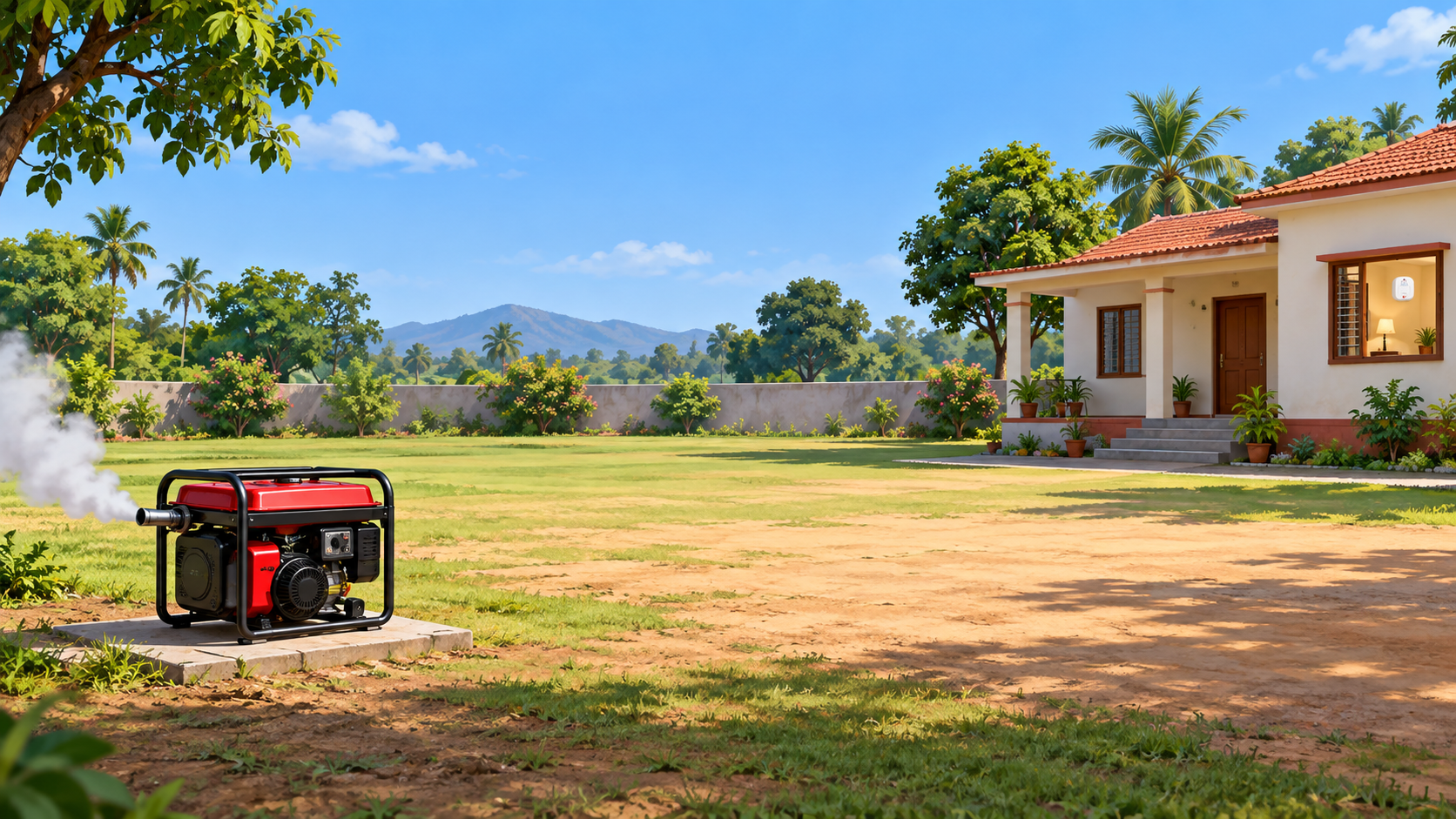
Outdoors only, at least 20 feet (about 6 metres) from doors, windows and vents, with the exhaust pointing away. Never in a room, garage or closed balcony, even with a door open (CDC).
Is a gas geyser in the bathroom safe?
It is risky in a small closed bathroom. Fit it outside or with an outlet to the open air, service it every year and keep the door slightly open. An electric geyser gives off no CO.
Can I burn an angithi or sigri in my room?
Not in a closed room, and never while sleeping. Smouldering coal and charcoal still give off CO.
What are the signs of CO poisoning?
Headache, dizziness, weakness, nausea, vomiting, chest pain and confusion; they can come and go (CDC, NHS).
What should I do if someone collapses?
Get yourself to air, move them to fresh air, call 112 or 108, watch their breathing and have them checked at a hospital.
Do CO alarms work in India?
Battery-operated alarms near the bedroom are advised by the CDC. We did not find an Indian standard for CO alarms and make no claim about one.
Where should a generator stand at a wedding or function?
Outdoors, more than 20 feet from tent walls, hall doors and windows and from anywhere people sleep, with the exhaust pointing away. The 20-foot figure is US CDC advice for homes; applying it to a pandal is our reading.
Is there a helpline for poisoning in India?
The National Poisons Information Centre at AIIMS, New Delhi, has a toll-free number, 1800 116 117, which its page lists as open all day, every day. It is a poisoning advice line, so if someone has collapsed call 108 or 112 first. The page was last updated in 2015.
Can a room heater cause carbon monoxide?
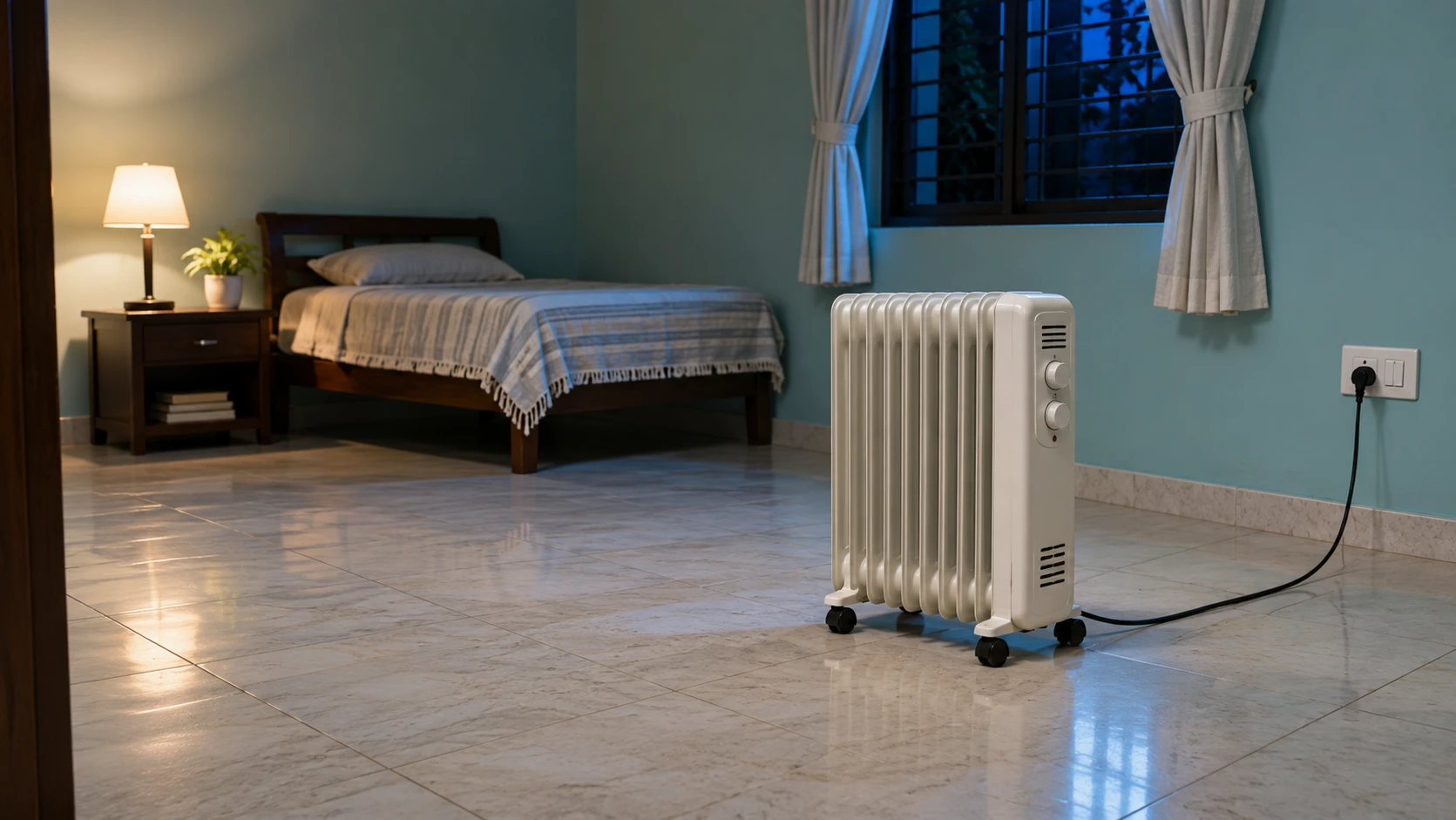
A heater that burns a fuel can, if it is used in a closed room. That includes a gas, LPG or kerosene heater, a coal oven and an angithi. The National Institute of Disaster Management cold wave sheet says to keep proper ventilation when kerosene heaters or a coal oven are in use. An electric heater does not burn fuel, but it has fire risks of its own, which our room heater and blower safety page covers.
In the early hours of Monday 19 October 2026, six members of one family were found dead in a house on a ranch near Las Choapas, in southern Veracruz, Mexico. A cold front had cut the power, and the family had reportedly started a petrol generator inside the house. The same storm killed four women in Coatzacoalcos when a wall fell on their home. Most of what follows is about India, where the same quiet gas kills people every year through generators, gas geysers and coal or charcoal angithis and sigris. If a power cut, a monsoon or a winter night is coming, this page tells you where to keep the generator, how to use a geyser and an angithi, and what to do if someone collapses. Last checked: 22 October 2026.
In short
- Carbon monoxide (CO) has no colour and no smell. People who are asleep can die without ever feeling unwell.
- A generator belongs outdoors, well away from doors, windows and vents. Never in a room, garage, shop with the shutter down or an enclosed balcony, even with a door open.
- A gas geyser should not sit inside a closed bathroom. A coal or charcoal angithi should never burn in a closed room.
- If someone feels dizzy or collapses, get them to fresh air first, then call 112 or 108.
Veracruz, 19 October 2026: what is reported and where the reports differ
We read reports published between 19 and 21 October by El Universal, Excélsior, Meganoticias, Milenio, El Congresista and La Jornada Veracruz. They agree on the basics: a power cut caused by cold front no. 2, a generator started by the family, and six dead, among them two or three children. Preliminary findings point to CO poisoning. We saw no necropsy result in anything we read.
The details do not match everywhere. El Universal, Excélsior and Milenio say the generator was inside the house; Meganoticias does not say where it stood; El Congresista calls it an electric generator on a ranch. Excélsior counts three minors, while Milenio and Meganoticias give two children aged about five and six. Milenio’s text speaks of carbon dioxide, the others of carbon monoxide. An engine’s exhaust kills through CO, so we use CO, and it remains the authorities’ preliminary view. We are not naming the victims.
The death toll for the whole storm is also disputed. By 21 October the Veracruz government was reporting 10, then 11, deaths. The federal civil protection office put its own count at four. Governor Rocío Nahle said only five were directly attributable to the weather, and El Congresista does not say which deaths make up that number. In Coatzacoalcos, the governor said heavy rain had softened the ground and a concrete wall fell on a house at Villa Allende at about 2 am on 19 October. The state prosecutor opened an inquiry, and the cause of the collapse is not established.
We use this only as an opening. It shows the usual pattern: power fails, someone brings a generator indoors against the cold, the damp or the dark, and the people asleep never wake up.
Three Indian cases, and what they have in common
Belagavi, Karnataka, November 2025. Three young men, aged 22, 23 and 22, were found dead on Tuesday 18 November in a room in Aman Nagar. A fourth, aged 19, was found unconscious and described as critical. Police said a charcoal stove had been lit to keep the room warm, the room had no ventilation and the door was shut from inside. The preliminary finding is asphyxiation, with CO from the stove suspected. ETV Bharat and the PTI report carried by The Week both say no laboratory result had been reported.
Somwarpet, Kodagu, Karnataka, June 2026. A 27-year-old woman on a trip with colleagues was found unconscious in the bathroom of a homestay on a Sunday morning and could not be revived. Republic World, on 8 June, reported that police suspect fumes from a gas geyser, are looking into the installation and upkeep of the heater, and are waiting for the post-mortem. A Deccan Herald report, which we saw only as a search extract, also points to the geyser. The cause has not been confirmed in anything we found.
Near Mangaluru, Karnataka, November 2017. Three security guards at a cooperative bank were found dead on a Tuesday morning after a night of heavy rain. Lightning was first suspected. After a power cut, one of them had switched on the diesel generator. A forensic expert confirmed that they died of CO from it, and police registered a case of death by negligence. The News Minute says poor ventilation was only suspected as a factor. This one is older, but it is the clearest Indian example of the monsoon power-cut pattern, so we keep it.
Different fuel, same set-up: a burning fuel, a closed space, people asleep or washing, and nothing to warn them. We found no national count of CO deaths in India, and do not give one.
What carbon monoxide does, and the signs
US CDC says CO is a colourless, odourless gas from fuel-burning appliances and engines, and that sleeping or intoxicated people can die before they notice any symptoms. The commoner signs are headache, dizziness, weakness, an upset stomach, vomiting, chest pain and confusion. The NHS adds shortness of breath and says symptoms may come and go and improve once you leave the place. Infants, older people and those with heart or breathing problems are at higher risk (CDC). Because the early signs look like flu or tiredness, a family that all feel unwell together, only at home, should suspect CO.
Your checklist for monsoon, cyclone and winter power cuts
Generator
- Run it outdoors only, at least 20 feet (about 6 metres) from doors, windows and vents, with the exhaust pointing away from the building. This is the CDC and CPSC rule, not an Indian law. The CDC adds: never use a generator inside the home or garage, even with doors and windows open.
- That rules out a closed balcony, a staircase, a half-open shop shutter, a car porch under the house and a tent. If you have no outdoor spot that fits, use an inverter or battery instead, and read our generator guide.
- Switch it off and let it cool before refilling it, and keep the fuel outside the living area (CPSC advice, read by us as an extract). Never plug a generator into a wall socket to power the house wiring.
- Fit a battery-operated CO alarm near the sleeping area and replace it as the maker says; the CDC says about every five years. We did not find an Indian standard for CO alarms and make no claim about one.
Inverter and battery room
- An inverter does not burn fuel, so it gives off no CO. Keep the inverter and battery in a ventilated spot, as the maker advises.
- Do not run a generator in the same closed room to charge the inverter. Our lift fire and power failure guide covers power failure inside buildings.
Gas geyser
- Fit it outside the bathroom, or where there is a proper outlet to the open air. Never in a small closed bathroom with the window shut and the door closed.
- Have a trained technician install and service it. The CDC advises a yearly check of water heaters and other fuel-burning appliances. An electric or solar water heater gives off no CO.
- LPG water heaters come under the BIS standard IS 15558, which BIS revised in 2024, and licensed products carry the Standard Mark. Look for it. A mark does not make a closed bathroom safe.
- Our suggestion: keep the bathroom door a little open while the geyser burns. If you feel dizzy, light-headed or breathless, turn it off, open the door and get out.
Angithi, sigri and charcoal
- Never burn coal, charcoal or wood in a closed room, and never go to sleep next to an angithi, even if the fire looks dead. The CDC says never burn charcoal indoors.
- Keep the burner outside, and bring only warm clothes and blankets in. Never run a car or two-wheeler in a closed garage. Using a gas, LPG or electric room heater this winter? Our room heater and blower safety checklist covers distance, sockets and which heaters make carbon monoxide.
Wedding, function and tent
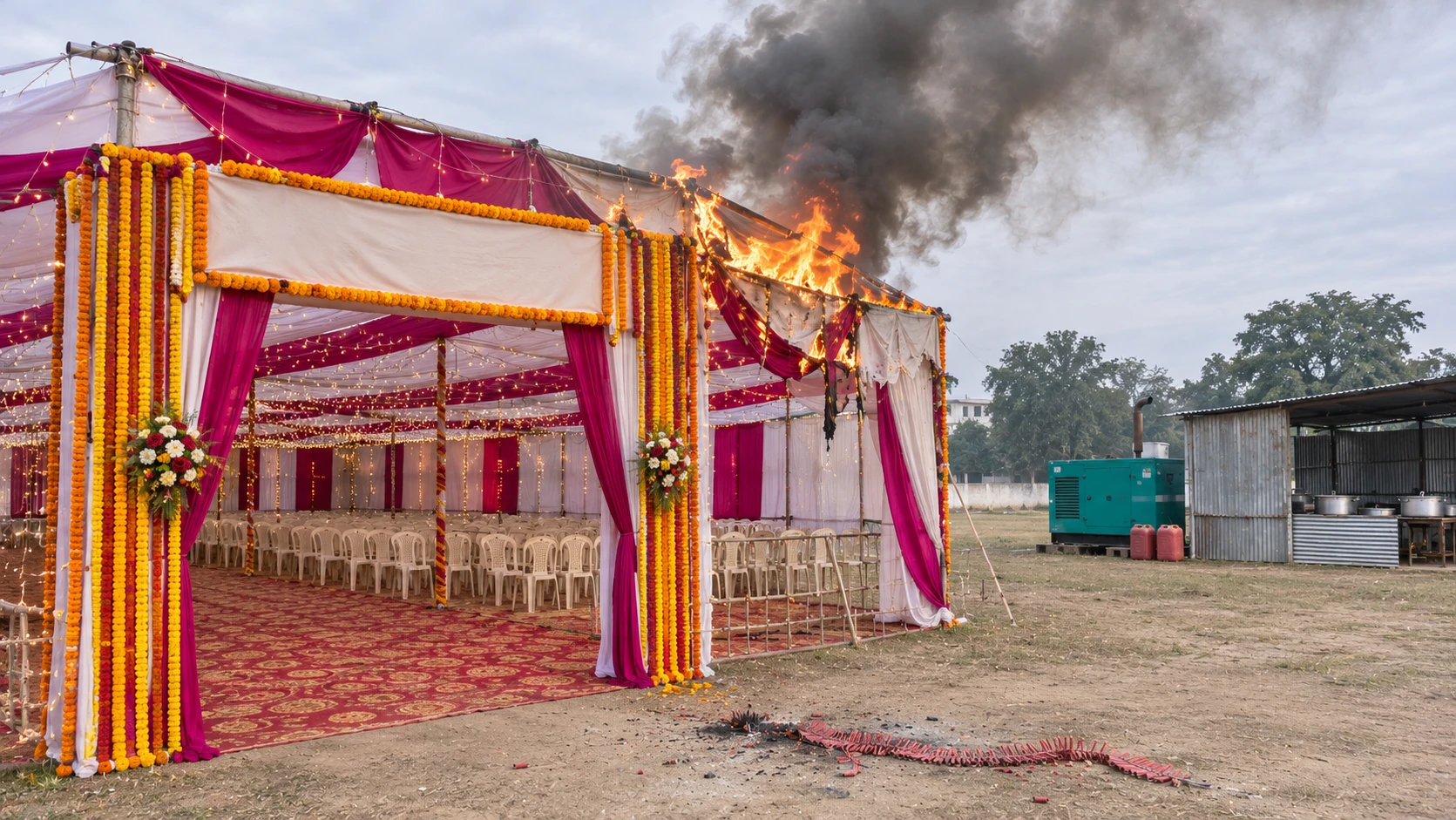
- A generator for the lights, the sound system or the caterer’s kitchen follows the same rule: outdoors, more than 20 feet from the tent wall, the hall’s doors and windows and anywhere people sleep, with the exhaust pointing away. The CDC’s distance is written for homes; applying it to a pandal or a tent is our reading.
- Do not cook over coal, charcoal or wood inside a closed tent, hall or shed, and keep a clay oven or tandoor in the open. The NHS lists clay ovens and coal and wood fires among the things that can make carbon monoxide, and says not to use a barbecue or camping stove inside a tent.
- Do not leave a vehicle or a generator engine running inside a closed hall, shed or garage; the NHS lists this as a cause. Workers or guests who sleep in a tent or hall overnight should have no burning fuel in it, as with the angithi above. Our wedding pandal and venue safety guide covers the fire side of a wedding venue as well.
- A generator. Outdoors only, 20 feet from doors, windows and vents, exhaust pointing away. The longer version is in our guide to portable generators and carbon monoxide.
- A gas geyser. Not in a small closed bathroom, serviced every year, with the door a little open while it burns. The rules are in the checklist above.
- An angithi, sigri or charcoal fire. Never in a closed room and never beside a sleeping person, even when it looks dead. Our guide to Lohri, bonfire and angithi safety goes further on charcoal and bonfires.
- A gas, LPG or kerosene room heater. It burns fuel in the room you are sitting or sleeping in. Our room heater and blower safety checklist covers distance, sockets and which heaters give off carbon monoxide.
- An engine running in a closed space. A car, scooter or generator left on in a shut garage, shed or hall. The NHS page lists this as a cause.
- Protect yourself first. Take a breath, open the door and window, switch off the appliance if you can do it safely, and get out. Do not go back into a room full of fumes.
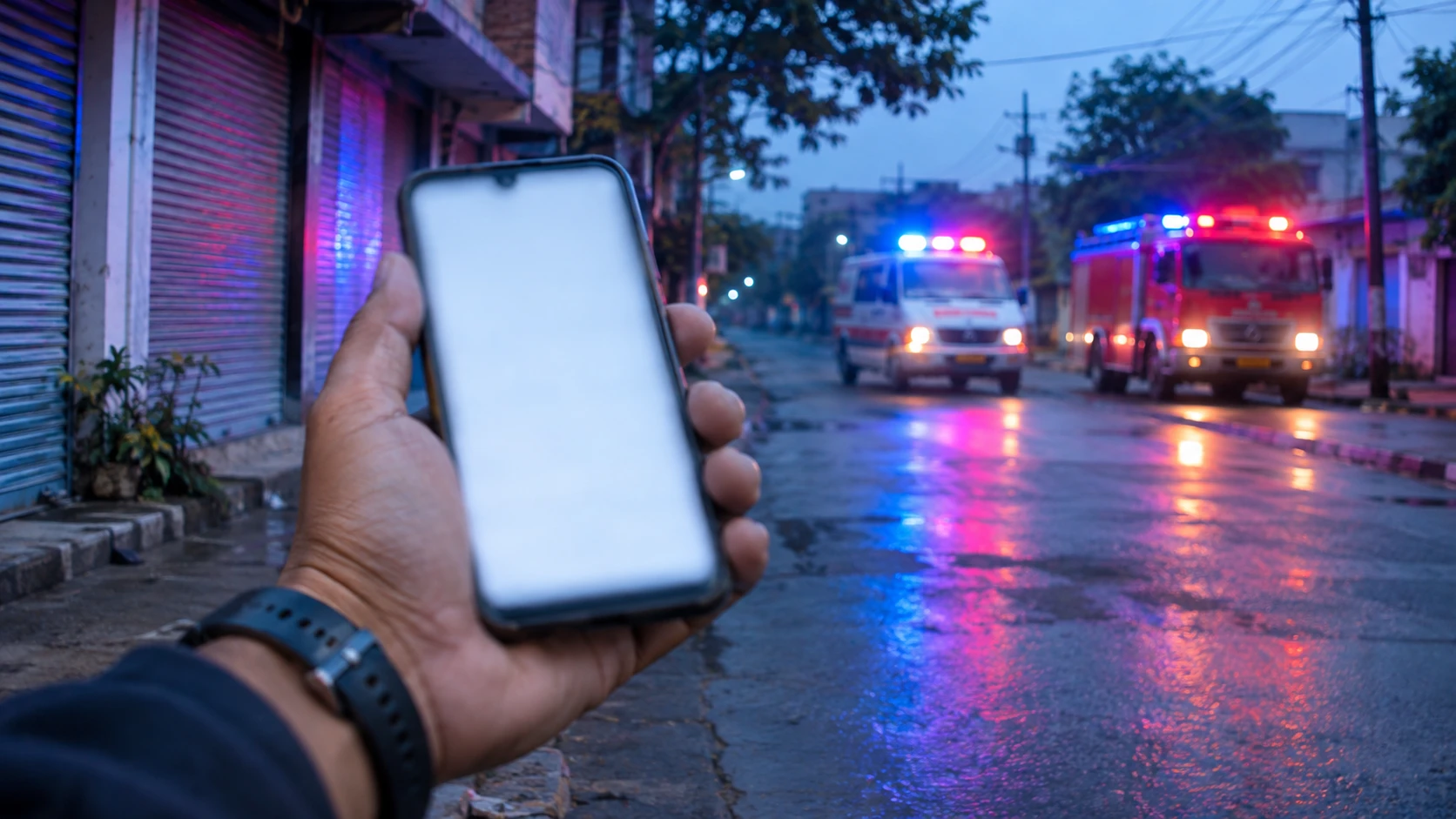
- Get everyone who can walk out into fresh air at once; the Red Cross and the NHS both say to go outside. If someone has collapsed, moving them into the open is our advice, and only if you can do it quickly without breathing the fumes yourself. Call 112, or 108 for an ambulance. 112 is the national emergency number; keep 108 and 101 saved as well in case it does not connect in your area. Say the address and that you suspect CO; our page on how to call 112, 101 or 108 shows what the operator will ask.
- Watch breathing and response while you wait. If the person is not breathing normally and you are trained, begin CPR as the operator guides you; our basic first aid page has the steps.
- Even a person who recovers must be checked at a hospital. The NHS says tests measure CO in the blood and treatment may be oxygen by mask. Do not go back into the building until a qualified person says it is safe.
- Do not drive a breathless, confused or weak person to hospital yourself. The NHS lists difficulty breathing, sudden confusion, loss of consciousness, weakness, and chest or muscle pain as signs to call an ambulance, and says to have someone else drive you or to call for one. That is UK advice, but the signs and the reason apply here.
- Everyone who shared the air should be checked, not only the person who collapsed. The signs can be mild and can come and go (NHS), and several people in one house often feel unwell together. Checking everyone is our advice.
- For advice on poisoning, the National Poisons Information Centre at AIIMS, New Delhi, has a toll-free line, 1800 116 117, which its page says takes calls all day, every day. It tells callers not to wait for the victim to look or feel sick, not to treat the person themselves and to take them to a nearby healthcare facility. The page was last updated in 2015, and this is general poisoning advice, not specific to carbon monoxide. If someone has collapsed, ring 108 or 112 first.
- The necropsy and prosecutor’s findings in Las Choapas, and whether the generator was inside the house, as most reports say.
- How many children died there, two or three.
- Why the state and federal counts differ, and whether the Veracruz total has risen since 21 October.
- The cause of the Coatzacoalcos wall collapse.
- The confirmed cause of the Somwarpet death, and whether the Belagavi survivor recovered.
Winter carbon monoxide at a glance: five sources, one habit
In winter the same gas comes from five different things in Indian homes. This page is the hub for all of them. Each source has its own page where we go further.
Two Indian official pages say the same thing in fewer words. The National Institute of Disaster Management (NIDM) cold wave sheet says to keep proper ventilation when kerosene heaters or a coal oven are in use, so that toxic fumes do not build up. The National Centre for Disease Control (NCDC) advisory on floods, which has a line on carbon monoxide for people using generators while cleaning up, says to keep a generator at least 20 feet from any door, window or vent. Both are general advice, not a carbon monoxide standard, and the NIDM sheet is undated. The habit that covers all five is simple: anything that burns fuel stays outdoors or has a proper vent to the open air, and nobody sleeps next to it.
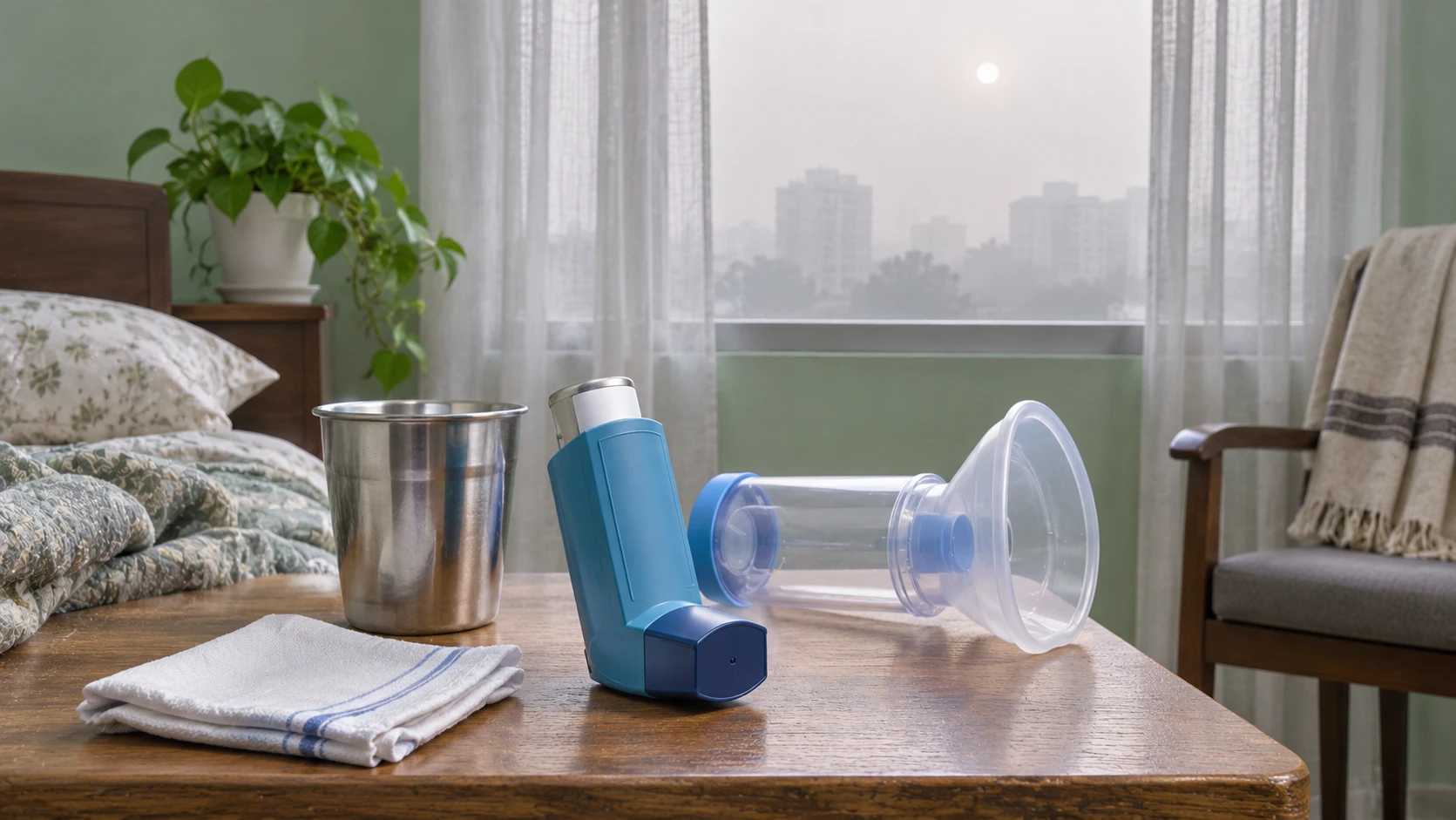
Cold and smog also bring breathing trouble that has nothing to do with this gas, and a cold wave brings hypothermia and frostbite, which our guide to the cold wave in India, who is at risk and what to do explains. If someone is wheezing in the smog, our page on asthma or allergy attacks in smog and cold weather is the one to read. If two or more people in a closed room with a burning appliance feel unwell together, follow the steps below: everyone into fresh air, then 112 or 108.
If someone collapses or feels unwell
A short note on waterlogged ground and walls
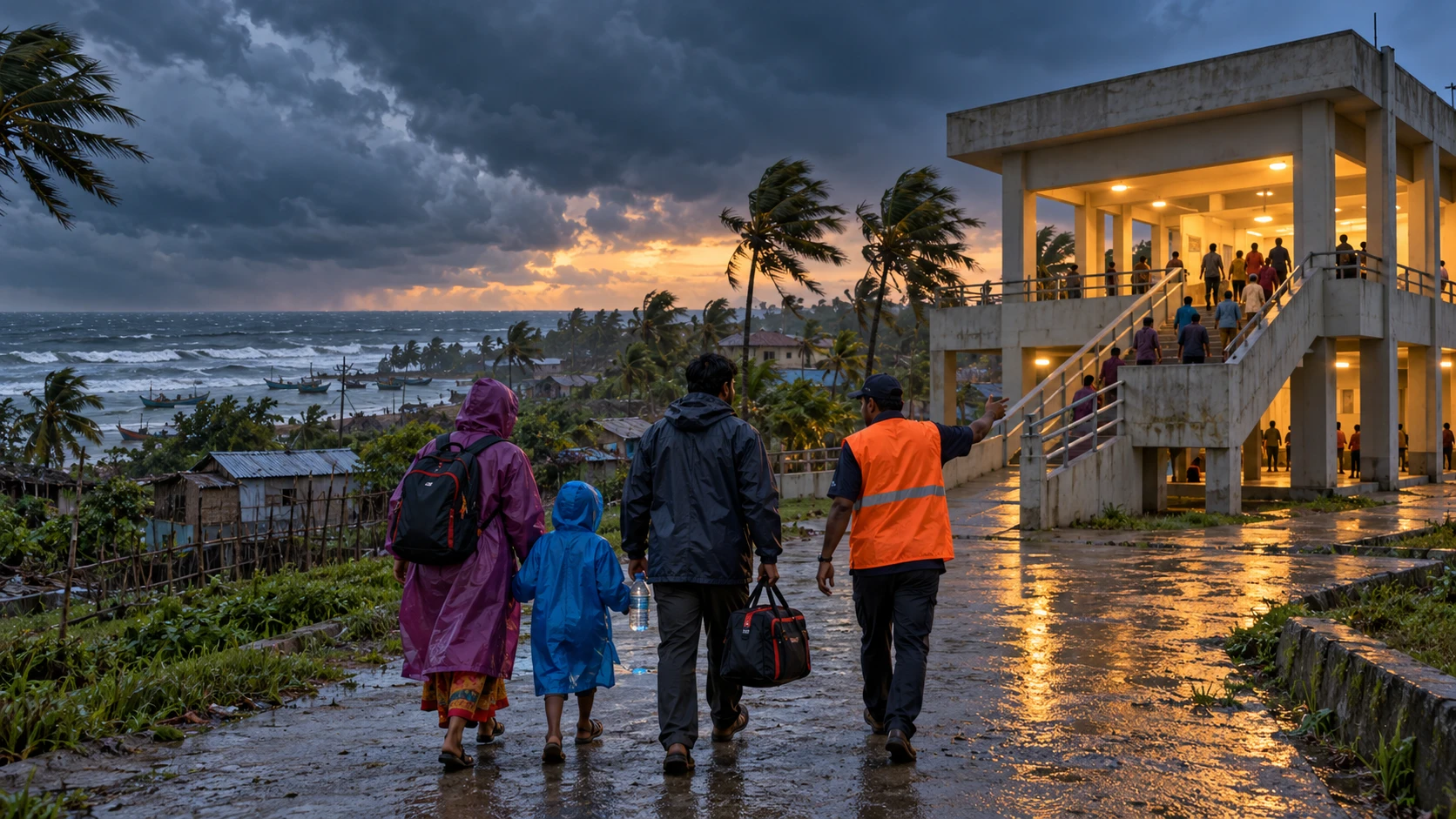
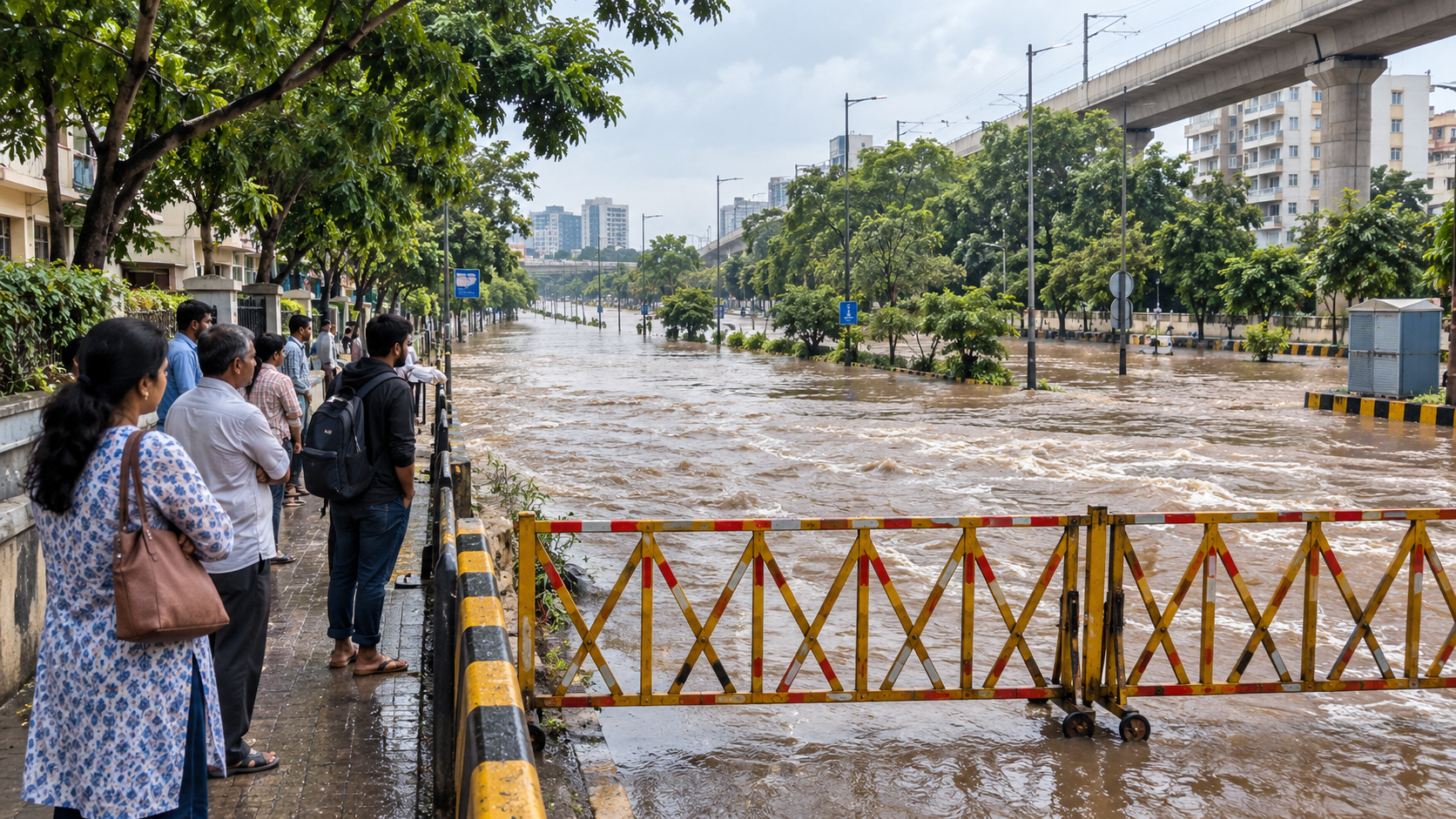
In Coatzacoalcos a boundary wall fell on a house after days of rain. Where the ground is soaked, old walls, compound walls and sheds can fail without warning, mostly at night. Keep sleeping rooms away from a tall wall that leans, cracks or has water standing at its foot, move to another room or a safer house when rain is heavy, and tell the local body about a leaning wall. Our cyclone safety guide has more on leaving early. The cause of the Veracruz collapse is still under inquiry.
What is still not known
We will update this page if the picture changes. Last checked: 22 October 2026. The guidance and the response steps were re-read on 4 November 2026, and the winter hub section was added on 10 November 2026 from the NIDM and NCDC pages.
What needs attention
- The Veracruz family reportedly lost power and ran the generator indoors; most reports say it kept running while they slept. Sleeping people may die before any symptom (CDC).
- The three Indian cases show different fuels (charcoal, LPG, diesel) but the same set-up: a closed space and no warning.
- In Belagavi the room had no ventilation and the door was shut from inside; in Mangaluru the generator was started in a power cut during heavy rain.
- Official counts can differ: the governor counted five deaths as directly attributable to the weather, and the reports we read do not say which.
- India has no national count of CO deaths that we could find, so the risk cannot be sized with a figure.
- The NIDM cold wave sheet says to keep proper ventilation when kerosene heaters or a coal oven are in use, and the NCDC flood advisory says to keep a generator at least 20 feet from doors, windows and vents. Both are general Indian official advice, not carbon monoxide standards.
Controls that reduce risk
- Household: decide where the generator would stand before the monsoon or cyclone, and keep it at least 6 metres from every opening.
- Household: fit a battery-operated CO alarm near the bedrooms and test it.
- Household: have the geyser fitted outside the bathroom or with an outlet to the open air, and serviced once a year by a technician.
- Household: in winter, keep the angithi or sigri out of sleeping rooms.
- Shop and office owner: never run a generator in a closed room or behind a shutter, and tell guards and night staff.
- Tourist or homestay guest: check where the geyser is and keep the bathroom door ajar; homestay owners should service heaters.
- Anyone who suspects CO: leave, call 112 or 108, move the person to fresh air, do not re-enter.
- Wedding or function host: generator outside and away from tent walls and sleeping areas; no coal, charcoal or tandoor inside a closed tent or hall.
Common unsafe practices
- Bringing a generator indoors, into a garage, a closed balcony or a shop with the shutter down.
- Keeping a gas geyser inside a small closed bathroom with the window shut.
- Sleeping next to a burning angithi, sigri or charcoal stove in a shut room.
- Opening a door and thinking the generator is now safe indoors.
- Refilling a generator while it is running or hot.
- Going back into a fume-filled room to rescue someone without getting air first.
- Ignoring headache, dizziness or nausea that affects everyone in the house together.


Leave a comment