
What happened here
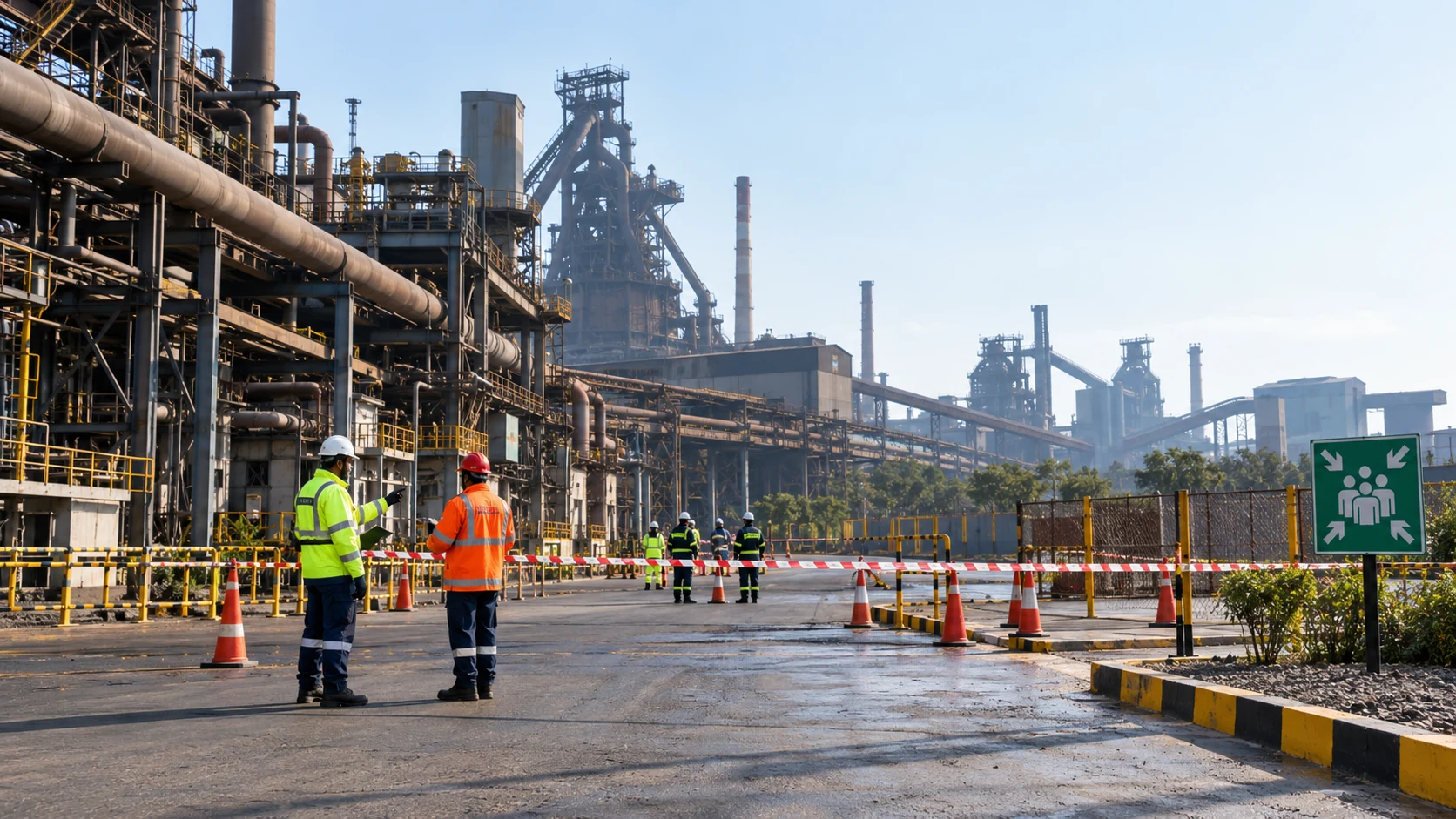
Two men died after a reported gas exposure at ESL Steel in Bokaro. The known record confirms the deaths and multiple inquiries; it does not establish the gas involved, the exposure pathway, a technical cause or responsibility.
Quick answers
Was carbon monoxide confirmed as the cause?
No. A factory official described it as a preliminary view and said the probe and post-mortem reports were awaited.
How many people died?
Reviewed reporting consistently described two deaths.
Should an untrained worker enter to help?
No. Raise the alarm, keep clear and follow trained emergency responders or site command.
What is currently reported
On 11 October 2026, two men died after reported gas exposure at the ESL Steel plant area in Siyaljori, in Jharkhand’s Bokaro district. ThePrint/PTI and India Today both reported that authorities opened inquiries and that the company said it would conduct an independent investigation.
A factory official described carbon monoxide as a preliminary possibility, but also said the inquiry and post-mortem reports were awaited. That is not a final medical or technical finding. This article therefore does not state that carbon monoxide, a gas leak, a particular task, equipment failure, a person or an organisation caused the deaths.
What remains unknown
- The gas or gases involved and the exposure pathway.
- The final post-mortem findings and a verified injury count.
- The final administrative, factory-inspector and company investigation findings.
- Whether any corrective direction, responsibility finding or enforcement action follows.
What workers and witnesses should do in a suspected hazardous atmosphere
- Raise the site alarm and alert the control room or emergency team from a safe position.
- Move away from the area and follow the designated muster instruction.
- Do not enter a potentially toxic atmosphere to attempt a rescue unless you are trained, equipped and assigned to do so by incident command.
- Keep gates, roads and access routes clear for responders.
- Give first aid only within your training and only when the scene is safe.
- Write down factual observations for investigators; separate what you saw from what you heard.
Why the wording matters
Early industrial-accident reports can contain preliminary observations. They are important for warning people about a possible hazard, but they do not establish a final cause, fault or liability. A safe response protects people first while competent authorities and investigators establish what occurred.
- Gas exposure incident reported at the ESL Steel plant area in Siyaljori, Bokaro district
- Officials and the company reported two deaths; post-mortem process and discussions with families were reported
- Factory-inspector inquiry and a company independent investigation were reported
- No final post-mortem, inquiry finding, technical cause or liability finding was located
Why consequences escalated
- The two deaths are consistently reported by independent news accounts.
- A preliminary carbon-monoxide view is not the same as a final medical or technical finding.
- The reviewed record does not establish whether a leak, process failure, equipment failure, work practice or another circumstance caused the exposure.
Failures and risk multipliers
- Do not enter a suspected toxic-atmosphere area to rescue a colleague unless you are trained, equipped and directed to do so.
- Do not treat an odour, a headline or a video as proof of the gas involved.
- Do not return to a restricted work area for belongings, phones or footage.
- Do not present preliminary reporting as a final cause or blame finding.
Actions that reduce risk
- Raise the site alarm and notify the control room or emergency team from a safe location.
- Move to the site-designated safe area and keep access routes open for responders.
- Call 112 for a wider emergency when needed and give the plant gate, unit or landmark only when it is safe to do so.
- Give first aid only within your training and only after the scene is declared safe.
- Preserve a factual account for the investigation; distinguish what you saw from what you heard.
Leave a comment