
What happened here
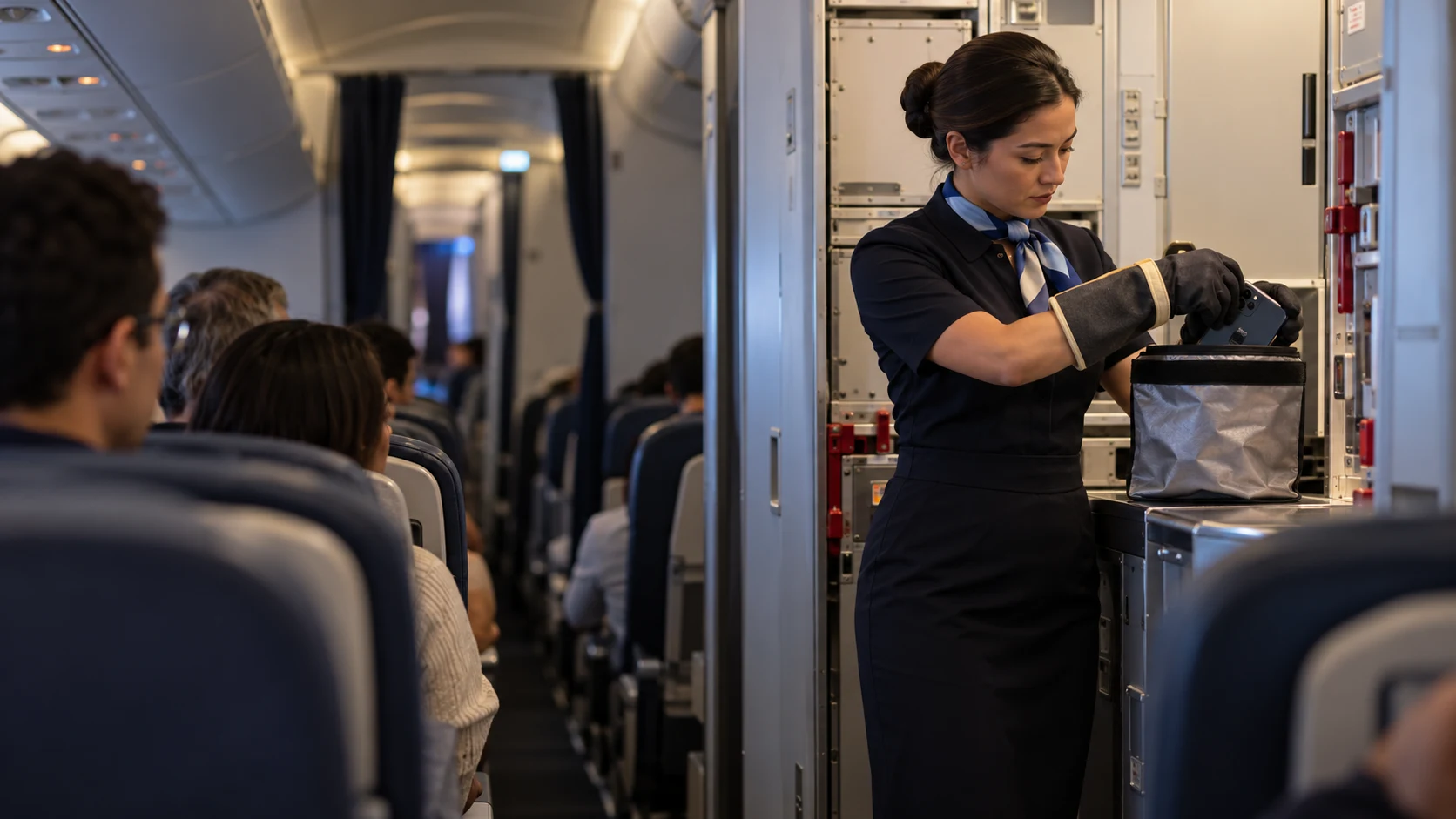
IndiGo flight 6E 6115 was operating from Delhi to Chennai on 11 October 2026 when smoke was detected from a passenger’s personal electronic device. IndiGo said the crew responded promptly, the situation was controlled and the pilots diverted to Hyderabad under established procedures. Hindustan Times reported 191 people aboard and a safe landing around 3.15 pm. Several reports identified the device as a power bank, but IndiGo’s own quoted statement described it more generally as a personal electronic device. This case study keeps that distinction clear.
Quick answers
Was the cause of the incident confirmed?
No. IndiGo’s quoted statement said smoke came from a passenger’s personal electronic device. Multiple reports called it a power bank, but no final technical cause was located as of 12 October 2026.
Can I put a power bank in checked baggage or an overhead bin on IndiGo?
No. IndiGo’s published policy says power banks and spare lithium batteries must be in hand baggage, within personal reach, and not in checked baggage or overhead compartments.
Can I use a power bank to charge my phone during an IndiGo flight?
IndiGo’s published lithium-battery policy says batteries must not be recharged on board and should not be used to recharge a portable electronic device on board. Check the current airline policy before travel.
What should I do if my power bank gets hot or smokes during a flight?
Tell cabin crew immediately, give the location, follow crew instructions and do not try to handle or contain the device yourself unless instructed.
Nobody was hurt, and the aircraft landed safely. That is the good news from IndiGo flight 6E 6115. The rest of the story is a reminder of what a small battery can do in a sealed cabin at cruising height, and of how much depends on passengers speaking up quickly.
What happened
On Sunday, 11 October 2026, IndiGo flight 6E 6115 was flying from Delhi to Chennai when smoke was detected from a passenger’s personal electronic device. In its statement, IndiGo said the cabin crew responded promptly and brought the situation under control, and that the pilots diverted the flight to Hyderabad in line with established procedures.
Hindustan Times reported that the aircraft was carrying 191 people and landed safely at Rajiv Gandhi International Airport, Hyderabad, at around 3.15 pm. No injuries were reported in the sources we reviewed.
Several news reports described the device as a power bank that caught fire, and said the crew put out the flames. IndiGo’s own statement used the broader words “personal electronic device”. We keep that difference clear in this case study, because the airline has not published what the device was or why it failed.
Response
The crew dealt with the device on board, and the pilots chose to land at the nearest suitable airport rather than continue to Chennai. An airport official told Hindustan Times that because the fire had already been put out, no emergency or priority landing needed to be declared.
After landing, IndiGo apologised to passengers, offered refreshments and kept them updated. The journey to Chennai resumed that evening; Hindustan Times reported a departure from Hyderabad at about 5.45 pm.
What is known about the cause
Very little has been published. No technical cause, device examination or regulatory finding had been made public as of 12 October 2026. It is not known whether the device was a power bank, what its watt-hour rating was, whether it was being used or charged, or where exactly it was in the cabin.
What is known is the general risk. In an advisory dated 11 November 2025, the Directorate General of Civil Aviation (DGCA) warned that lithium battery fires can be triggered by overheating, overcharging, crushing, manufacturing defects or mishandling, as reported by Hindustan Times. That is a list of possible causes, not a finding about this flight. Do not read it as blame on the passenger, the maker or the airline.
The same report noted earlier power-bank incidents on IndiGo aircraft: a fire on flight 6E-108 shortly after landing at Chandigarh in May 2026, in which six passengers were injured, and one aboard flight 6E 2107 while it taxied at Delhi in October 2025, in which nobody was hurt.
What remains unknown
- The type and condition of the device, and its watt-hour rating
- Whether it was charging, being used or switched off
- Exactly where it was in the cabin and how the crew contained it
- The technical failure sequence
- Whether DGCA or the airline will publish any investigation finding
Lessons
The rules on board are now clear. The Ministry of Civil Aviation told the Rajya Sabha on 9 March 2026 that DGCA’s Dangerous Goods Advisory Circular of 11 November 2025 advises airlines to prohibit using power banks to charge devices during a flight. According to the advisory as reported, airlines should also tell passengers to carry power banks and spare batteries only in hand baggage, keep them out of overhead bins, and tell cabin crew at once if a device gives off heat, smoke or an unusual smell.
If a device near you starts to smoke:
- Tell the cabin crew immediately and say the seat number.
- Do not touch, move, cover or throw the device unless the crew tell you to. They have the equipment and the training.
- Keep the aisle clear and stay seated unless told to move. Filming from close by only gets in the way.
- If it is your device, tell the crew where it is and whether it was charging.
- If an evacuation is ordered, leave your bags behind.
- After landing, see a doctor if you have any breathing irritation or burns, even if the event seemed small.
Before your next flight, check the watt-hour label on every power bank you own, keep them in your hand baggage, and do not use them to charge anything during the flight. It takes two minutes at home, and it is the part of this story that is in your hands.
Reporting limits
This case study is based on IndiGo’s statement as quoted in news reports, Hindustan Times reporting, and the Ministry of Civil Aviation’s Rajya Sabha answer. News reports call the device a power bank, but no device examination or final investigation had been published when we checked. No location inside the cabin is given, and the map shows only the diversion airport. The image with this article is an AI-generated editorial illustration, not a photograph of the incident.
More on Hyderabad: see our Hyderabad fire and emergency safety guide for fire brigade numbers, every fire station and the local risks to know.
- Smoke was detected from a passenger’s personal electronic device while flight 6E 6115 was travelling from Delhi to Chennai.
- Cabin crew responded and the situation was brought under control, according to IndiGo’s quoted statement.
- The aircraft landed safely at Hyderabad, according to Hindustan Times.
- IndiGo arranged another aircraft for the onward journey to Chennai, according to the airline statement reported by multiple outlets.
- No final technical cause or investigation finding was located in the sources reviewed.
Why consequences escalated
- What is established: the Delhi–Chennai service diverted safely after cabin smoke from a passenger device, and the crew contained the event.
- What is reported, not independently established here: several news reports call the device a power bank and describe a fire.
- What remains unknown: the device’s condition, its watt-hour rating, whether it was being used or charged, the precise location of the device, the technical failure sequence and any regulatory finding.
- Why wording matters: a lithium-battery incident can have different causes. Early footage or witness accounts do not establish fault, product defect or compliance with airline rules.
Failures and risk multipliers
- Do not touch, move, cover or throw a smoking device unless cabin crew instruct you to do so.
- Do not crowd the aisle, film close to the event or block crew access.
- Do not assume water, blankets or personal bags are an appropriate response; cabin crew use aircraft procedures and equipment.
- Do not put power banks in checked baggage or an overhead compartment on IndiGo flights.
- Do not use a power bank to charge a device during the flight; IndiGo’s published policy says not to recharge it or use it to recharge another device on board.
Actions that reduce risk
- Tell cabin crew immediately if a device becomes unusually hot, swells, smells unusual, hisses, smokes or catches fire.
- Follow the crew’s instructions promptly and remain seated unless directed otherwise.
- Keep the aisle and access to the affected seat clear.
- If you own the device, tell crew where it is and whether it was charging, but do not handle it unless instructed.
- Before travel, check the airline’s current battery policy; rules can change and may differ by carrier.
Leave a comment