
What happened here
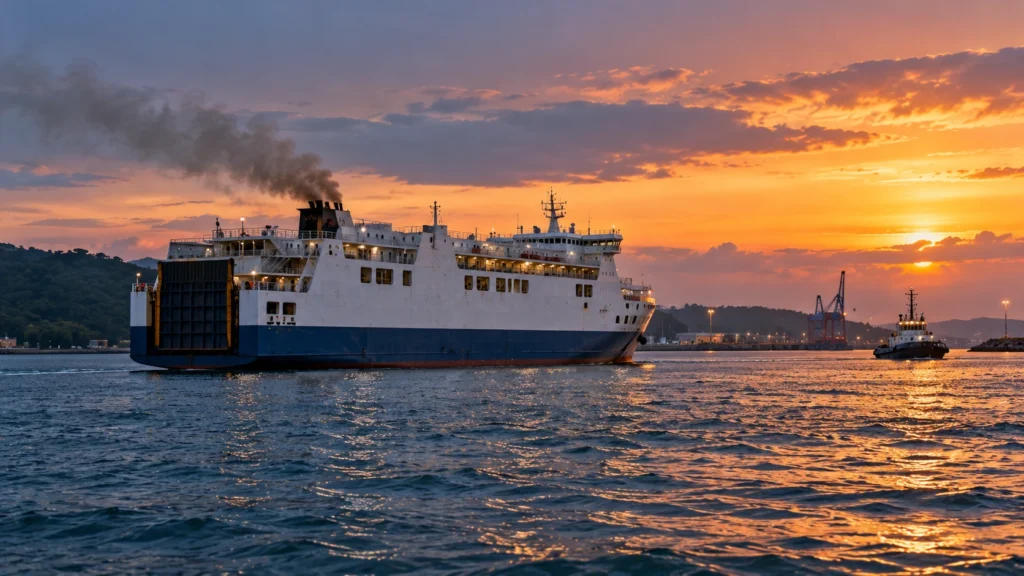
On the afternoon of 20 October 2026 the ferry KMP Batumandi caught fire near Merak Port, Banten, Indonesia, on the Bakauheni to Merak crossing, with 420 passengers and 89 vehicles aboard. All passengers and crew were evacuated, nobody died, and the number injured is reported as 6, 11 or 21. The cause is not known. This is a developing story.
Quick answers
What happened to the ferry KMP Batumandi?
It caught fire on the afternoon of 20 October 2026 as it approached Merak Port in Banten, Indonesia, on the Bakauheni to Merak crossing. All 420 passengers and the crew were evacuated.
Did anyone die in the Merak ferry fire?
No. ASDP says no one died and no one is reported missing. This is a developing story and we will update it.
How many people were injured?
Reports differ: six treated and sent home (ASDP), 11 (police chief via Xinhua) and 21 (Banten Health Office via Kompas.com). No final count has been published.
What caused the fire?
It is not known. An early report suggested the engine room, ASDP saw sparks on the upper small-vehicle deck at the stern, and the Transport Minister has ordered KNKT and police to investigate.
Are ferry services between Merak and Bakauheni running?
The operator moved boarding to another pier to keep traffic moving, according to Baird Maritime, and a Tempo headline says services continued; we could not open the Tempo page.
Developing story. This page was last checked on 21 October 2026. The investigation has only just started, the cause is not known and the injury figure differs between sources. We will update it.
What happened
On the afternoon of Tuesday, 20 October 2026, the ferry KMP Batumandi caught fire as it came in towards the port of Merak, in Cilegon, Banten, on the western tip of Java. It was on the Bakauheni to Merak crossing of the Sunda Strait and is run by ASDP Indonesia Ferry, the state ferry company. It left Bakauheni, at the southern tip of Sumatra, at about 2.52 p.m. local time (ASDP, as quoted by Kompas.com and Euronews; one report gives 2.32 p.m.). Shore staff saw sparks and flames at the stern at about 4.15 p.m., according to ASDP. Banten police put the fire at about 4 p.m. in one statement and at about 4.35 p.m. in another, so the exact minute is uncertain. Xinhua and Antara place the ferry about 700 metres from Pier VI when the fire began (Xinhua; Antara quotes the police for the same distance before docking).
ASDP says the sparks were seen on the upper deck at the rear that carries small vehicles. An early report from the Merak vessel traffic service had pointed to the engine room. ASDP itself has said it cannot yet say whether the fire began at the stern, on the vehicle deck or in the engine room (Metro TV, Antara). A passenger told Liputan6 that black smoke came out of deck 2 and grew, and that people were told the fire may have started in a private car parked there and spread to other vehicles. That is a passenger’s account relayed in the moment, not a finding. Another passenger told Euronews the smoke thickened, made it hard to breathe, and that diesel was dripping from the ceiling.
The people and vehicles aboard
The manifest lists 420 passengers: 393 travelling inside vehicles and 27 on foot, with 89 vehicles on board (ASDP via Antara and Metro TV; Banten Police Chief Hendra Kurniawan via Xinhua). Police first spoke of 240 passengers and corrected it to the manifest figure of 420 (Antara). Metro TV’s live count, relayed by Baird Maritime, said eight vehicles, which looks like a slip for 89, since every other source says 89. We have not found the number of crew in any report we opened.
Casualties
Nobody died. ASDP president director Heru Widodo said so directly, and every outlet we opened agrees. No one is reported missing. The number hurt is where the sources part:
- Six. ASDP says six passengers received treatment for minor injuries, shortness of breath and shock, and have since been allowed home (Liputan6, Metro TV, Antara, 21 October). Kompas TV also said six had been taken to a community health centre.
- Eleven. Xinhua, quoting the police chief, says 11 were injured.
- Twenty-one. Kompas.com, on the night of 20 October, quoted the head of the Banten Health Office, Ati Pramudji Hastuti, as saying 21 passengers were hurt: 5 sent to Krakatau Medika hospital in Cilegon and 11 treated at the Pulomerak health centre. She listed vertigo, a pinched nerve, a broken bone and minor burns (also reported by Lentera Today). One passenger told Liputan6 that mothers and small children pushed and crushed each other in the panic and some people were hurt in the crush.
These counts were made at different times by different bodies, and none has been withdrawn. We show six as the headline because it is ASDP’s latest statement, and we show the others beside it.
Response and rescue
The fire was in the approach channel, so rescue was done from the water. The ferry Royce 1 told the Merak traffic service at 4.56 p.m. that it had taken all passengers and crew aboard, and ASDP logged the evacuation as complete at 5.05 p.m. (Baird Maritime). Euronews says the operator put the whole evacuation at under an hour. Six tugs (Gunung Cipala, Avatar Harbour, Teluk Jakarta, Tirtayasa V, Gunung Batur and Gunung Santri), the patrol vessel KNP 333, a customs boat BC 9006 and the ferries Royce 1, Munic 3 and SMS Mulawarman responded, according to Baird Maritime. Banten’s search and rescue office (Basarnas), the regional disaster agency, the Banten police water and air unit, the port authority and customs worked together. The Transport Ministry said tugboats and ferries were used to fight the fire and evacuate people. Passengers told Liputan6 that life jackets were handed out, lifeboats were made ready, and local fishing and tourist boats helped pull people off. Baird Maritime, citing the Jakarta Globe, says some passengers reportedly jumped overboard; we could not open that report ourselves.
The ferry was later brought alongside Pier IV in Merak (Baird Maritime). It was still burning at 9 p.m. on 20 October. By 21 October ASDP and Metro TV said the fire was fully out and cooling was under way, with a Transport Ministry vessel, KN Trisula P.111, helping (Antara headline, Liputan6). The investigators will go on board only when the ship is cool enough.
Service and losses
Merak is one of the busiest ports in Indonesia, and the crossing carries more than 20 million passengers and 5 million vehicles a year (Baird Maritime). The company moved boarding and landing from the executive Pier VI to the Express 2 pier to keep traffic moving (Baird Maritime). Tempo’s English headline says ferry services continued at Merak; we could not open that page. Survivors were sheltered at Pier VI and bused towards Jakarta and nearby cities (Antara). Vehicles and luggage burned. Police set up a lost-property post on Pier VI to issue loss certificates, and ASDP says it will work with the state insurer Jasa Raharja to count the losses and pay compensation (Antara, Metro TV). A member of the national parliament’s transport committee asked the company to list what passengers lost and pay promptly (Kompas.com).
The investigation
Transport Minister Dudy Purwagandhi told the National Transportation Safety Committee (KNKT) on 21 October to look at technical and non-technical factors, with the police helping, and asked the public to wait for the findings rather than guess (Xinhua, Liputan6). The National Police Chief said police will help the probe (CNN Indonesia, 21 October). The minister also said the government will review the shipping safety system as a whole. Nothing on the cause has been published.
Not the first time at Merak
In September 2023 another ferry, Mutiara Berkah I, caught fire during cargo work at Merak, and all 139 people aboard were evacuated (Baird Maritime, one source). One of Indonesia’s deadlier ferry fires also began on a vehicle deck. In February 2007 a fire that began in a truck on the car deck of the Levina 1 in the Java Sea killed at least 16 people, and 275 were pulled from the water or the hull by fishing boats, warships and helicopters (NBC News/AP, 2007). That is the history the Batumandi fire will be read against, but this case is not yet explained and we do not say it is the same.
Why this matters in India
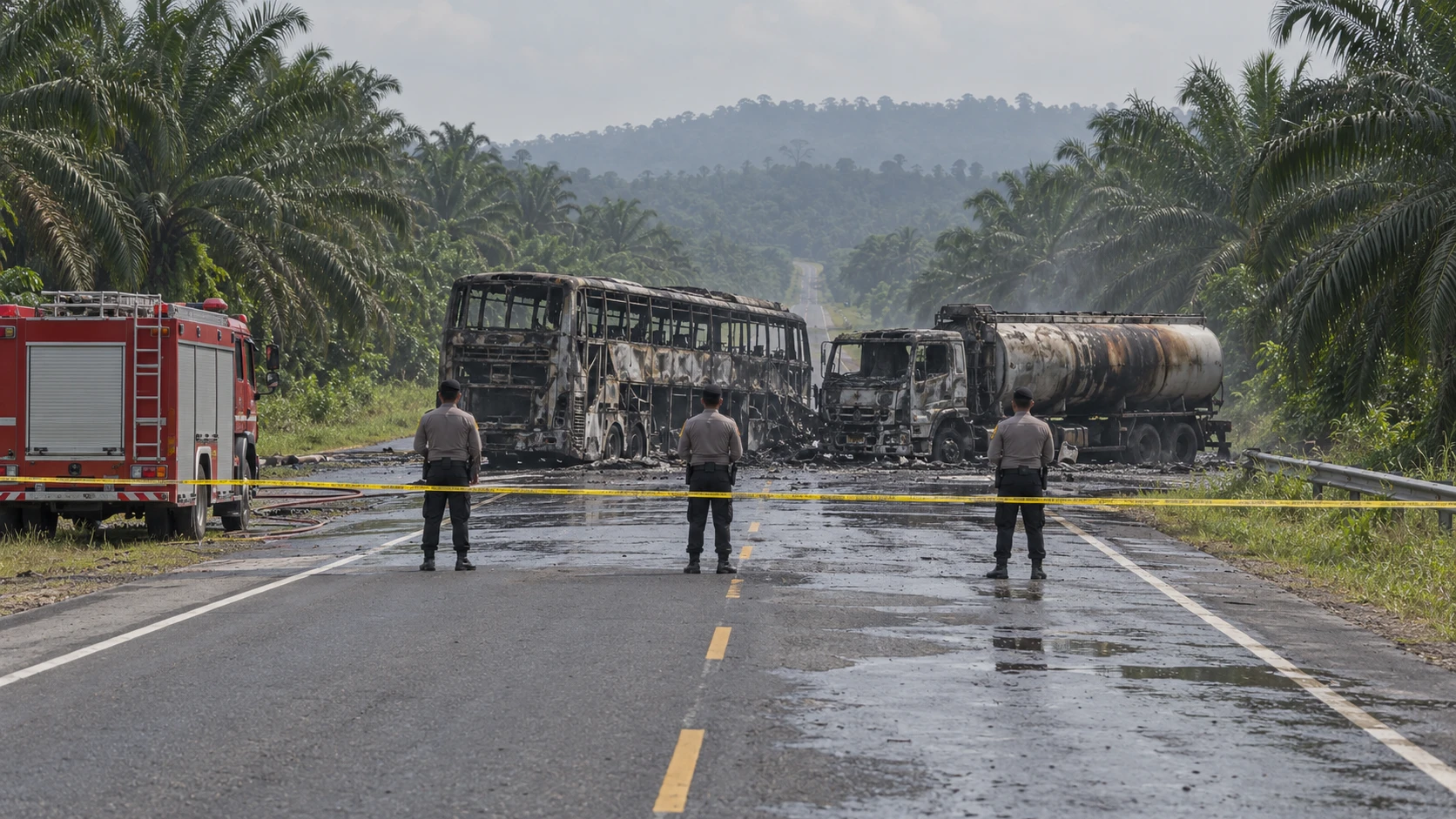
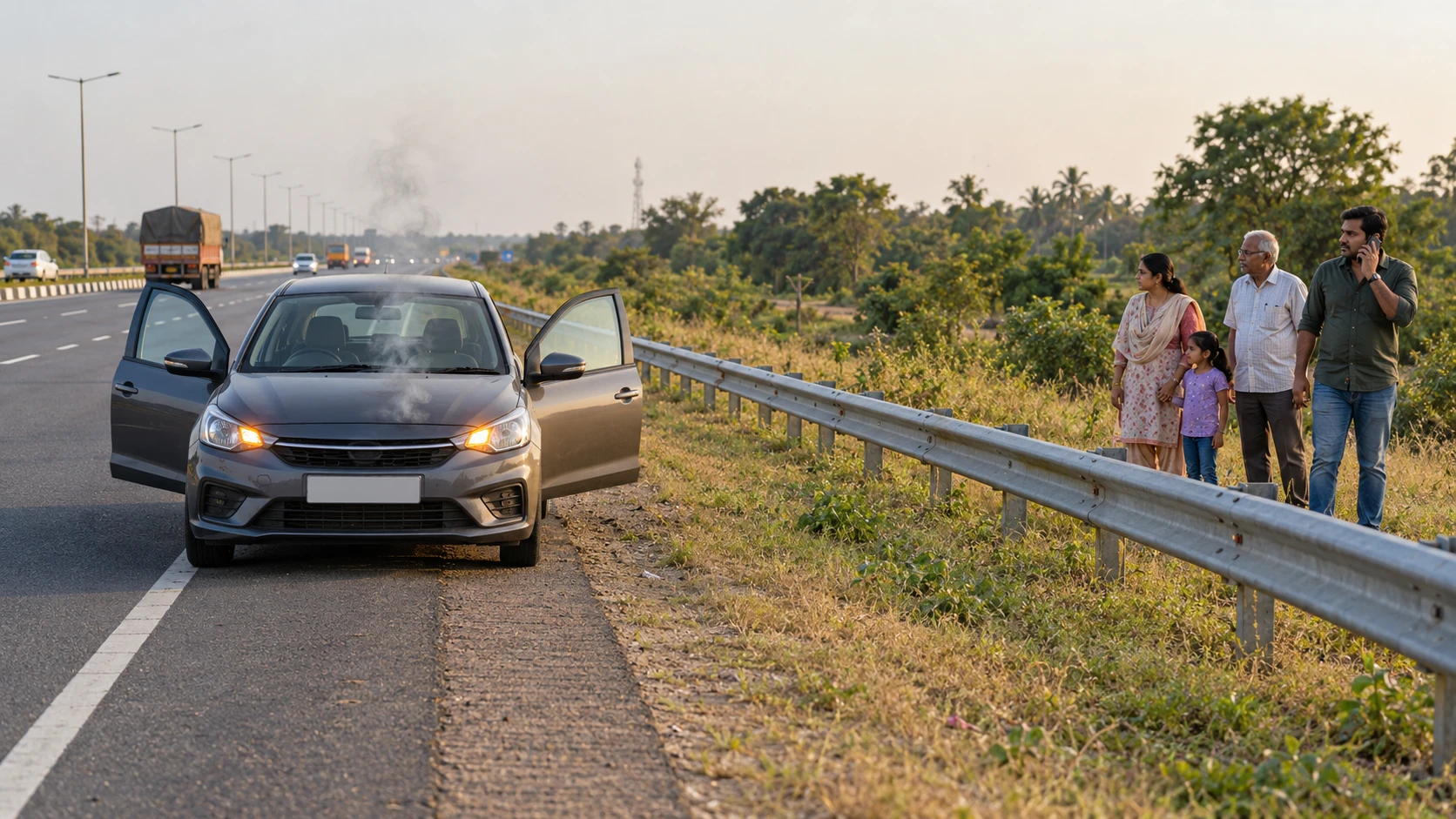
India runs the same kind of services: roll-on ferries carrying cars and trucks, passenger launches on rivers and open-deck boats on festival days. We have not found a verified fire on an Indian vehicle ferry that we can place beside this one. The nearest we can verify is the double-decker tourist boat that caught fire on the Godavari in Andhra Pradesh on 5 November 2018; about 120 tourists were aboard, witnesses said the fire started while tea was being made on a gas stove and spread to the generator room, and the driver ran the boat onto a bank so that everyone got off (Gulf News, single source, no casualties mentioned). On water the pattern is the same, the nearest dry ground is not near and the crew decide the outcome in the first minutes. On our own pages, the Raghopur boat capsize and the Kota canal boat capsize show what happens when a small vessel is overloaded and people have no life jackets. The Vijayawada EV car fire shows how fast a vehicle fire grows, and the North Musi Rawas bus and fuel tanker fire in Indonesia shows fuel on a road. A ferry puts all of those on one deck.
Lessons
These are general ferry-safety points. They are not findings from the Batumandi probe, which has not reported.
- On boarding, find your muster point and the nearest life jackets. Look at the safety plan on the wall. If the crew read out a safety announcement, listen to it. On a short crossing, people sit in their cars and ignore it; that is exactly where it matters.
- Leave the vehicle deck when the ferry sails, if the operator allows. Passengers in vehicles were 393 of the 420 aboard. The vehicle deck is where fuel, batteries, gas cylinders and heat sit together. Where rules force you to stay in the vehicle, know the way to the passenger deck.
- Put on a life jacket as soon as the crew say so, before you start for the rail. Children first. Fasten the strap. Do not jump from a height wearing a jacket that is loose.
- Do not go back for the car, the bag or the phone. At Merak, vehicles and luggage were lost and everyone lived. Fire on a ship spreads and fills decks with smoke faster than people expect.
- Follow the crew and move away from the smoke, low if needed. Do not run to one side all together; a crowd on one side of a ferry can also tip it. In the Merak account, mothers and small children were crushed in the rush. Keep children by hand, and let the elderly and anyone with a child go first when there is a queue for a boat.
- Drivers: park with the handbrake on and leave room to walk between vehicles. A car left badly parked can block the way for others to the stairs.
- Do not hide fuel, gas cylinders or damaged batteries on a ferry. Carry what is declared. Our guide to car fire safety explains the first 30 seconds in an EV, CNG or petrol car. We have no report that an electric vehicle or a tanker was involved at Merak, and we do not suggest it was.
- Operators and crews: drill the evacuation with passengers. A fire drill with vehicle-deck patrols, working sprinkler or drencher systems, a clear alarm, a headcount, and radios that reach the port will save time. At Merak, tugs, ferries and small local boats alongside did much of the rescue work.
- Port authorities: plan for the vessel in the channel. Tugs with fire monitors, rescue boats and a place to land hundreds of people must be a few minutes away, as they were here.
What is still not known
The cause, and where the fire started, are not known. It is not known how many crew were aboard, how many people were hurt (6, 11 or 21), whether life jackets were worn by everyone, how long the ferry burned, whether the fire-fighting systems worked, or whether the ship was carrying hazardous or battery-powered cargo. We will update this page when KNKT or the police publish findings. Last checked: 21 October 2026.
- KMP Batumandi leaves Bakauheni, Sumatra, for Merak, Java (ASDP)
- Fire breaks out as the ferry approaches Pier VI at Merak; shore staff see sparks at the stern at about 4.15 p.m. (ASDP); police give 4 p.m. and 4.35 p.m
- Royce 1 tells Merak vessel traffic service it has taken all passengers and crew aboard (Baird Maritime)
- ASDP records the evacuation as complete; passengers sheltered at Pier VI and bused onwards
- The ferry is still burning with tugs working on it (Baird Maritime); Kompas.com reports late that evening 21 injured per the Banten Health Office
- ASDP says no one died, six were treated and sent home, and the fire is fully out; cooling continues
- Transport Minister orders KNKT to investigate; police and National Police Chief say they will help; police open a lost-property post
Why consequences escalated
- All 420 passengers and the crew were taken off within about an hour, mostly by ferries, tugs and small craft alongside, and nobody died.
- The fire began near the stern and upper vehicle deck as the ferry approached the port; the exact origin and cause are not established.
- Injury counts differ (6, 11, 21) because they come from different bodies at different times; one source mentions a crush among panicking passengers.
- 393 of the 420 passengers were travelling in vehicles, which is why vehicles and luggage burned with them.
- Investigation by KNKT and police is just starting; the ship must cool before investigators can board.
Failures and risk multipliers
- Not yet established; no investigation finding has been published and we do not assign fault.
- A crush among panicking mothers and children is reported by one passenger account; it is a hazard of any crowded evacuation.
- Many people stay with their vehicles on a short crossing and do not know where the muster point is; this is general, not a finding here.
Actions that reduce risk
- Learn where the muster point and life jackets are as soon as you board; do not wait for an alarm.
- Put on a life jacket when told, children first, and leave the car, bags and phones behind.
- Move away from smoke on the crew's instructions; do not crowd one side of the vessel.
- Never carry undeclared fuel, gas cylinders or damaged batteries on a ferry.
- Operators should drill evacuations, patrol vehicle decks and keep rescue craft ready near the channel.
Leave a comment