
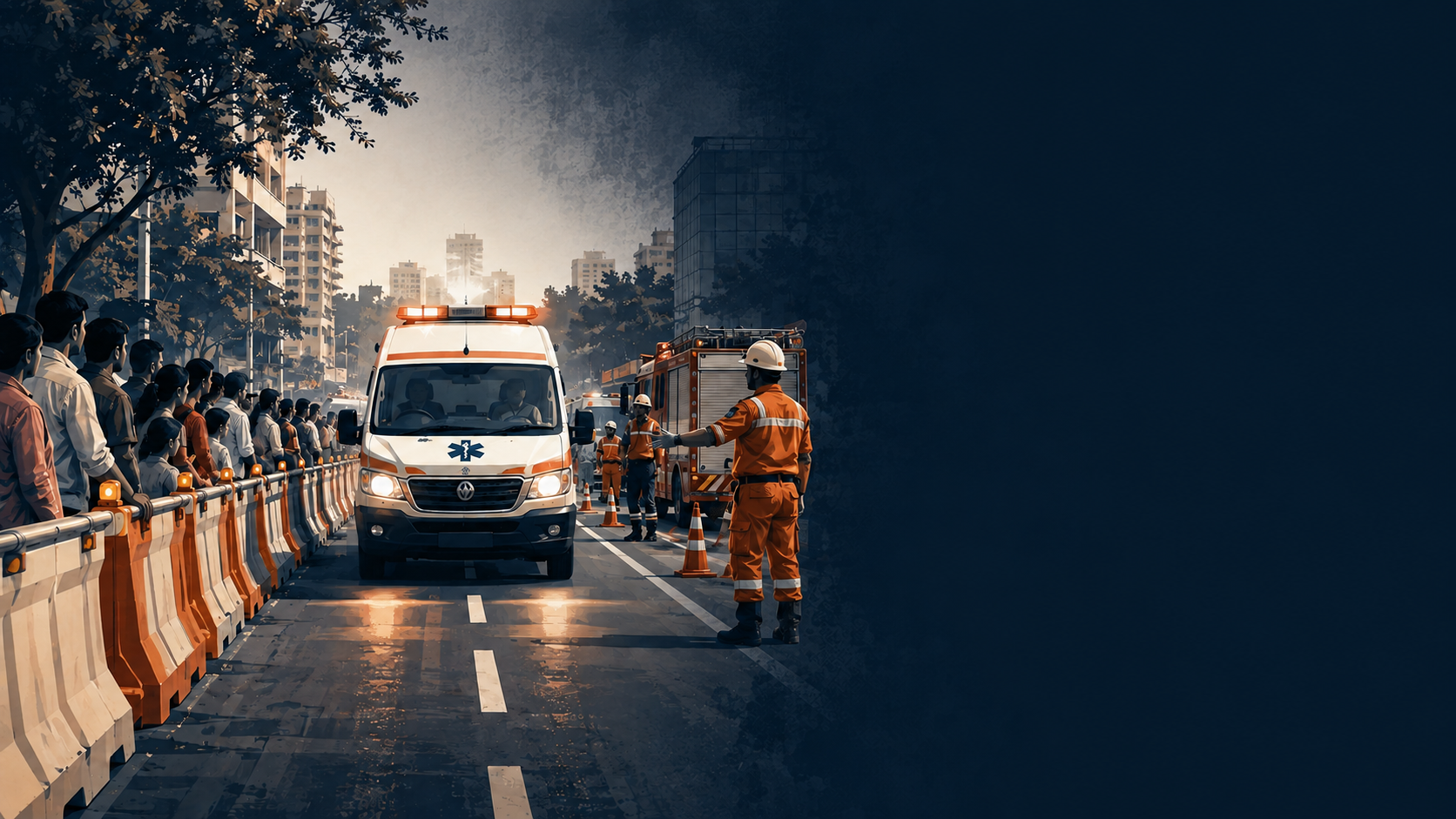
Quick answers
How can residents keep rescue access clear during an emergency?
Agree who relays official instructions, identify where vehicles can be moved without entering the restricted area and keep access points free. The incident commander decides the actual cordon.
What should bystanders avoid near an emergency scene?
Do not stop, park or gather near the incident, race emergency vehicles or crowd the site. Do not enter a restricted area to film or direct vehicles against police instructions.
How can I help responders without getting in the way?
Give responders relevant location information from a safe position, remain behind official cordons and follow official directions over informal crowd instructions.
Which number should be used to report an emergency in India?
India's unified emergency reporting number is 112. Report the emergency, stay behind cordons and keep ambulance and response routes clear.
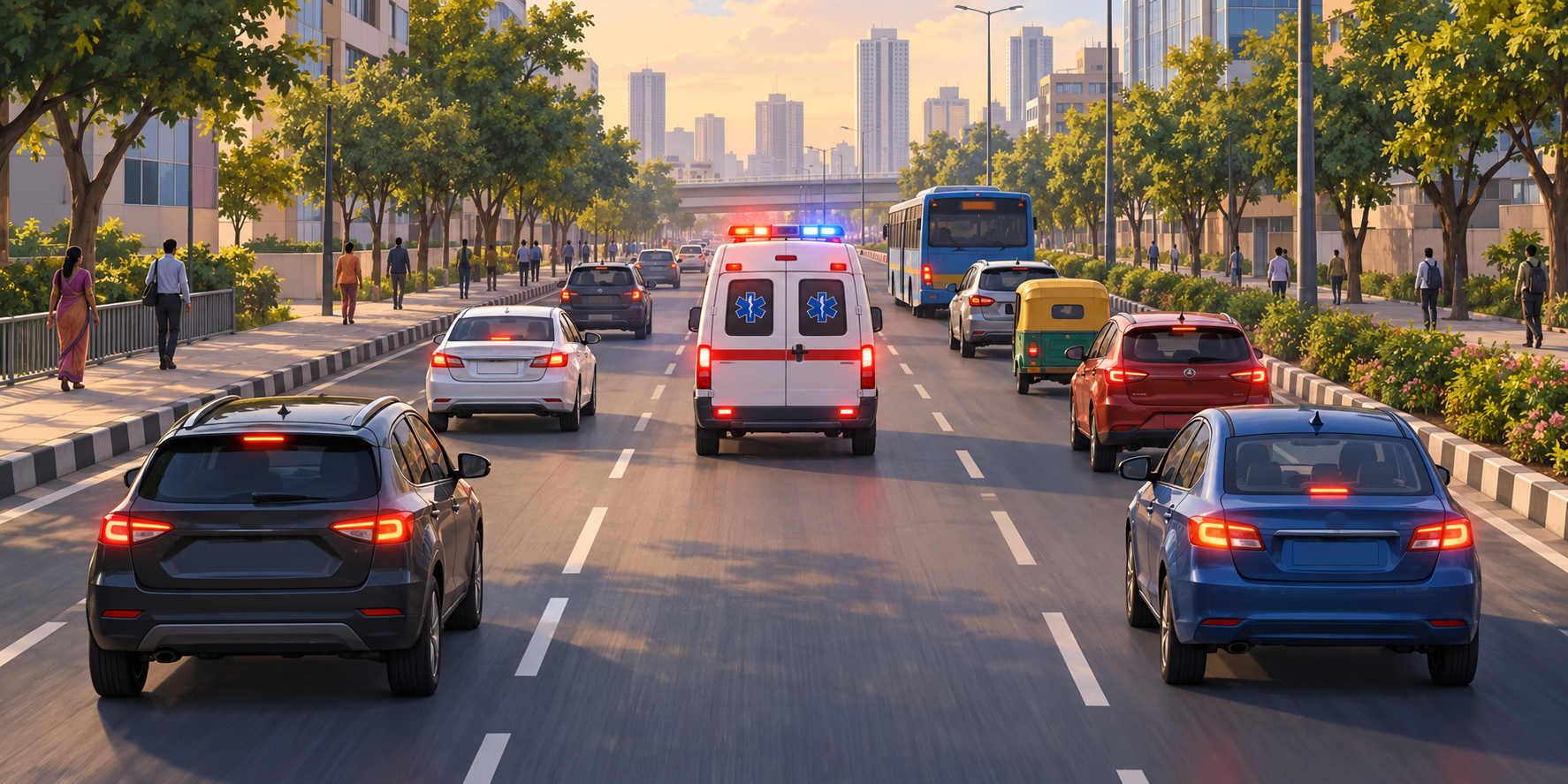
An emergency response needs usable access. In its 7 September Satya Niketan advisory, Delhi Traffic Police asked the public to avoid affected routes, obey traffic personnel and avoid stopping, parking or gathering near the incident. Incident-specific official advisory.
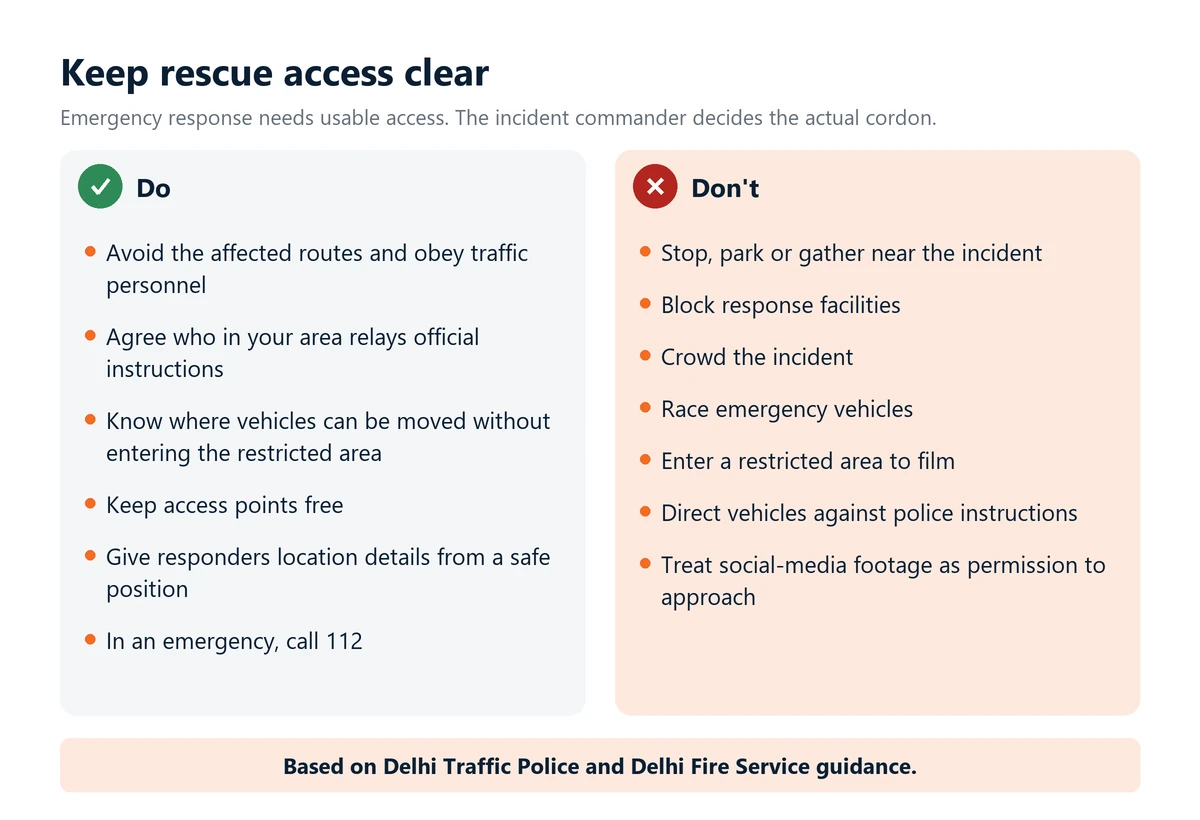
Delhi Fire Service also advises against blocking response facilities, racing emergency vehicles or crowding an incident. Delhi Fire Service guidance.
Turn that guidance into a neighbourhood arrangement: agree who relays official instructions, identify where vehicles can be moved without entering the restricted area, and keep access points free. These are editorial planning suggestions; the incident commander decides the actual cordon.
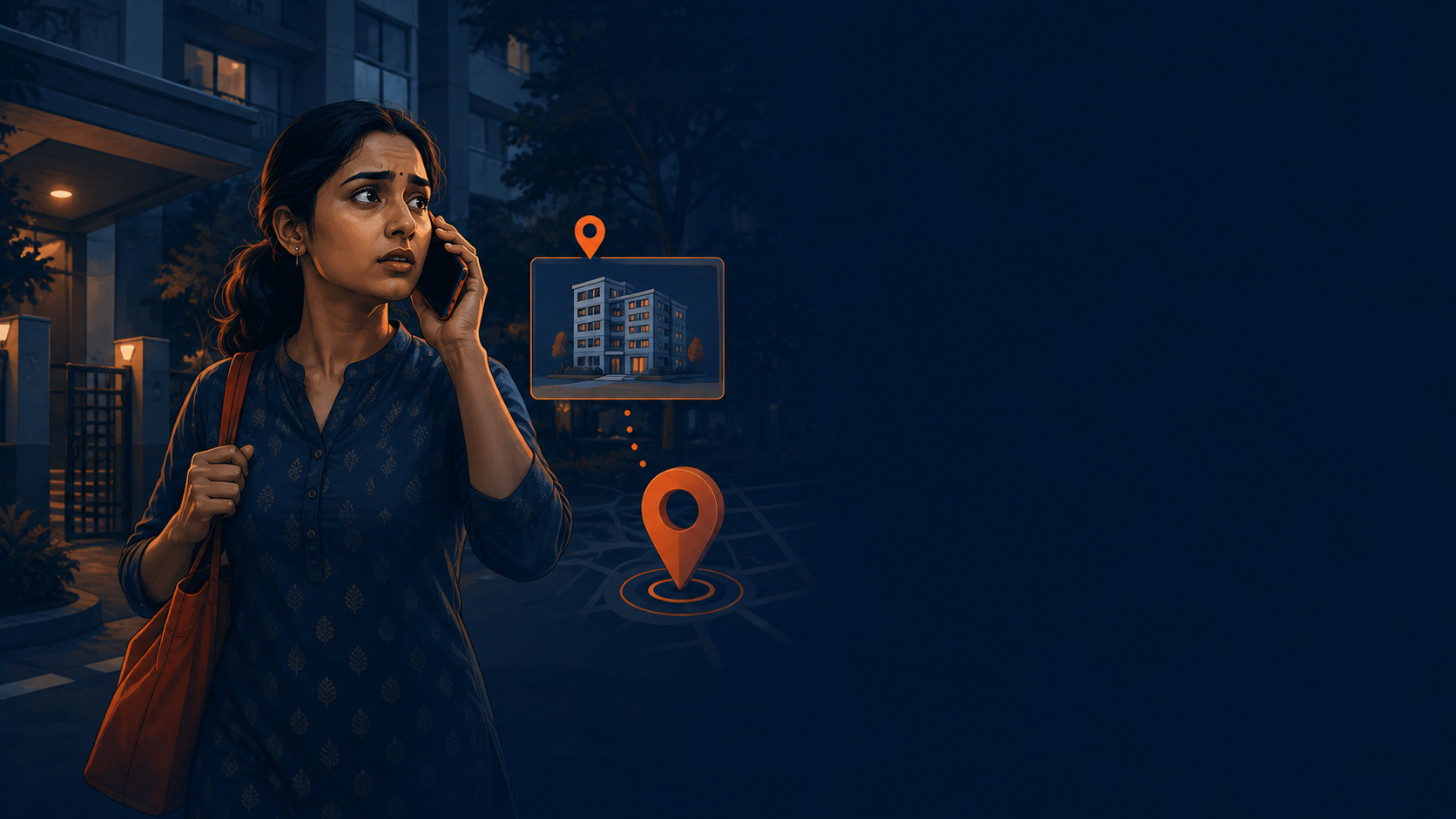
Give responders relevant location information from a safe position. Do not enter a restricted area to film, direct vehicles against police instructions or treat social-media footage as permission to approach.
India’s unified emergency reporting number is 112. Ministry of Home Affairs ERSS.
No comparable Indian statistic measuring lives saved by clearing lanes was established in this review. The evidence here is Indian operational guidance, not a numerical benefit claim.
About the videos: The video panel contains related safety and awareness material, clearly labelled by source and geography. It is not footage of this incident or evidence of its cause.
What needs attention
- Official response directions take priority over informal crowd instructions.
Controls that reduce risk
- Identify access points with your building manager.
- Share current official directions with residents.
- Move only as directed and from a safe position.
Common unsafe practices
- Blocking access or crowding the site conflicts with Delhi Fire Service advice.
Leave a comment