
Quick answers
Should a layperson check a pulse first?
No; if an adult is unresponsive and not breathing normally, call 112, start chest compressions and use an AED.
Does every emergency have the same golden hour?
No; timing and care depend on the condition.
How long do I cool a thermal burn?
Use cool running water for 20 minutes while keeping the rest of the person warm.
This is a general guide, not a promise that every emergency has the same “golden hour” or that every condition can wait five minutes. The useful first move is to make the scene safe, call for help early, and take only the action that fits the person’s condition. If the scene is unsafe, stay back and tell responders what you can see.
Start with scene safety and a call
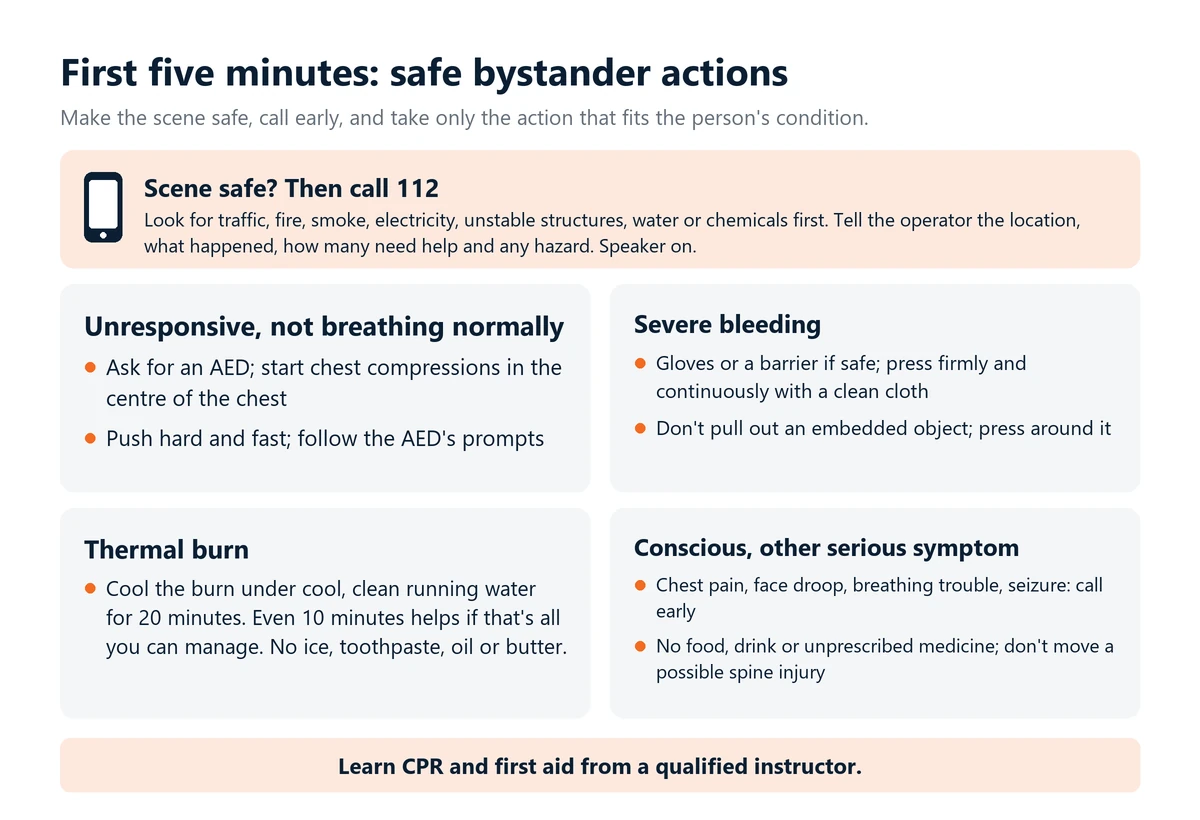
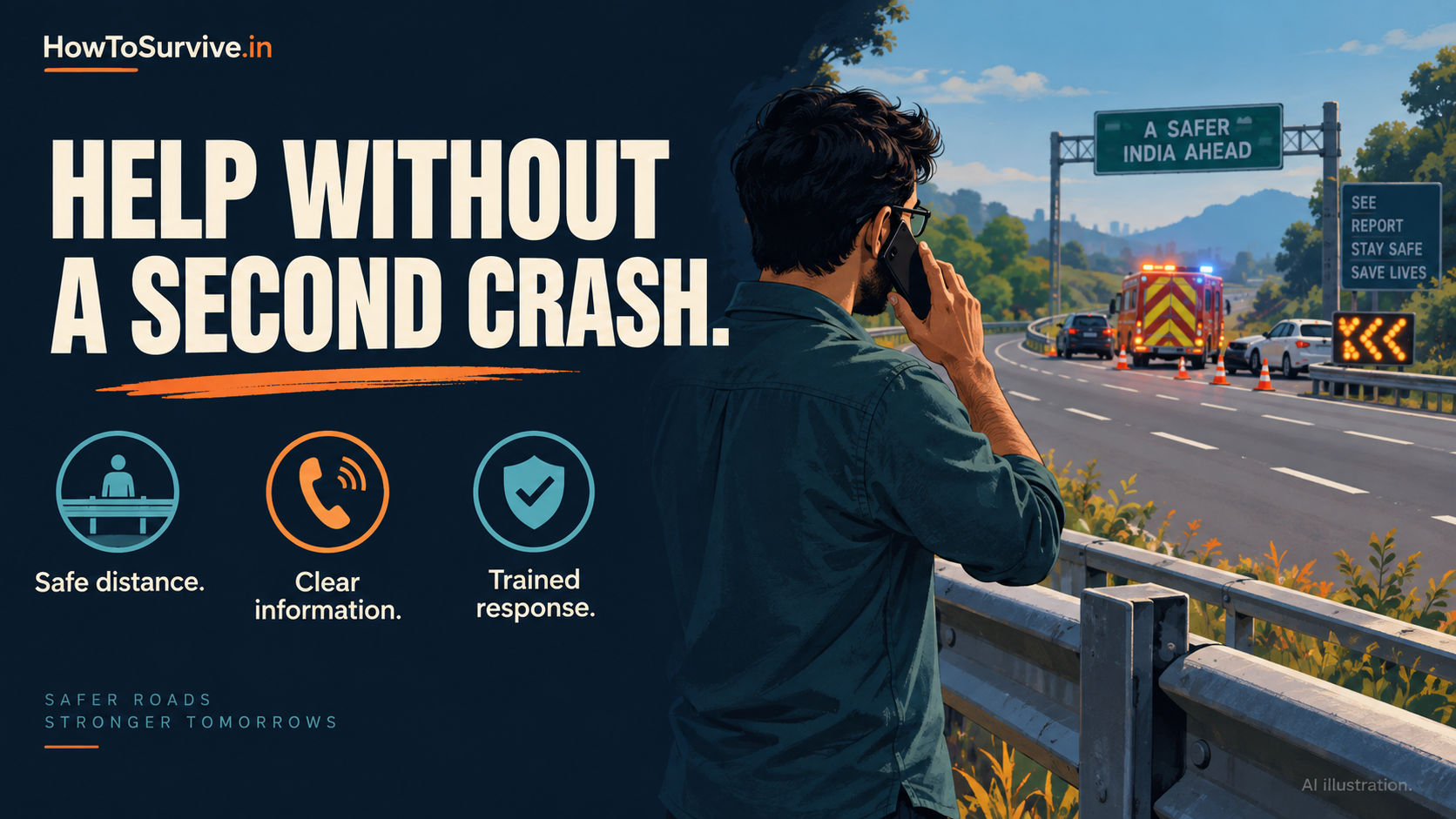
Look for traffic, fire, smoke, electricity, unstable structures, water or chemicals before approaching. Do not become another casualty. Shout for help. In India, call 112 for an emergency; tell the operator the exact location or landmark, what happened, how many people need help and whether the scene is hazardous. Put the phone on speaker and follow the operator’s instructions. Ask another person to fetch an AED or first-aid kit if available.
If an adult is unresponsive and not breathing normally
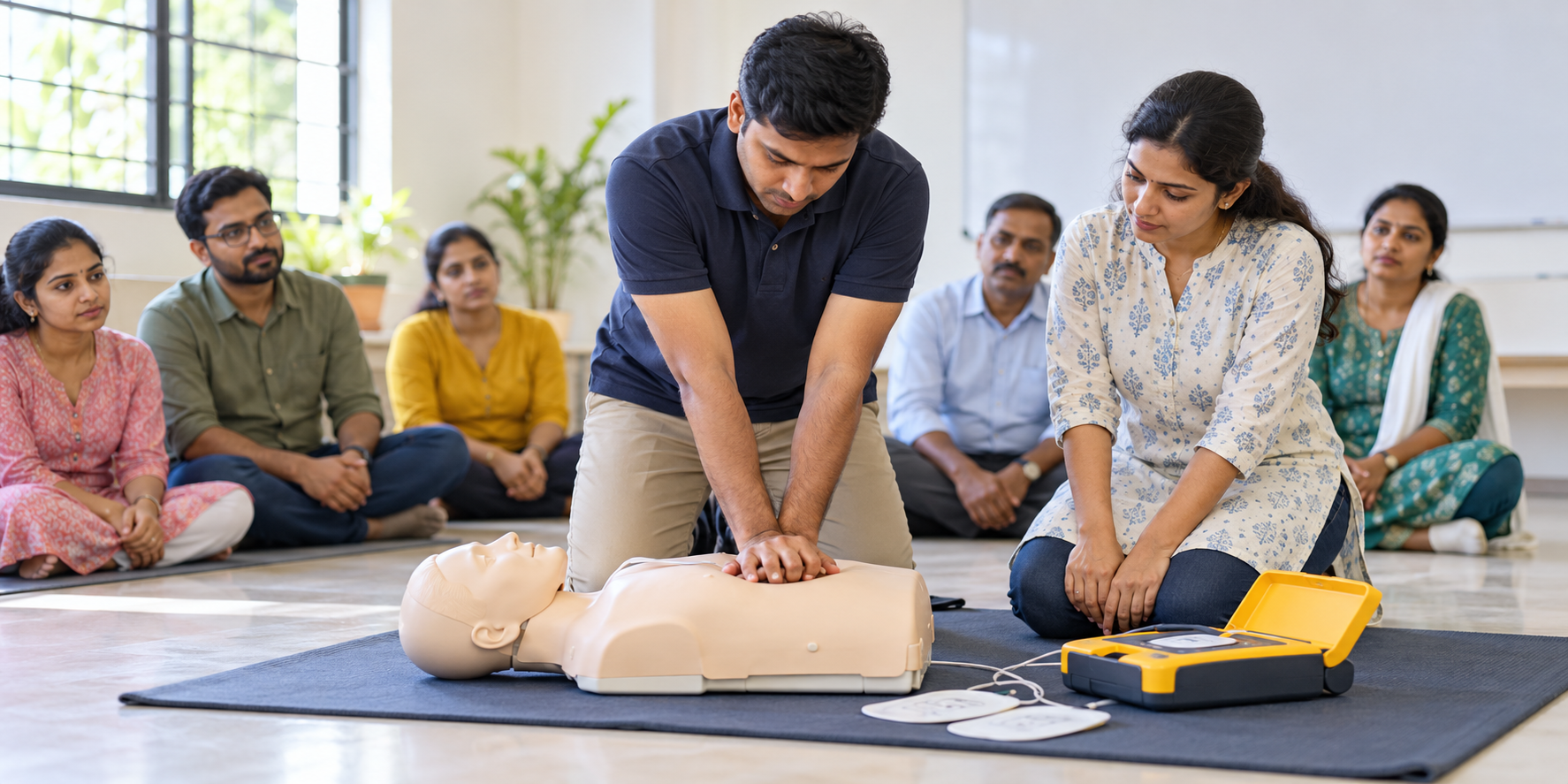
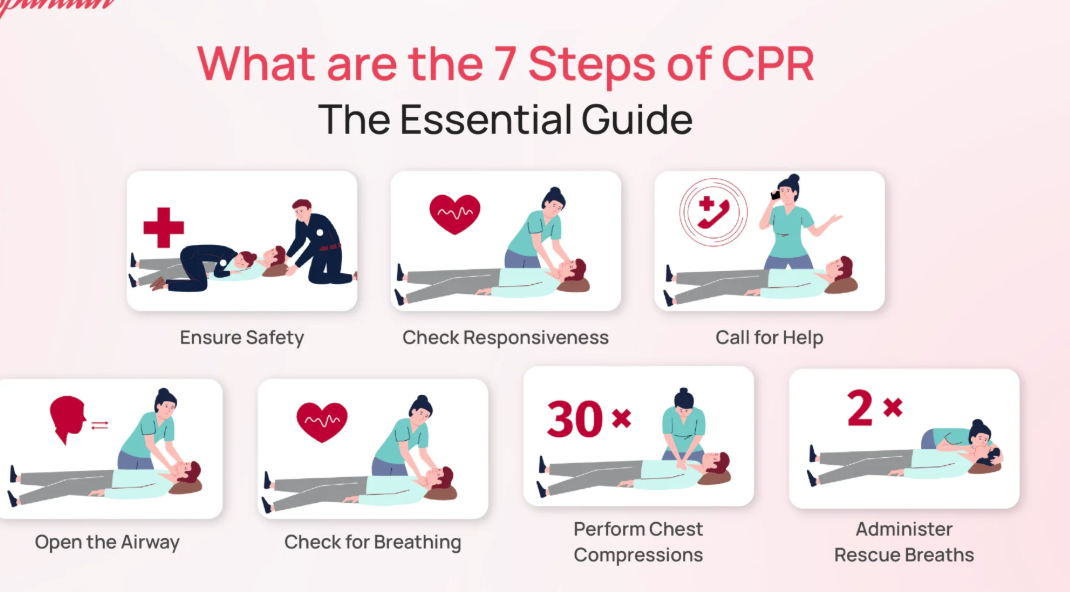
If an adult does not respond and is not breathing or is only gasping, treat this as possible cardiac arrest. Call 112, ask for an AED and begin chest compressions in the centre of the chest. Do not delay CPR while a lay bystander tries to find a pulse. Push hard and fast, allow the chest to rise between compressions, and follow the AED’s spoken prompts as soon as it arrives. If you are trained and willing to give breaths, follow your CPR training; otherwise continue chest compressions. Continue until trained responders take over, the person clearly shows signs of life, you are exhausted, or the scene becomes unsafe. Guidance for children, drowning and other special situations differs; follow the emergency operator and your training.
If there is severe external bleeding
Call 112. If safe, use gloves or another barrier and press firmly and continuously directly on the wound with a clean dressing or cloth. Keep pressure on while help is coming. Do not pull out an embedded object; press around it instead. A tourniquet or wound packing is for the appropriate injury and someone trained to use it. Watch for changes in breathing and responsiveness.
If there is a thermal burn
Move the person away from the heat source if it is safe. Cool the burned area under cool running tap water for 20 minutes; keep the rest of the person warm. Remove jewellery and loose clothing near the burn, but never pull away material stuck to the skin. After cooling, cover the burn loosely with a clean non-fluffy dressing or cling film; do not wrap a limb tightly or use ice, butter, oil or toothpaste. Seek urgent medical help for a large or deep burn, a burn to the face or hands, smoke inhalation, or any concern about a child. Chemical and electrical burns require hazard-specific care and urgent assessment.
If the person is conscious but has another serious symptom
Chest pain, sudden facial droop or speech difficulty, severe breathing trouble, a seizure, or a major injury still needs an early emergency call. Do not give food, drink or unprescribed medicine. Keep the person as comfortable and safe as possible while following the operator’s advice. Avoid moving someone with possible head, neck or spine injury unless staying there is dangerous.
What not to assume
There is no verified single percentage of “preventable emergency deaths” across fires, road injuries, stroke and cardiac arrest, and no universal survival loss per minute for all of them. Ambulance arrival times vary by place and situation. This guide replaces those unsupported claims with practical first steps. Learning CPR and first aid from a qualified instructor is more useful than memorising a slogan.
Before an emergency happens
Save 112, know the address and landmarks of your home or workplace, check that exits are usable, and ask where the nearest AED and first-aid kit are located. Practise a recognised CPR/first-aid course. Review this advice when official guidance changes.
Reviewed 6 October 2026. Sources: American Heart Association 2025 Adult Basic Life Support; American Red Cross life-threatening bleeding guidance; Queen Victoria Hospital NHS burns first aid; India Ministry of Home Affairs Emergency Response Support System. This article provides general information and is not a substitute for emergency services or hands-on training.
What needs attention
- The old all-emergency mortality and preventability percentages had no matched source.
- Lay CPR recognition relies on responsiveness and breathing, not a prolonged pulse search.
- Scene safety and early emergency activation are essential.
- First-aid steps differ by condition; no single golden-hour formula fits all.
Controls that reduce risk
- Save 112 and your complete address.
- Know where the nearest AED and first-aid kit are.
- Take an accredited CPR and first-aid course.
- Keep exits and responder access usable.
Common unsafe practices
- Entering an unsafe scene.
- Waiting to find a pulse before lay CPR.
- Treating gasping as normal breathing.
- Removing an embedded object.
- Cooling a burn with ice or applying oil or toothpaste.
- Repeating unsupported universal survival percentages.

Leave a comment