
Quick answers
What should I do if I see a road accident in India?
Stop only where it is safe and lawful, stay out of traffic and call 112. Give the exact location, direction of travel, number of vehicles, known hazards and an estimate of casualties.
Should I move an injured person after a road crash?
Do not move a casualty unnecessarily, as movement can worsen injury. Move someone only if an immediate threat makes staying in place more dangerous and it can be done as safely as possible.
How can a bystander help a road crash victim until the ambulance arrives?
When safe, check responsiveness and breathing, follow the dispatcher's instructions and use recognised first aid such as bleeding control or CPR when trained. Do not give food, drink or unverified medicines.
When are professional responders needed at a crash scene?
Trapped casualties, unstable vehicles, fire and hazardous-material risks need professional responders. Bystanders should warn others from a safe position and let responders reach the scene.
If you are in the crash
Your first job is to stop a second crash from hitting you. If the vehicle can still move and nobody is badly hurt, pull over as far from moving traffic as you safely can.
- Switch on the hazard lights and switch off the engine.
- Check yourself first, then the people with you. If you smell fuel or see smoke, get everyone out.
- Get out on the side away from traffic if it is safe, and wait well clear of the road, behind a barrier if there is one. Do not stand between vehicles.
- Call 112. Give the exact location, the direction you were travelling and how many people are hurt.
- Do not pull an injured person out of the vehicle unless staying there is more dangerous, for example because of fire. Unnecessary movement can worsen injury.
If you stop to help: do not create a second crash
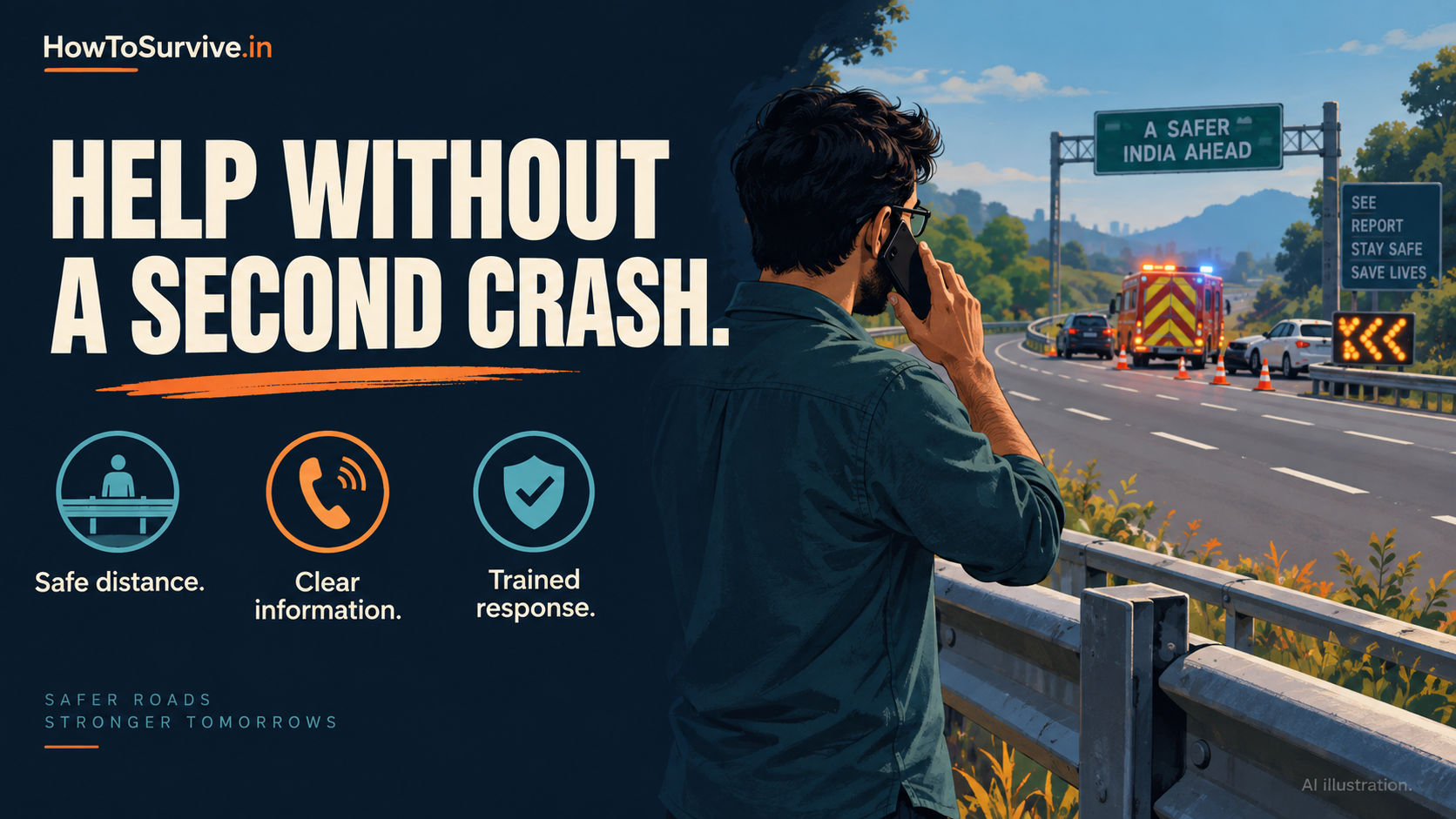
At a road collision, passing traffic, fuel, unstable vehicles and damaged power lines may threaten bystanders as well as injured people. Stop only where it is safe and lawful, keep yourself out of traffic and call India’s emergency number 112. Give the exact location, direction of travel, number of vehicles, known hazards and an estimate of casualties. Do not step into a live lane or improvise a road closure that puts another person in danger.
Let responders reach the scene
Warn people from a safe position and follow dispatcher directions. Do not move a casualty merely to make room for a photograph or a vehicle; unnecessary movement can worsen injury. Move someone only if an immediate threat makes remaining in place more dangerous and it can be done as safely as possible. Professional responders are needed for trapped casualties, unstable vehicles, fire and hazardous-material risks.
Help within your training
Check responsiveness and breathing when it is safe to reach the person. Follow the emergency dispatcher’s instructions and use recognised first-aid skills, including control of severe external bleeding or CPR when indicated and trained. Do not give food, drink or unverified medicines. Keep an injured person as comfortable as the situation permits and watch for changes until help arrives. Give responders a concise account of what you saw and did.
Prepare as a driver and passenger
Wear a seat belt, use suitable child restraints, avoid impairment and distraction, and keep the vehicle roadworthy. Learn first aid and how to share a precise location. This article concerns general scene response, not the casualty count or cause of any named crash; those require a separate verified case study.
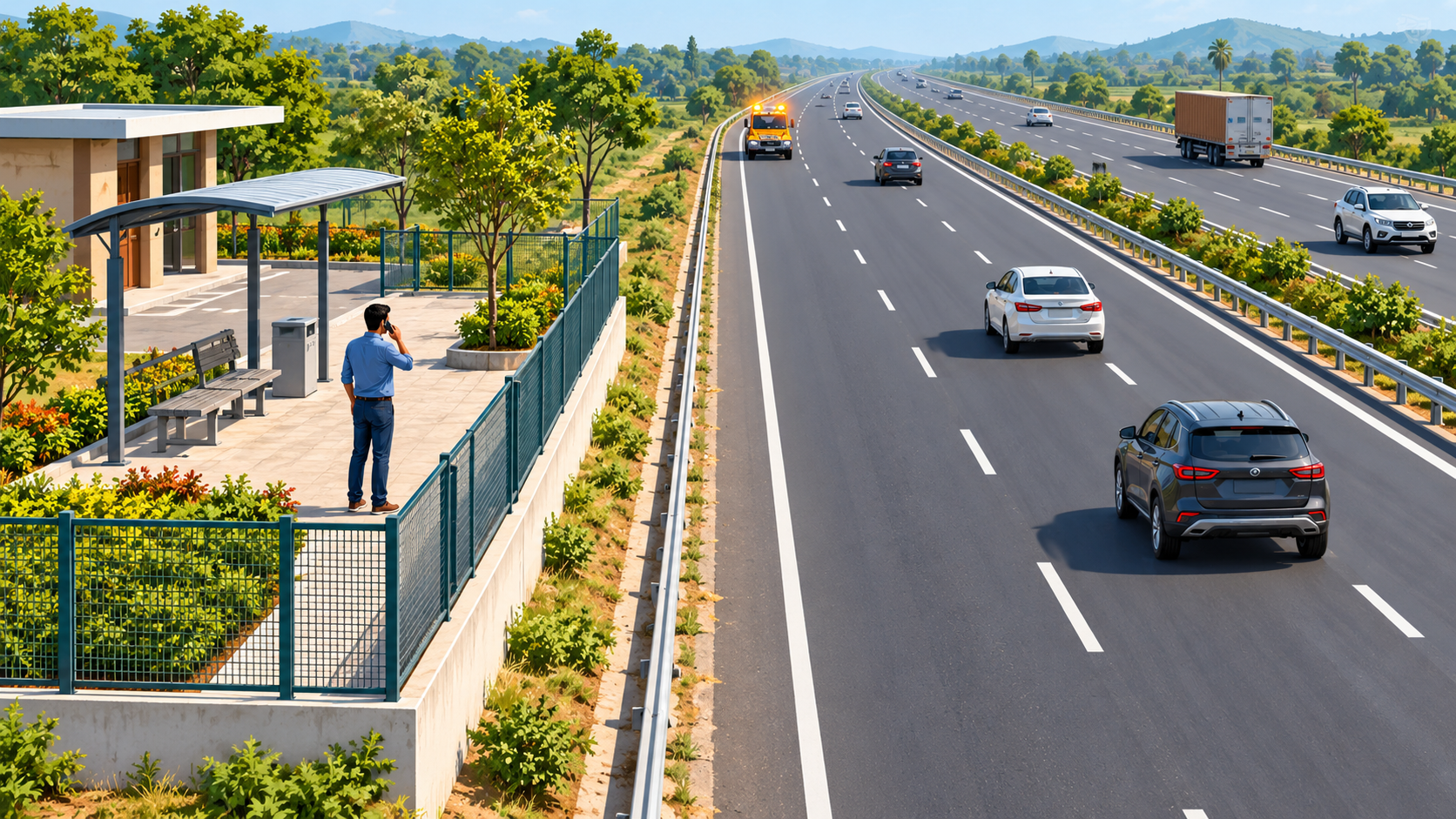
Cover note: AI-generated editorial illustration of a fictional caller standing behind a barrier and away from highway traffic, not a real crash photograph.
Source boundaries: St John Ambulance’s clinically reviewed traffic-collision guide supports scene safety and cautious casualty care, but its road-control details are UK-contextual. India’s 112 number is confirmed by MHA ERSS.
What needs attention
- Passing traffic, fuel/electrical hazards and unstable vehicles make the scene dangerous. Casualties need professional assessment; avoid moving a person unnecessarily unless there is immediate danger.
Controls that reduce risk
- Plan safer driving and roadside behaviour; learn recognised first aid; know how to give an exact location to dispatch.
Common unsafe practices
- Entering live traffic.
- moving a casualty for convenience.
- treating a news crash as this guide's dataset.
Leave a comment