
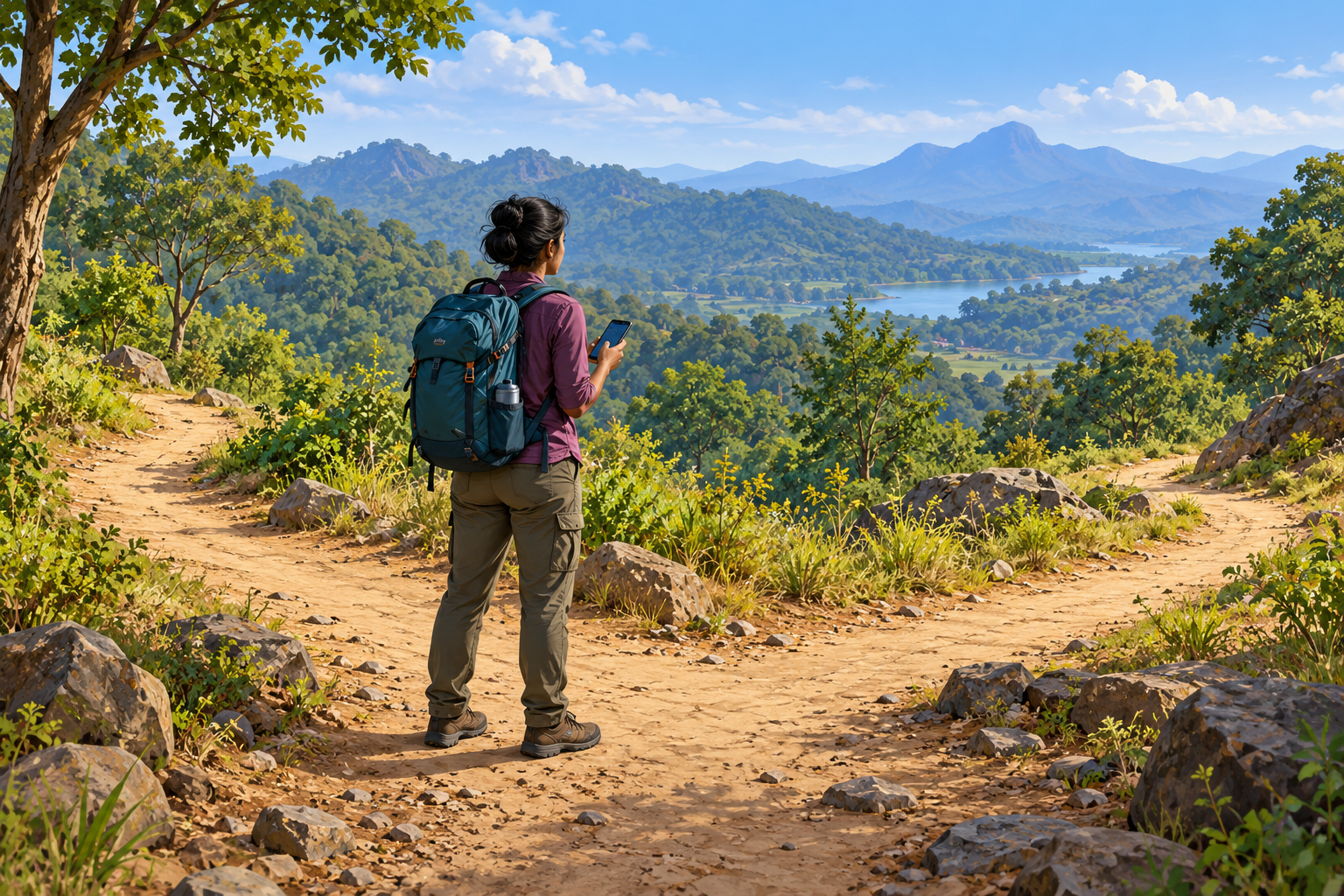
Cover image: AI-generated editorial illustration, not a photograph of a real rescue.
Leave a route before you leave home
Tell a trusted person where you plan to go, your route and when you expect to return. Carry a charged phone, offline map, weather-appropriate layers, drinking water and a way to signal. Check the local forecast and access restrictions. A short urban walk and a remote mountain route need different planning.
If you lose your location
Stop, move away from an immediate hazard and avoid wandering in circles. If you can contact rescue services, share your coordinates, last known point, trail name, visible landmarks, injuries and weather. In India, 112 is the emergency response number where urgent rescue is needed. Conserve phone power after sharing your location and follow the dispatcher’s instructions.
Stay findable, with an important exception
The U.S. National Park Service outdoor plan generally advises staying put after sharing a location because movement can complicate a search. That advice is not absolute: leave an exposed or immediately dangerous spot, seek safer shelter and follow local rescue instructions. Signal from a safe position and keep warm or shaded according to conditions. This article cannot prescribe one shelter or water strategy for every Indian terrain or season.
India emergency number: MHA ERSS confirms 112.
What needs attention
- Repeated wandering can complicate rescue. Weather, terrain, injury and water supply change the safest immediate action.
Controls that reduce risk
- Carry a charged phone, route/map, weather-appropriate clothing and basic signalling equipment; leave a route and return time with a trusted person.
Common unsafe practices
- Wandering without sharing location.
- treating stay-put as absolute in an immediate hazard.
Leave a comment