
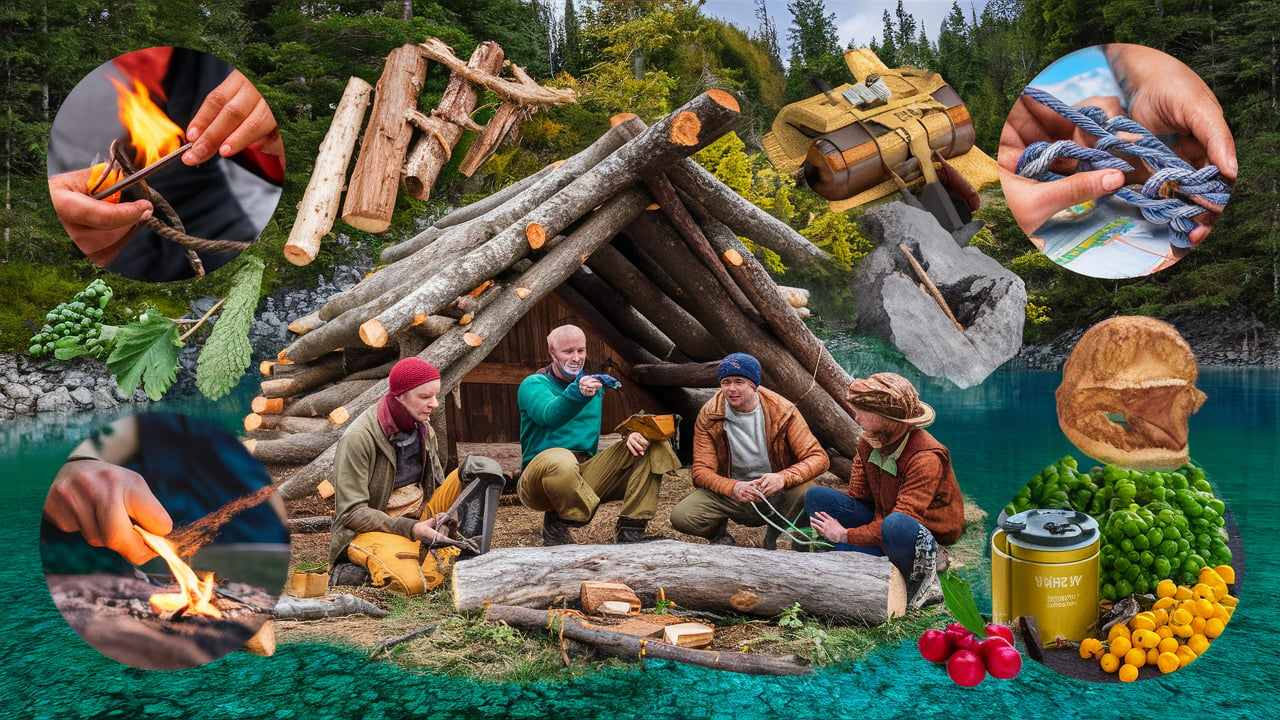
Quick answers
How do I signal for help if I am lost outdoors?
Give three short blasts on a whistle, build three fires in a triangle or a straight line, or flash a mirror or torch towards possible rescuers. If you have signal, call 112.
How can I make stream water safe to drink?
Boil it for at least one minute, use water purification tablets, or pass it through a portable water filter. Do not drink it untreated.
Where should I set up a shelter while trekking or camping?
Away from falling branches, animal paths and dry stream beds that can flood in heavy rain. Use leaves and branches underneath and around you to keep warm.
How do I use a campfire safely?
First check that fires are allowed where you are. Build it away from dry grass and anything that can catch, and put it out completely with water and soil before you leave.
Can I trap or hunt animals for food if I get stranded?
No. Under the Wild Life (Protection) Act, 1972, trapping or snaring an animal counts as hunting, and hunting protected wild animals is an offence. Carry enough food for an extra day and call 112.
A trek in the Western Ghats, a camping weekend in the hills, a long walk to a waterfall in the monsoon: most trips end with tired legs and good photos. But the weather turns, a trail splits, someone twists an ankle, and suddenly a day trip becomes a night out in the forest. A few basic skills, learnt at home, make that night much safer.
Before you leave
Tell someone at home exactly where you are going, your route and when you expect to be back. If you do not return, a search starts sooner and in the right place. Check the weather and any forest department advisory for the area, and carry a map, compass, torch, whistle, first-aid kit and spare batteries.
Finding your way
Getting lost is the start of most trouble outdoors. Know more than one way to find your direction.
- Map and compass. Learn to read a topographic map and use a compass. Practise turning the map to match the ground around you and planning a route.
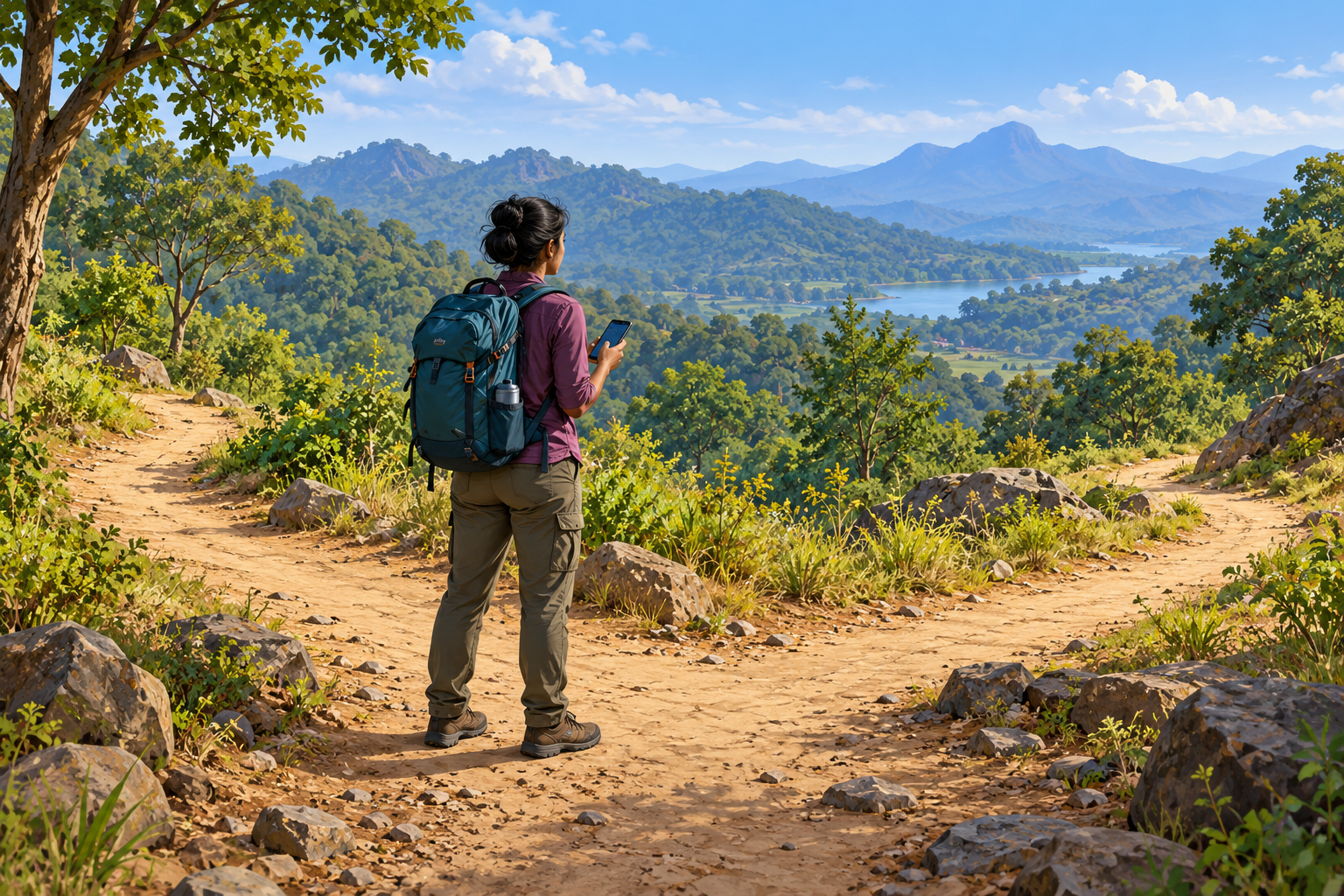
- GPS. Learn how your GPS device or app works, download offline maps, and always carry spare batteries or a charged power bank. Do not rely on phone signal in the hills.
- Natural signs. Landmarks, the sun’s position and the stars can help you keep a rough direction.
Shelter
A shelter keeps off rain, wind and cold, and gives you a safe place to rest.
- Simple shelters. Learn to put up a lean-to, a debris hut or a tarp shelter.
- Where to set up. Stay away from falling branches, animal paths and dry stream beds, which can flood quickly in heavy rain.
- Insulation. Leaves and branches under and around you help keep the body warm.
Safe drinking water
You can go without food for a while, but not without water.
- Finding water. Look for rivers, streams and lakes. Animal trails often lead to water too.
- Making it safe. Boil water for at least one minute, use purification tablets, or pass it through a portable filter. Do not drink stream water straight.
Lighting a fire, and putting it out
A fire gives warmth, cooks food and can signal for help. Check first whether fires are allowed where you are; many forests and sanctuaries ban them.
- Ways to light it. Carry a lighter, matches or fire-starter sticks. Friction methods such as the bow drill are worth learning, but are hard to use when you are cold and tired.
- Materials. Collect tinder (dry leaves, bark), kindling (small sticks) and bigger pieces of wood.
- Safety. Build the fire away from dry grass and anything else that can catch. Before you leave, put it out completely with water and soil. A smouldering campfire can start a forest fire.
Basic first aid
- First-aid kit. Carry a well-stocked kit that suits your group and the length of the trip.
- Wounds. Clean and cover cuts and scrapes to keep out infection.
- Common injuries. Learn before you go how to deal with sprains, suspected fractures, burns and insect bites.
- Burns. Cool the burn under cool, clean running water for 20 minutes. Even 10 minutes helps if that’s all you can manage. No ice, toothpaste, oil or butter.
Signalling for help
- Signal fires. Three fires in a triangle or a straight line are an internationally recognised distress signal.
- Whistle. Three short blasts mean distress, and a whistle carries much further than your voice.
- Mirror and torch. Flash sunlight with a mirror, or a torch at night, towards anyone who might see you.
If you have phone signal, call 112 and also inform the forest department.
Food
- Wild plants. Learn which plants, berries and nuts in your area are edible, and never eat anything you are not completely sure of.
- Carry your food. Pack enough ready-to-eat food for the whole trip plus a spare day. Do not trap, hunt or harm wild animals. Under India’s Wild Life (Protection) Act, 1972, trapping or snaring an animal counts as hunting, and hunting protected wild animals is an offence. If you are lost or stranded, call 112 and tell the forest department.
- Food hygiene. Keep food sealed and dry, and use safe water for cooking and washing so nobody falls ill.
If you get lost
Stop. Stay where you are, keep warm and dry, and conserve your phone battery. Walking around at random makes it harder for rescuers to find you. Signal with three whistle blasts, a mirror or a torch, and call 112 if you can get through.
Before your next trip, put a whistle and a small mirror in an outer pocket of your bag, and send your route and return time to someone at home. It takes two minutes.

What needs attention
- If someone at home knows your route and return time, a search starts sooner and in the right place
- A map, compass and GPS with spare batteries are better than relying on phone signal
- Boiling water for at least a minute, tablets or a filter make stream water safer to drink
- Three fires, three whistle blasts or a flashing mirror are recognised distress signals
- Trapping or hunting wild animals is an offence under the Wild Life (Protection) Act, 1972; carry your own food
Controls that reduce risk
- Leave your route plan and return time with a family member
- Carry a map, compass, torch, whistle, first-aid kit and spare batteries
- Pack ready-to-eat food for the whole trip plus one spare day
- Carry purification tablets or a filter, and boil water when you can
- Learn basic first aid for sprains, fractures, burns and insect bites before you go
Common unsafe practices
- Setting off without telling anyone the route and the expected return time
- Relying only on a phone to find your way in areas with no signal
- Drinking untreated stream water
- Eating wild plants or berries you are not completely sure of
- Leaving a campfire smouldering, which can start a forest fire
- Trapping or harming wild animals for food

Leave a comment