
Quick answers
How many workers die in accidents in India's factories?
The Labour Ministry told the Lok Sabha that 1,131 workers were killed and 3,251 injured in registered factories in 2024, against 1,127 killed in 2023. These counts leave out construction, farms and informal work, so the real toll is higher.
How many people die because of their work worldwide?
The ILO estimated in November 2023 that nearly 3 million people die every year from work-related accidents and diseases. Most of these deaths are from disease; about 3.3 lakh are from accidents at work.
What are the most common safety gaps in Indian workplaces?
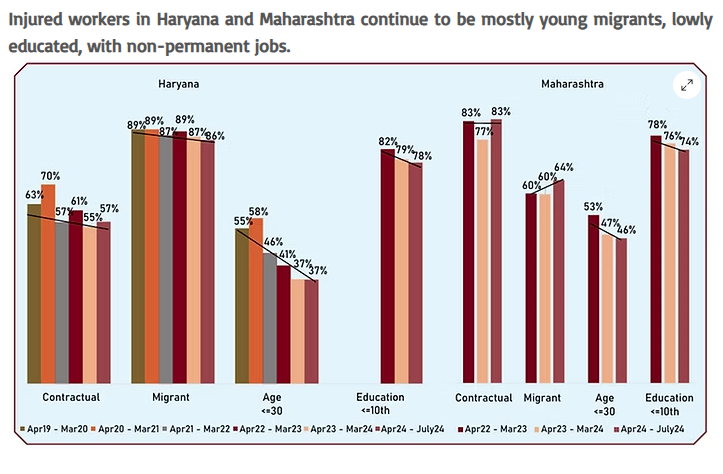
Audits that are skipped or never acted on, missing helmets, gloves, safety shoes or harnesses, untrained supervisors on heavy machinery, locked or blocked exits, and no first aid or hospital tie-up.
What can a worker do to stay safe at work?
Know two ways out of your work area, wear your safety gear every time, and speak up about a missing machine guard, a locked exit or work at height without a harness. If it is dangerous, refuse until it is fixed.
What can India learn from other countries on workplace safety?
Japan gets every worker to spot hazards before work starts, Germany links accident insurance with inspection, the US regulator can penalise violations, and the UK treats work-related stress as a health risk employers must manage. The common thread is worker involvement and real inspections.
Around the world, nearly 3 million people die every year from accidents and diseases linked to their work, according to the ILO (November 2023). About 3.3 lakh of them die in accidents at work.
In India’s registered factories alone, 1,131 workers were killed and 3,251 injured in 2024, the Labour Ministry told the Lok Sabha. That count covers registered factories only. It leaves out construction sites, farms, small workshops and the many informal workplaces where most Indians earn their living.
Behind each of those numbers is a family that sent someone to work in the morning and got a phone call instead.
Workplace deaths in India and the world (latest official figures)
| Measure | Figure | Source |
|---|---|---|
| Work-related deaths worldwide each year | Nearly 3 million (2.6 million from disease, 3.3 lakh from accidents) | ILO, 2023 |
| Non-fatal work injuries worldwide each year | 395 million | ILO, 2023 |
| Workers killed in India’s registered factories | 1,127 (2023); 1,131 (2024) | Labour Ministry, Lok Sabha, 2026 |
| Workers injured (non-fatal) in India’s registered factories | 2,981 (2023); 3,251 (2024) | Labour Ministry, Lok Sabha, 2026 |
| Deaths in factory or machine accidents (police-reported) | 660 (2024) | NCRB ADSI 2024 |
Read these numbers with care.
- The ILO figure includes deaths from work-related disease. India’s factory figure counts only reported injuries in registered factories. The two cannot be compared directly.
- Between 2017 and 2022, an average of 3 people died and 11 were injured every day in accidents in India’s registered factories (NHRC, 2023).
- Many accidents in small and informal workplaces are never reported at all, so the real toll is higher than any of these counts.
Case study: chemical factory fire at Pirangut, Pune (2021)
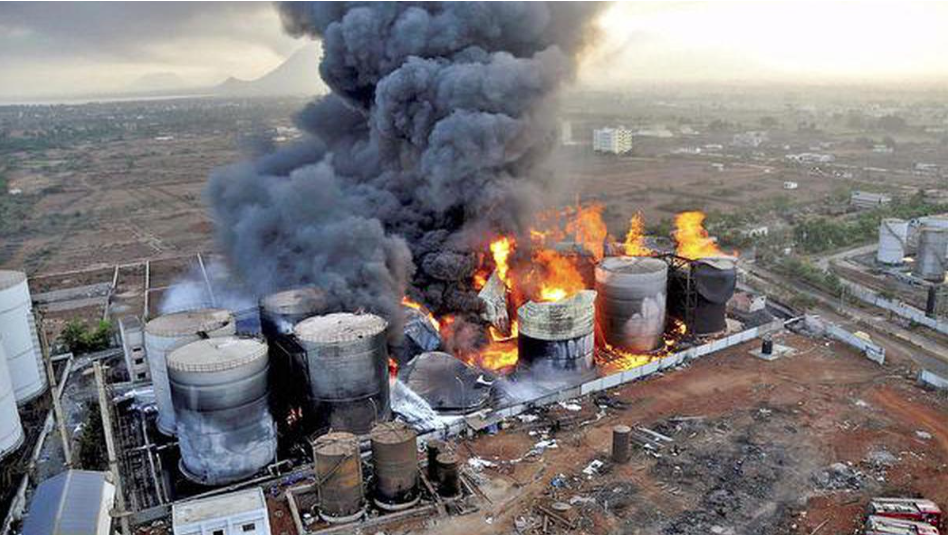
On 7 June 2021, a fire broke out at SVS Aqua Technologies, a chemical unit in Pirangut MIDC near Pune. At least 18 workers were killed, 15 of them women. Company officials said a spark in the packaging section set plastic material alight, and the fire spread fast.
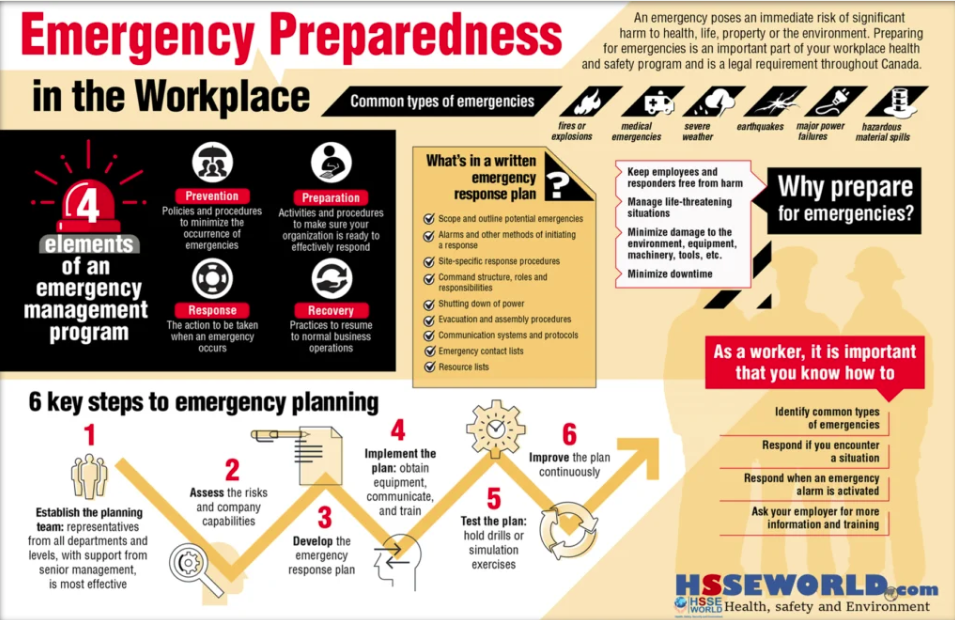
Where chemicals and plastic packaging are kept together, a small spark can become a big fire in minutes. Workers in such units need clear exits, a working alarm and a plan they have actually practised, so they can get out at once.
Common safety gaps
- No regular fire and safety audits, or audits whose findings are never fixed.
- No helmets, gloves, safety shoes or harnesses, or gear that workers are not trained to use.
- Untrained supervisors in charge of heavy machinery.
- Locked or blocked emergency exits, and staircases used as storage.
- No first-aid facilities and no arrangement with a nearby hospital.
Simple steps that prevent accidents
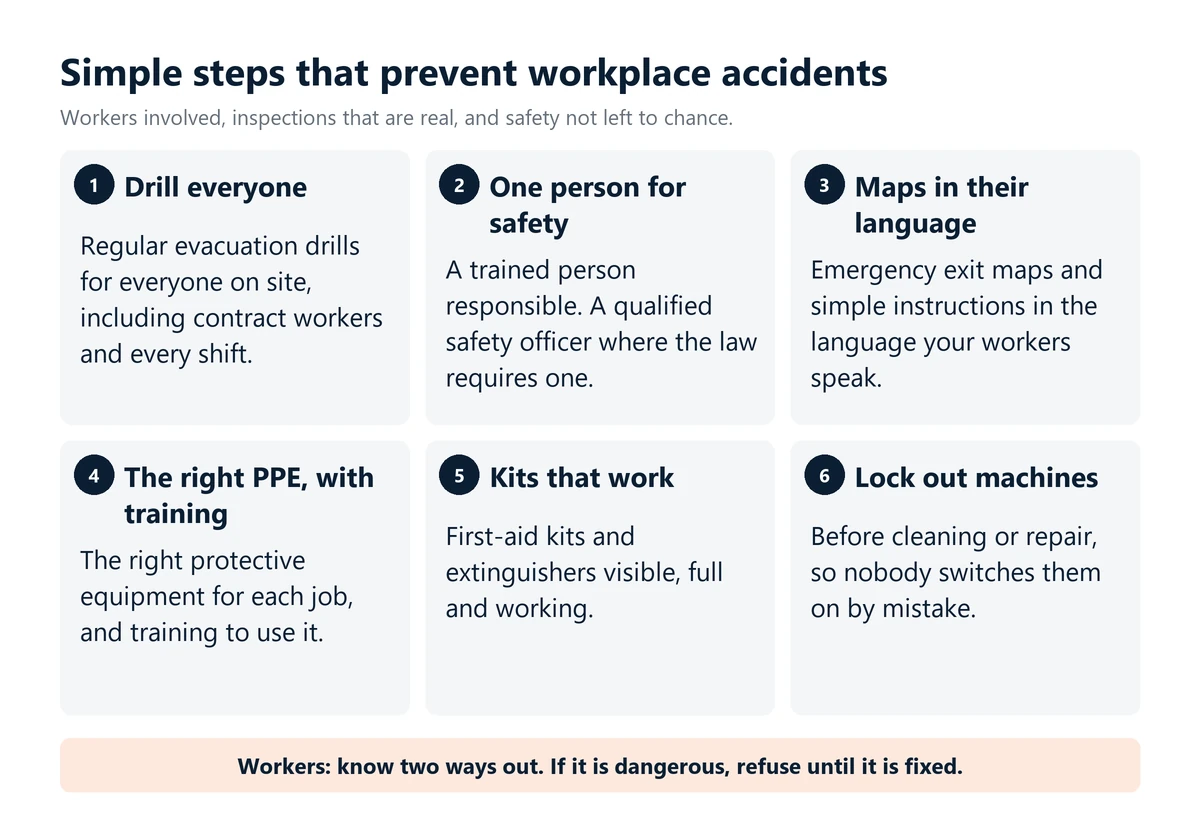
- Hold regular evacuation drills for everyone on site, including contract workers and every shift.
- Make one trained person responsible for safety. Larger factories and hazardous units must have a qualified safety officer under the law, so check what applies to your unit.
- Put up emergency exit maps and simple instructions in the language your workers speak.
- Give every worker the right personal protective equipment (PPE) for the job, and train them to use it.
- Keep first-aid kits and extinguishers visible, full and working.
- Lock out machines before cleaning or repair, so nobody switches them on by mistake.
What other countries do
- Japan: the Zero-Accident Total Participation Campaign gets every worker involved in spotting hazards before work starts.
- Germany: statutory accident insurance bodies for each industry advise and inspect workplaces, so prevention and compensation sit together.
- United States: the federal safety regulator, OSHA, can impose penalties for the violations it finds.
- United Kingdom: the Health and Safety Executive treats work-related stress as a workplace health risk that employers must manage.
India does not need to copy any one of these. What they share is simple: workers are involved, inspections are real, and safety is not left to chance.
What should change
- Enforce the Occupational Safety, Health and Working Conditions Code, 2020 properly in every state.
- Track inspections and compliance digitally, so that problems found are followed up.
- Count accidents in construction, small units and informal work, not just in registered factories.
- Let workers report hazards without fear of losing their job.
- Run a national workplace safety campaign the way road safety campaigns are run.
If you are a worker
Know two ways out of your work area. Wear your safety gear even when the supervisor is not watching. If a machine guard is missing, a fire exit is locked or you are asked to work at height without a harness, say so. If it is dangerous, refuse until it is fixed. In an emergency, call 112.
If you are an employer
Walk your shop floor this week and look for the locked exit, the missing guard and the empty extinguisher. Fixing them costs far less than one funeral.
References
- ILO, “Nearly 3 million people die of work-related accidents and diseases”, 26 November 2023
- Ministry of Labour and Employment, reply to Lok Sabha Unstarred Question No. 2309 on injuries in registered factories, 3 August 2026 (as reported by Kashmir Life)
- NHRC press release on deaths in registered factories, 2 February 2023
- NCRB, Accidental Deaths and Suicides in India 2024, Table 1.7
What needs attention
- More than 1,100 workers were killed in India's registered factories in each of 2023 and 2024
- Official counts cover registered factories only, so deaths in construction and informal work are largely missing
- At Pirangut, a spark in the packaging section started a fire that killed at least 18 workers
- Locked exits, missing PPE and untrained supervisors are among the most common gaps
- Countries with fewer workplace deaths involve workers in safety and carry out real inspections
Controls that reduce risk
- Hold regular evacuation drills for all workers and every shift
- Make a trained person responsible for safety, and appoint a safety officer where the law requires
- Give every worker the right PPE and train them to use it
- Keep exits unlocked and clear and extinguishers working
- Lock out machines before cleaning or repair
- Let workers report hazards without fear
Common unsafe practices
- Locking emergency exits or using staircases for storage
- Working without helmets, gloves, safety shoes or harnesses
- Putting untrained supervisors in charge of heavy machinery
- Cleaning or repairing machines without locking them out
- Leaving contract workers and night shifts out of drills
- Treating safety audits as paperwork

Leave a comment