

Quick answers
What to do if someone is trapped under a heavy object?
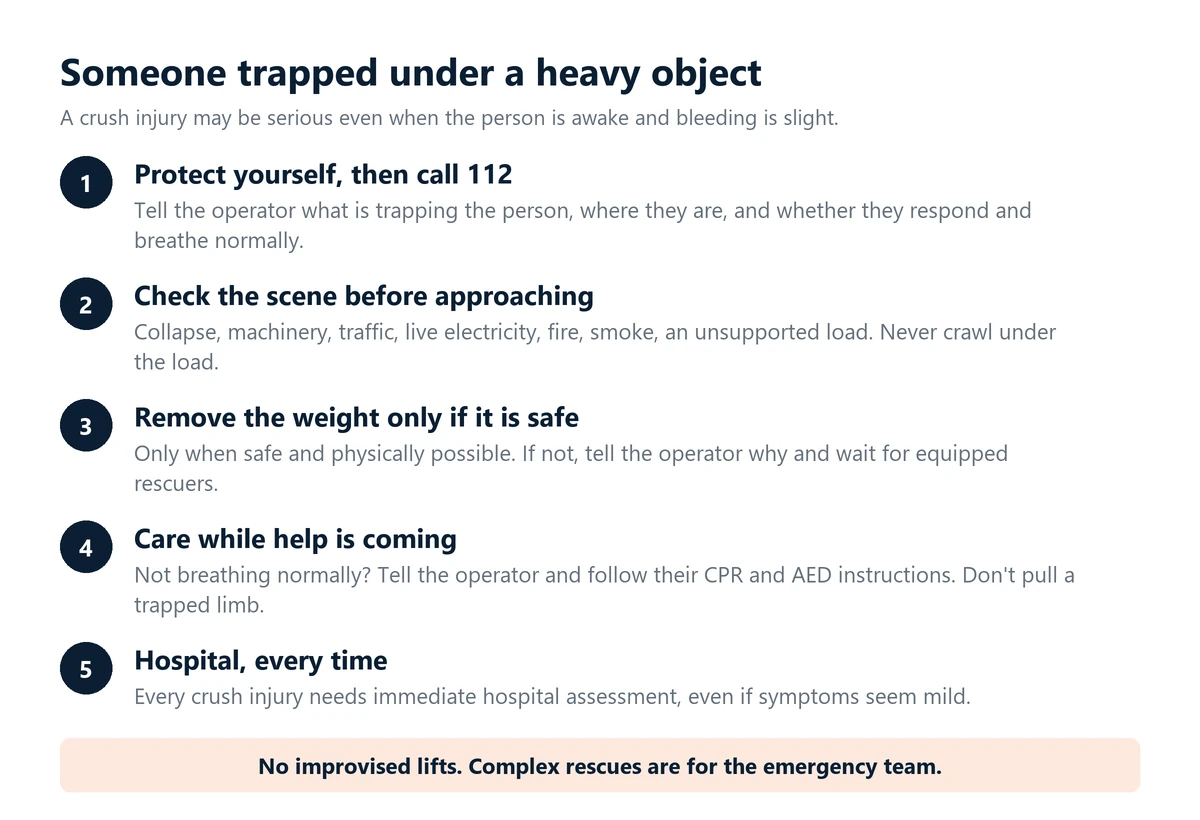
Protect yourself first and check for collapse, machinery, traffic, live electricity or fire. Call 112 and tell the operator what is trapping the person, where they are and whether they are responsive and breathing normally.
Should the heavy object be removed quickly from a crush victim?
Current ANZCOR first-aid guidance recommends removing the crushing force as soon as it is safe and physically possible. Do not attempt an unstable or improvised lift; if safe removal is not possible, wait for equipped rescuers.
Should a tourniquet be used before freeing a crushed limb?
Not routinely just to delay release. A tourniquet may be needed for actual or anticipated life-threatening limb bleeding under first-aid and dispatch guidance, and it must not delay safe release.
Does a crush injury need hospital care if there is no visible wound?
Yes. A crush injury may be serious with little visible bleeding, so every person subjected to one needs immediate hospital assessment, even if symptoms seem mild.
When someone is trapped beneath a heavy object
A crush injury may be serious even when a person is awake and there is little visible bleeding. A falling wall, vehicle, machine or heavy fixture may also leave an unstable scene. Protect yourself first, call India’s emergency number 112, and tell the operator what is trapping the person, their location and whether they are responsive and breathing normally.
Check the scene before approaching
Look for another collapse, moving machinery or traffic, live electricity, fire, smoke and an unsupported load. Warn others and keep a clear route for responders. Do not crawl beneath a load, pull on unstable debris or start an improvised lift that could drop the object again. If the scene is unsafe, stay back and give emergency services the best information you can.
Release the pressure when it can be done safely
The current Australian and New Zealand first-aid guideline recommends removing a crushing force as soon as it is safe and physically possible. This is not permission for an untrained bystander to move an unstable structure or enter a danger zone. If safe removal is not possible, tell the emergency operator why and wait for equipped rescuers. Do not deliberately prolong entrapment because of an assumed fixed time threshold. Do not apply a tourniquet routinely merely to delay release; a tourniquet may be needed for actual or anticipated life-threatening limb bleeding under first-aid and emergency-dispatch guidance, and its use must not delay safe release. Complex chest, abdominal or pelvic entrapment may require coordinated rescue and medical care; follow the emergency team’s real-time directions.
Care while help is coming
If you can reach the person without entering danger, check responsiveness and normal breathing. Tell the operator immediately if they are unresponsive or not breathing normally, and follow their instructions on CPR and an AED only when care can be provided safely. Control accessible external bleeding using first-aid training and dispatch guidance. Avoid unnecessary movement, reassure the person, keep them comfortably warm when possible, and continue watching for a change in condition. Do not pull on a trapped limb or remove an embedded object. Every person subjected to a crush injury needs immediate hospital assessment, even if symptoms initially seem mild or there is no visible injury.
Prevent the next injury
At work and public events, keep people outside lifting, collapse and falling-object zones; use competent inspection and rated supports for loads and temporary structures. At home, secure furniture that could tip and do not rely on improvised supports under a vehicle or appliance. These are general prevention measures, not a substitute for a site-specific rescue plan or first-aid training.
Evidence and limits
This guide is for public awareness in India. The release recommendation is drawn from the ANZCOR first-aid guideline and St John Ambulance Australia first-aid material; their local emergency numbers do not apply in India. The Government of India’s ERSS identifies 112 as the emergency contact. Rescue decisions depend on the actual load, injury and scene. Emergency responders should direct complex extrication.
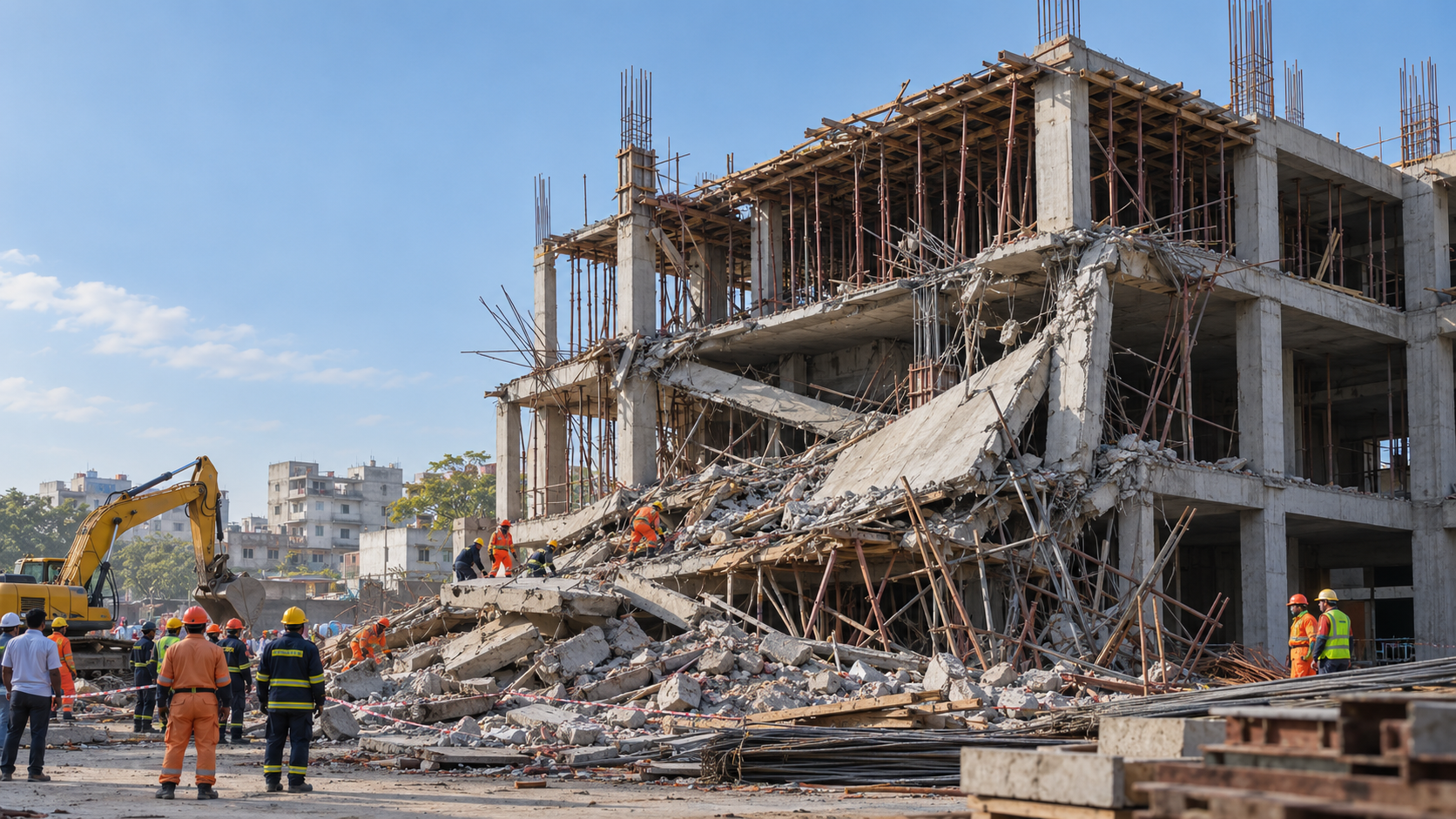
Cover image: AI-generated editorial illustration, not a photograph of a real incident.
What needs attention
- A person may have significant hidden injury with little visible damage.
- Keeping a person trapped solely because of an assumed fixed time threshold is not recommended by current ANZCOR first-aid guidance.
- An unstable load can injure the casualty and rescuers again; safe release and unsafe lifting are different decisions.
Controls that reduce risk
- Keep people out of lifting and falling-object zones.
- Use competent inspection and appropriate supports for temporary structures and raised loads.
- Prepare a way to report the exact location, hazard and access route to 112.
- Train staff in recognised first aid and in when to call equipped rescuers.
Common unsafe practices
- Entering an unstable collapse zone or crawling beneath an unsupported load.
- Delaying safe release because of a presumed crush-syndrome time threshold.
- Using an unplanned lift that transfers weight or drops the object again.
- Applying a tourniquet routinely without actual or suspected life-threatening limb bleeding.
- Assuming a conscious person with no visible wound needs no hospital assessment.
Leave a comment