
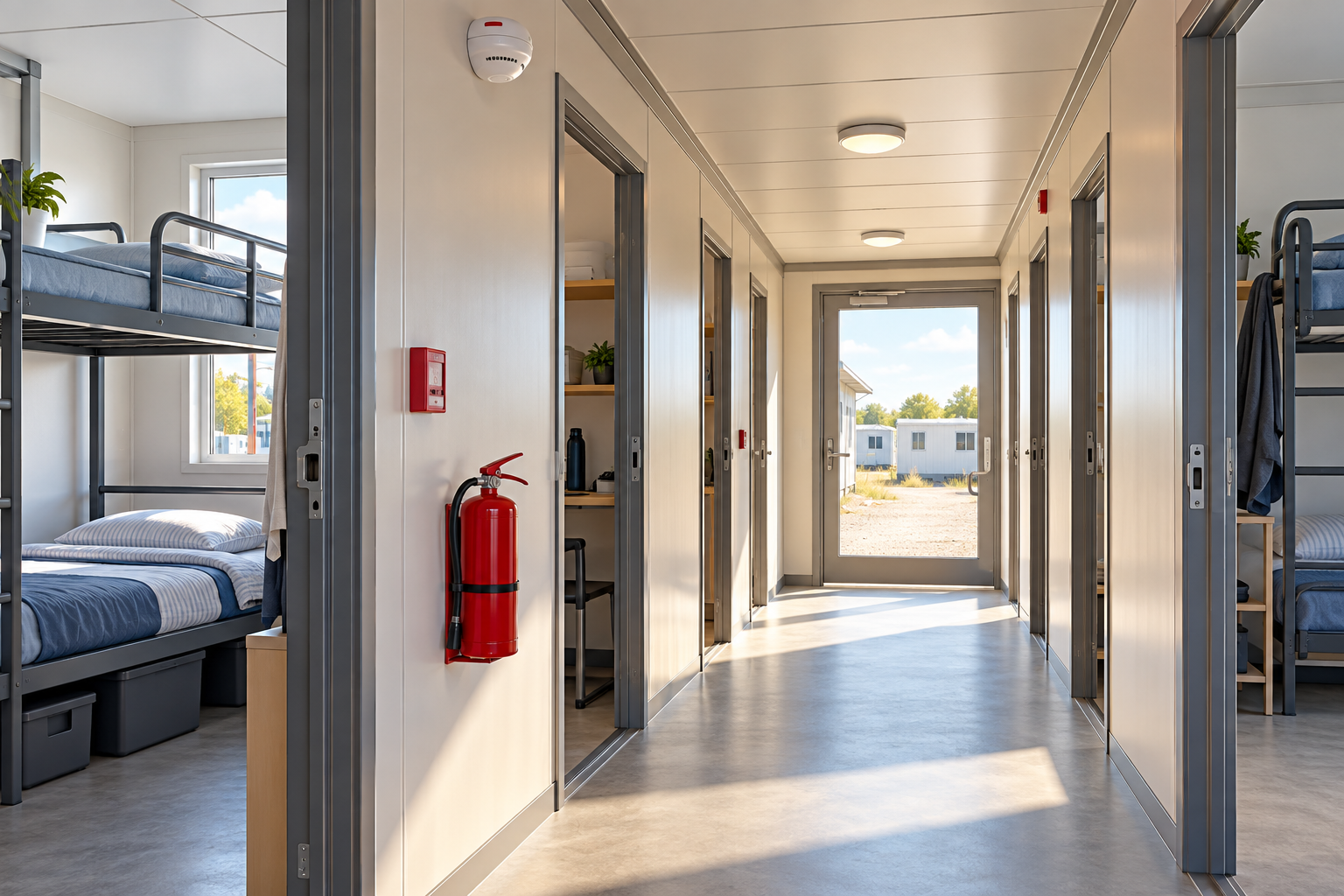
Temporary housing still needs a real fire plan
A dormitory, converted building or short-term worker camp can become crowded before its safety arrangements catch up. The operator must assess the actual occupancy and check the locally applicable building, fire and labour requirements with the competent authorities. The National Building Code of India is a model technical reference, not a substitute for local approvals or an inspection of the premises.
Start with the sleeping area
Count the people who actually sleep on each floor, including night-shift workers. Check that they can hear or otherwise receive the alarm while asleep, recognise an exit, open the required doors and reach an outdoor assembly point. Keep routes clear and lighting reliable. Provide an accessible plan for people who need assistance. Do not treat a locked gate, a roof or a ladder as an ordinary substitute for an approved escape route.
Control cooking, charging and electrical hazards
Separate cooking and fuel storage from sleeping and exit routes as required by the assessed design and local rules. Have competent people inspect wiring, distribution boards, extension leads and charging arrangements. Do not allow temporary cables or stored goods to obstruct exits. Record defects, assign a named person to correct them and check the work was completed. Detection, extinguishers and other installed systems need the inspection and maintenance appropriate to the actual building and its approvals.
A 12-point check for the operator
- Record the actual building use and number of residents.
- Check required local approvals and inspection conditions.
- Confirm every occupied sleeping area can receive the alarm.
- Walk each required exit route and test doors.
- Check emergency lighting and signs where required.
- Plan assistance for residents who cannot evacuate independently.
- Inspect cooking arrangements and fuel storage.
- Have a competent person review wiring and charging.
- Check fire equipment service and access records.
- Keep responder vehicle access and the full address available.
- Practise a night-time evacuation and account for residents.
- Assign owners and deadlines to defects, then confirm closure.
Make the response work at night
Give residents instructions in languages they understand. Identify who raises the alarm, calls emergency services, guides evacuation and accounts for occupants, without sending anyone back inside. Practise a realistic drill, including a night-time scenario and people with limited mobility. Keep the address and access gate details ready for responders. If there is smoke, an alarm or signs of fire, warn others, leave by a safe route and call India’s emergency number 112 from safety. Do not re-enter for belongings. An untrained person should not attempt to fight a growing fire.
Review every change
Reassess the plan when room layouts, staffing, cooking locations, equipment or resident numbers change. Ask the local fire authority and other competent regulators what approvals and inspection duties apply to this specific site. This is a general safety guide, not a certificate of compliance for any worker accommodation.
Cover note: AI-generated editorial illustration; no real accommodation or incident is depicted.
Source boundaries: See the BIS National Building Code as a model framework and MHA ERSS for 112. Neither source certifies this particular occupancy or its local approval conditions.
What needs attention
- Temporary occupancy can change faster than the fire plan. A blocked or unfamiliar exit, weak alarm and unattended cooking/electrical hazards can defeat evacuation.
Controls that reduce risk
- Verify the actual occupancy and locally applicable approvals; inspect cooking, charging, wiring, alarms, lighting, exits and fire-service access; assign night responsibilities and practise evacuation.
Common unsafe practices
- Treating sleeping quarters like daytime offices.
- blocked exits.
- uninspected cooking/charging.
Leave a comment