
Quick answers
Where did the Sandesh News reel happen?
We do not know. The Gujarati caption gives no place or date, and we found no news report in English, Gujarati or Hindi that says. It is a single-source reel.
Is it safe to make reels or take selfies near waves?
No. Waves, rip currents and wet rocks can knock an adult off balance in seconds, and a child is more at risk. Film from dry, higher ground or after leaving the edge, and keep one adult watching the water.
How many people drown in India?
NCRB recorded 40,044 drowning deaths in 2024 and 37,738 in 2023. It counts only deaths reported to police and its tables we read do not split drowning by age.
What should I do if someone is swept away by waves?
Shout, call 112, throw something that floats and do not go in unless you are trained. Many rescuers drown. Ask a lifeguard to help if one is on the beach.
What if I am caught in a rip current?
Stay calm and float, do not fight the current, swim parallel to the shore until out of it and then angle back, and wave for help.
Does a child need a hospital check after a near-drowning?
Yes. St John Ambulance says everyone rescued from water needs a hospital check, even if they seem well.
Do Gujarat beaches like Tithal, Dumas and Suvali have lifeguards?
We could not verify that from official sources. Ask the district administration or municipal corporation and look for a staffed post; if there is none, stay out of the water.
On 20 October 2026 a Gujarati news reel from Sandesh News went around on Instagram. Its caption says that while a child’s parents were making a reel, the child was nearly swept away by waves, and a passer-by ran in and saved the child. That is all we can say about it. We could read the caption but not play the video, the caption names no place, and in English, Gujarati and Hindi searches we found no news report that tells us where or when it happened. So please read it as “a Gujarati news reel said”, from a single source. We are not using it to blame anyone. We are using it because the situation it describes is real and keeps repeating on Indian shores: a family at the water’s edge, a phone in hand, a wave that arrives sooner or stronger than expected. Last checked: 21 October 2026.
In short
- Waves, rip currents, slippery wet rock and sudden drop-offs are dangerous even for adults. For a small child a single surge can be enough to knock them off their feet.
- Filming takes one adult out of the “watching” job. Hold the child’s hand, keep behind the wet-sand line, and take the reel after you leave the edge, or let a second adult do the watching.
- If someone is swept away, shout, call 112, throw something that floats and do not go in unless you are trained. Many would-be rescuers die.
- Anyone pulled out of water, even if they seem fine, should be checked at a hospital.
What recent Indian reports show
These are reports we opened between 20 and 21 October 2026. Counts and causes are as the outlets give them; we leave out names and do not describe minors.
Anjuna, Goa, late July 2026. A 25-year-old hotel worker from Manipur was swept away by waves while at the beach with friends. The Goan reported on 30 July that police said he “reportedly lost his balance while attempting to take a selfie” on the rocky shoreline and was dragged into the sea. Lifeguards, local residents and emergency staff searched through the night and his body was recovered off the Anjuna coast the next day; police registered a case of unnatural death. The reports differ on the day (an earlier piece in The Goan says Monday evening, its later one and DigitalGoa say Tuesday), and DigitalGoa’s first report gives no cause. A search result we could not open suggests another police account, that he had fallen asleep on a rock. So the selfie is the police’s preliminary account in one report and is not settled.
Baga, Goa, 24 June 2026. A tourist from Karnataka’s Bijapur district was sitting on the rocks near the shore when a surge of rough waves swept him into the sea. Deccan Chronicle says officials said he had been cautioned about the sea conditions but stayed on the rocks; WION reported the same day that several Goa beaches were under red-flag warnings. Neither report mentions a selfie. His body was recovered, according to Deccan Chronicle. Reports differ on his age, so we omit it.
Rewa, Madhya Pradesh, 11 May 2026. A young man entered a fast-flowing stretch below the Ton river power-plant facility to film a social-media reel and was swept away by the current. Police and villagers pulled him out with ropes and poles after more than 45 minutes, with minor injuries. The police officer quoted said the current was strong because of recent discharges, and the Superintendent of Police urged people to avoid fast water, especially for videos or stunts (Dainik Jagran English, single source).
Chhara, Gir Somnath, Gujarat, 4 August 2026. Five teenagers, students from a nearby school, were caught by the sea at a beach in Kodinar taluka. Two had gone in to bathe and were pulled into deep water; three went in to save them and were also swept away. Fishermen jumped in and rescued the three; the other two are missing and, police said, drowned. The report does not mention selfies or filming (ETV Bharat, single source). We include it because it shows how a rescue attempt can multiply the number of people in trouble.
Nani Daman, 29 August 2026. A seven-year-old girl on a family outing was carried into deeper water by a strong wave. A lifeguard on duty saw her struggling, reached her and brought her ashore in about two minutes; a video of the rescue circulated (Free Press Journal, single source opened). It is the good outcome that a staffed beach makes possible.
Goa’s lifeguard agency. The Goan reported on 17 March 2026 that Drishti Marine, which it describes as Goa’s government-appointed beach safety agency, rescued five people from drowning over one weekend, including a swimmer caught in a flash rip current at Baga. WION reported on 24 June 2026 that Goa recorded 71 drowning deaths between January and June 2026, mostly among youths, and cited risky behaviour near water, swimming in prohibited areas, alcohol and ignoring lifeguards’ warning flags. WION does not name the source of the 71 figure, so treat it as unconfirmed.
How many people drown in India
The National Crime Records Bureau’s Accidental Deaths and Suicides in India 2024 records 40,044 deaths by drowning in 2024, about 8.6 per cent of all accidental deaths, against 37,738 in 2023. Maharashtra had the most, 5,151. These are police-recorded deaths and count only what reaches a police station, so the true toll is higher. The tables we read do not give drowning by age, so we cannot give you an NCRB figure for children. The World Health Organization says children and young people aged 0 to 29 account for 57 per cent of drowning deaths worldwide, and drowning is the third leading cause of death for children aged 5 to 14. That is a global figure, not an Indian one. We looked for studies of “selfie deaths” and have not cited any because we could not verify one. For the state-wise picture see India’s accident and disaster deaths by state (NCRB 2024).
Why waves and wet rocks are so dangerous
- Rip currents. NOAA says a rip current pulls you away from shore, not under, and that fighting it only tires you. Rip currents often form on calm, sunny days, and the National Weather Service puts it plainly that good beach weather does not mean safe swimming or even safe wading.
- Sneaker waves. The National Weather Service describes these as larger-than-average swells that surge well past the normal wave line without warning, often after 10 to 20 calm minutes. Its advice: stay farther back than you think necessary, never turn your back on the ocean, and always know your escape route. These pages are American, but the physics of a surge at a rocky edge is the same on any coast.
- Swell surges and high-wave alerts. INCOIS, the Indian ocean-information service, issues swell-surge and high-wave alerts. For 19 and 20 August 2026 it advised tourists in Kerala, south Tamil Nadu and Lakshadweep to avoid beaches and nearshore areas. On 20 July 2026 INCOIS warned of waves of 3 to 4.3 metres along the Gujarat coast and said people should stay away from the shoreline (DeshGujarat). The sea may look ordinary on the day you visit, so check the alert first.
- Wet rock and sudden depth. Rocks at the edge are where a wave can reach you, and a fall there leaves nothing to hold. In both Goa cases above the person was on rocks at the water’s edge. Keep to dry sand and dry rock well above the wave line. This is our practical advice and not a quoted rule.
- Why filming makes it worse. It takes one adult’s eyes and hands, you step back and sideways to “get the shot”, and you face the camera, not the sea. Neither WHO nor NOAA discusses phones, so this is our reading of how these accidents happen, not a measured cause. WHO does say drowning risk rises when children are near water without active adult supervision.
A checklist for families
- Hold the child’s hand, not the phone, whenever you are within a few metres of the surf. Toddlers and small children can be knocked over by knee-deep water.
- Stay behind the wet-sand line. The dark, wet sand marks where waves have recently reached. If you are standing on it, you are in the waves’ range.
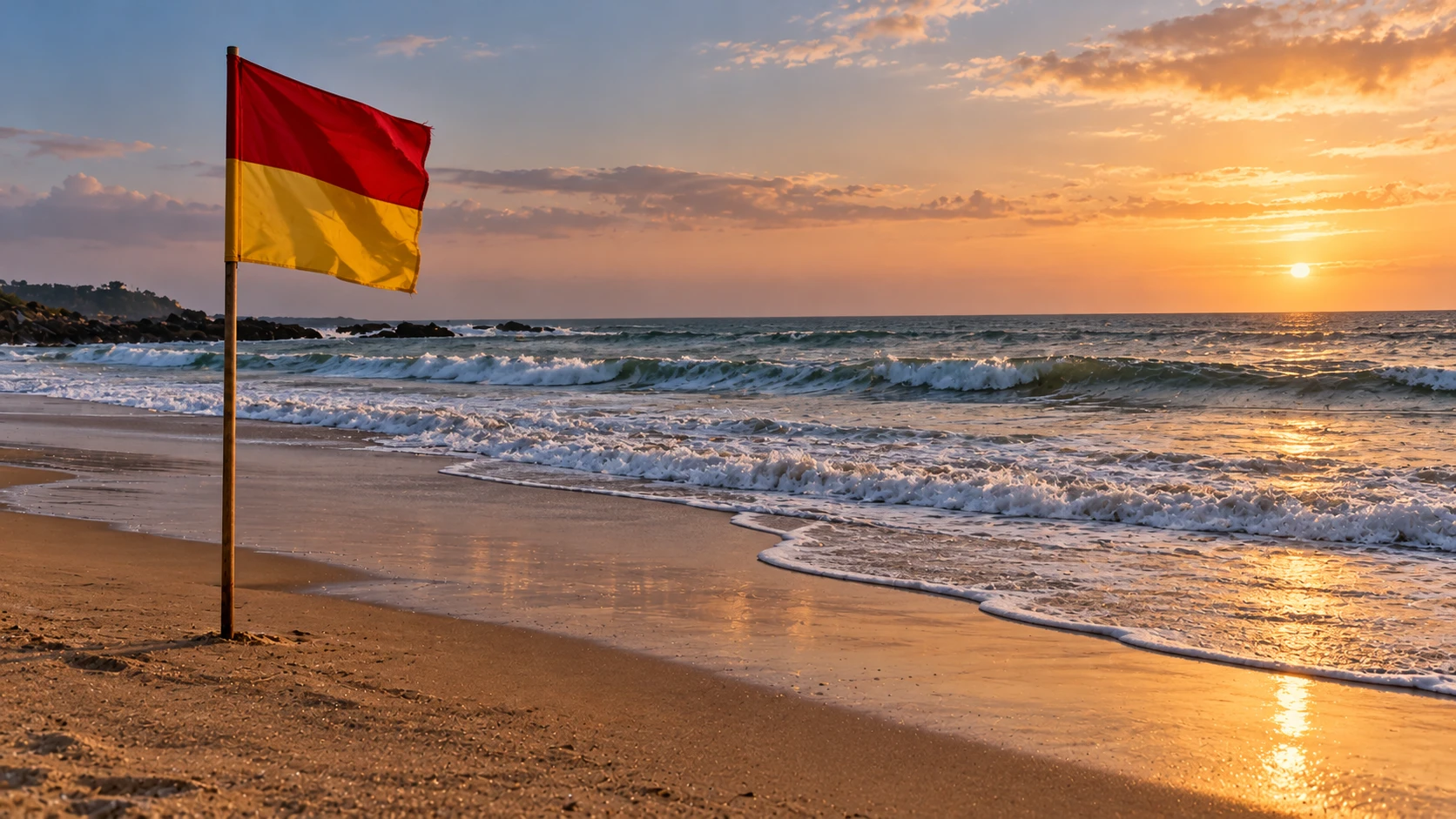
- Read the flags and boards. Where a lifeguard agency works, as at Goa’s beaches, a red flag means unsafe conditions and reports say several beaches were under red-flag warnings in June 2026. Follow the lifeguard, not the crowd.
- Never turn your back to the sea, and keep one adult whose only job is watching the child and the water.
- Pick a beach with lifeguards and swim near them. The National Weather Service gives US figures for guarded beaches that show how much a lifeguard changes the odds, and the Daman rescue above shows it in India.
- No reels or selfies at the water’s edge. Film from dry, higher ground with the child behind you, or after you have left the beach. No photo is worth a place on the rocks.
- Life jackets for children on any boat and at any waterfall or river where they will go near the water. The American Red Cross advises a life jacket on every boat trip whatever the swimming skill.
- Do not drink alcohol if you are the adult in charge, and do not take children out when a high-wave or heavy-rain alert is in force.
- Teach the child to stay out of the water unless an adult says yes, and to shout and wave if they are in trouble.
If someone is swept away
- Shout and point. Tell people nearby and keep your eyes on the last place you saw the person.
- Call 112, give the beach name, nearest landmark and what happened. Ask someone else to find the lifeguard if there is one. In many states 108 reaches an ambulance.
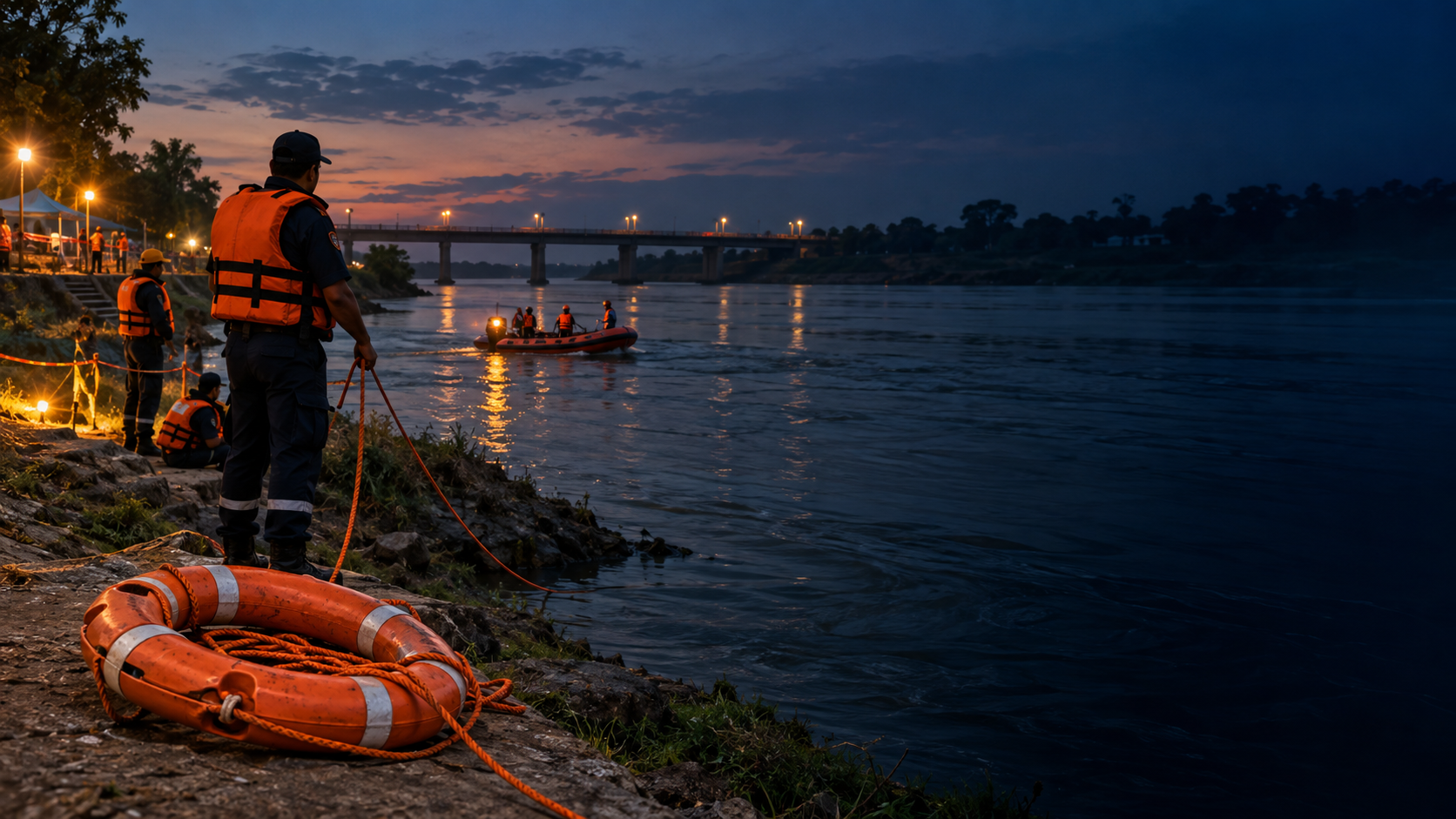
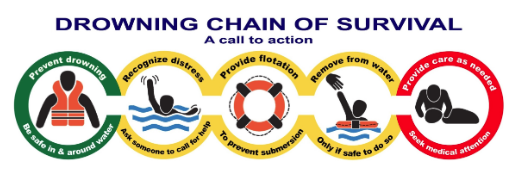
- Throw something that floats: a lifebuoy, a cooler box, a rescue tube, an empty plastic can with its lid on, a rolled jacket. NOAA says to throw something that floats and not to enter the water yourself, because many rip-current deaths happen to would-be rescuers.
- Do not jump in unless you are trained. At Chhara three teenagers who went in to rescue two others were also swept away and were saved by fishermen who knew the water.
- Bystanders can still help: fetch a rope or lifebuoy for a trained rescuer, keep watching, call out directions to the person, clear space for the ambulance and keep the family together and calm.
- The American Red Cross puts it in four words: reach or throw, do not go.
First aid after a near-drowning
The steps below come from the British Red Cross and St John Ambulance drowning pages, which we opened on 21 October 2026. They describe adult first aid. Learn child and infant resuscitation on a course from a trained instructor.
- Do not put yourself in danger. Get the person out of the water by reaching or throwing, or let a trained rescuer do it.
- Check breathing. If the person is not responding and not breathing normally, have someone call 112 and bring a defibrillator if there is one, and start CPR. For drowning, both organisations teach five rescue breaths first, then 30 chest compressions and two breaths, and carry on until help arrives. If you are alone, the Red Cross says to call after one minute of CPR.
- If the person breathes, put them in the recovery position, be ready to turn them to the side if they vomit, take off wet clothes and cover them to prevent cold.
- St John Ambulance says everyone rescued from water needs a hospital check, even if they seem well.
Monsoon, festival and immersion seasons
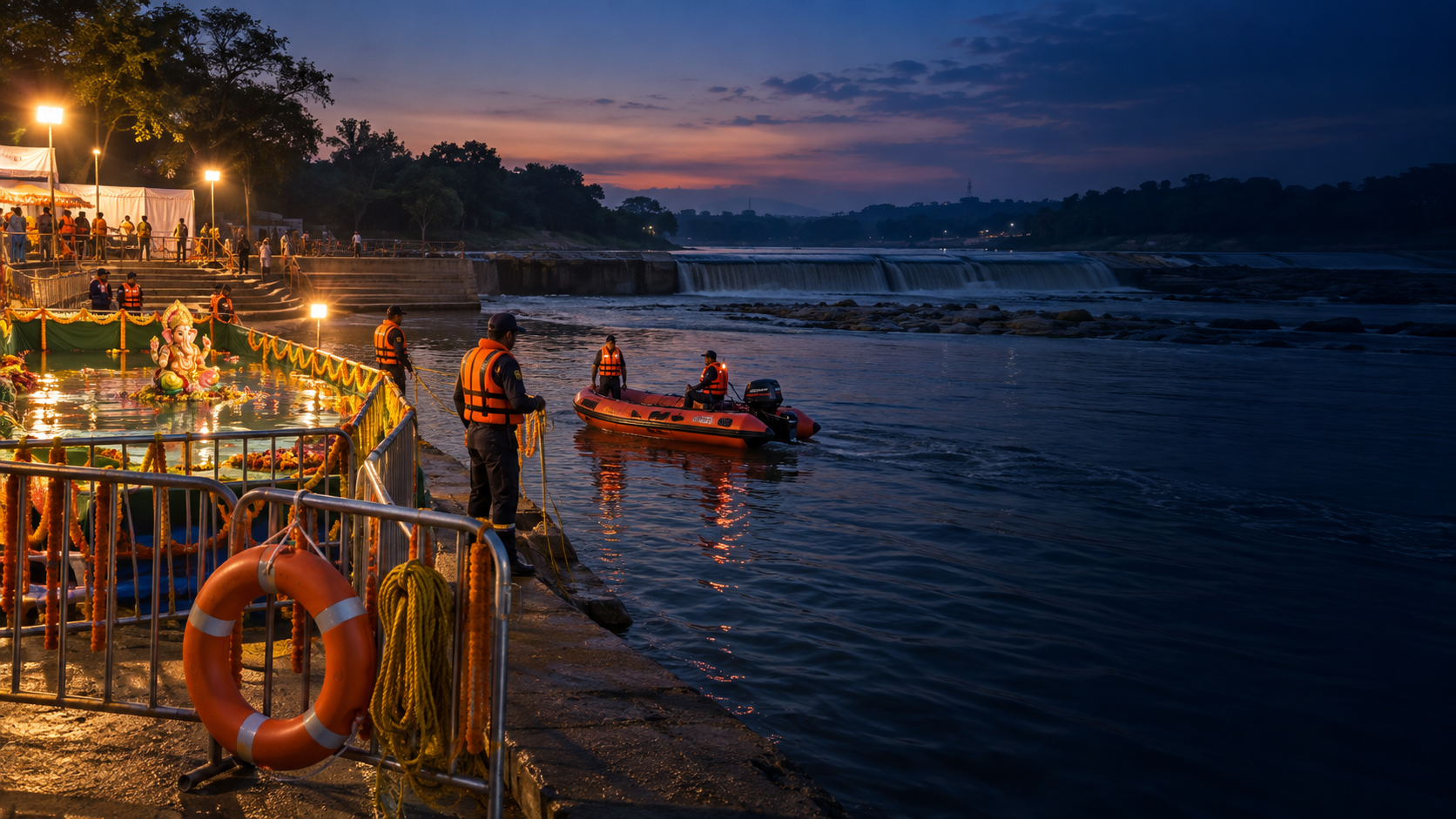
The rules above matter most when crowds and high water meet. Rivers and canals rise and release water suddenly (the Rewa case followed discharges from a power plant), alerts are issued for high waves on the Gujarat, Kerala and Goa coasts, and festival days put families on the shore. On 20 October 2026 at least eight people died while immersing idols in Uttar Pradesh and Rajasthan; see our festival and immersion safety page and the Kota canal boat capsize. For immersion use the designated ghat and not the open shore, as in Safe idol immersion. Earlier cases, such as Sangareddy, the Sai river near Lucknow and the Gujarat drowning cluster, show the same pattern. If you are in a river or flood, how to save a drowning person without risking your life and water safety tips explain more.
Lifeguards at Gujarat beaches
We looked for official information on lifeguards at Tithal, Dumas and Suvali and found none that we could verify. The Gujarat Tourism pages we found cover access and timings only, and the one safety note we saw about Tithal dates from 2015. We therefore do not say that these beaches have lifeguards. Before you go, ask the Valsad or Surat district administration or the municipal corporation, and look for a staffed lifeguard post on arrival. If there is none, stay out of the water. The verified example in this piece is Daman, where a lifeguard on duty reached a child within about two minutes, and Goa, where Drishti Marine lifeguards work the beaches.
Who to call
112 for any emergency, and 108 for an ambulance where it is available. Say the beach name and nearest landmark. We looked for an official number for beach rescue and did not verify one, so we do not print one.
What is still not known
- Where and when the Sandesh News reel was filmed, who the family were, and whether the child was hurt.
- Whether police in Goa will settle the cause of the Anjuna death; reports differ.
- The national count of children who drown near the sea or on rocks. NCRB’s tables we read do not split drowning by age.
- Whether Gujarat’s main beaches are staffed with lifeguards at all hours.
Last checked: 21 October 2026. We will update this page if we find the original report of the reel.
What needs attention
- In the Goa cases the person was on rocks at the water's edge; a surge can reach and pull you in without warning.
- Reel-making appears in two of the cases we found (Rewa, and the Sandesh reel) and a selfie is the police's preliminary account in the Anjuna case; we found no verified study of how often filming causes these accidents.
- Rescue attempts can multiply victims: at Chhara three more were swept away and were saved by fishermen.
- A lifeguard on duty changed the outcome at Nani Daman.
- NCRB records 40,044 drowning deaths in 2024; its tables we read do not give children's share.
Controls that reduce risk
- Hold the child's hand and stay behind the wet-sand line.
- Keep one adult watching the water and the child; put the phone away.
- Read flags, boards and INCOIS alerts before you go.
- Choose a beach with lifeguards; if there are none, stay out of the water.
- Call 112, throw something that floats and do not go in unless trained.
- After any rescue from water get a hospital check.
Common unsafe practices
- Filming a reel or selfie at the water's edge while a child is within reach of the waves.
- Standing or sitting on wet rocks close to the sea.
- Turning your back on the sea.
- Ignoring red flags, lifeguards' warnings or an INCOIS high-wave alert.
- Jumping in to rescue instead of reaching or throwing.
- Letting children near the water without a life jacket or an adult whose only job is watching.



Leave a comment