
Quick answers
How do I rescue a drowning person without risking my own life?
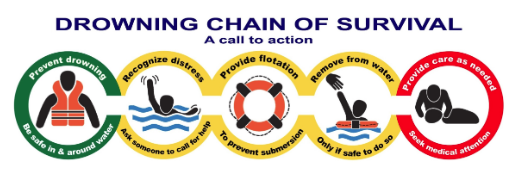
Shout for help and call 112 or 108. Do not jump in unless you are trained. Reach with a stick or dupatta, throw something that floats, row out if there is a boat, and go in only as a last resort with a flotation aid.
What should I do once a drowning victim is out of the water?
Lay them on their back, tilt the head back and check breathing for no more than 10 seconds. If they are not breathing normally, give 5 rescue breaths and then start CPR. If they are breathing but unconscious, roll them onto their side and cover them.
Should I turn a drowning victim upside down to drain water?
No. It delays CPR and makes the person vomit. Do not slap their face or splash water on them either.
Does a person rescued from drowning need to go to hospital if they seem fine?
Yes. Lung damage can get worse over the next 6 to 24 hours. Watch for a cough, frothy sputum, chest pain, blue lips, confusion or drowsiness, and get them checked at a hospital anyway.
A child slips into a village pond, or a friend gets pulled under at a river ghat. Everyone’s first instinct is to jump in. That instinct often costs a second life. Most drowning victims can be saved by someone who stays on dry land, calls for help and knows what to do once the person is out of the water.
Why every family should know this
Drowning kills around 3,00,000 people worldwide every year, and 92% of those deaths happen in low- and middle-income countries such as India (WHO drowning fact sheet, May 2026). In India, 40,044 people died by drowning in 2024, about one in every twelve accidental deaths recorded that year. Maharashtra alone reported 5,151 (NCRB, Accidental Deaths and Suicides in India 2024).
Drowning is fast and often silent. It happens in ponds, rivers, wells and tanks, and even in a bucket at home. People who are pulled out alive can still suffer brain injury, a lung infection or cardiac arrest if they are not looked after properly.
First, call for help and stay on dry land
- Shout for help and call 112, or 108 for an ambulance, straight away.
- Do not jump in unless you are trained. Follow Reach, Throw, Row, Go:
- Reach with a stick, a branch, a towel or a dupatta.
- Throw a rope, a life ring or anything that floats, such as an empty plastic can or bottle.
- Row out in a boat if one is there.
- Go into the water only as a last resort, and only with something that floats.
- Lie flat on the bank while you pull, so a panicking person cannot drag you in.
Once they are out of the water
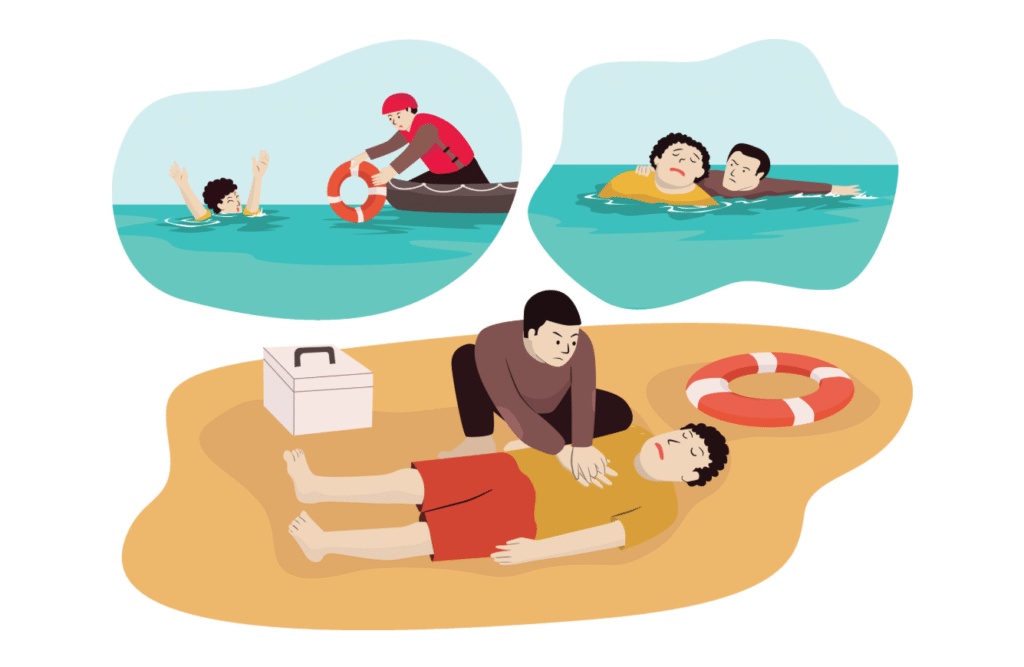
- Lay the person on their back, tilt the head back and lift the chin. Check whether they respond and are breathing normally. Look, listen and feel for no more than 10 seconds. Do not waste time feeling for a pulse.
- If they are unresponsive and not breathing normally, start CPR at once. Give 5 rescue breaths first, then 30 chest compressions and 2 rescue breaths. Keep repeating 30 compressions and 2 breaths until help arrives or they start breathing normally. If you cannot give breaths, keep doing chest compressions without stopping.
- If they are breathing but unconscious, roll them onto their side in the recovery position so the airway stays clear.
Drowning is a breathing emergency. That is why CPR for a drowned person starts with rescue breaths, not compressions.
After the rescue
- Take off wet clothes and cover the person with a dry blanket or shawl so they do not get too cold.
- If they start to vomit, turn them onto their side so they do not breathe it in.
- Watch them closely for the next few hours. A cough that won’t settle, fast or hard breathing, chest pain, frothy sputum, unusual sleepiness, confusion or blue lips mean the lungs have been affected. Doctors no longer use terms like “dry” or “secondary” drowning. These are delayed effects of the drowning itself, and they need medical care straight away.
- Take them to hospital even if they seem fine. Breathing problems can appear or get worse in the hours after rescue.
What not to do
- Don’t hold the person upside down to “drain the water”. It delays CPR and makes them vomit.
- Don’t assume someone who is talking is out of danger. Problems can come on later.
- Don’t slap their face or splash water on them to wake them up.
Danger signs to watch for
Get emergency care at once if the person has any of these after being in the water:
- difficulty breathing or a cough that won’t stop;
- frothy sputum or chest pain;
- blue skin or lips;
- confusion, vomiting or drowsiness.
Stopping drowning before it starts
- Never leave a small child alone near water, including buckets, drums, tanks, wells and bathtubs. Not even for a minute.
- Cover water tanks and drums, and fence pools and ponds with a self-latching gate.
- Teach children to swim and float early.
- Keep alcohol away from swimming, boating and river outings.
- Wear a life jacket on every boat ride, including ferries.
Picture this
A boy is pulled out of a village pond, not breathing. A friend who has learnt CPR gives five rescue breaths, starts chest compressions and keeps going while others call 112. That quick start gives a drowned person the best chance. (This is an illustrative example, not a specific reported case.)
A drowning does not end when the person is out of the water. What you do in the first few minutes, and whether you take them to hospital afterwards, can decide whether they live. Book a CPR class this month, for yourself or one person in your family.
What needs attention
- Jumping in without training or a float puts a second life at risk
- Reaching or throwing from the bank is safer than swimming out to a panicking person
- Drowning is a breathing emergency, which is why CPR starts with five rescue breaths
- Holding a person upside down to drain water delays CPR and can make them vomit
- Someone who seems fine after rescue can still develop fluid in the lungs hours later
- Children can drown in buckets, tanks, wells and bathtubs, not only in rivers and pools
Controls that reduce risk
- Never leave a child alone near water, including buckets, drums, tanks and wells
- Cover water tanks and drums, and fence pools and ponds with a self-latching gate
- Teach children to swim and float early
- Wear a life jacket on every boat ride, including ferries
- Keep alcohol away from swimming, boating and river outings
- Learn CPR, including rescue breaths, on a certified course
Common unsafe practices
- Jumping in to help without training or anything that floats
- Standing upright at the edge while pulling, and getting dragged in
- Holding the person upside down to drain water
- Feeling for a pulse instead of starting CPR
- Sending the person home because they are talking and seem fine
- Leaving a small child alone near a bucket, tank or well, even for a minute


Leave a comment