
What happened here
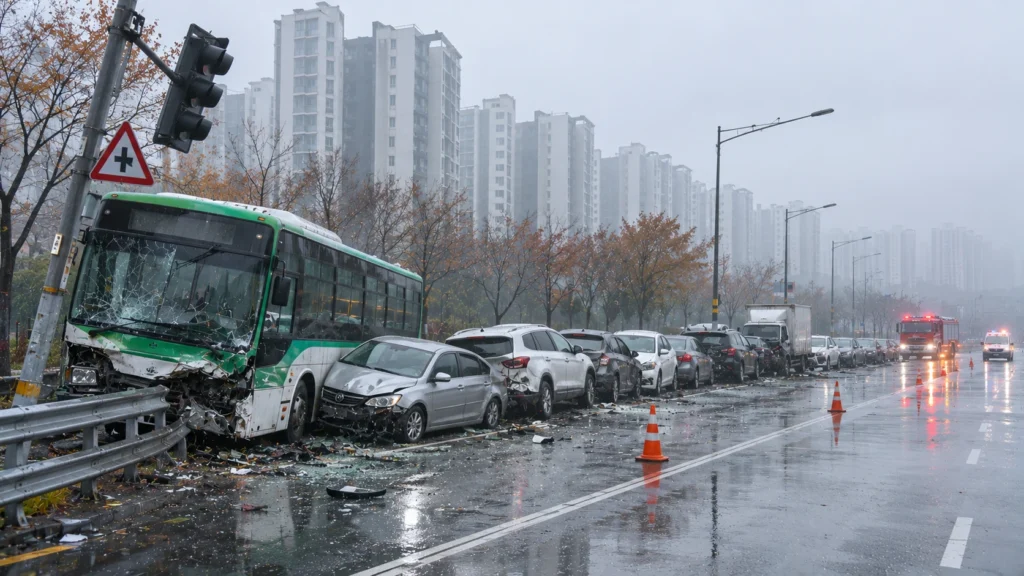
Cause of the crash: not established. The driver told police the brakes did not work, and police are also checking pedal misuse and drugs. On the morning of Wednesday 11 November 2026, a Route 340 city bus hit vehicles waiting at a signal on Pangyo-ro in Yatap-dong, Bundang district, Seongnam, South Korea, at about 7.34 am local time. Reports count 32 vehicles hit over 100 to 150 metres, before the bus stopped against the central median barrier. The injured count rose from 48 to 57 to 70, with 10 seriously hurt, and no death is reported. The driver's breath test found no alcohol, and the bus's dashcam and nearby CCTV are being examined.
Quick answers
What happened in Seongnam on 11 November 2026?
A Route 340 city bus ran into vehicles waiting at a signal on Pangyo-ro in Yatap-dong, Bundang district, at about 7.34 am local time. Reports count 32 vehicles hit and up to 70 injured, with no deaths.
How many people were injured?
The count rose through the day, from 34 to 48 to 57, then to 70 in late reports, with 10 seriously hurt. Fire-authority tallies reported by Yonhap, News1 and Seoul Shinmun are the basis. No death is reported.
Was it a brake failure?
The driver told police the brakes did not work. Police have not confirmed it and are also checking whether the pedals were misused and whether the driver had taken drugs.
Was the driver drunk?
A breath test at the scene found no alcohol. A drug check was planned and no result is reported.
How many vehicles were hit?
32 in most outlets: four other buses, one cargo truck and 27 cars, according to Yonhap. One report counts the bus itself within the 32, and early reports said 16 or 17.
What should I do if a bus has no brakes or I am on a bus in a crash?
Hold the rail, brace and keep clear of the front glass. After a crash, leave by the nearest door or emergency window if there is smoke or fuel, and call the local emergency number. Our guides on road collisions and bus safety have the full steps.
Why does this post not name the driver or the injured?
The inquiry is open and the people involved have not been charged. We use no names or photographs.
What happened
At about 7.34 am local time on Wednesday 11 November 2026, a Seongnam city bus, Route 340, ran into vehicles waiting at a signal on Pangyo-ro in Yatap-dong, Bundang district, Seongnam, Gyeonggi province, South Korea. It was the morning rush hour, and the bus was carrying passengers. Reports say it hit vehicles one after another over a stretch of 100 to 150 metres, took a traffic light and a utility pole down, and stopped only when it struck the central median barrier. Yonhap, through The Korea Times, counts 32 vehicles hit, not counting the bus itself: four other buses, one cargo truck and 27 passenger cars. That is about 4.04 am in India.
No death is reported in any outlet we opened. The injured count kept rising through the day. Early reports said 34 and then 48 were hurt, with 6 seriously. Yonhap and fire authorities later gave 57, with 9 seriously and 48 slightly. By the evening, News1 and Seoul Shinmun reported 70 injured, 10 seriously and 60 slightly, and none in danger of dying. Seoul Shinmun says 55 people were taken to hospitals and 15 walked in for treatment, and that firefighters freed the driver, who was trapped. The driver, a man in his 60s, told police that the brakes did not work. A breath test at the scene found no alcohol. Police are checking whether the brakes were defective, whether the pedals were misused and whether the driver had taken drugs, and they are going through the bus’s dashcam and nearby CCTV. None of this has been established. We use no names for the driver or anyone hurt.
What the reports say
- When: About 7.34 am local time (KST) on Wednesday 11 November 2026, during the morning rush hour (Yonhap via The Korea Times, Weekly Kyunghyang, Pressian, Seoul Shinmun). That is about 4.04 am IST and 10.34 pm UTC on Tuesday 10 November.
- Where: Pangyo-ro in Yatap-dong, Bundang district, Seongnam, Gyeonggi province. Seoul Shinmun puts the impact zone between the Areum and Beolmal intersections; some outlets say Imae-dong or name only the Beolmal intersection.
- The bus: A Seongnam city bus on Route 340, driven by a man in his 60s. The reports do not name the operating company or say how many passengers were on board; the injured count says many were.
- Vehicles hit: 32 vehicles in total in most outlets: four other buses, one cargo truck and 27 passenger cars (Yonhap via The Korea Times, Weekly Kyunghyang, Pressian). Seoul Shinmun counts 32 including the Route 340 bus. Early reports said 16 or 17. The bus rear-ended vehicles waiting at a signal, hit a traffic light and utility pole and stopped against the median barrier.
- Injured: The count moved from 34 (early) to 48 (6 serious) to 57 (9 serious, 48 slight) to 70 (10 serious, 60 slight, News1 and Seoul Shinmun, late on 11 November). Most were bus passengers with abrasions and bruises. No death is reported and the injured are not in danger of dying.
- Rescue: Fire authorities sent 45 personnel and 18 vehicles in the first report and 88 personnel and 33 vehicles in the later count (Newdaily, Seoul Shinmun, The Korea Herald). Firefighters freed the trapped driver. Both directions of Pangyo-ro were closed for a time and all closures were lifted by about 10 am.
- The driver’s account: The driver told police the brakes did not work (Yonhap via The Korea Times, Weekly Kyunghyang, Pressian). The breath test found no alcohol. The Korea Herald says police suspect a brake malfunction but call it unconfirmed.
- Police checks: Police are checking dashcam and CCTV footage for a possible brake defect and for possible pedal misuse, and plan to check whether the driver had taken drugs (Seoul Shinmun, Yonhap). No result is reported.
Where reports differ and what we do not know
- Number injured: 34, 48, 57 and 70 were all reported on the same day as counts were revised. The last two figures come from fire-authority tallies reported by Yonhap and by News1 and Seoul Shinmun. We use 70 as the latest count and 57 as the figure most outlets carried in the morning.
- Serious injuries: 6 (early), 9 (Yonhap, Korea Times, Weekly Kyunghyang, Pressian) and 10 (News1, Seoul Shinmun). Some reports include the driver in the serious group.
- Number of vehicles: 32 vehicles besides the bus (Yonhap via The Korea Times) against 32 including it (Seoul Shinmun). Early reports said 16 or 17 vehicles and 34 injured. One headline said 32 buses, which the body of the same report contradicts.
- Place: Yatap-dong (most outlets), Imae-dong (News1) and the stretch between the Areum and Beolmal intersections on Pangyo-ro (Seoul Shinmun). The pin on our map is at the area level.
- Cause: The brake failure comes from the driver’s own account. Police have not confirmed it and are also checking pedal misuse and drugs. We do not say what caused the crash.
- Not yet reported: The bus operator, its maintenance and inspection record, the last brake service, the bus’s speed, the CCTV results, the drug test result and any charge against the driver.
What this case teaches
A city bus is heavy and full of people, so a failure at the front of a traffic queue ends up in the lap of everyone behind. What the reports show is simple: a bus was moving fast enough to hit one vehicle after another over about 150 metres and to take a traffic light down with it, at a time when roads are full and passengers are standing and sitting in the first rows. It is too early to say whether the brakes, the driver’s foot or something else was the cause, and the police have not said. We repeat only what the driver says and what the checks are looking at.
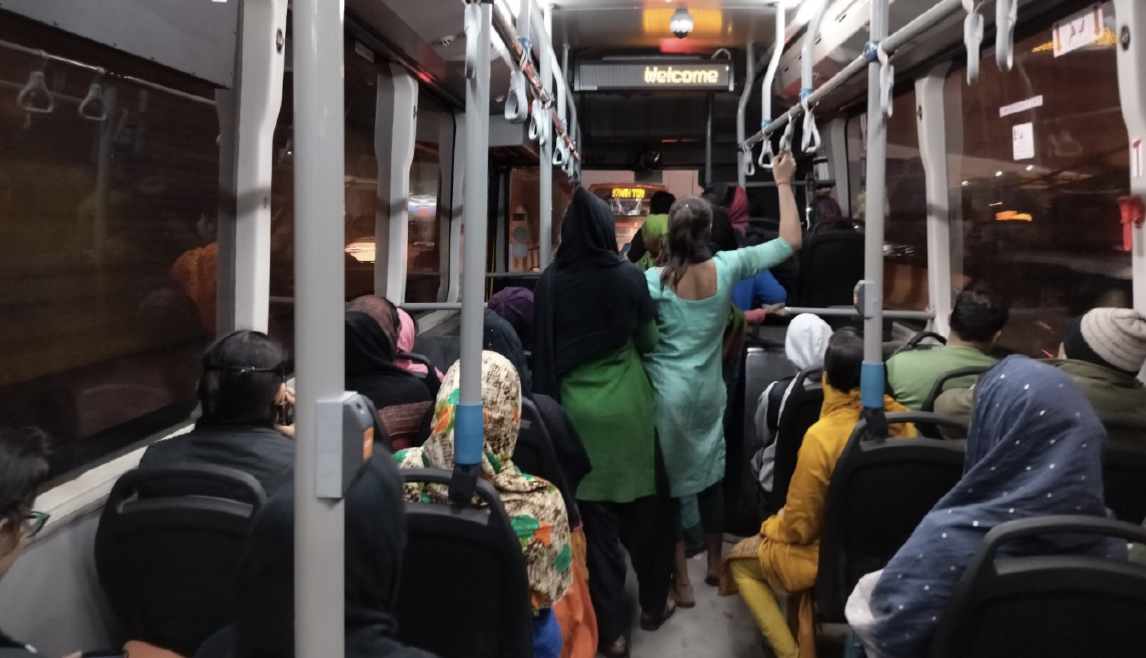
For passengers, the lessons are the ones that apply on any city bus. Sit with your back against the seat if you can, hold the rail with both hands when the bus is moving fast or the driver shouts, keep clear of the front glass and the first row, and keep phones and bags out of your hands. After a crash, get off by the nearest door or emergency window if there is smoke or fuel and move to the pavement away from moving traffic. For other drivers in a queue at a signal, keep the handbrake off but your foot ready, look in the mirror when you stop and leave a gap if the lane beside you is open. Our guides cover what to do after a road collision as a driver or passenger, safety in buses, trains and metros, road accident first aid before the ambulance arrives and why the first hour after a crash matters.
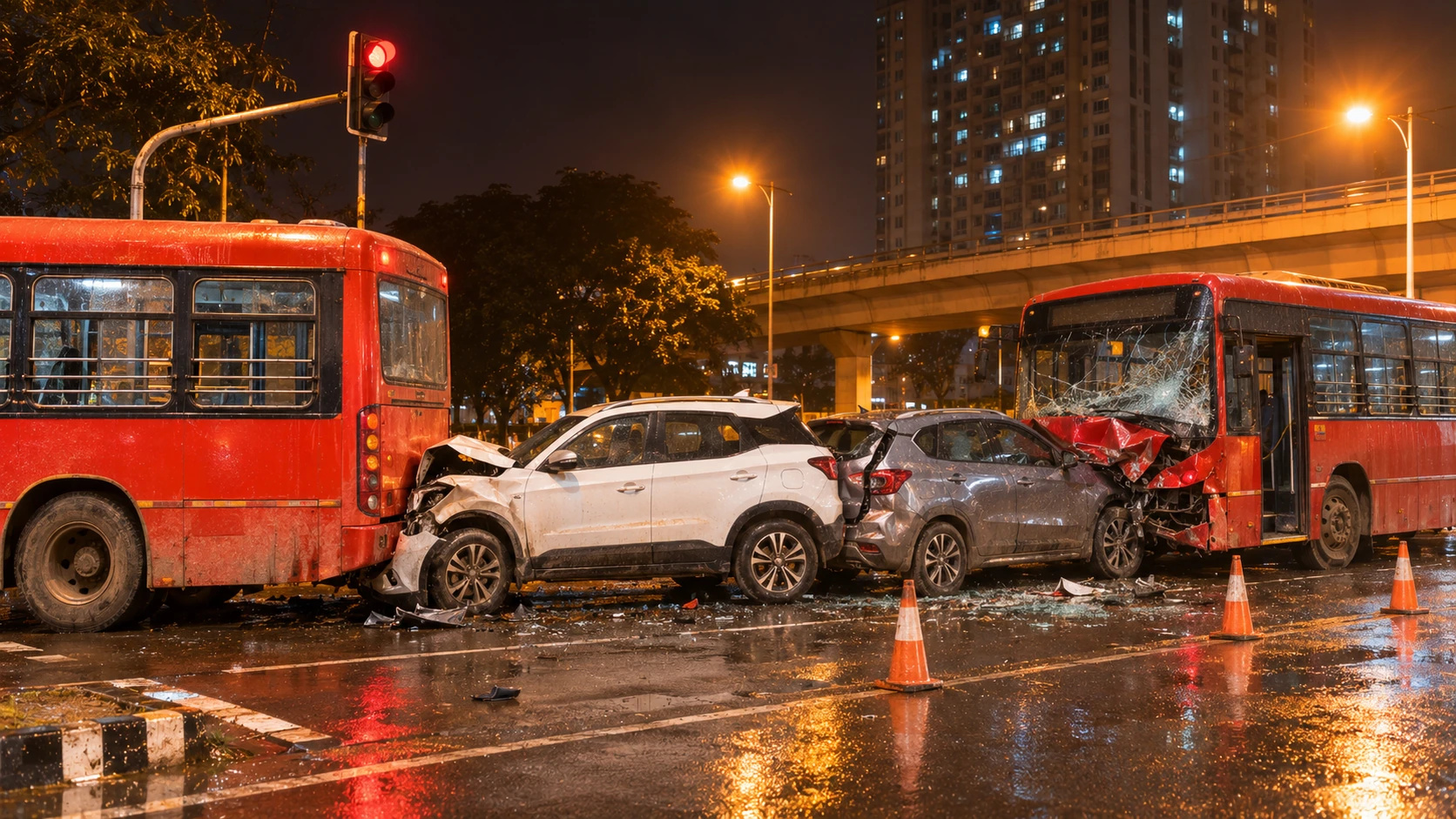
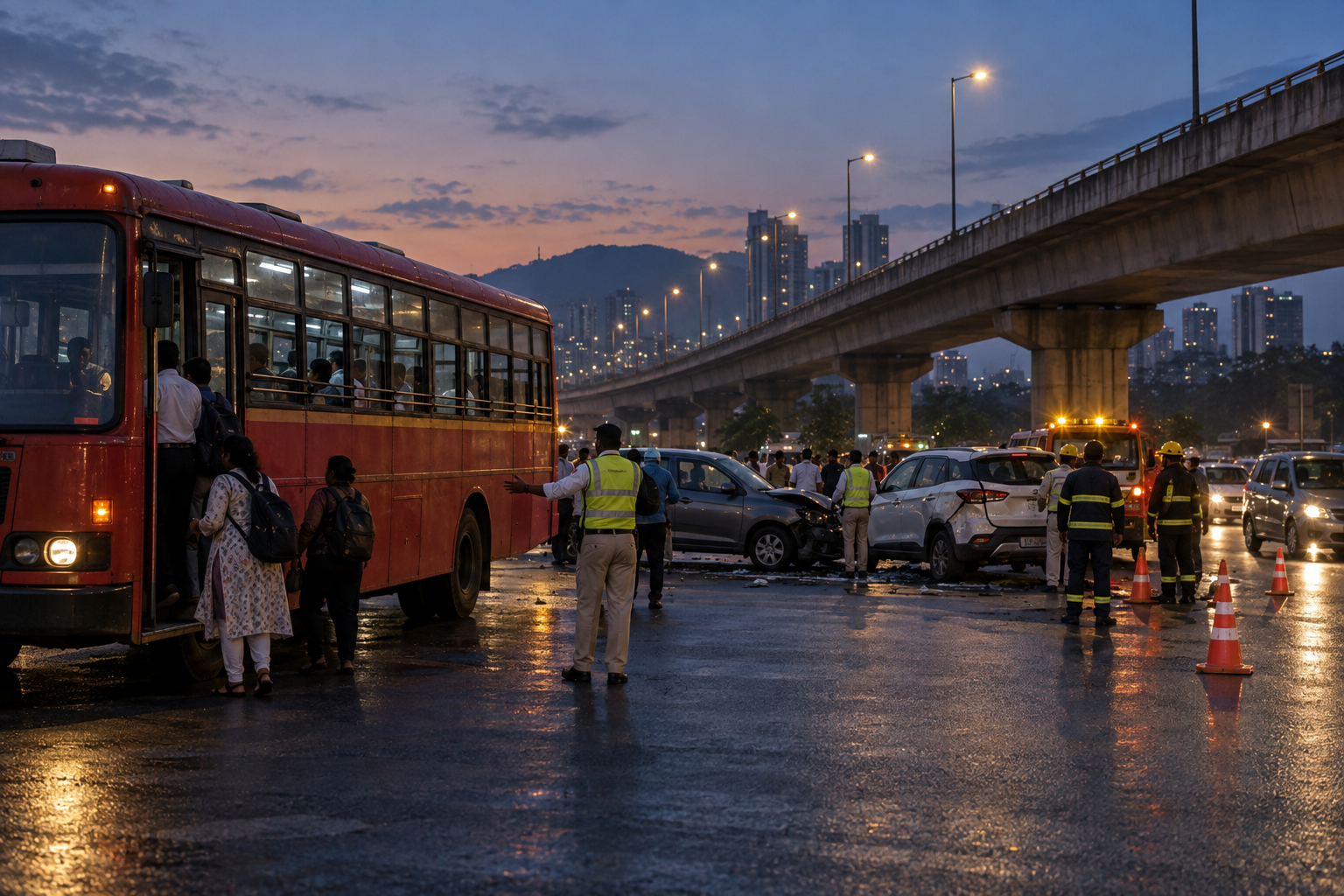
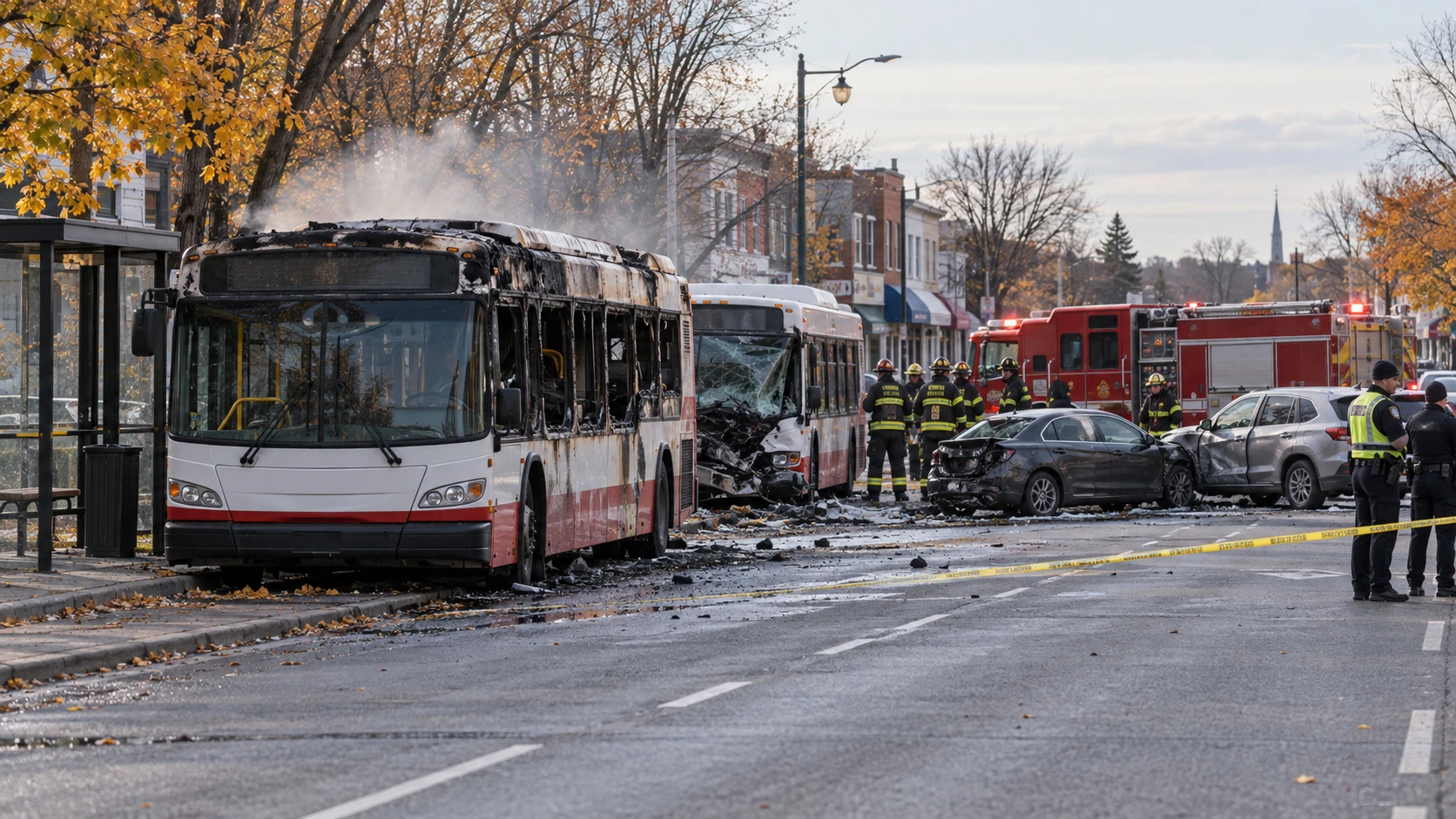
Other bus cases on the site include the BEST bus that lost control and hit two cars at Wadala signal in Mumbai, the Belapur bus pile-up where brake failure was investigated, the Calgary bus pile-up and the coach rollover on the A3 motorway in Croatia. We read the reports up to the evening of 11 November 2026 and found no inspection result yet. We will update this post when one is published.
- A Route 340 city bus runs into vehicles waiting at a signal on Pangyo-ro, Yatap-dong, Bundang, and hits a traffic light and utility pole
- The bus stops against the central median barrier; vehicles are left damaged over 100 to 150 metres, some pushed into other lanes or onto the pavement
- Fire crews and police arrive and free the trapped driver; first reports say 34 injured and 16 or 17 vehicles hit
- The count becomes 32 vehicles and 48 injured, 6 seriously; the driver says the brakes did not work and his breath test is negative
- Both directions of Pangyo-ro are reopened after the damaged vehicles are towed
- Yonhap and fire authorities give 57 injured, 9 seriously; police say they will check brakes, pedals and drugs
- News1 and Seoul Shinmun report 70 injured, 10 seriously and 60 slightly, with no deaths
Why consequences escalated
- A Route 340 city bus hit 32 vehicles at a signal on Pangyo-ro in Seongnam on the morning of 11 November 2026, and stopped against the median barrier.
- The injured count rose from 48 to 57 to 70 during the day, with 10 seriously hurt; no death is reported.
- The driver told police the brakes did not work; his breath test was negative.
- Police are checking for a brake defect, pedal misuse and drugs, using the bus's dashcam and nearby CCTV.
- The vehicle count is 32 in most outlets and early reports said 16 or 17.
- The cause, the bus's maintenance record and the drug test result are not yet reported.
Failures and risk multipliers
- No official finding exists yet. What the reports raise as questions:
- Whether the bus's brakes had a fault, and when it was last serviced and inspected.
- Whether the pedals were used correctly; police say they are checking.
- How fast the bus was travelling when it first hit a vehicle, and how long it ran before it stopped.
- Whether the drug test, once done, shows anything.
- These are questions, not findings of fault. The brake claim is the driver's own account.
Actions that reduce risk
- Passengers on city buses: hold the rail firmly and keep clear of the first row and front glass when the bus is moving fast; keep your back to the seat and your phone away.
- Drivers waiting at a signal: keep an eye on the mirror, leave a gap if you can, and be ready to steer to an open lane or the kerb if a vehicle is coming from behind.
- Bus operators and regulators: publish the inspection and brake service record, and check that drivers are trained for a brake failure.
- Police and investigators: publish the brake examination, the CCTV findings and the drug test result so the public knows what caused the crash.
- Anyone at the scene: call the local emergency number (119 in South Korea, 112 in India), keep clear of traffic and do not move seriously hurt people unless there is fire or fuel.

Leave a comment