
Quick answers
What is the golden hour after a road accident?
The golden hour is the short period after an accident when getting help quickly matters most. Ambulance delays, traffic jams and untrained bystanders can waste this time.
What can a bystander do to help a road accident victim?
Simple actions such as stopping bleeding, calling an ambulance and keeping the airway clear can improve survival. Help only if it is safe and call 112 from a safe place.
Will I get into trouble with police for helping an accident victim?
No. The Good Samaritan Law protects people who help accident victims from liability.
How can I prepare to help in a road emergency?
Learn the basics of first aid and bleeding control, save ambulance contacts for your area and carry a small trauma kit in your vehicle.

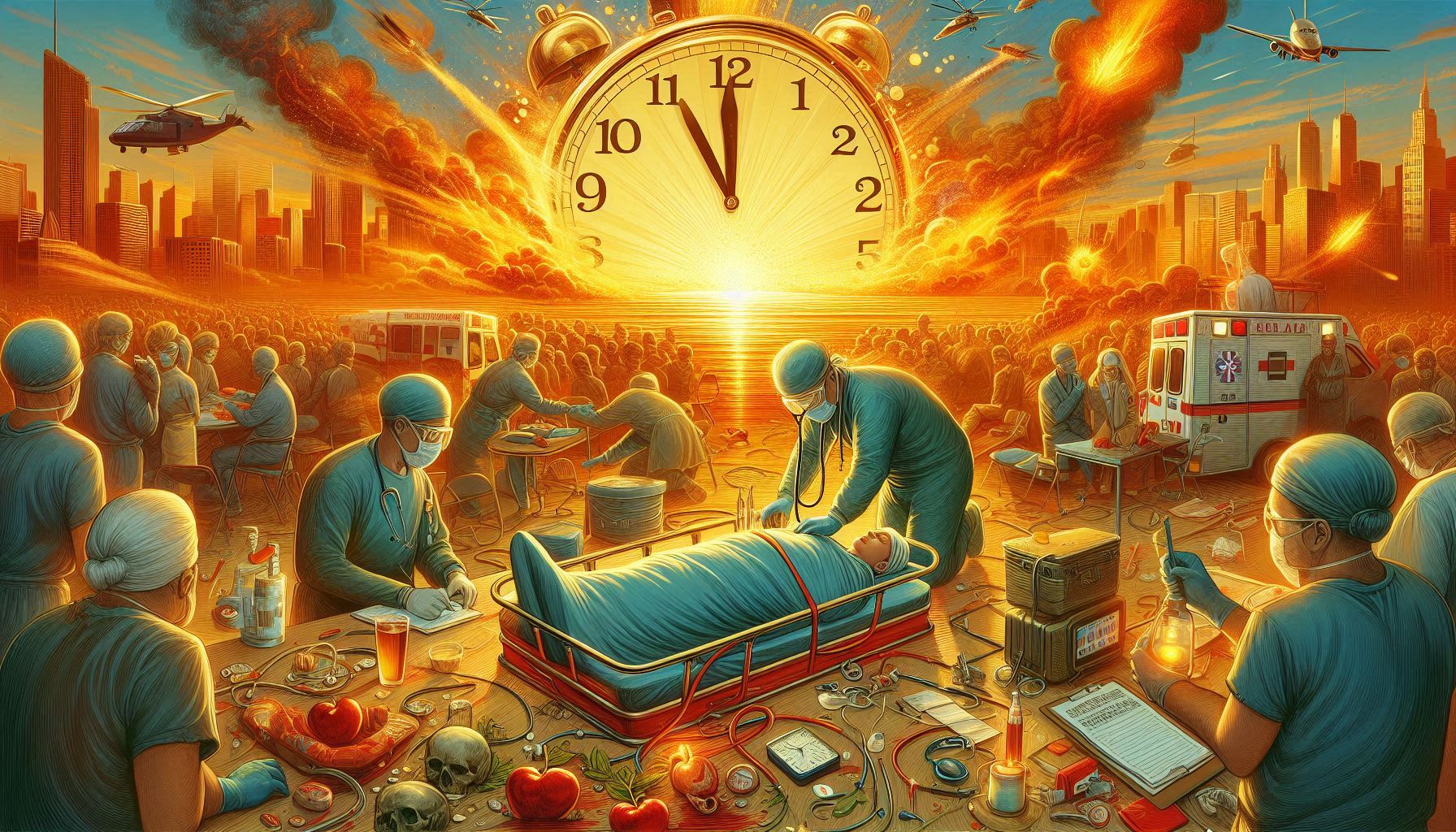
Indian law has a name for the first hour after a road crash: the “golden hour”. The Motor Vehicles Act defines it as the hour after a traumatic injury when prompt medical care has the best chance of preventing death. In 2023, road crashes in India killed 1,72,890 people, about 474 every day. (Sources: Motor Vehicles (Amendment) Act, 2019; MoRTH, Road Accidents in India 2023)
Why minutes matter
After a serious crash, a person can bleed heavily, or stop breathing properly because the airway is blocked. Either can kill long before they reach a hospital. Getting help moving fast, and doing a few simple things while you wait, can keep them alive.
In real life, the golden hour is often lost. The ambulance is stuck in traffic, nobody is sure of the exact location, or a crowd gathers and watches but nobody acts, often because they are afraid of the police. Families lose loved ones not only because of how badly they were hurt, but because help came too late.
Two myths
“Only doctors can help accident victims.” Not true. Simple bystander actions, like calling 112, pressing firmly on a bleeding wound and keeping the airway open, help keep an injured person alive until the ambulance arrives.
“If I help, the police will harass me.” The law is on your side. Section 134A of the Motor Vehicles Act, added in 2019, says a Good Samaritan who helps a road accident victim in good faith cannot be held liable in any civil or criminal action for the victim’s injury or death.
What to do in the golden hour
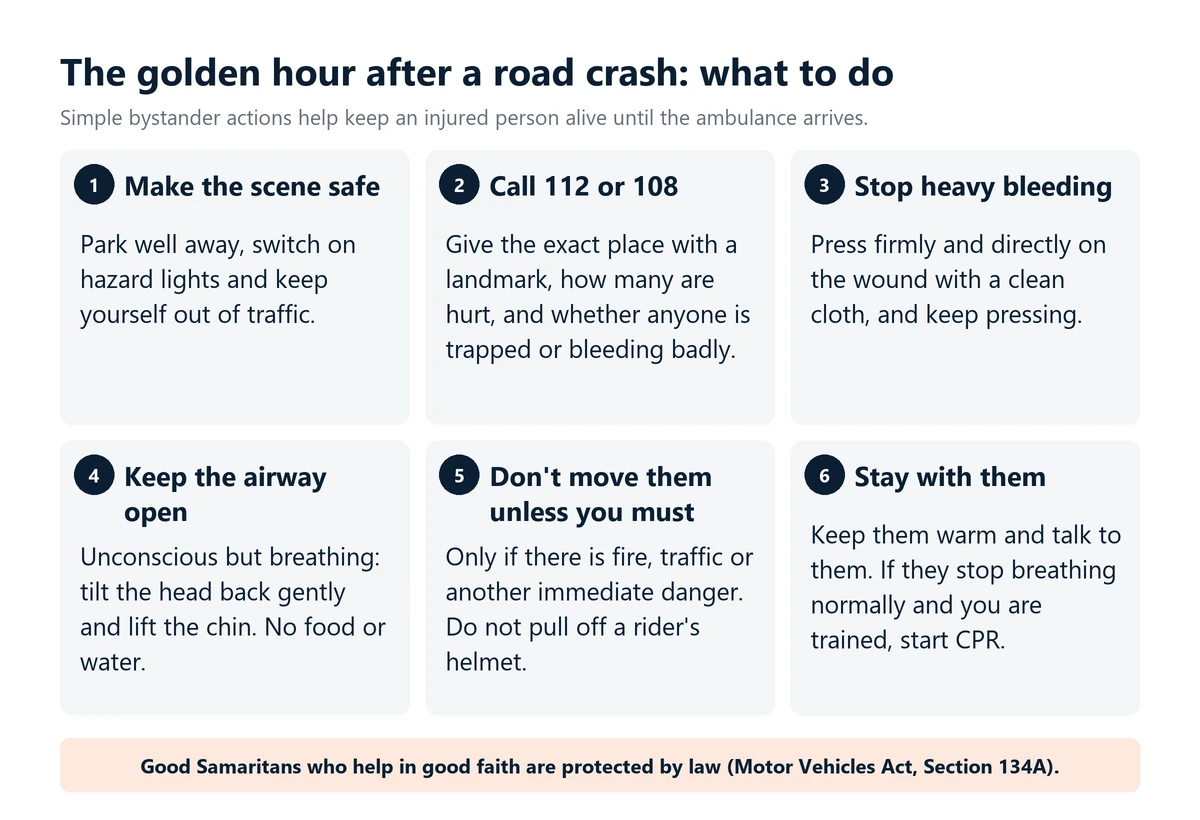
- Make the scene safe. Park well away, switch on hazard lights and keep yourself out of traffic.
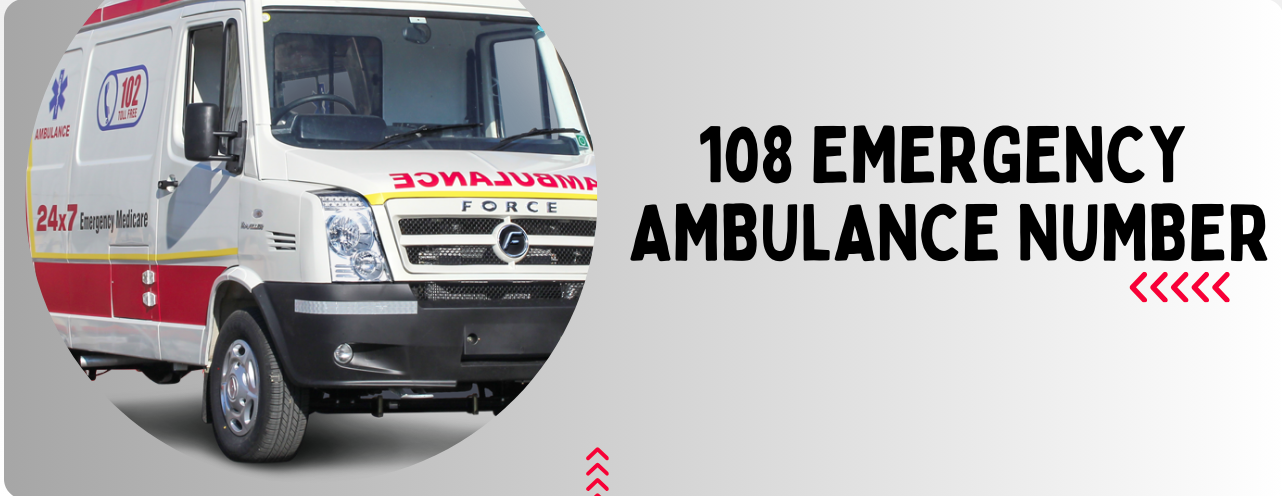
- Call for help. Dial 112 or 108. Give the exact place with a landmark, how many people are hurt and whether anyone is trapped or bleeding badly.
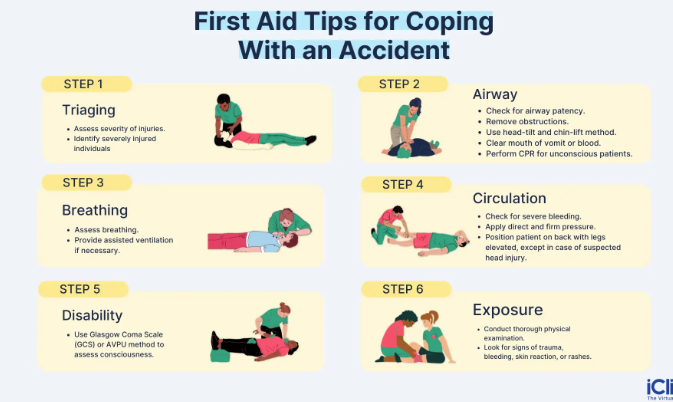
- Stop heavy bleeding. Press firmly and directly on the wound with a clean cloth, and keep pressing.
- Keep the airway open. If the person is unconscious but breathing, tilt the head back gently and lift the chin so they can breathe. Do not give them food or water.
- Don’t move them unless you must. Move a person only if there is fire, traffic or another immediate danger. Do not pull off a rider’s helmet.
- Stay with them. Keep them warm and talk to them until the ambulance arrives. If they stop breathing normally and you are trained, start CPR.
Treatment without paying first
Since May 2025, the government’s cashless treatment scheme for road accident victims, now called PM-RAHAT, covers treatment up to ₹1.5 lakh per victim for up to seven days from the date of the accident at designated hospitals anywhere in the country, on any category of road. Hospitals empanelled under Ayushman Bharat PM-JAY that follow the scheme’s guidelines count as designated hospitals. So money should never be the reason to delay taking a victim to hospital.
What you can do today
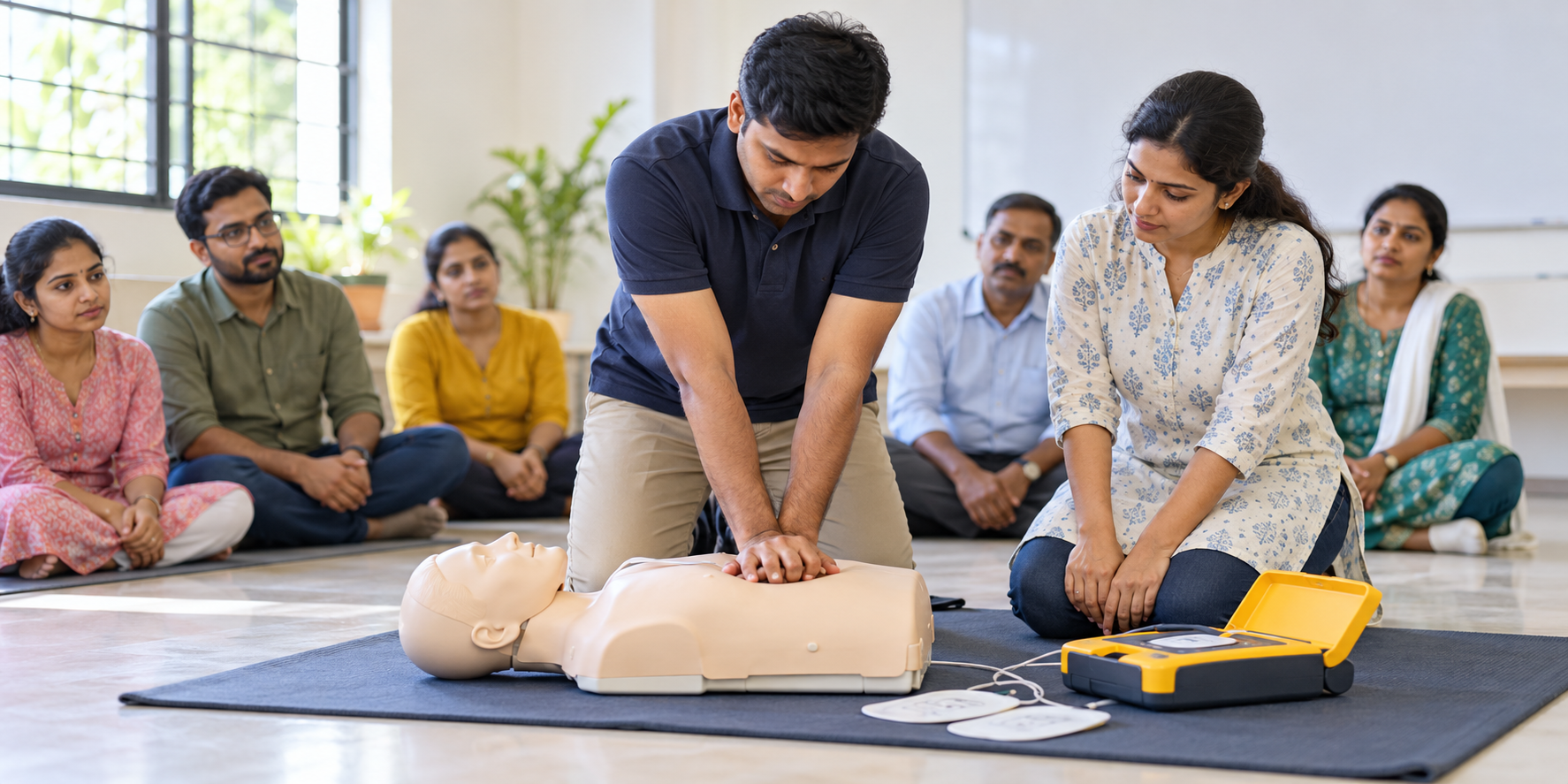
- Learn basic first aid, especially how to stop bleeding and open an airway. Many hospitals, Red Cross branches and volunteer groups run short courses.
- Save 112 and 108 in your phone, and learn to share your live location from it.
- Carry a small first-aid kit in your car or on your two-wheeler, with gloves, gauze, bandages and a clean cloth.
- Don’t hesitate. One minute of courage from a stranger can save a life.
Ask yourself honestly: would you know what to do if you saw a crash today? If not, learn it this week, and share it with your family.
What needs attention
- Heavy bleeding and a blocked airway can kill within minutes, long before hospital
- Delays in calling for help, unclear locations and traffic often waste the golden hour
- Many bystanders do not help because they fear the police, though the law protects them
- Simple actions by untrained people, like firm pressure on a wound, can keep someone alive
- Cashless treatment means money should not delay getting a victim to hospital
- Moving an injured person carelessly can make spinal injuries worse
Controls that reduce risk
- Take a basic first-aid course that covers bleeding control and airway
- Keep a first-aid kit with gloves, gauze and bandages in every vehicle
- Teach your family how to share a live location in an emergency call
- Encourage your workplace or society to host a first-aid session
- Tell others about Section 134A and the cashless treatment scheme
Common unsafe practices
- Watching and filming instead of calling for help
- Not giving the exact location to the ambulance
- Pulling off a rider's helmet or moving the victim without need
- Giving the injured person food or water
- Leaving heavy bleeding unattended while waiting
- Driving off out of fear of police trouble
Leave a comment