
What happened here
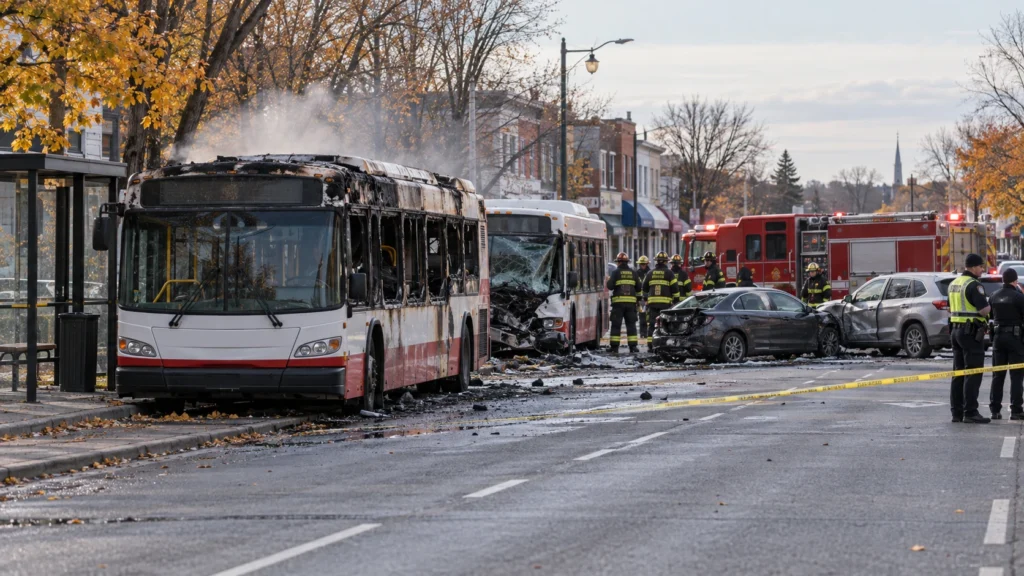
On the afternoon of 15 October 2026 a Calgary Transit bus set off a chain of collisions on Saddletowne Circle N.E. and hit a second bus standing at a stop. The second bus caught fire. Three people on it died, and between 16 and 19 others were hurt, depending on the source. Police are investigating the cause of the crash and the fire.
Quick answers
How many people died in the Calgary bus crash?
Three people, all on the bus that caught fire, according to the Calgary Police Service. Their names had not been released by the morning of 16 October 2026.
How many people were injured?
Emergency Health Services said 19 were injured and 10 were taken to hospital by ambulance. CBC News reported 16 injured. A police officer was among those hurt.
What caused the crash and the fire?
Police have not said. They describe a moving bus that set off a chain of collisions and then hit a second bus at a stop, which caught fire. The cause is under investigation.
Was the bus running on natural gas?
Yes. The fire chief said it ran on compressed natural gas, while The Canadian Press and Global News said liquid natural gas. The city said its natural gas fleet would remain in service.
What should I do if a bus I am on catches fire?
Leave at once by the nearest door or emergency exit, leave bags behind, stay low under smoke, and move well away. In India call 112 or the fire brigade on 101.
What happened
Just after 1 p.m. local time on Thursday, 15 October 2026, a chain of collisions involving two Calgary Transit buses and six other vehicles left three people dead in the Saddle Ridge area of northeast Calgary, Canada. It happened in the 800 block of Saddletowne Circle N.E., near the Saddletowne LRT station and close to a fire station. The Calgary Police Service said officers were called at about 1:11 p.m. to a vehicle fire involving a City of Calgary bus.
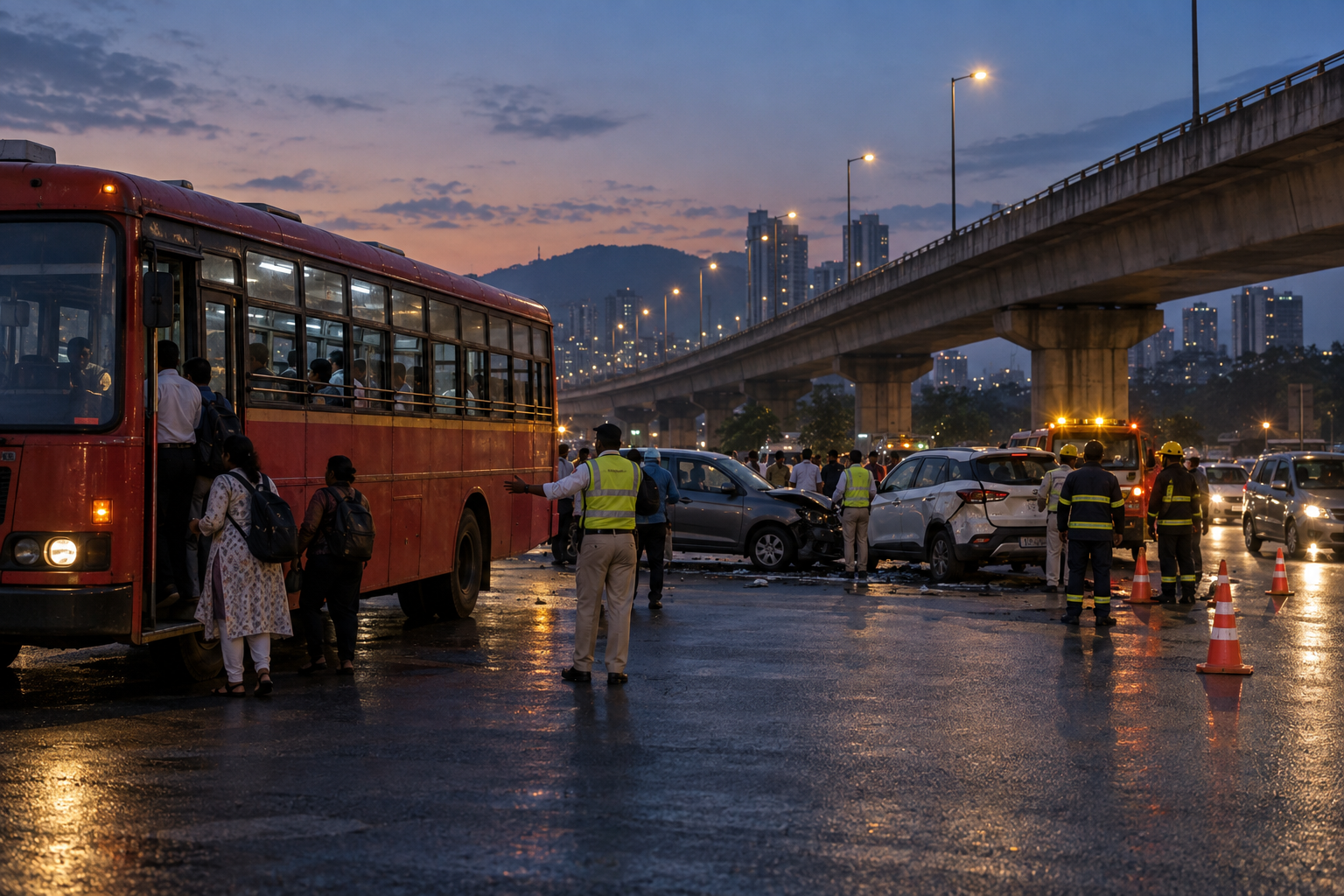
Calgary police Staff Sergeant Andy Woodward described the sequence at a news conference. A bus travelling along Saddletowne Circle hit a white vehicle, which struck a black vehicle, and the chain went on into a cube van. The moving bus then hit a second bus that was standing at a bus stop. That second bus was pushed across the road into other vehicles. Global News quoted him as saying two vehicles were hit on the far side; The Canadian Press and CP24 reported three. Police counted eight vehicles in all.
The bus at the stop caught fire. Images showed flames and thick black smoke from its roof, and Calgary Fire Chief Steve Dongworth told CBC News there was also a small fire in the other bus. Woodward said a police officer ran towards the burning bus, and that the fire then spread and an explosion followed. Crews from the nearby fire station put out both fires. Twelve fire units attended, and a hazardous materials unit was called because the burning bus ran on natural gas.
Reports differ on the fuel. The fire chief, as quoted by CBC News and CP24, said the bus ran on compressed natural gas (CNG). The Canadian Press, in the Globe and Mail, and Global News described it as liquid natural gas. The Canadian Press noted that Calgary Transit says on its website that it runs nearly 250 CNG buses, about 20 per cent of its fleet.
The people
Police said the three people who died were all on the bus that caught fire. Their names had not been released when this page was checked on 16 October 2026.
Injury figures changed through the afternoon. A police statement on the City of Calgary newsroom confirmed at least 10 injured, one with life-altering injuries and one with serious injuries. Later, Emergency Health Services spokesperson Adam Loria said 19 people were injured in all, and that 10 were taken to hospital by ambulance. CBC News put the figure at 16 injured: 10 taken by ambulance, one in life-threatening condition and nine in non-life-threatening condition, plus five walking wounded taken to hospital for checks, plus a police officer with minor injuries. Global News reported both “at least 16” and 19.
Transit union president Mike Mahar told The Canadian Press that one bus driver got out quickly, but the other had to be cut free by emergency crews and was taken to hospital. His condition was not known. Calgary Transit director Sharon Fleming said both were regular in-service buses with passengers on board.
Response and investigation
The Calgary Police Service is investigating, and its collision reconstruction team went to the scene. Woodward said video from nearby shops was being collected. He also said that in 36 years of policing it was probably the biggest collision scene he had worked on. Police closed Saddletowne Circle for a long time and asked drivers to avoid the area.
Calgary Transit said it would carry out its own review once the cause is known. Mayor Jeromy Farkas promised a full investigation, and Alberta Premier Danielle Smith offered condolences. Mahar said the natural gas bus appeared to lose control at some point, and that it was not clear why the fire was so severe. He added that natural gas buses are generally safe. The city said its natural gas bus fleet would stay in service, according to CP24 and CTV News.
By the morning of 16 October 2026 we found no official finding on why the bus lost control or why the fire started, and no report of charges.
Why this matters for India
Two things went wrong together here: a rear-end crash into a bus at a stop, and a fire on a bus full of passengers. Both are familiar on Indian roads. In 2023, crashes in which a vehicle was hit from the back killed 36,804 people in India, more than any other type of collision, according to the Road Transport Ministry’s Road Accidents in India 2023 report. The same report counts 3,956 people killed while travelling in buses that year.
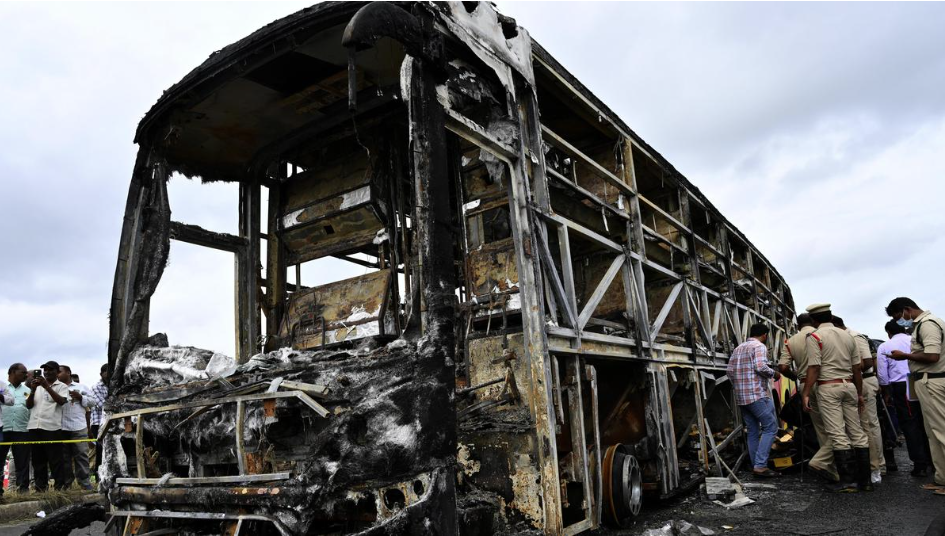
Bus fires in India have killed many passengers who could not get out in time. In February 2026 the Road Transport Ministry told the Rajya Sabha that in the Jaisalmer–Jodhpur sleeper-bus fire, the emergency doors were too small, seats blocked the way to the emergency door, and only one roof hatch had been fitted instead of two. It has asked States to check that buses meet the AIS-052 bus body code and AIS-119 at registration and at every fitness test.
Lessons for Indian passengers, drivers and operators
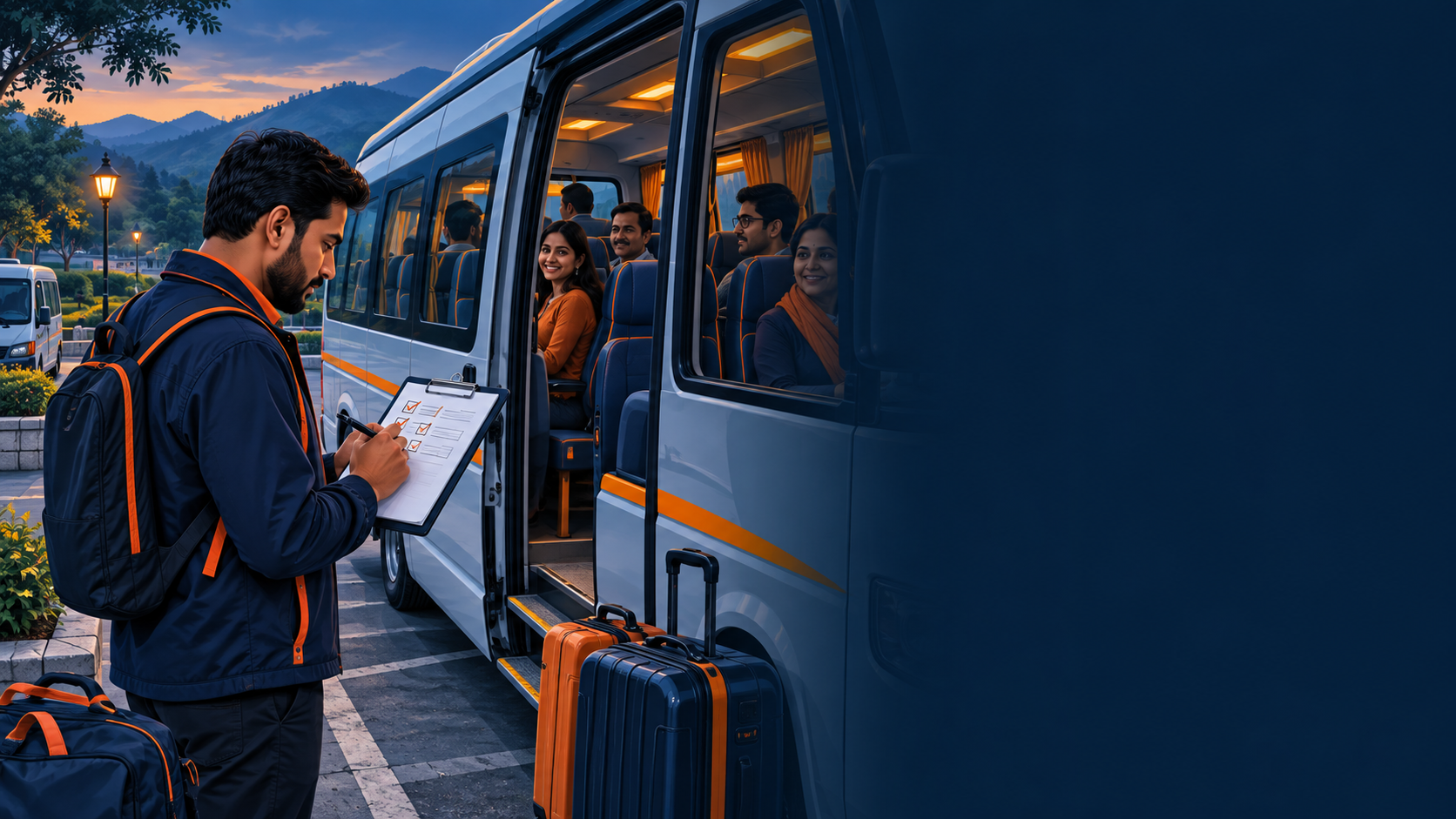
- Find the way out before the bus moves. Look for the emergency door, the roof hatch and the window hammers when you sit down. If the hammer is missing or the exit is blocked by luggage or an extra seat, tell the conductor or the depot.
- Get out first, ask questions later. If you smell smoke or see fire, leave at once by the nearest door or exit. Do not stop for bags. Help children and elderly people out, and move well away from the bus.
- Break the corner of the window. If the doors will not open, strike a side window near its corner with the hammer, not the centre, then clear the glass before climbing out.
- Keep your distance. Leave enough gap to stop safely behind the vehicle in front, and more for a heavy bus. Rear-end crashes killed more people in India in 2023 than any other type of collision.
- Stops are danger zones. Drivers should slow down well before a bus stop, and passengers waiting at a stop should stand back from the kerb.
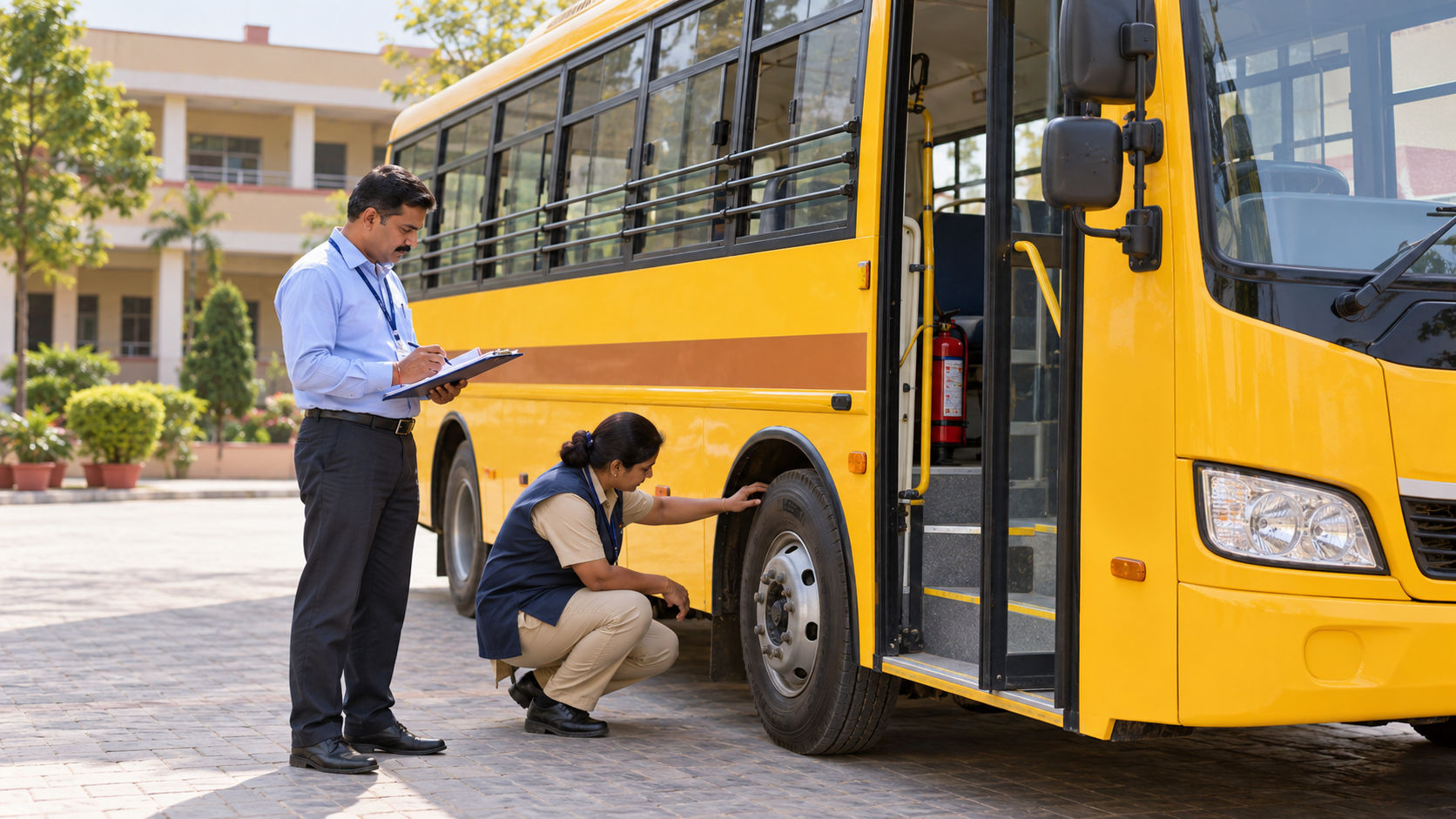
- Operators must keep exits and fire equipment working. Check emergency doors, hatches, hammers, extinguishers and any fire detection system at every service, and keep CNG cylinders, pipes and valves inspected on schedule.
What is still not known
Why the first bus lost control, which bus ran on natural gas and whether both did, how the fire started and how it spread, and whether the fuel system played any part, have not been officially confirmed. The final injury count and the names of the people who died have also not been published. We will update this page when the Calgary Police Service or the City of Calgary releases findings.
- Police called to a vehicle fire involving a City of Calgary bus in the 800 block of Saddletowne Circle N.E.
- A moving bus hits a white vehicle and sets off a chain of collisions, then hits a second bus at a stop; the second bus catches fire
- Crews from the nearby fire station put out fires on both buses; 12 fire units and a hazardous materials unit attend
- Police close Saddletowne Circle at 80 Avenue N.E.
- Police confirm three deaths and at least 10 injured (LiveWire Calgary)
- Police say eight vehicles were involved; EMS says 19 injured, 10 taken by ambulance
- No cause finding, victim names or charges located in published reports
Why consequences escalated
- Three passengers on the bus standing at the stop died after it caught fire.
- Police describe a chain of collisions that ended with a moving bus hitting a stationary bus.
- The burning bus ran on natural gas; reports differ on whether it was compressed or liquid natural gas.
- Injury totals differ between 16 and 19 depending on how walking wounded and the officer were counted.
- No official cause has been given for the loss of control or the fire.
Failures and risk multipliers
- Following too closely or failing to slow down near a bus stop, a common cause of rear-end crashes.
- Passengers not knowing where the emergency exits and window hammers are.
- Bus exits blocked by luggage, extra seats or locked hatches.
- Fire detection and fuel systems on buses that are not checked on schedule.
Actions that reduce risk
- Check the emergency door, roof hatch and window hammers every time you board a bus.
- Report a missing hammer or blocked exit to the conductor, depot or transport office.
- Keep a safe gap behind the vehicle in front, and slow down near bus stops.
- Operators should test exits, extinguishers and fire detection systems at every service.
- Inspect CNG cylinders, pipes and valves on schedule and keep the records.
Leave a comment