
Quick answers
What should be checked before a concrete pour on a construction site?
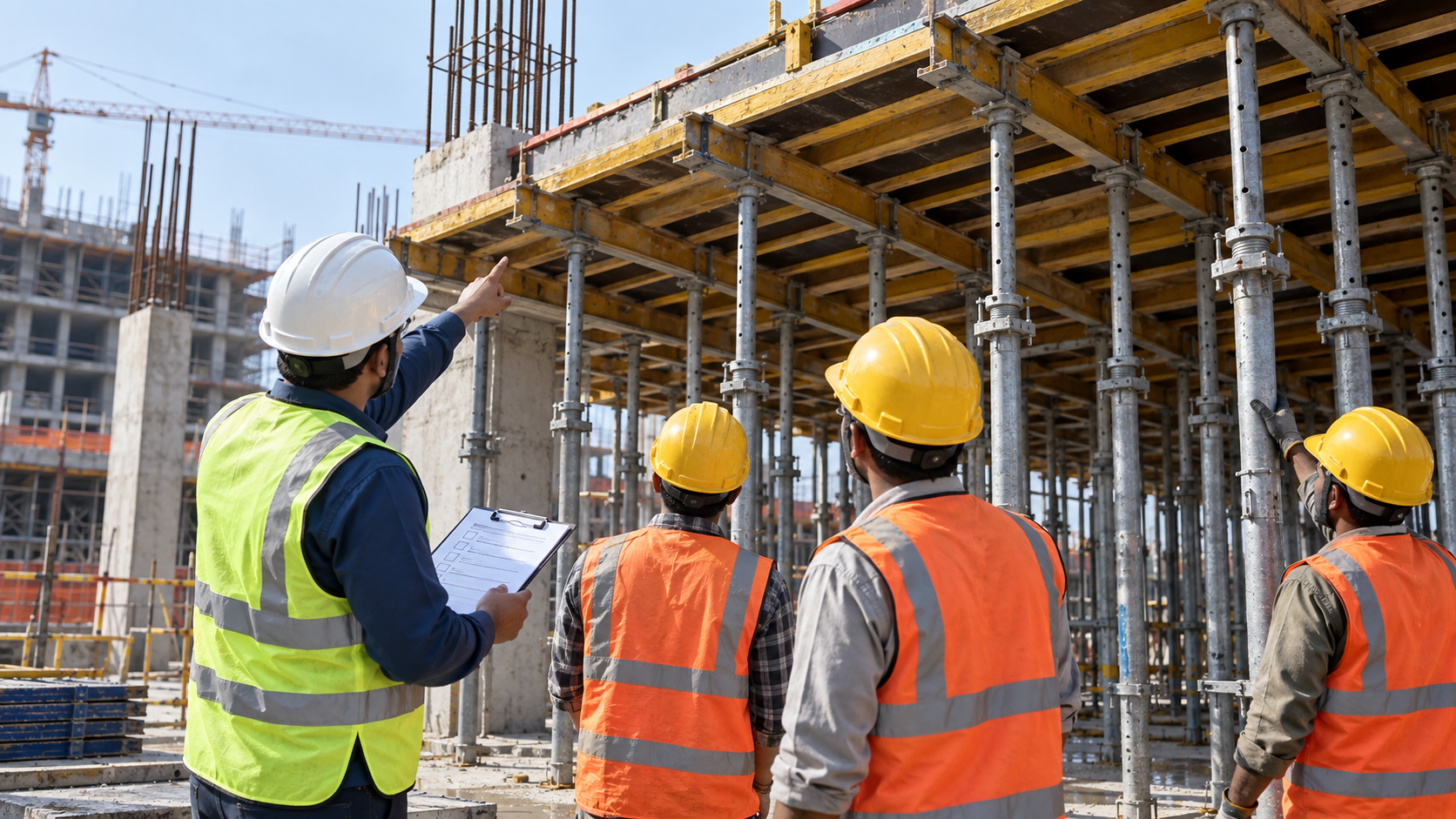
A competent person should inspect the erected formwork and shores against the approved design, looking for loose or missing bracing, poor bearing, damaged members, gaps, displaced props and unsafe access. The area below the pour should be controlled.
What are the warning signs of formwork or shoring failure during a pour?
Warning signs include unusual movement, sagging, audible cracking, shifting supports or fresh concrete leaking from formwork. These signs mean work must stop and people must move clear while a competent engineer assesses the structure.
When can formwork and shores be removed after concreting?
Only after the responsible engineer confirms sufficient concrete strength and a planned load-transfer sequence. Do not assume the end of a shift or a fixed number of days makes removal safe, as weather, curing and loads can change the answer.
What to do if formwork collapses at a building site in India?
Move out of the possible collapse zone, warn others and call 112 with the site gate, landmark and any known trapped people. Do not enter unstable debris or move shores to reach someone, and give responders the drawings and known hazards.
The temporary structure carries a real load
Before a slab or beam can hold itself up, something else has to hold up the wet concrete, the steel, the workers and their equipment. That something is the formwork, which gives the concrete its shape, and the shores, props and bracing below it, which carry the weight and keep it steady. A collapse can happen while the system is being put up, during the pour, or when supports are taken out too early.
This guide is general prevention advice for site teams and workers, not an account of any single incident. A qualified designer and the site engineer must decide the actual system and its capacity for each project.
Plan the load path before work starts
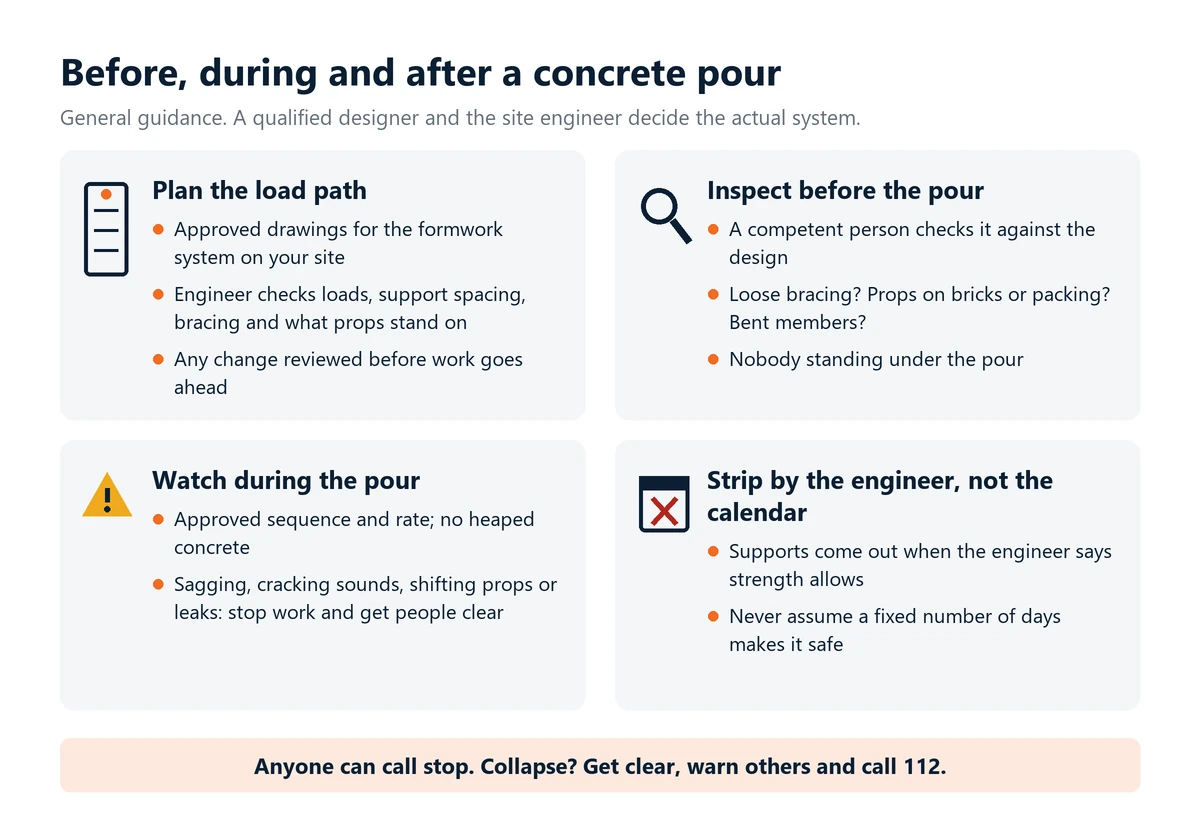
Use drawings and instructions approved for the specific formwork system on your site. The responsible engineer should check the expected concrete and construction loads, the spacing of supports, the bracing, what the props stand on and the order of work. Any change to the pour plan or the temporary works must be reviewed before work goes ahead.
In India, the Building and Other Construction Workers Central Rules cover formwork, falsework and shoring, and local laws and project requirements must also be followed. The SafeWork NSW (Australia) and OSHA (US) material cited here is useful technical guidance, not a statement of Indian law.
Inspect before the pour
A competent person should inspect the erected formwork and shores against the design before any concrete is placed. Look for:
- missing or loose bracing
- props standing on soft ground, loose bricks or packing instead of proper base plates
- damaged or bent members
- unexpected gaps
- props that have been knocked out of line
- unsafe ladders or access
Make sure nobody will be standing under the pour. Tell workers the load limits and who to go to with a concern. A signed checklist is worth something only if it reflects a real inspection on site.
Control the pour, not just the start
During the pour, follow the approved sequence and rate. Do not heap concrete or park equipment where the design did not allow for it. Keep a competent supervisor watching the temporary works throughout.
Warning signs include unusual movement, sagging, cracking sounds, supports shifting or fresh concrete leaking from the formwork. Any of these means stop work and get people clear while a competent engineer looks at the structure. Never send a worker to tighten or move a loaded prop under an area that is visibly unstable.
Do not strip supports by the calendar alone
Concrete needs enough strength, and the load needs a planned way to transfer, before formwork or shores come out. The responsible engineer should decide when test results, the specified strength and site conditions allow stripping or reshoring. Weather, curing and loads from floors above can all change the answer. Never assume that the end of a shift or a fixed number of days makes removal safe.
OSHA’s concrete rule and SafeWork NSW guidance both stress inspection and competent control. Neither replaces the Indian design and site requirements that apply to your project.
Give every worker a way to stop the work
Before the pour, agree on a clear stop signal, the safe way out and the person who will reassess the temporary works. A worker who sees movement or a missing support must be able to raise the alarm without being told to carry on. Supervisors should clear the danger area, keep people out and get a qualified review. Record and fix the problem before restarting. Pressure to finish the pour is not an engineering sign-off.
If a collapse happens
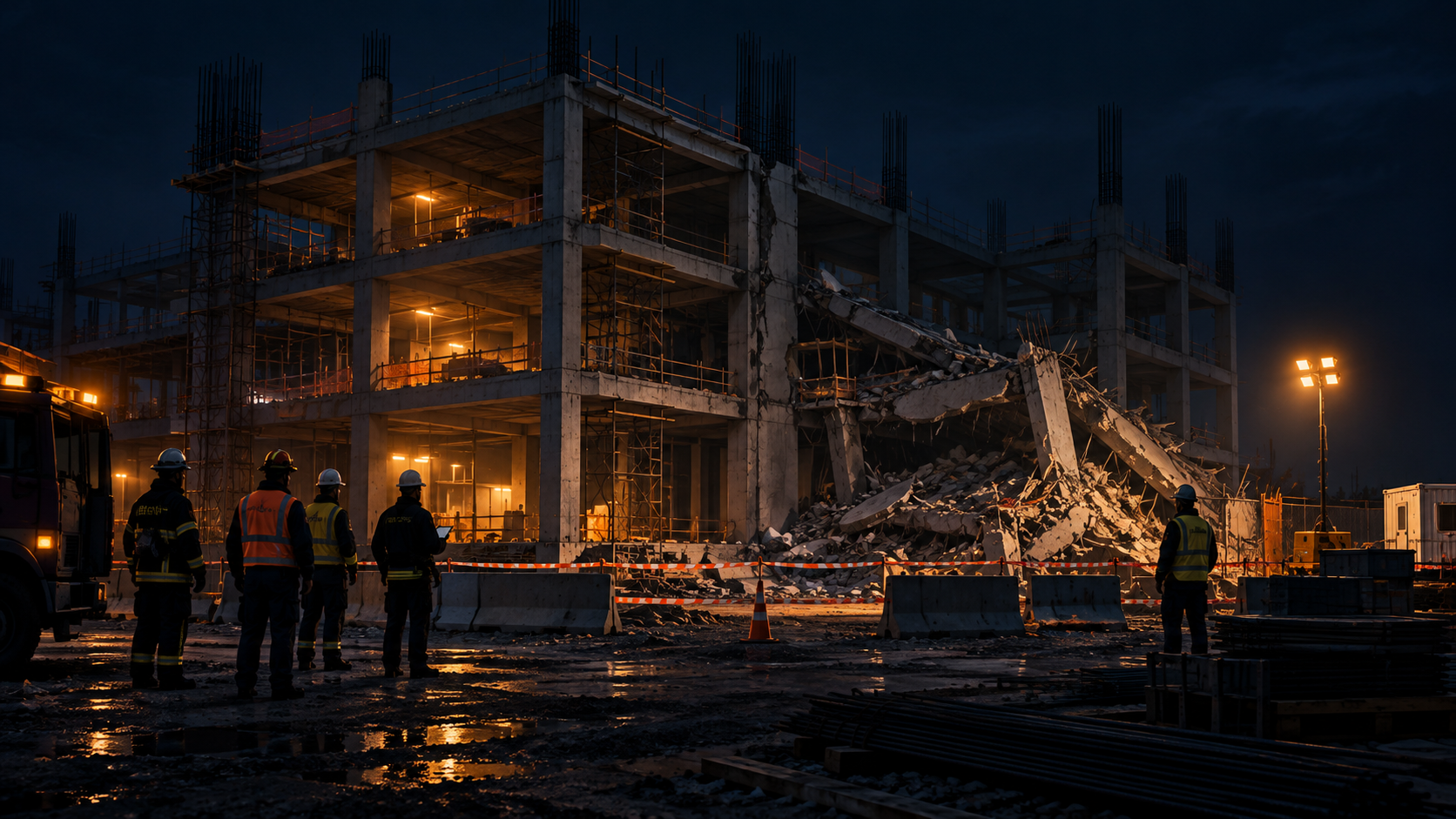
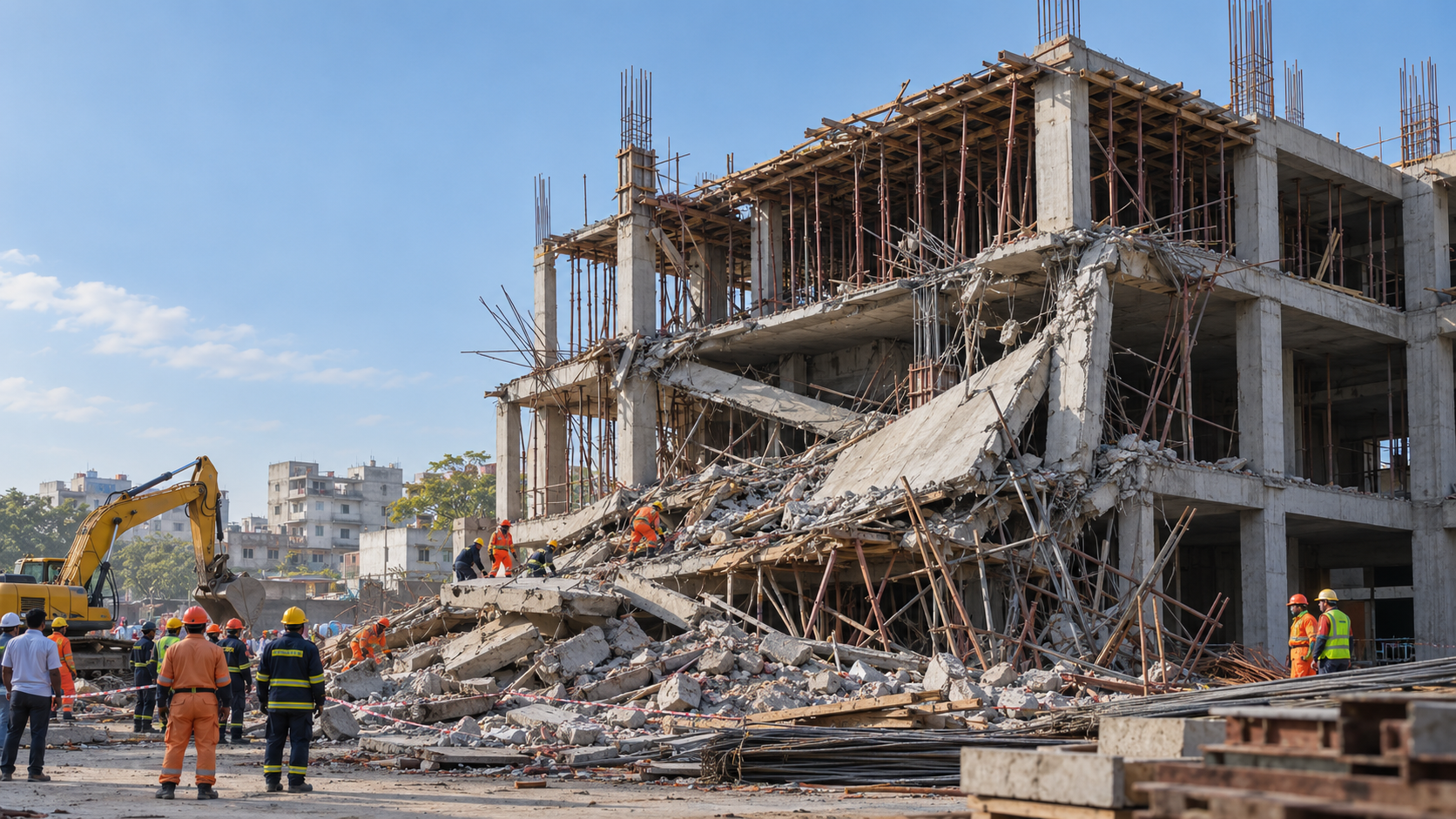
Get out of the possible collapse zone and warn others. Call 112 and give the site gate, a landmark, any access problems and how many people may be trapped. Do not climb into unstable debris or pull out shores to reach someone, because a second collapse can kill the rescuers too. Give trained responders the drawings and tell them about known hazards. Keep onlookers and machines out of their way.
A short conversation before every pour
Ask these questions on site:
- Is the temporary works design current?
- Has the system as built been inspected against it?
- Does everyone understand the loads and the pour sequence?
- Is the area below kept clear of people?
- Who has the authority to stop and restart?
- How will concrete strength be confirmed before supports come out?
If anyone does not know the answer, pause and get a competent review before the first bucket of concrete goes in.
What needs attention
- Temporary supports need the same careful design and inspection as permanent structures
- Inspection has to continue during the pour, not stop once concrete starts flowing
- Props should come out only on evidence of adequate strength and an approved sequence
- The safe response to visible movement is to stop and clear the area, not to repair under load
- Australian and US guidance is cited for technical learning, not as Indian law
Controls that reduce risk
- Have a current temporary works design for every pour
- Record a real pre-pour inspection by a competent person
- Brief workers on the pour sequence, the no-go area below and the stop signal
- Watch supports and formwork throughout the pour
- Record strength results and engineer approval before stripping or reshoring
- Keep site access details ready for emergency responders
Common unsafe practices
- Pouring to outdated or unapproved temporary works drawings
- Ignoring missing bracing or poor bearing because the props look straight
- Heaping concrete or parking equipment where the design did not allow it
- Sending someone under a moving area to adjust a prop
- Removing props after a fixed number of days without checking strength
- Letting workers stand below an active pour
Leave a comment