
Quick answers
What should I do if I feel chest pain while driving?
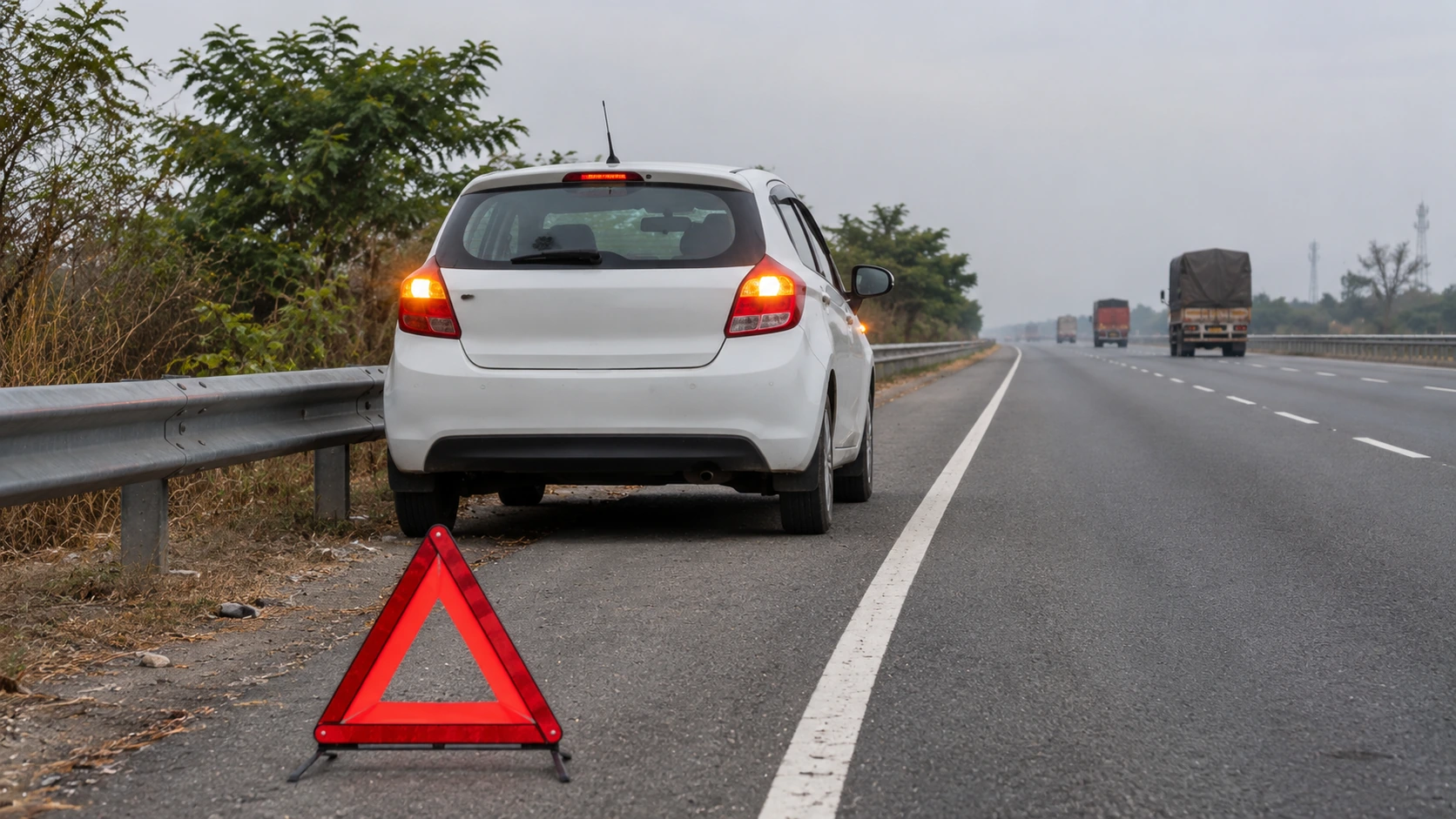
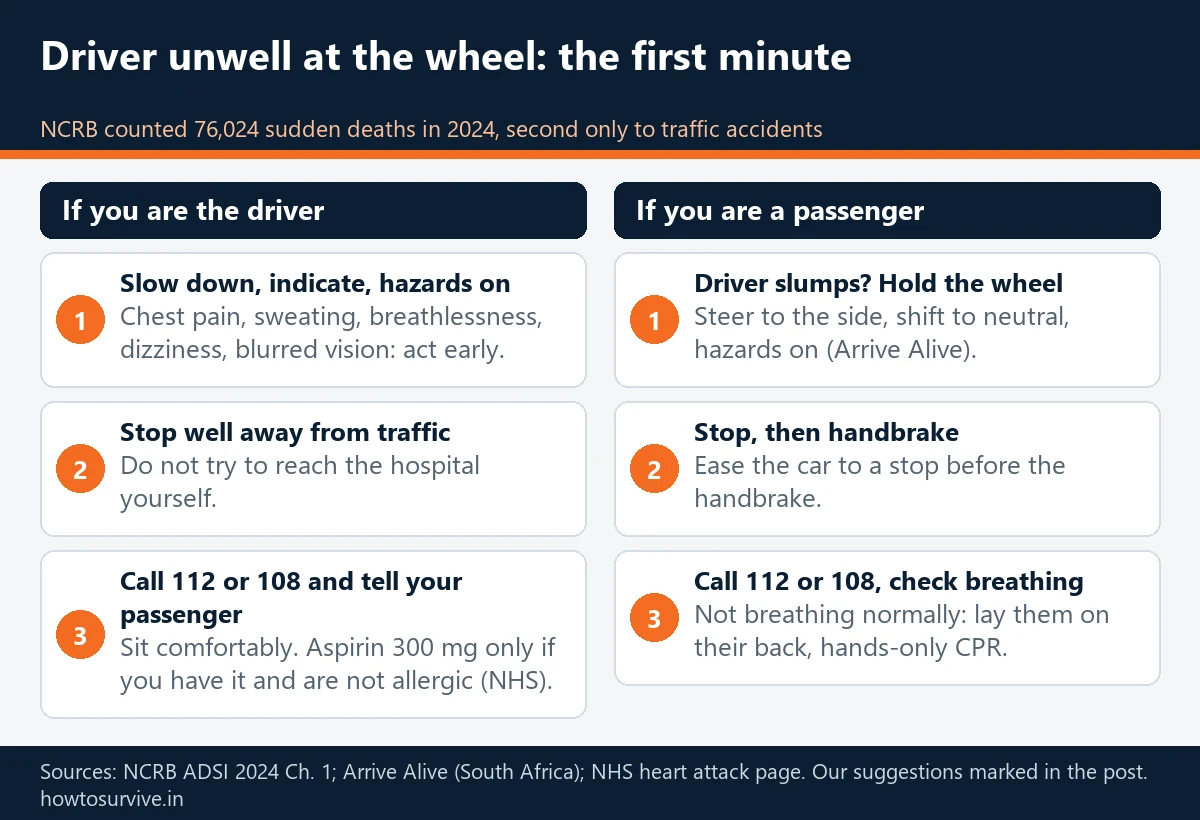
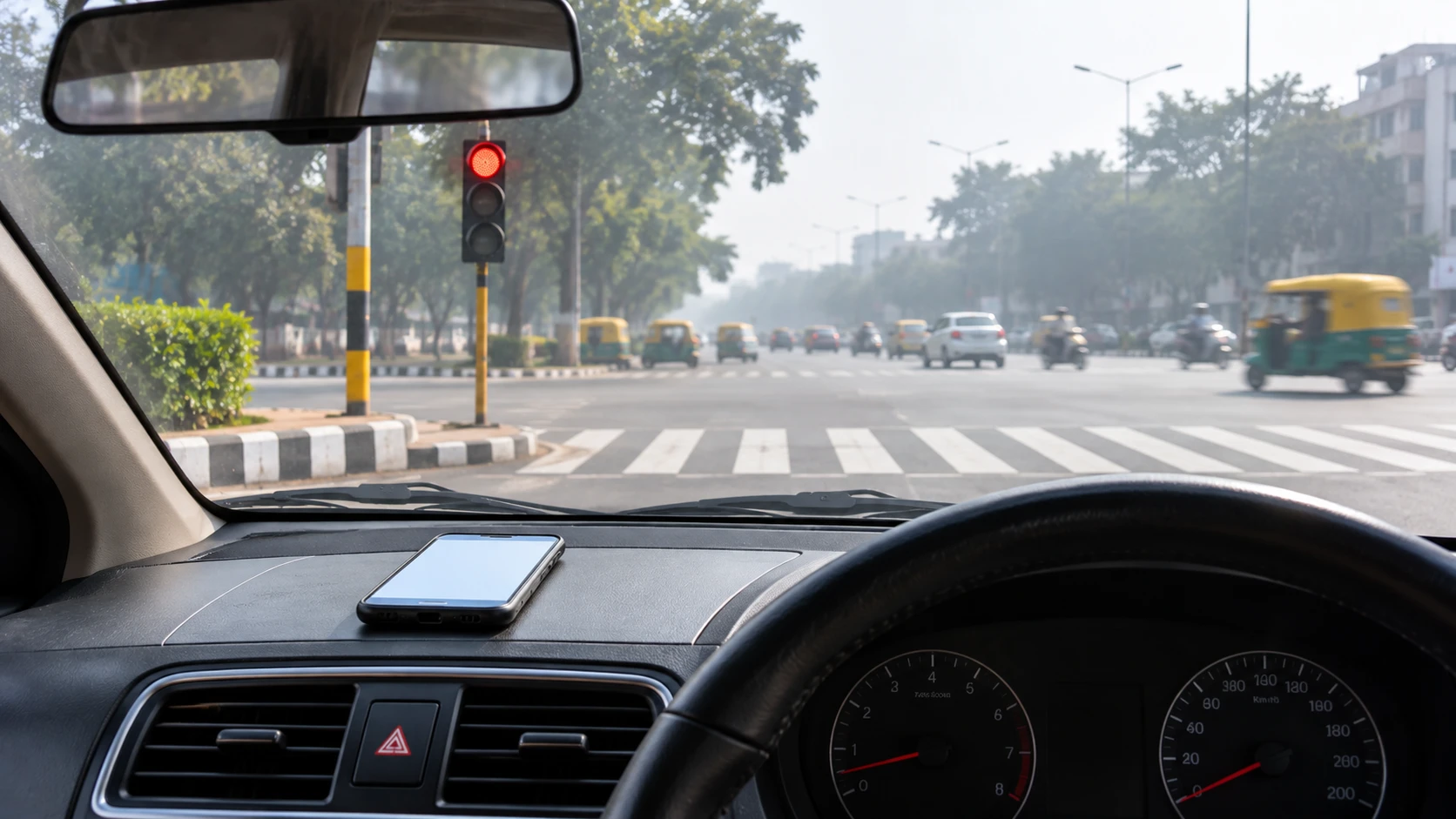
Slow down, indicate, switch the hazard lights on and stop well away from traffic. Call 112 or 108, tell any passenger, and sit and rest. Do not drive yourself to a hospital. The NHS advises taking a 300 mg aspirin if you have one and are not allergic.
What should a passenger do if the driver faints or collapses?
Take hold of the steering wheel, shift to neutral, switch the hazard lights on and steer to the side of the road (Arrive Alive). Ease to a stop and apply the handbrake once stopped, then call 112 or 108 and check breathing.
What if the driver is not breathing?
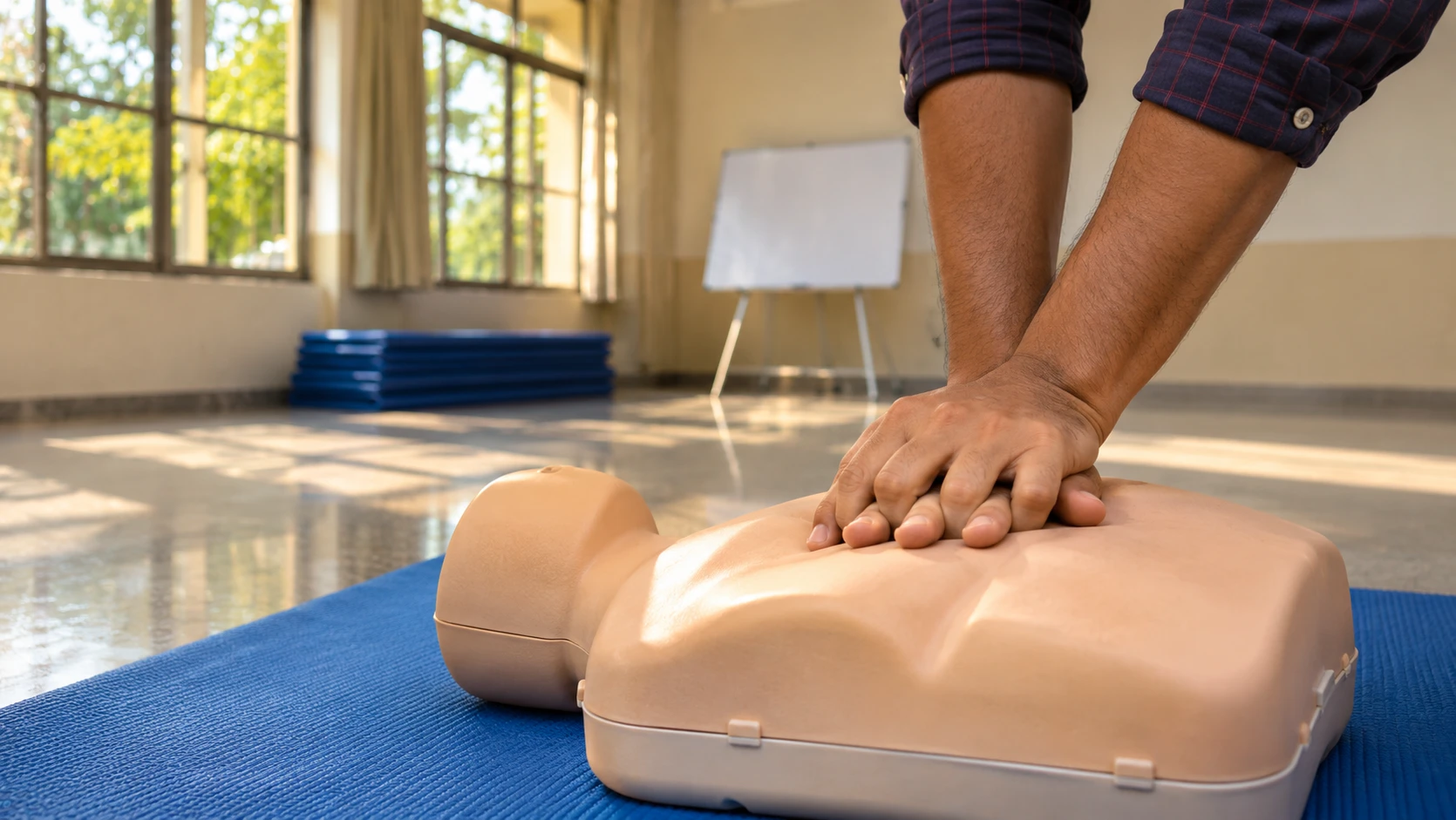
Call 112 or 108 and, as Arrive Alive advises, move the person out of the car, lay them on their back with the airway open, and give hands-only CPR: heel of the hand on the breastbone, 5 to 6 cm deep, 100 to 120 compressions a minute, until help arrives.
Should I switch off the engine when the driver collapses?
Arrive Alive says to hold the wheel, shift to neutral and switch the hazards on. Our own suggestion is to leave the key in the ignition until the car has stopped; guides differ, so read your vehicle's manual.
How common are sudden deaths in India?
NCRB counted 76,024 sudden deaths in 2024, 16.5 per cent of deaths from causes other than forces of nature and second only to traffic accidents. It does not say how many happened while driving.
How can a driver lower the risk of a medical emergency at the wheel?
Keep up regular check-ups, take medicines as prescribed and check their side effects, eat normally after insulin if you have diabetes, and do not drive after a blackout until a doctor has assessed you (Arrive Alive).
Is aspirin safe for everyone with chest pain?
No. The NHS advises it for a person with heart attack symptoms only if they have it and are not allergic to it; ER24's advice applies only to a person who can chew and swallow. Do not give aspirin to a person who is not awake.
A driver unwell at the wheel, with chest pain, a faint, a seizure or a sudden low sugar, has a minute or less to stop a moving vehicle safely, and passengers may have even less. The National Crime Records Bureau (NCRB) counted 76,024 sudden deaths in India in 2024, second only to traffic accidents among accidental causes; it does not say how many happened at the wheel. This guide sets out the warning signs, what a driver should do at once, what a passenger does if the driver slumps, and how to lower the risk before the next long drive. Checked 13 November 2026.
In short
- If you feel unwell, act at once: slow down, indicate, switch the hazard lights on and stop well away from traffic. Do not try to drive yourself to a hospital (Arrive Alive, NHS).
- Call 112 or 108 and tell any passenger what is happening. For a suspected heart attack the NHS advises sitting and resting, and taking a 300 mg aspirin if you have one and are not allergic.
- If the driver slumps, a passenger holds the wheel, steers to the side of the road, shifts to neutral and switches the hazards on (Arrive Alive). Once the car has stopped, apply the handbrake.
- Then call 112 or 108 and check breathing. If the driver is not breathing normally, lay them on their back and start hands-only CPR: press the centre of the chest 5 to 6 cm deep, 100 to 120 times a minute, until help arrives (Arrive Alive).
- Before the next trip: keep up regular check-ups, take medicines as prescribed and check their side effects, and do not drive after a blackout until a doctor has assessed you (Arrive Alive).
What the numbers say
NCRB’s Accidental Deaths and Suicides in India 2024 counts 4,67,857 accidental deaths. Of the 4,59,954 deaths from causes other than forces of nature, 76,024 (16.5 per cent) were “sudden deaths”, the second largest cause after traffic accidents (1,99,443). Maharashtra recorded 25,421 of them, and the 53 big cities 20,253. The chapter text does not say how many sudden deaths happened while driving, what caused them, or how many road crashes started with a medical emergency, so we cannot put a number on this risk. We use the figure only to show how common sudden collapse is.
Two recent examples
Two Indian reports from 2026 show how differently it can end. In Aligarh district, Uttar Pradesh, on 26 June 2026, a state transport bus driver with severe chest pain slowed the bus and steered it off the road before he lost consciousness; the bus hit an electric pole without overturning, passengers moved to the front, applied the brakes and switched off the engine, none of the passengers was injured, and the driver died in hospital (Free Press Journal). In Thiruvananthapuram, Kerala, on 5 August 2026, a school bus driver had a heart attack while dropping students home, lost consciousness, and the bus crashed into a house; two of the six students on board had minor injuries and the driver was declared dead (Onmanorama). We do not name anyone here and we draw no conclusion about either case beyond what the reports state: a driver who can stop gives the passengers a chance, and one who cannot leaves it to whoever is beside them.
Warning signs for the driver
- Heart attack: tight or squeezing chest pain that can spread to the arm, neck or jaw, shortness of breath, feeling sick, sweating, and pale, blue or grey skin (NHS).
- Low blood sugar: feeling lightheaded or drowsy, blurred vision, or spots in front of the eyes (Arrive Alive).
- Stroke: confusion, dizziness, numbness, severe headache, trouble speaking or walking, vision changes or weakness; Arrive Alive suggests the FAST check of face, arm, speech and time.
- Seizure: some people with epilepsy get an aura first, such as a disturbed sight or smell (Arrive Alive). Our guide to a seizure or a diabetic emergency covers what a bystander does.
- Faint or blackout: Arrive Alive says not to drive if you have a history of blackouts until a medical specialist has assessed you.
Arrive Alive also notes that medical emergencies are often unforeseen, with no warning signs at all. That is why the plan matters.
If you are the driver
- Stay as calm as you can. The South African ambulance service ER24 notes that panic puts extra strain on the heart.
- Slow down gently and signal. Ease off the accelerator, indicate, switch the hazard lights on, and move to the side or the emergency lane (Arrive Alive, ER24).
- Stop well away from traffic, on the hard shoulder or in a side street, and tell any passenger what is happening.
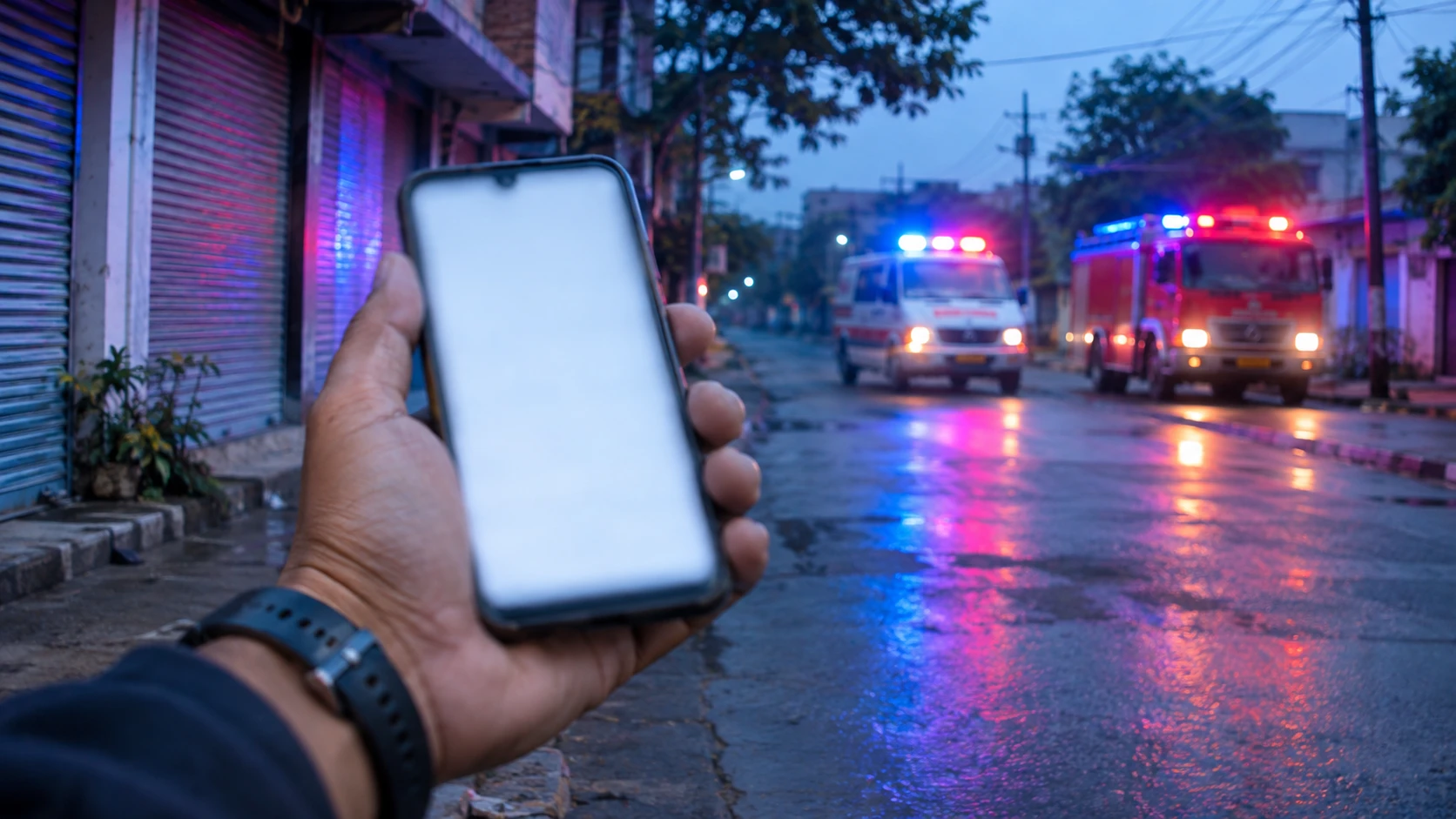
- Call for help on 112, or 108 for an ambulance. Tell the operator exactly where you are and describe the vehicle (ER24). Our guide to how to call 112, 101 or 108 says what to tell the control room.
- Do not drive yourself to the hospital. Arrive Alive says plainly not to be stubborn about this, and the NHS says the same for a heart attack.
- Sit and rest, in a comfortable position with the knees bent and the back supported (NHS).
- Aspirin: the NHS advises taking a 300 mg aspirin if you have one, unless you are allergic to it; with angina, use the glyceryl trinitrate spray if you carry it. This is general information; follow your own doctor’s advice about what you carry.
If you are a passenger and the driver slumps
These steps follow Arrive Alive’s order. They are for a moment when seconds count, so read them once now.
- Stay calm and watch the driver for any change in alertness.
- If the driver is awake but unwell, encourage them to pull over to the side as soon as possible.
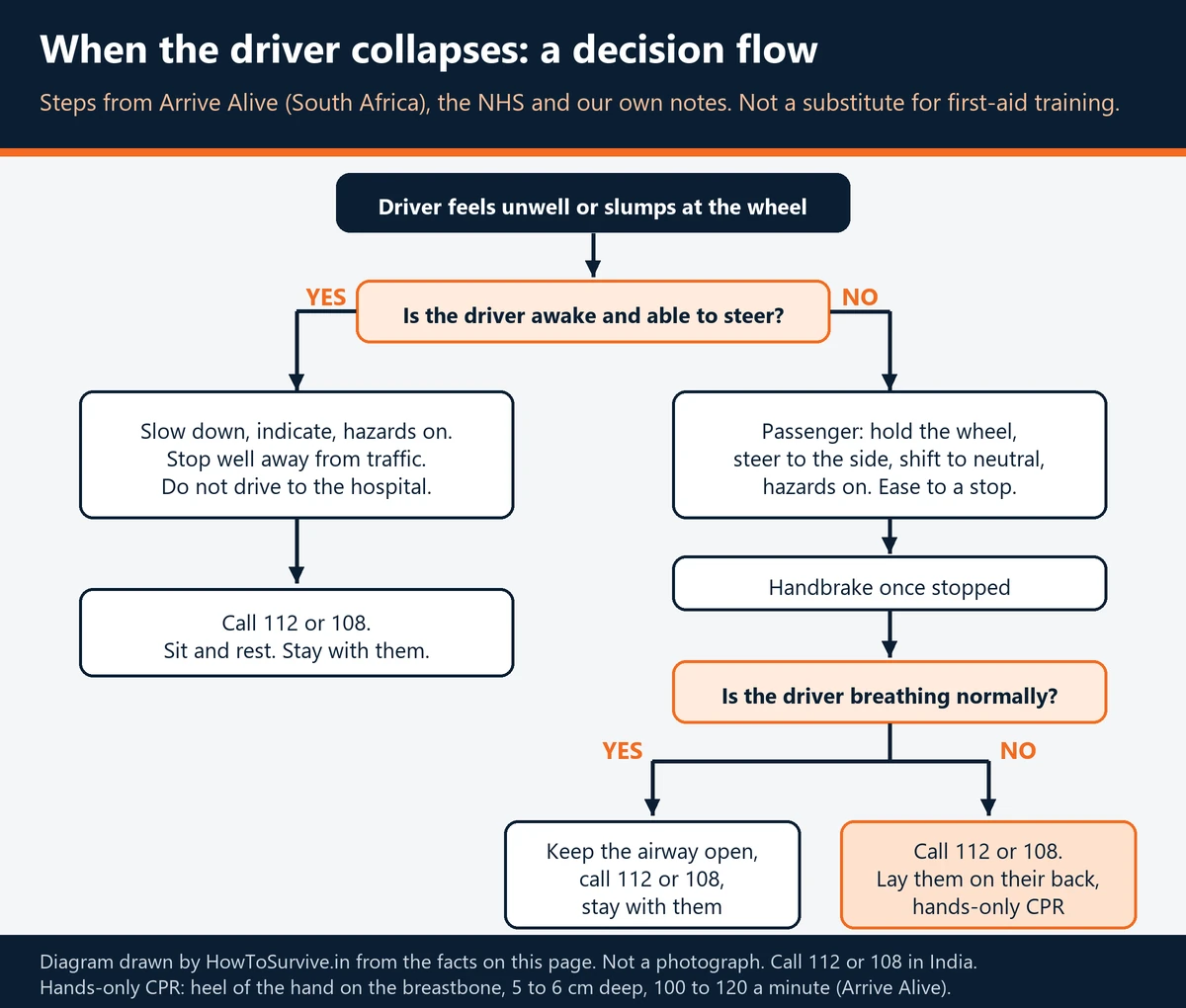
- If the driver loses consciousness, take hold of the steering wheel, shift to neutral, switch the hazard lights on and steer to the side of the road (Arrive Alive).
- Stop gently. Our suggestion: let the car slow down before you apply the handbrake, do not yank it at speed, and leave the key in the ignition until the car has stopped.
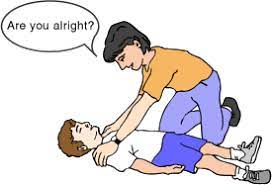
- Once the car has stopped and the handbrake is on, call 112 or 108 and check whether the driver is breathing. If they are breathing, keep the airway open and stay with them (Arrive Alive).
- If the heart has stopped, Arrive Alive says to move the person out of the car, lay them on their back with the airway open and start CPR as soon as help has been called. For hands-only CPR, place the heel of one hand on the breastbone, put the other hand on top, and press 5 to 6 cm deep at 100 to 120 compressions a minute until the ambulance arrives. Our guide to hands-only CPR in three steps and our guide to bystander CPR in India explain why the first minutes matter.
- Do not give aspirin or anything by mouth to a person who is not awake and able to swallow. ER24’s aspirin advice applies only to a person who can chew and swallow.
Lowering the risk before a long drive
- Regular check-ups with your doctor, and take medicines as prescribed (Arrive Alive).
- Check the side effects of any medicine before you drive, especially the first time you take it (Arrive Alive).
- Diabetes: Arrive Alive says not to drive after taking insulin without eating normally, because a smaller meal raises the risk of a low sugar episode at the wheel.
- After a blackout, do not drive until a medical specialist has assessed you (Arrive Alive).
- Our suggestions: do not start a long drive feeling chest tightness or dizzy; share the driving on a long trip; keep your phone charged and in reach; and tell your co-passengers the plan above before you set off.
- Our suggestion for fleet owners, bus and school transport managers: ask drivers about chest pain, blackouts and diabetes at their regular health checks, give rest breaks, and make sure at least one adult on board knows the steps above. Our guide to school bus defects covers other checks at a school.
What we could not confirm
NCRB gives no count of sudden deaths at the wheel or of crashes that began with a medical emergency. We did not find an Indian government page on a driver’s medical emergency at the wheel, so the steps come from Arrive Alive and ER24, which are South African road-safety and ambulance sources, and from the NHS (UK) for the heart attack advice; the emergency numbers have been replaced with Indian ones. Guides differ on the handbrake and the ignition while the vehicle is moving, so the lines marked as our suggestion are cautions, not rules, and your vehicle’s manual comes first. We did not verify the two news reports beyond reading them, and we add no video because the clips we found showed an incident or a person in distress rather than guidance. This page is general safety information, not medical advice.
Do this this week
What needs attention
- NCRB counted 76,024 sudden deaths in India in 2024, the second largest cause of accidental death after traffic accidents.
- NCRB gives no count of sudden deaths at the wheel or of crashes that began with a medical emergency.
- Arrive Alive and the NHS both say a driver who feels unwell should stop and call for help, not drive to the hospital.
- Arrive Alive's steps for a passenger are: hold the wheel, shift to neutral, hazards on, steer to the side, handbrake once stopped, then call and check breathing.
- Two Indian reports from 2026 show a bus driver who stopped the bus before he collapsed and one who did not.
Controls that reduce risk
- Slow down, hazards on, stop away from traffic, call 112 or 108.
- Passenger: hold the wheel, shift to neutral, steer to the side, handbrake once stopped.
- Check breathing; if not breathing, hands-only CPR until help arrives.
- See a doctor about medicines and conditions that could make you faint at the wheel.
- Learn hands-only CPR.
Common unsafe practices
- Trying to drive yourself to the hospital with chest pain.
- Carrying on driving because the symptoms seem mild.
- Switching the engine off or pulling the handbrake hard while the vehicle is moving.
- Giving aspirin or anything by mouth to a person who is not awake.
- Driving after a blackout or after insulin without eating normally.
- Not telling co-passengers what to do if the driver slumps.


Leave a comment