
What happened here
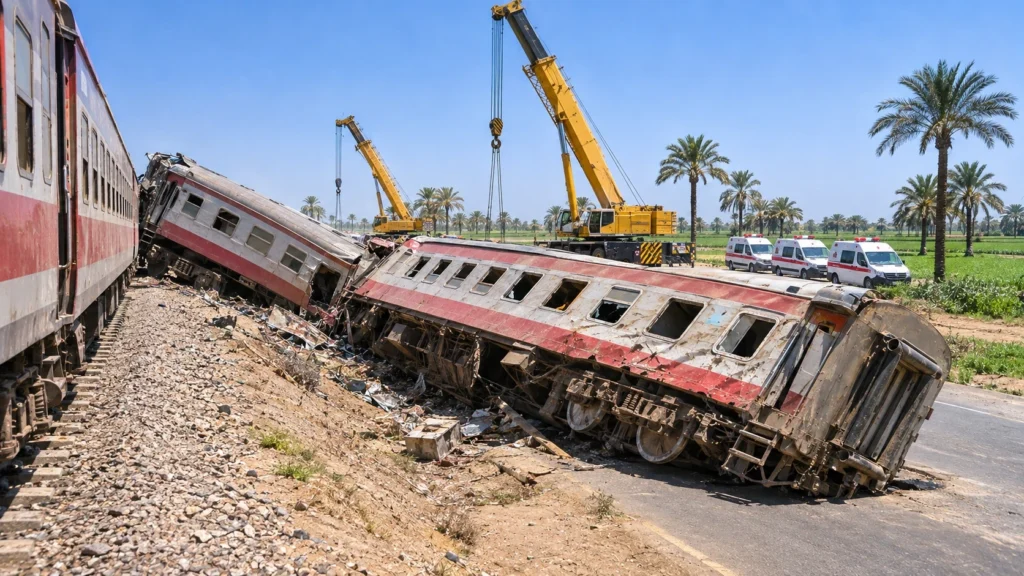
On Sunday 8 November 2026, a Giza-to-Fayoum passenger train ran into the back of a stopped Cairo-to-Aswan train at El-Ayyat, in Giza governorate, Egypt. Egyptian Streets, citing Egyptian National Railways, names them Train No. 134 (a Tahya Misr service) and Train No. 2010 and puts the collision between Kafr Ammar and Al-Raqqa stations on the Cairo-Aswan line. Al Jazeera quotes a witness who said six carriages overturned, and that the derailed train came to rest on a country road. The Health Ministry's first count was four dead and 88 injured; the toll then rose to seven dead and 112 injured (Egyptian Streets) and Al Jazeera reports at least seven dead and more than 125 injured. Authorities said more than 70 ambulances took part. The cause has not been announced; the Public Prosecution inspected the site and asked a railway technical committee to examine why the carriages derailed, and President Sisi ordered an urgent investigation and accountability for anyone found negligent.
Quick answers
What happened at El-Ayyat on 8 November 2026?
A Giza-to-Fayoum passenger train ran into the rear of a stopped Cairo-to-Aswan train, derailing carriages. At least seven people died and more than 100 were injured.
How many were killed and injured?
The Health Ministry first said four dead and 88 injured, then seven dead and 112 injured. Al Jazeera reports seven dead and more than 125 injured.
Was it a derailment or a collision?
A collision: the Fayoum train hit the back of the stopped Aswan train, and carriages then derailed.
What caused it?
The cause has not been announced. The Public Prosecution inspected the site and asked a railway technical committee to examine why the carriages derailed.
Did a driver die?
The Public Prosecution's statement, carried by El Nabaa, says the driver of Train 134 is among the seven dead. Egyptian Streets and Al Jazeera do not mention it.
How can passengers stay safe on a train?
Know the exits, keep the aisle clear and follow crew instructions. See: https://howtosurvive.in/city-safety/
Why no city guide?
Safety guides cover Indian cities; this is a world case.
What happened
On Sunday 8 November 2026, a Giza-to-Fayoum passenger train ran into the rear of a stopped Cairo-to-Aswan train at El-Ayyat, in Giza governorate, Egypt, and several carriages derailed. Egyptian Streets, citing Egyptian National Railways, names them Train No. 134, a Tahya Misr service, and Train No. 2010, and places the collision between Kafr Ammar and Al-Raqqa stations on the Cairo-Aswan line. A witness quoted by Al Jazeera said about 1.30 pm and that six carriages overturned.
The Health Ministry’s first count was four dead and 88 injured. By evening it was seven dead and 112 injured, and Al Jazeera reports seven dead and more than 125 injured.
What the reports say
- Dead: at least seven, per the Health Ministry (Egyptian Streets, Al Jazeera). The first count was four.
- Injured: 112 per Egyptian Streets and more than 125 per Al Jazeera; the first count was 88, and early reports of 64 and about 120 also circulated.
- Trains: the Fayoum train struck the rear of the stopped Aswan train, and the derailed train came to rest on a country road (Al Jazeera).
- Response: more than 70 ambulances took part, injured went to Al-Wasta, El-Ayyat and Atfih hospitals, Giza and Beni Suef hospitals were put on alert, and the Transport Ministry ran replacement buses.
- Officials: President Sisi ordered an urgent investigation and accountability for anyone found negligent; the Public Prosecution inspected the site and asked for a technical committee; the Prime Minister followed up on medical care.
Where reports differ and what we do not know
- Derailment or collision: many headlines say derailment; the opened reports describe a rear-end collision that derailed carriages.
- Toll: seven dead in the latest counts; injured 112 or more than 125 depending on the source and time.
- Time: about 1.30 pm per one witness; no official time was found.
- Newer reports: the Public Prosecution’s statement, carried by El Nabaa on the evening of 8 November, says the driver of Train 134 is among the seven dead and calls its counts of seven dead and 114 injured preliminary. It says the front of Train 134 hit the last carriage of Train 2010, which was stopped on the same track, and that a technical committee will examine the site, carriages and rails and whether operating or safety procedures were deficient. Masrawy’s headline gives 125 injured, citing the Health Ministry spokesperson. Sky News Arabia says 72 of the injured went to Al-Wasta, 33 to El-Ayyat and 7 to Atfih, that 45 had been discharged, and that four carriages overturned where Al Jazeera’s witness said six. The Financial Regulatory Authority raised the exceptional insurance payment for death and total permanent disability from 30,000 to 50,000 Egyptian pounds (Amwal Al Ghad).
- Still not known: the cause, why the Aswan train was stopped, and the signalling and braking details. No charge or arrest was reported in the pages we opened.
What this case teaches
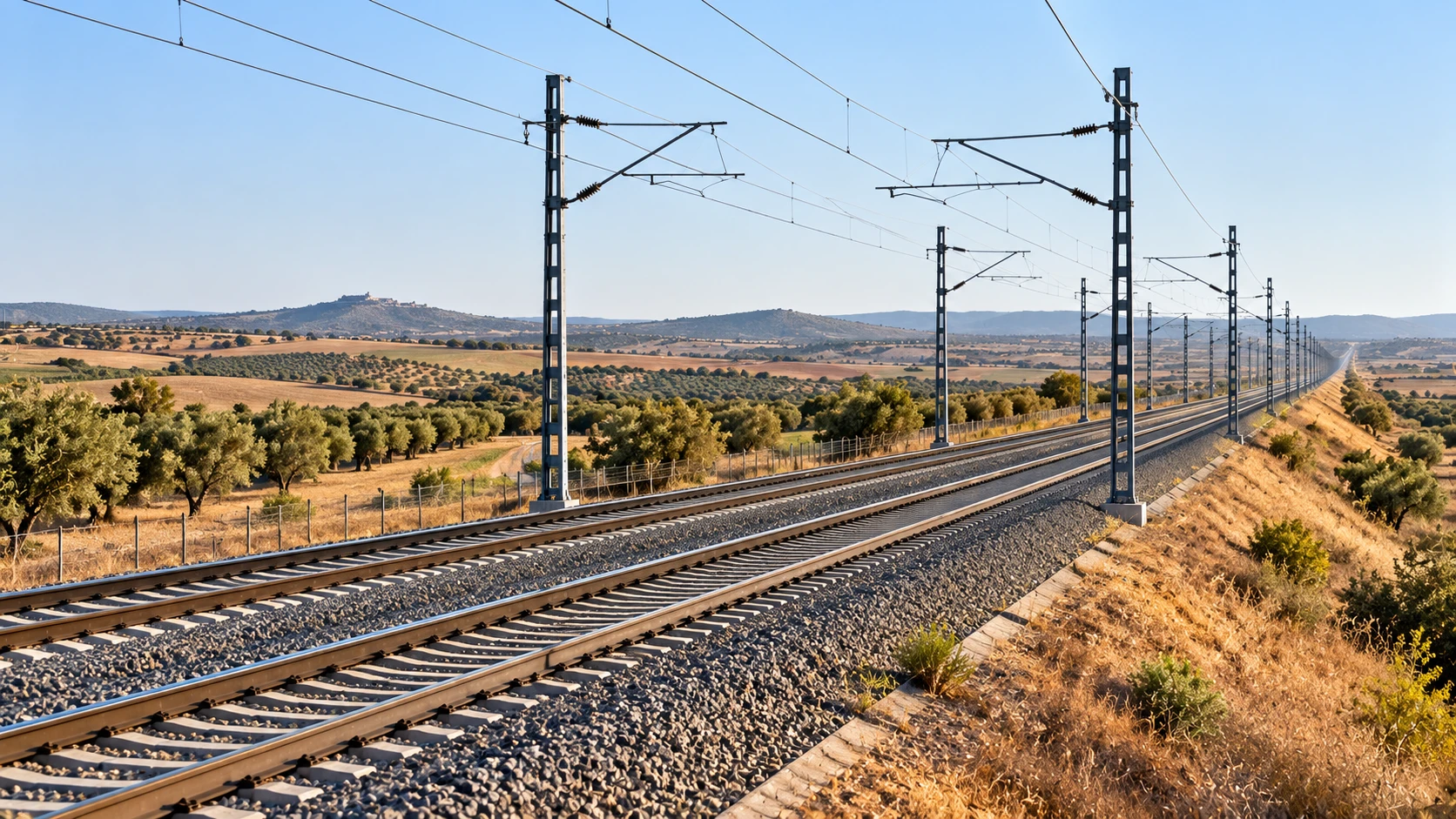
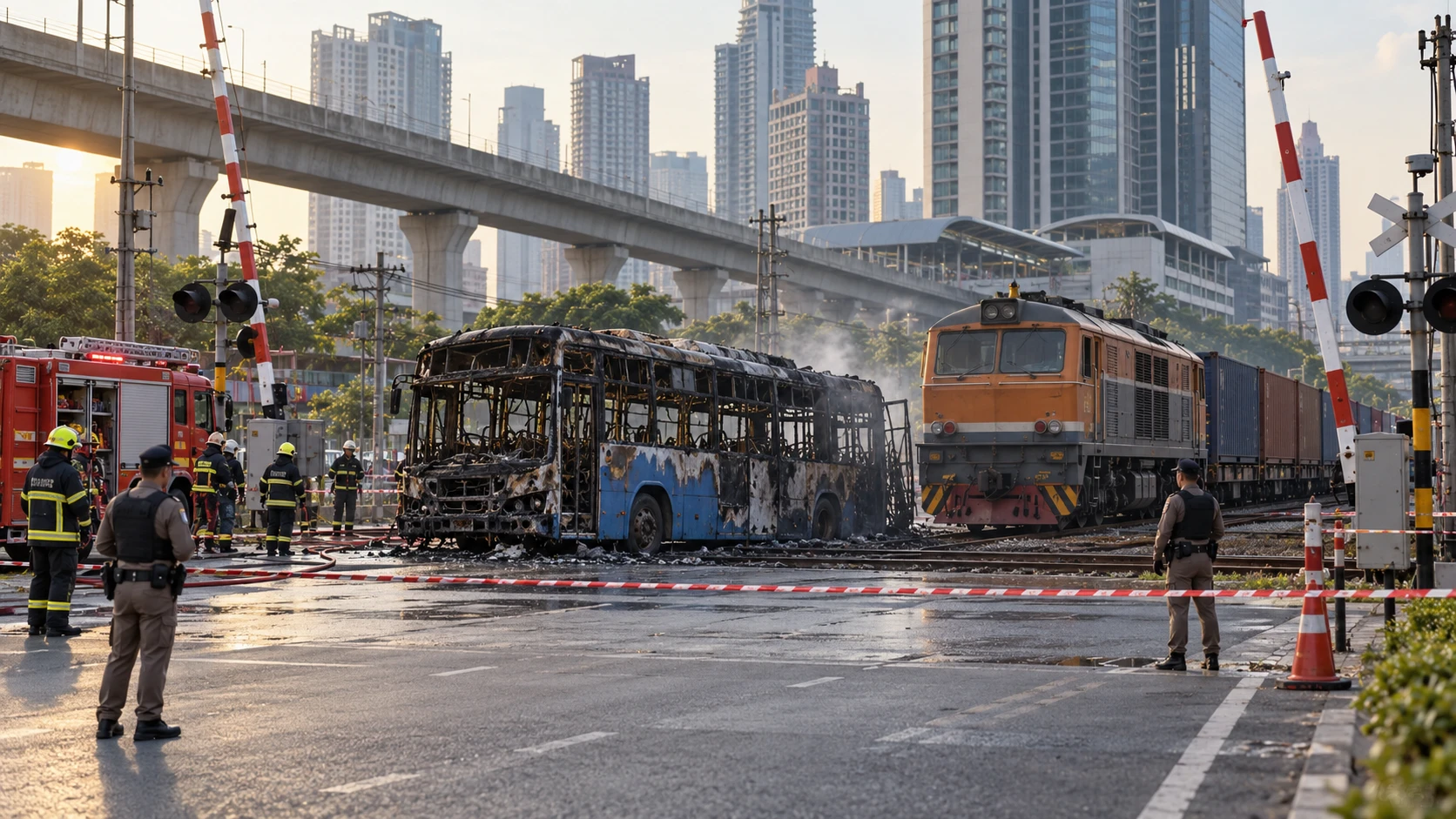
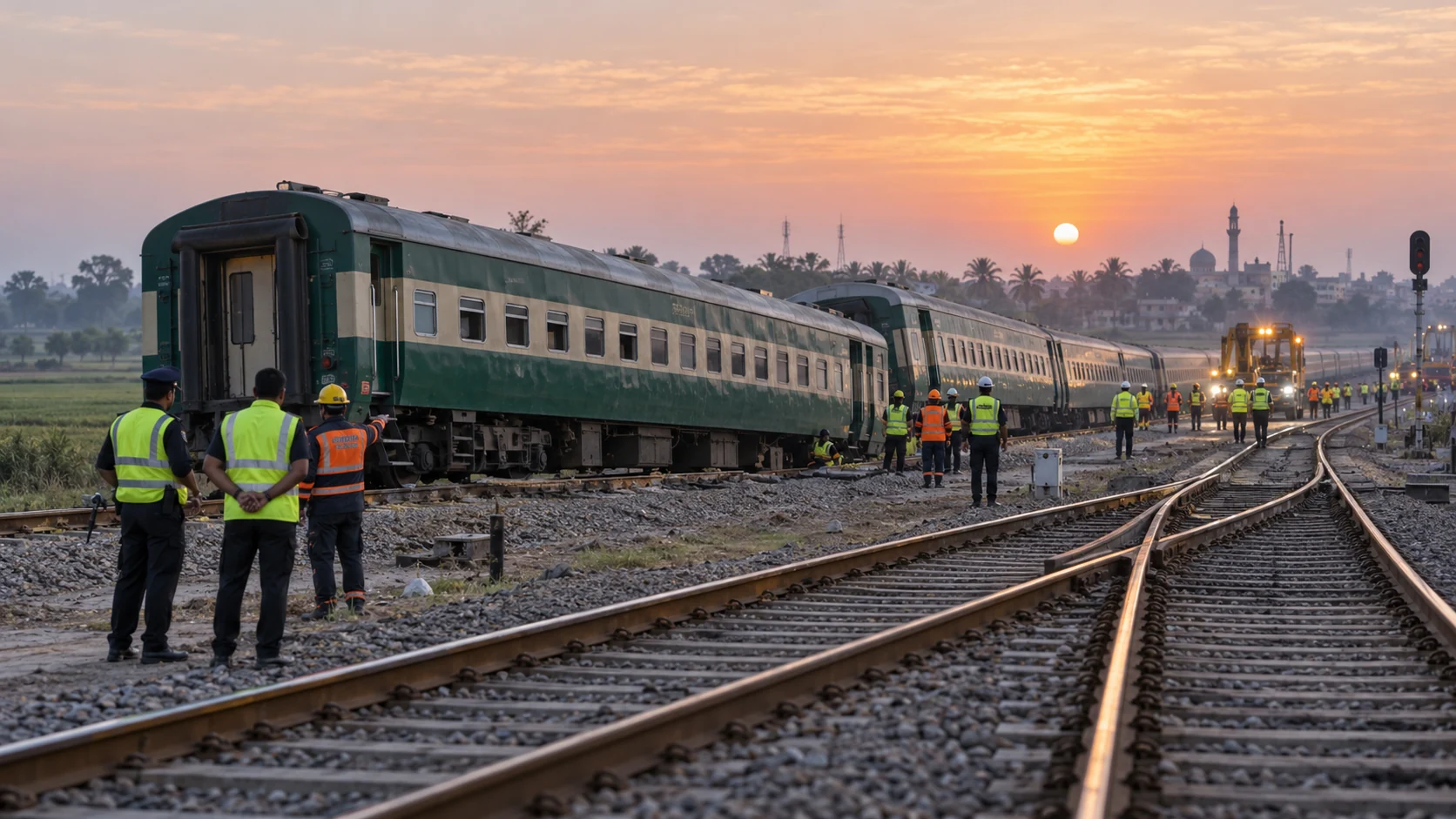
A train running into a stopped train is exactly the failure that signalling is meant to stop. This case is not a finding of fault, but it shows why the basics matter. See our Spain train collision near Toledo, Bangkok level crossing crash and Rahman Baba Express derailment cases. This is a world case with no city guide.
- The Giza-to-Fayoum train runs into the rear of the stopped Cairo-to-Aswan train at El-Ayyat; carriages derail
- Ambulances (72 per Masrawy) take the injured to Al-Wasta, El-Ayyat and Atfih hospitals; the first Health Ministry count is four dead and 88 injured
- The Health Ministry toll rises to seven dead and 112 injured; the Public Prosecution inspects the site and asks for a technical committee
- President Sisi orders an urgent investigation and accountability; Egyptian National Railways sends cranes and emergency teams
- Al Jazeera reports seven dead and more than 125 injured; the Transport Ministry runs replacement buses
- El Nabaa carries the Public Prosecution statement: 7 dead including the driver of Train 134 and 114 injured, both called preliminary; the front of Train 134 hit the rear of the stopped Train 2010
- Amwal Al Ghad reports that the Financial Regulatory Authority raised the exceptional insurance payment for deaths and total permanent disability to 50,000 Egyptian pounds
Why consequences escalated
- A Giza-to-Fayoum passenger train hit the rear of a stopped Cairo-to-Aswan train at El-Ayyat on 8 November 2026, derailing carriages and killing at least seven.
- The Health Ministry's toll rose through the day, from four dead and 88 injured to seven dead and 112 to more than 125 injured.
- No cause has been announced; the Public Prosecution and a railway technical committee are examining it.
- Headlines often say derailment; the reports describe a rear-end collision that derailed carriages.
Failures and risk multipliers
- No official finding exists. What the reports raise as questions:
- Why the Aswan train was stopped on the line and whether signals, block working or communications failed.
- Whether the Fayoum train driver saw the stopped train in time, and whether speed or braking played a part.
- Whether the status of the driver or conductor of either train is as some search snippets claim; we could not confirm it.
- Whether the carriages were old and how they behaved in the impact.
- These are open questions, not findings of fault.
Actions that reduce risk
- Railway operators: enforce the block and signalling rules, never let a train follow into an occupied section, and test brakes, communication and train-protection systems.
- Passengers: sit away from the end carriages if you can, keep the aisle clear and know where the emergency exit is; after a collision follow crew instructions and leave on the side away from other tracks.
- First responders and hospitals: follow a major-incident plan, route ambulances to several hospitals and share one verified count.
- Authorities: publish the cause and the technical committee's findings and the toll history.
- Families: rely on the Health Ministry and railway announcements for casualty lists.

Leave a comment