
What happened here
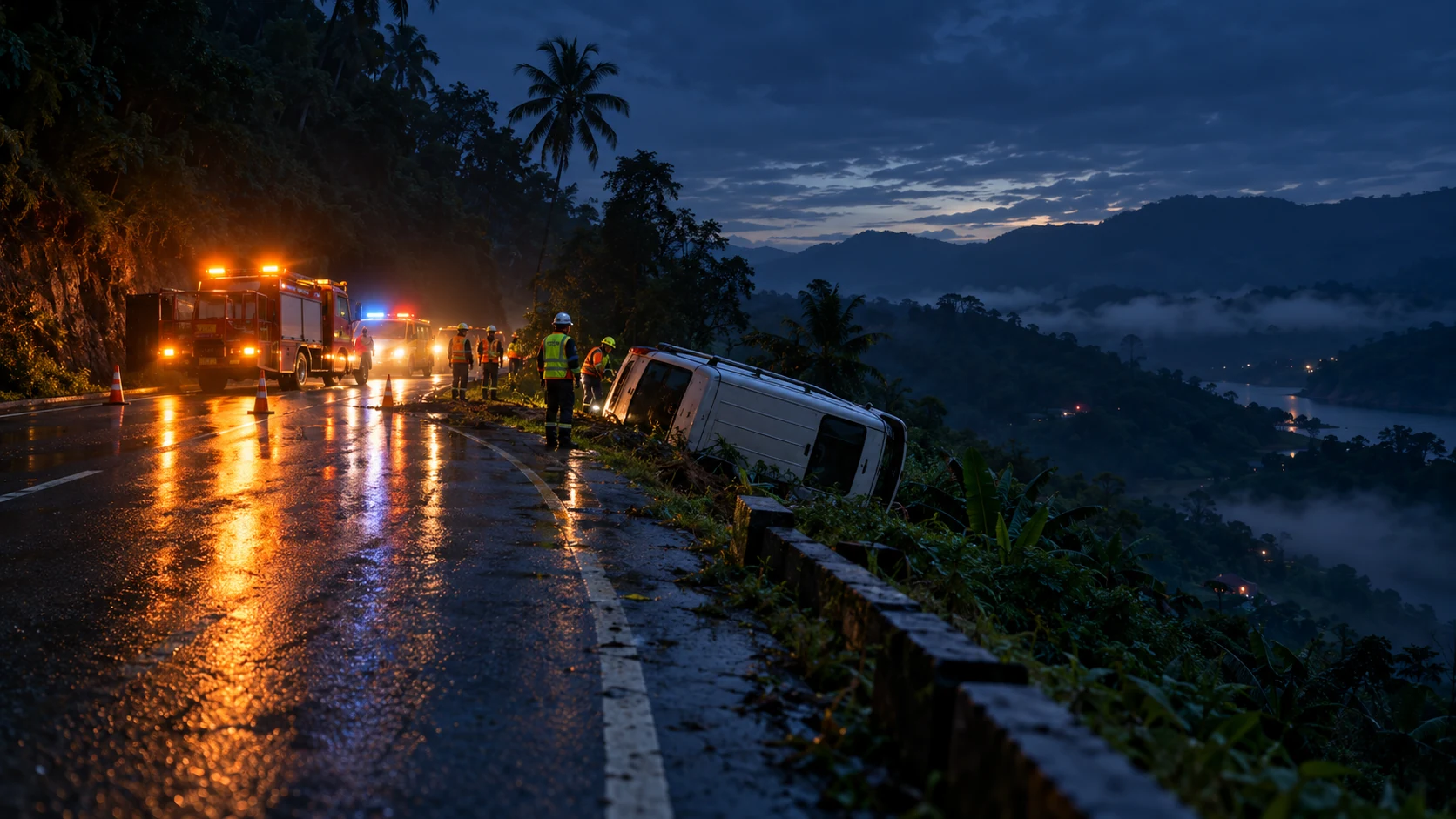
A tourist tempo traveller carrying a Mandya University group reportedly collided with a truck and overturned near Sulthan Bathery. This article distinguishes source-attributed casualty reporting from the unresolved cause.
Quick answers
What caused the Wayanad crash?
The reviewed record does not establish a final cause or responsibility finding.
Why does the article say reported deaths and injuries?
The counts come from named news reporting and may change as hospitals and investigators issue updates.
What should a group leader prepare before road travel?
A passenger list, emergency contacts, vehicle details, rest plan and clear rule to stop for driver fatigue.
What is currently reported
Named news reports say a tempo traveller hired by a group returning to Mysuru after a trip to Munnar collided with a truck at Beenachi near Sulthan Bathery at about 1:45 a.m. on 12 October 2026. The vehicle reportedly left the road, entered a crevice and overturned. The reports describe 15 people in the vehicle: 13 postgraduate students, a cook/helper and the driver.
The driver, Ranjith, 40, and Bharath, described as the cook/helper from Mysuru, were reported dead. The reviewed reports describe 13 injured people. Onmanorama reported that two seriously injured people were shifted from a Sulthan Bathery hospital to a private medical-college hospital in Meppadi, while police told that outlet nobody was then critical. This article does not convert that early wording into a final medical outcome.
What remains unknown
The reviewed public record does not establish a final collision reconstruction, a final hospital outcome for every injured survivor, or responsibility. Some early reporting mentioned possible driver fatigue; this article does not treat that as a confirmed cause. Speed, vehicle condition, road conditions, truck conduct, restraint use and any individual fault remain unestablished pending competent-authority findings.
Response and practical lessons
- For group road travel, plan fatigue controls, realistic rest stops and a lawful relief-driver option before departure.
- Keep an accurate passenger list, emergency contacts and the vehicle registration with the group leader.
- Use available seat belts throughout the journey.
- At a crash scene, call 112, share a clear landmark, avoid secondary traffic hazards and leave access open for responders.
- Do not enter an unstable vehicle, handle leaking fuel or force doors unless the scene is safe and you are trained to do so.
- Give responders factual information: the number of people believed to be in the vehicle, missing people and visible hazards.
Reporting limits
The casualty counts and rescue sequence are attributed to named reporting, not a final police or hospital record. News footage and early eyewitness descriptions do not establish cause or liability.
- A tempo traveller carrying a Mandya University group is reported to collide with a truck near Beenachi / Sulthan Bathery
- Reporting says the vehicle left the road and overturned; occupants were trapped by jammed doors
- Local residents and Fire and Rescue Services personnel reportedly extracted occupants
- Two deaths and 13 injuries reported; two seriously injured people reportedly shifted to Meppadi
- No final police reconstruction, final hospital bulletin or responsibility finding located in reviewed public material
Why consequences escalated
- The reported counts are a dated news snapshot, not a final medical audit.
- A reported hospital transfer is not a final clinical outcome.
- A preliminary fatigue suggestion is not a final collision finding.
- News footage can document a response but does not establish fault.
Failures and risk multipliers
- Do not treat early news wording or social footage as a crash finding.
- Do not crowd a crash scene or block responder access.
- Do not re-enter a damaged vehicle without training or direction.
- Do not continue driving when fatigue compromises safe control.
Actions that reduce risk
- Build rest and fatigue controls into group-road-trip planning.
- Confirm usable restraints and a passenger headcount before departure and after every stop.
- Keep a passenger list and emergency contacts with the group leader.
- Call 112 from a safe place and provide a clear landmark.
- Report factual observations to responders; do not speculate about cause online.
Leave a comment