
What happened here
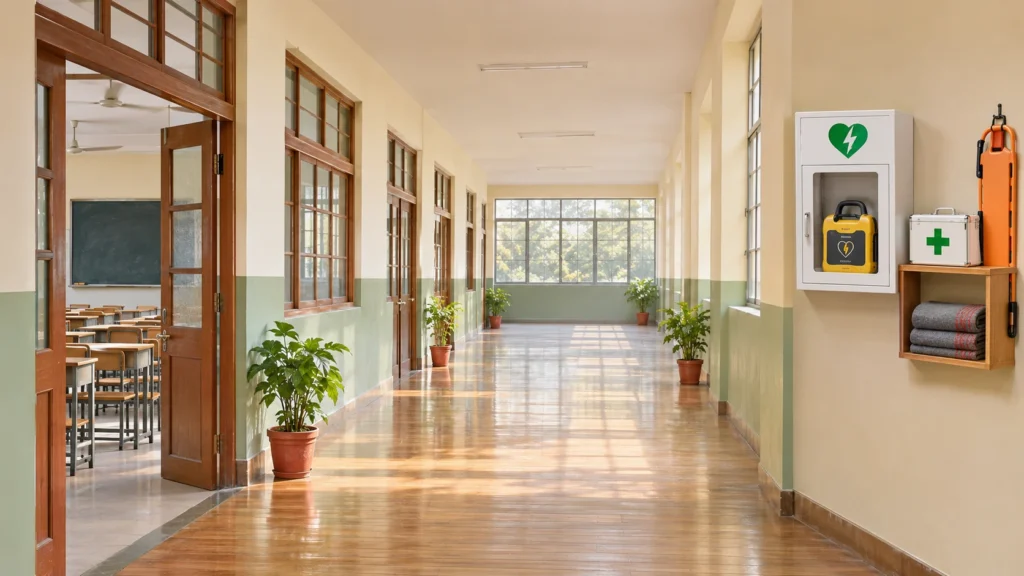
On the morning of Wednesday 4 November 2026, a nine-year-old Class 3 girl collapsed in her classroom at a private school in Mayur Vihar Phase 2, East Delhi, after returning from a PT period. Police told PTI that CCTV shows her putting her hands on her waist and falling face-down, hurting her chin. Her teacher tried to seat her on a chair; she did not respond. School staff took her to a private hospital in Pandav Nagar, where doctors advised a bigger hospital, and then to one in Nirman Vihar, where she was declared dead. Police received a PCR call at about 9.52 am. The principal says doctors called it a cardiac arrest; the post-mortem is awaited. Her father says she was healthy and that timely CPR could have saved her; the principal says staff first thought the chin injury explained the unconsciousness. None of the reports says whether CPR was attempted. Police are investigating, and we found no official statement from the education or health departments and no report after 5 November.
Quick answers
What happened at the Mayur Vihar school on 4 November 2026?
A nine-year-old Class 3 girl collapsed in her classroom after a PT period, was taken to two hospitals and was declared dead at one in Nirman Vihar. Police are investigating.
What was the cause of death?
It is not established. Doctors suspect a cardiac event, the principal says doctors called it a cardiac arrest, and the post-mortem is awaited.
Was CPR given?
No report says. The family says CPR was not given and asks why; the principal says staff first thought the chin injury explained the unconsciousness. We do not know whether CPR was attempted at any stage.
Would CPR have saved her?
Nobody can say from public reports. Immediate CPR can double or triple the chance of survival after a cardiac arrest, according to the Indian COLS guideline, but survival is still low, and a cardiologist told PTI that cardiac arrest in children is often linked to an undiagnosed heart condition.
What does Indian guidance say to do when someone collapses?
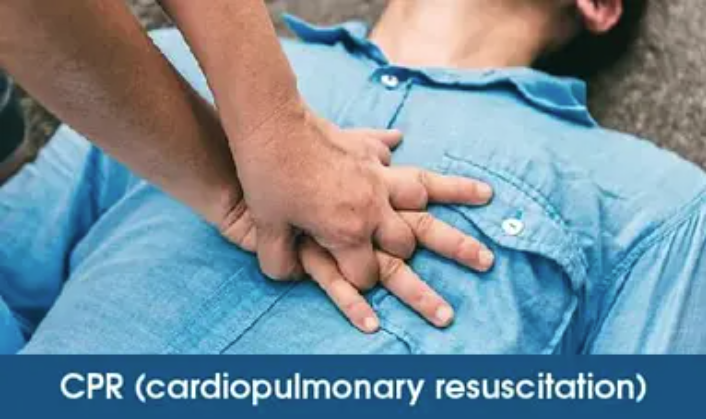
The Indian COLS guideline for adults says to check for a response, call the emergency system, start chest compressions at once and not interrupt them until help takes over. Move the person only if the place is unsafe.
Is there a CPR or AED rule for schools in India?
We found none. A 2015 CBSE circular asks schools to encourage staff first-aid training and keep first-aid equipment, but it does not mention CPR or AEDs.
Where can teachers and parents learn CPR?
The Health Ministry's NIPHTR runs a First Responder course open to school teachers, the Indian Red Cross Society lists a first-aid programme, and our guides explain hands-only CPR. Ask for a hands-on session at your school.
Is there a city safety guide for Delhi?
Yes. Our Delhi city safety guide lists the emergency numbers, including 112 and 102 for an ambulance.
What happened on the morning of 4 November 2026
On Wednesday morning, 4 November 2026, a nine-year-old girl in Class 3 collapsed in her classroom at a private school in Mayur Vihar Phase 2, East Delhi. She was taken to hospital and was declared dead at a private hospital in Nirman Vihar. PTI, Amar Ujala, India TV and Daily Jagran all report this. We have not named her or her family.
Police told PTI that she had returned to class after a physical training (PT) period and collapsed while standing in front of her teacher. The classroom CCTV, which police have taken, shows her putting her hands on her waist and falling face-down, hurting her chin (PTI, Amar Ujala). India TV says she looked very tired and was speaking when she fell. The principal said she stood for about two minutes before she collapsed (The News Mill, Daily Jagran).
What the reports say staff did
- In the classroom: the teacher went to her, tried to lift her and seat her on a chair, and found she did not respond (Amar Ujala, India TV, The Hans India, Gulf News). Gulf News, quoting India Today, adds that the teacher stepped out briefly, came back and carried her out for medical help.
- To hospital: school staff first took her to a private hospital in Pandav Nagar. Doctors there advised a bigger hospital, so she was taken to a private hospital in Nirman Vihar, where doctors declared her dead (PTI, Amar Ujala). The principal told The Hans India that the first hospital advised moving her to a higher centre.
- Time: police received a PCR call at about 9.52 am (PTI, NewsX, The News Mill). The principal put the collapse at about 9 am. The family says the school phoned them at about 10 am to say she was unwell, and her mother reached the hospital with school staff (PTI).
- Police: the Pandav Nagar police station is investigating. A crime team and forensic experts visited the school and the CCTV footage was taken for examination (PTI, Amar Ujala). The body went for post-mortem at the LBS Hospital mortuary (Amar Ujala).
What the reports say about CPR
This is the part of the story where we have to be most careful. The statements reported are these:
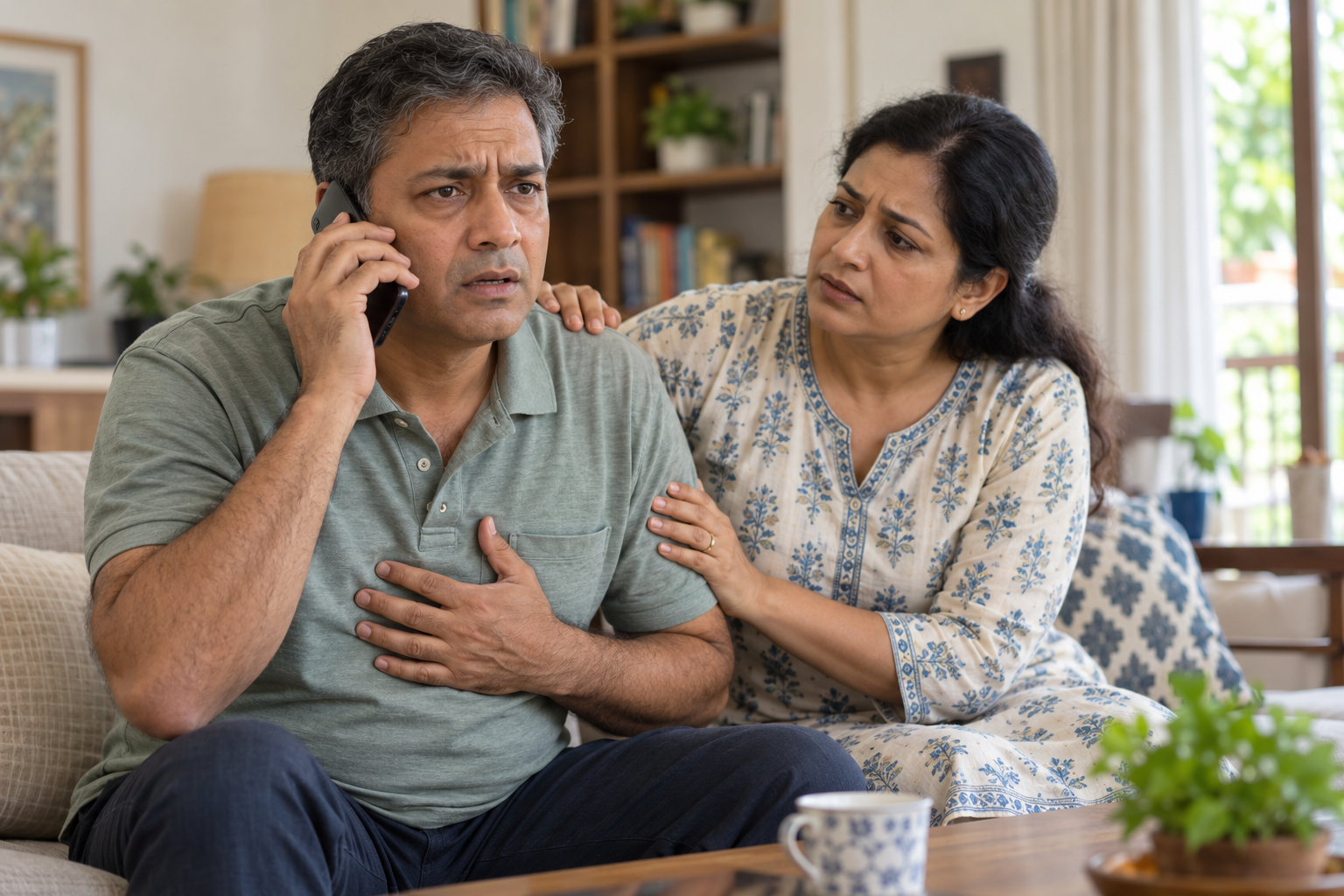
- The family: the girl’s father said his daughter was healthy and had no history of illness, and that timely CPR could have saved her (PTI). Relatives asked why CPR was not given at once after she fell (Daily Jagran, Gulf News).
- The principal: asked about CPR, she said staff first thought the girl had lost consciousness because of the chin injury and did not think of another cause, so they rushed her to hospital (Daily Jagran, Gulf News, India TV). The principal also said the school had never been told of any health problem. Gulf News, quoting India Today, says she added that a nurse was present at the school.
- The school: told Amar Ujala that the whole incident was recorded on CCTV and that it will cooperate fully with the investigation.
None of the reports we read says that CPR was given at the school, on the way or at either hospital, and none says that the hospitals did not attempt it. The principal’s reply, as reported, does not say CPR was given. The only statement that it was not given is the family’s. So we describe it as alleged by the family and not confirmed, and we do not know what the CCTV shows beyond what the reports describe.
Where the reports differ, and what we do not know
- Cause of death: not established. The principal said the doctors told the school it was a cardiac arrest, preliminary findings point to a suspected cardiac event (PTI), and several headlines say heart attack. A cardiac arrest and a heart attack are not the same thing, and the post-mortem report is awaited. We have not found it.
- Time: about 9 am (principal), PT period 8.30 to 9.10 am (teachers, per Amar Ujala), PCR call 9.52 am (police). The reports do not give the time between the collapse and the arrival at the first hospital.
- Hospitals: the reports differ on the names and on the order, so we do not name them. The Hans India names Nirman Vihar as the first hospital and does not name the second.
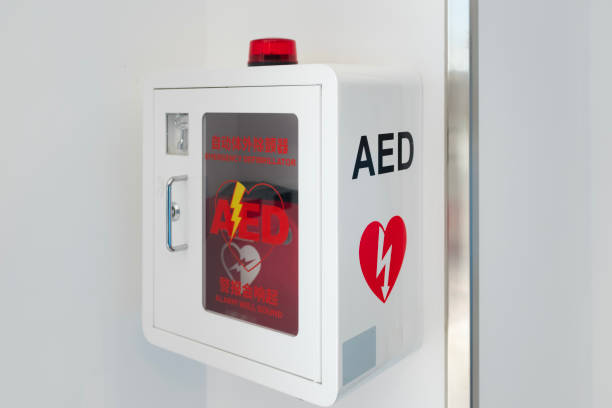
- Not reported: whether CPR was attempted at any stage, whether any staff member was trained in CPR or first aid, what the nurse did, whether the school has a defibrillator (AED), and any statement from the Delhi Directorate of Education or the health department. We found none.
- Later updates: we found no report after 5 November.
What Indian guidance says about CPR and timing
The best-known Indian guideline for ordinary people is the compression-only life support (COLS) guideline of the Resuscitation Council of the Indian Society of Anaesthesiologists, published in the Indian Journal of Anaesthesia in 2017. It comes from a professional body, not from the government, and it is written for adults. Its steps are short: if a person does not respond, call the emergency medical system or an ambulance, and start chest compressions at once. It says compressions should not be interrupted and should continue until medical help arrives, the person is handed to a medical facility, or the person responds. It tells the rescuer to shift the person only if the place is unsafe (for example fire, electrocution or drowning) and to start resuscitation as soon as feasible. The same guideline says that every minute of delay lowers the chance of survival by 7 to 10 per cent, and that CPR by someone nearby can double or triple that chance.
The Ministry of Health and Family Welfare said much the same in a PIB release of 6 December 2023, when the Union Health Minister launched a national CPR awareness programme run by the National Board of Examinations in Medical Sciences: a person who has a cardiac arrest must be treated immediately, and awareness and training in CPR are essential. The release says more than 20 lakh people took part in the online training that day.
Two limits matter here. First, we found no Indian government guideline written for children, so the child steps in our CPR guide come from international guidelines, and our guide says so. Second, nobody can say from public reports whether CPR would have changed the outcome. Dr Raj Kumar, a cardiologist at PSRI Hospital, told PTI that cardiac arrest in children is often linked to a heart condition that may never have been diagnosed, such as a congenital defect, an inherited rhythm problem or a thickened heart muscle, and that such children can look completely healthy. Survival after a cardiac arrest outside hospital is low even when everything is done well; in one South Indian hospital study of 205 patients, 9.8 per cent had received CPR from a bystander and 1.4 per cent survived to go home (Bhat et al., Indian Heart Journal, 2021). That study is mostly adults and is not a national figure.
What schools are officially asked to do
CBSE circular Acad-79/2015 of 24 November 2015 to all affiliated schools says schools should encourage staff to undergo first-aid training, keep adequate first-aid equipment, review their first-aid needs every year and notes that the affiliation bye-laws already require schools to appoint a health and physical education teacher who can look after first-aid arrangements. It does not mention CPR or defibrillators. We do not know which board this school follows. PTI reported in October 2025 that an SCERT circular made an online first-aid course mandatory for Delhi teachers, to be completed between 9 and 19 October 2025 with at least 70 per cent in each assessment; we have not seen the circular itself. We did not find any Indian rule that requires a school to have an AED.
What parents, teachers and schools can do
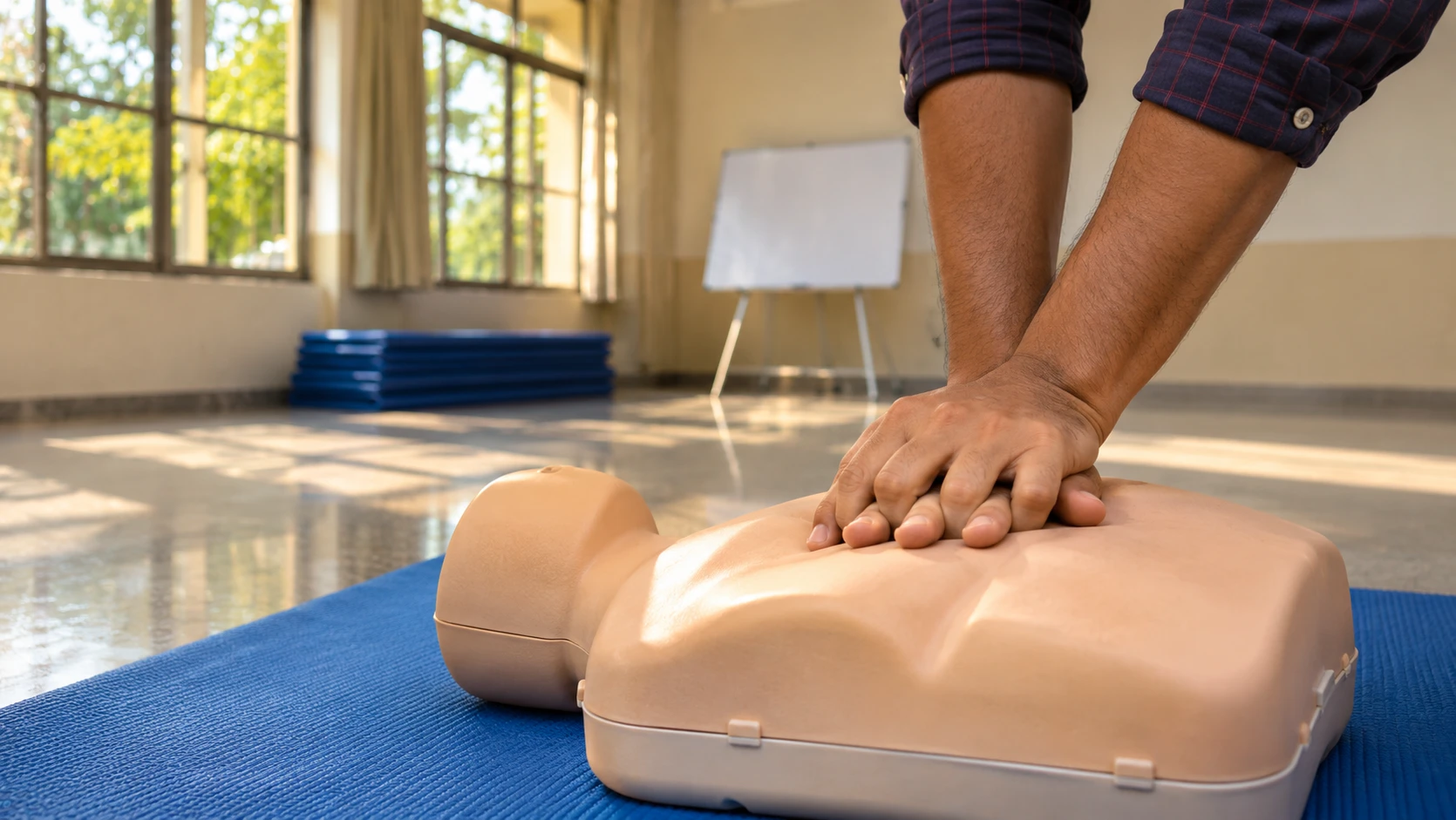
- Treat a child who collapses and does not respond as an emergency: call 112 or 108 straight away, send someone for the AED if there is one, and start chest compressions. Do not wait to be sure of the cause. A fall or an injury does not rule out a cardiac arrest. Our How to do CPR guide has the steps for a child, and CPR myths that cost lives answers the common fears.
- Train the staff who are with children: teachers, PT staff, the school nurse, bus attendants and guards. The National Institute of Public Health Training and Research (NIPHTR), under the Health Ministry, runs a First Responder course open to school teachers; its page lists a fee of Rs 1,000 and a duration of three or four days, so confirm with the institute. The Indian Red Cross Society lists a first-aid programme on its website and has branches across the country. Our bystander CPR guide explains how to find and ask for a hands-on session.
- Know the warning signs: Dr Raj Kumar told PTI that fainting during or just after exercise, unexplained dizziness, chest pain, unusual breathlessness and palpitations should not be ignored, and that a family history of sudden cardiac death at a young age should lead to a medical check. Parents should tell the school about any heart condition.
- Ask your child’s school three questions: who on each shift is trained in CPR and first aid, where the first-aid kit and any AED are kept, and who calls 112 or 108 and what the plan is. Our AED guide and child emergencies at home and school guide explain what to look for.
- Practise it: a drill once a term, like a fire drill, makes the first step automatic when a real emergency comes. Our school fire safety plan already treats drills this way.
Staff in a classroom are not paramedics, and in a shock it is easy not to recognise a cardiac arrest, especially when there is a visible injury. That is why training and a simple plan matter more than blame. For more, see how to recognise a suspected heart attack and how to call 112, 101 or 108.
Our Delhi city safety guide lists the emergency numbers for the city, including 112 and 102 for an ambulance.
- PT period (teachers, per Amar Ujala); she returns to the classroom
- She stands in front of her teacher for about two minutes (principal), then falls face-down; the teacher tries to seat her on a chair and she does not respond
- Staff take her to a private hospital in Pandav Nagar; doctors advise a bigger hospital
- Police receive a PCR call (PTI, NewsX, The News Mill)
- She is taken on to a private hospital in Nirman Vihar and declared dead; the principal says the first hospital advised a higher centre
- The family says the school phoned to say she was unwell; her mother reaches the hospital with school staff (PTI)
- Police, a crime team and forensic experts visit the school and take the CCTV footage; the body goes to the LBS Hospital mortuary for post-mortem
- Family questions why CPR was not given; the principal gives her account; reports appear (Amar Ujala, India TV, Daily Jagran, PTI)
Why consequences escalated
- A nine-year-old Class 3 girl collapsed in class at a private school in Mayur Vihar Phase 2 on 4 November 2026 and died at a hospital.
- The cause is not established; doctors suspect a cardiac event and the post-mortem is awaited.
- The family says CPR was not given; the principal says staff first thought the chin injury explained her unconsciousness; no report says whether CPR was attempted.
- The Indian COLS guideline (adults) says: no response, call the emergency system, start chest compressions at once, and do not interrupt them.
- No Indian government guideline for child CPR and no rule requiring an AED in schools was found; CBSE asks schools to encourage staff first-aid training.
Failures and risk multipliers
- No official finding exists. What the reports raise as questions:
- Whether the girl's collapse was recognised as a possible cardiac arrest in the first minutes; the principal says staff thought of the chin injury.
- Whether CPR was started before she was moved or taken to the first hospital; no report says.
- Whether staff in the room were trained in CPR and first aid, and whether the school had a nurse on duty and an AED; not reported.
- The family also asks why she was not taken to a nearer hospital (PTI).
- These are questions raised by the family and the reports, not findings of fault, and the cause of death is unconfirmed.
Actions that reduce risk
- If a child collapses and does not respond: call 112 or 108, send for an AED, and start chest compressions without waiting to find the cause.
- Train every adult who is with children in CPR and first aid: teachers, PT staff, nurse, guards and bus staff.
- Ask the school who is trained, where the first-aid kit and any AED are kept, and who calls 112 or 108.
- Tell the school about any heart condition; do not ignore fainting during exercise, chest pain, palpitations or breathlessness.
- Practise a medical-emergency drill once a term.


Leave a comment