
Quick answers
What is the difference between a heart attack and cardiac arrest?
A heart attack is blocked blood flow to the heart. Cardiac arrest is an electrical failure in which the heart stops beating, often suddenly and without warning.
What are the early warning signs of heart trouble?
Warning signs include chest pain, dizziness, jaw or arm pain and shortness of breath. Treat them as time-critical and call 108 or 112 immediately.
Why are young adults in India having cardiac arrests?
Factors include stress and burnout, smoking, energy drinks, alcohol and processed food, undetected high BP or heart conditions, extreme workouts, and pollution and heat stress.
How can young people protect themselves from sudden cardiac arrest?
Avoid extreme workouts without a medical checkup, get routine ECG and cholesterol tests, learn hands-only CPR, and ask for AEDs at your gym, office or housing society.
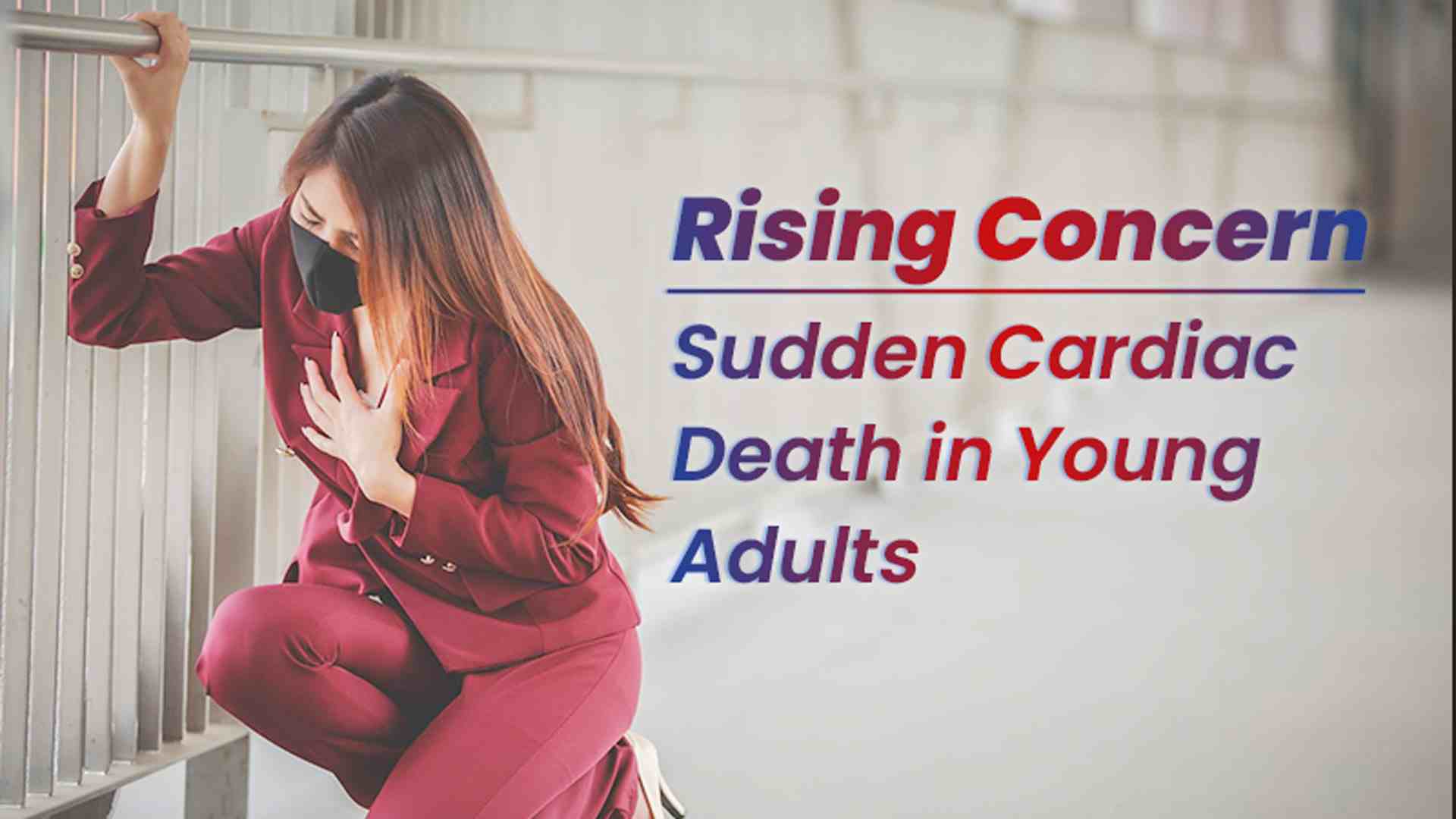
We still think of heart trouble as something that happens after 50. The police records tell a different story. India has no national register of cardiac arrests, so nobody can give an exact national trend. But NCRB counted 38,599 sudden deaths from heart attacks in 2024, up from 35,637 in 2023. About 40% of them, 15,574 in 2024, were people aged 18 to 44.
That is about 43 young and middle-aged adults a day, and these are only the deaths that reached police records.
Why this matters
Most of us have seen the news: a young man collapses at the gym, an office worker slumps at the desk, a runner falls during a marathon. Very often the person could have been saved. Cardiac arrest can be reversed in the first few minutes if someone starts CPR and uses a defibrillator (AED). In India, very few people get that help. In one South Indian hospital study (2019 to 2020), only 1.4% of people brought in after a cardiac arrest outside hospital survived to go home, and only 9.8% had received CPR from a bystander.
Heart attack and cardiac arrest are different
- Heart attack: blood flow to part of the heart is blocked. The person is usually awake, often with chest pain.
- Cardiac arrest: the heart’s electrical system fails and it stops pumping. The person collapses without warning, does not respond and is not breathing normally.
A cardiac arrest needs CPR at once and a shock from an AED as early as possible. Every minute of delay before the shock lowers the chance of survival by about 10%.
What the data shows (NCRB, 2023 and 2024)
| Year | Sudden deaths due to heart attack (all ages) | Aged 18 to 29 | Aged 30 to 44 | Share aged 18 to 44 |
|---|---|---|---|---|
| 2023 | 35,637 | 3,287 | 11,082 | 40.3% |
| 2024 | 38,599 | 3,575 | 11,999 | 40.3% |
Source: NCRB, Accidental Deaths & Suicides in India 2023 and 2024, Tables 1.7 and 1.8. These are deaths police recorded as sudden deaths due to heart attack. They are not a count of all cardiac arrests in India.
Two honest points. Total deaths went up between the two years. But the share of people aged 18 to 44 stayed the same, at 40.3%. So the data shows a large toll among young adults, but two years of police records are not enough to prove a rising trend among the young.
Why young hearts fail
- Stress and poor sleep. Long hours, high pressure and little rest.
- Unhealthy habits. Smoking, alcohol, energy drinks and fried, processed food.
- Silent conditions. High BP, high cholesterol, diabetes or an inherited heart problem that nobody has checked for.
- Pushing too hard at the gym. Very heavy workouts, dehydration or pre-workout stimulants, especially without a check-up.
- Pollution and heat. Both put extra strain on the heart.
- Nobody ready to help. Few people know CPR, and AEDs are rare in public places.
India and the world
| Where | Survived to leave hospital | Got CPR from a bystander | Source |
|---|---|---|---|
| USA, all cardiac arrests outside hospital (2024) | 10.5% | 41.7% | CARES 2024 Annual Report |
| USA, arrests in public places (2024) | 21.1% (8.9% at home) | Not given | CARES 2024 Annual Report |
| Europe, average across countries | 7.5% (3.1% to 35% by country) | Not given | ERC Guidelines 2025 |
| India, one hospital in South India (2019 to 2020) | 1.4% | 9.8% | Bhat et al., Indian Heart Journal 2021 |
India has no national cardiac arrest registry, so the India row comes from a single-hospital study of 205 patients and is not a national rate. Everywhere, survival depends on the first minutes: someone recognising the collapse, calling 112, starting CPR and fetching an AED.
What you can do
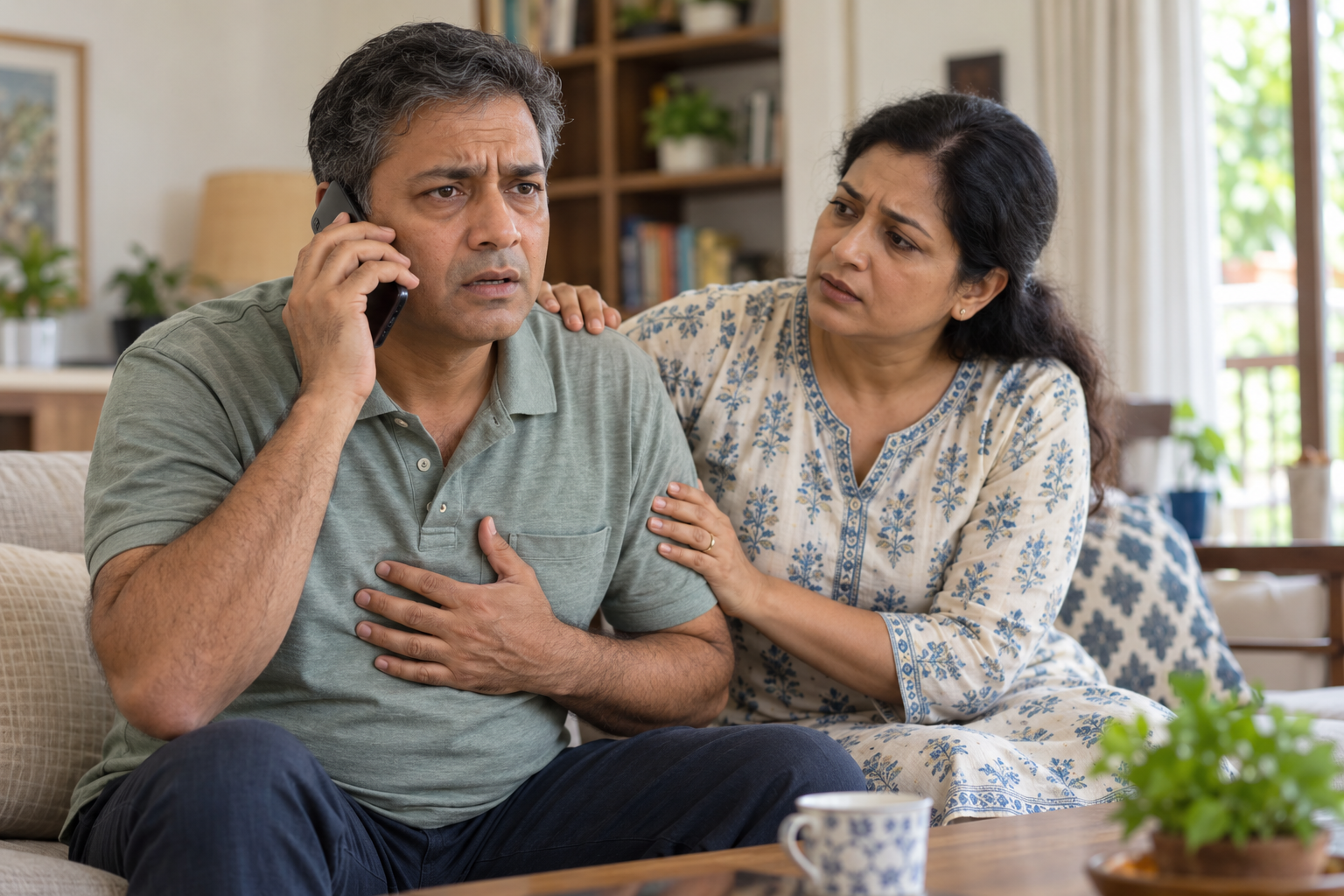
- Know the warning signs of a heart attack: chest pain or pressure, pain in the jaw, arm or back, breathlessness, sweating, dizziness. Call 108 or 112 at once. Do not wait to “see if it passes”, and do not drive yourself.
- Learn CPR. Hands-only CPR keeps blood flowing to the brain until an AED or the ambulance arrives. A short class is enough to start.
- Ask for AEDs at your gym, office, college, mall and housing society.
- Get a health check-up before starting heavy training, and regularly after that, with BP, sugar and cholesterol. Tell the doctor if anyone in your family died suddenly young.
- Do not ignore fainting during exercise, or chest pain or a racing heartbeat during a workout. Stop and see a doctor.
If someone collapses
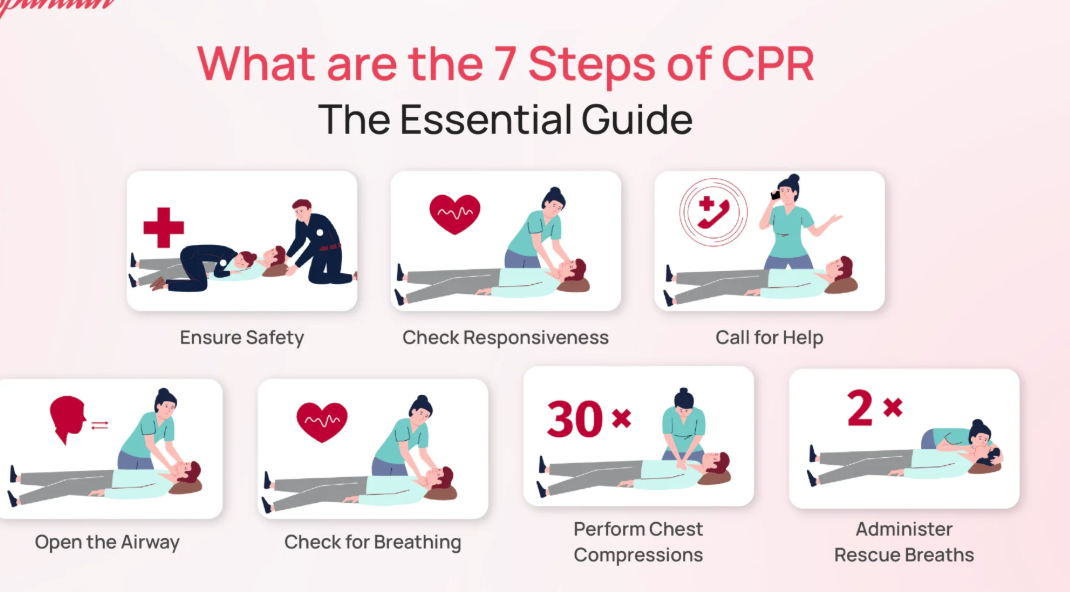
- Tap and shout. If there is no response and no normal breathing, call 108 or 112 and put the phone on speaker.
- Push hard and fast in the centre of the chest, about 100 to 120 times a minute.
- Send someone for an AED, switch it on and follow its voice prompts.
- Keep going until the person breathes normally or trained help takes over.
What needs to change
- CPR and first aid taught in every school and college.
- AEDs in public buildings, stations, malls and gyms.
- A national cardiac arrest registry, so we know the real numbers.
- 108 ambulances with crews trained for cardiac emergencies.
References
- American Heart Association: Highlights of the 2025 Guidelines for CPR and ECC
- European Resuscitation Council: ERC Guidelines 2025, resuscitation for everyone
- Resuscitation Council UK: Adult Basic Life Support Guidelines 2025
- CARES (Cardiac Arrest Registry to Enhance Survival): 2024 Annual Report
- Bhat R et al., pre-hospital care of out-of-hospital cardiac arrest victims in a tertiary care hospital in India, Indian Heart Journal, 2021
- NCRB: Accidental Deaths & Suicides in India 2023 and 2024, Tables 1.7 and 1.8
Young people die of cardiac arrest not because nothing can be done, but because nobody nearby knows what to do. Learn CPR this month, and teach two friends.
What needs attention
- About four in ten sudden heart-attack deaths recorded by police are in people aged 18 to 44
- Recorded heart-attack deaths rose from 2023 to 2024, but the young adults' share stayed flat
- India has no national cardiac arrest registry, so the true picture is unknown
- In the one Indian study cited, fewer than 1 in 10 victims got bystander CPR
- Undetected BP, cholesterol and inherited heart problems put young people at risk
- Survival depends on CPR and an AED in the first minutes
Controls that reduce risk
- Get BP, sugar and cholesterol checked, and share family history with your doctor
- Take a hands-on CPR class
- Ask your gym, office and society to install an AED and train staff
- Cut down on smoking, alcohol and energy drinks
- Stop exercising and see a doctor if you get chest pain or faint
- Save 108 and 112 on every family phone
Common unsafe practices
- Believing heart problems only affect people over 50
- Ignoring chest pain, fainting or palpitations during exercise
- Starting heavy gym training with no health check
- Relying on energy drinks and pre-workout stimulants
- Waiting for the ambulance instead of starting CPR
- Not knowing whether your gym or office has an AED

Leave a comment