
🔴 Truth Drop
Nearly 60% of all fire deaths in India occur in homes — not factories or offices.
(Source: NCRB Fire Accident Data 2025)
From kitchen flames to short circuits, the danger lives where we live.
“Most home fires begin with routine — not recklessness.”
📖 Why This Matters
Our homes are filled with hidden ignition sources — gas cylinders, loose wires, incense, candles, and overloaded sockets.
And yet, fewer than 5% of Indian homes have fire extinguishers or alarms.
Home safety isn’t a luxury. It’s the difference between a scare and a tragedy.
📊 Data Snapshot – Residential Fire Incidents (2019–2025)
| Year | Estimated Incidents | Deaths | Major Cause | % Electrical Fires |
|---|---|---|---|---|
| 2019 | 22,800 | 2,730 | Short circuits | 42% |
| 2020 | 24,200 | 2,890 | Gas leaks, stoves | 39% |
| 2021 | 25,700 | 3,010 | Electrical faults | 45% |
| 2022 | 27,100 | 3,300 | Heaters & appliances | 47% |
| 2023 | 29,800 | 3,520 | Candles, cooking | 40% |
| 2024 | 31,000 | 3,740 | Electric overloading | 43% |
| 2025 (till Aug) | 19,400 | 2,220 | Mix of all | 44% |
(Sources: NCRB, NDMA, State Fire Services Annual Data)
📈 Trend Summary:
- Home fires up 36% in 6 years.
- 8 out of 10 fatal fires start between 10 p.m.–6 a.m.
- Urban apartments and rented homes show highest casualty ratio.
🔥 Top 5 Common Mistakes
1️⃣ Leaving cooking unattended — 40% of kitchen fires start this way.
2️⃣ Overloaded plug boards — fans, chargers, fridges on single outlet.
3️⃣ Old or torn wires — cause internal sparking and delayed ignition.
4️⃣ Cylinders near heat sources — unsafe storage in sunlight or near stoves.
5️⃣ Blocked exits or locked balconies — delay evacuation during emergencies.
🧠 Case Study: Delhi Lajpat Nagar House Fire (2024)
- Incident: Short circuit in overloaded multi-plug caused spark in bedroom.
- Result: Fire spread through curtain to AC and ceiling.
- Fatality: 3 family members trapped behind locked grill door.
- Lesson: Fire doesn’t wait — neither should your prevention plan.
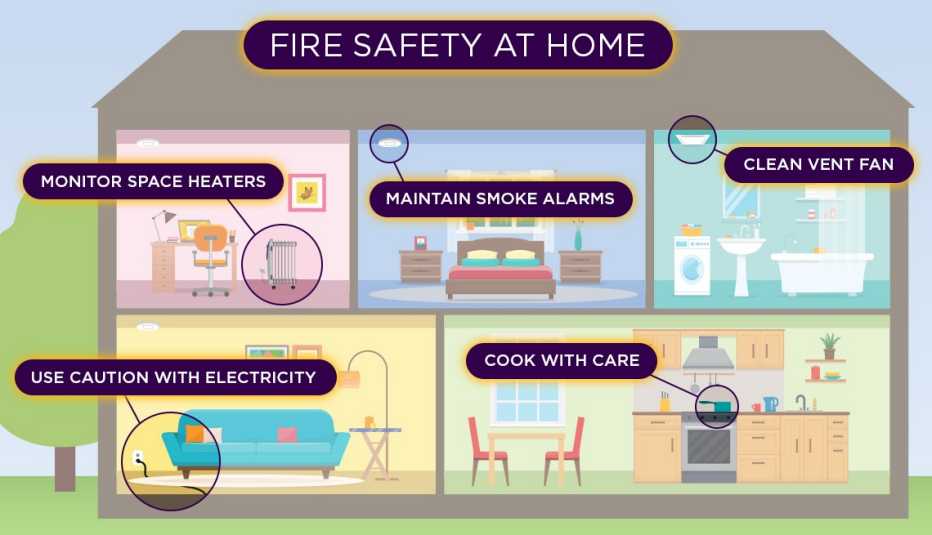
💡 Prevention Checklist for Every Home
✅ Keep 1 ABC dry powder extinguisher (1–2 kg) in kitchen & living area.
✅ Test smoke alarms monthly; replace battery every 6 months.
✅ Don’t use wet hands on electrical switches.
✅ Keep gas pipe flexible, short, and regularly replaced.
✅ Leave 30 cm space between cylinder and wall.
✅ Unplug appliances when not in use.
✅ Keep exits, balconies, and stairways free from clutter.
✅ Practice a night evacuation drill with family twice a year.
⚡ Electrical Safety Facts
- 1 in 3 home fires in India caused by faulty wiring.
- Copper wiring lasts 20–25 years — most homes never check it.
- Surge protectors reduce ignition risk by 70% in old buildings.
📢 Systemic Lessons
India must:
- Make home fire audits mandatory for all residential societies.
- Include basic fire safety modules in housing loan & builder approval process.
- Encourage citizen fire volunteer training through RWAs.
- Provide subsidies for smoke detectors and extinguishers in low-income areas.
📣 Call to Action
🚨 Don’t wait for tragedy to test your preparedness.
👉 Check your wiring, rehearse your exit, and talk about fire safety tonight.
Safety doesn’t cost — neglect does.
📎 References
- NCRB “Accidental Fire Deaths in India 2019–2025”
- NDMA “Home Fire Safety & Prevention Report,” 2024
- Bureau of Indian Standards (BIS) Electrical Code Guidelines, 2023
- State Fire Department Annual Data Compendium, 2025
🔚 Closing Line
Every home has two kinds of heat — the warmth of life and the danger of flame.
This is why we built HowToSurvive.in — to ensure one never destroys the other.
What needs attention
- The article topic must be linked to the actual occupancy and hazard
- Prevention and early warning provide more safety margin than last-second intervention
- Equipment is effective only when correctly selected, accessible and maintained
- People need short practised actions and a clear decision to stop and escape
- Children, visitors and people needing assistance require explicit planning
- Records, drills and inspections matter only when defects are corrected
Controls that reduce risk
- Complete a task- and site-specific hazard assessment
- Verify applicable Indian, state and local requirements
- Use competent inspection for installed systems and specialist hazards
- Keep alarms, exits, signs and emergency access usable
- Train intended users and practise evacuation
- Record defects with an owner and completion date
- Review the plan after changes, incidents or near misses
Common unsafe practices
- Relying on equipment without a hazard assessment
- Blocking or compromising escape routes
- Delaying the alarm or emergency call
- Attempting a response beyond training or safe conditions
- Re-entering before authorised clearance
- Treating a checklist as a substitute for competent inspection
Leave a comment