
Quick answers
What should I do if I see a tanker accident or fuel spill on the road?
Stay back from the spill and report the leak immediately to 112 or the local fire control room.
Why is a tanker spill an environmental emergency, not just a traffic problem?
Oil and chemical spills can damage soil fertility, make groundwater undrinkable and suffocate rivers by lowering oxygen levels, with effects that last long after the road is cleared.
What dangers do different hazardous spills create?
Fuel and oil coat soil and harm aquatic life, acids and chemicals burn vegetation and alter groundwater, and LPG or explosive vapours create a fire hazard and air toxicity.
How can damage from hazardous transport accidents be reduced?
Suggested measures include enforcing hazardous material transport guidelines, GPS tracking and emergency sensors in tankers, containment drains and absorbent material on highways, and trained HazMat response units.
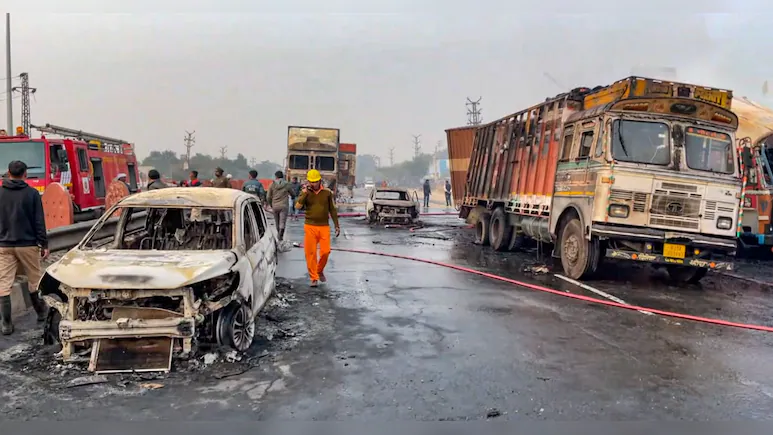
Traffic accidents killed 1,99,443 people in India in 2024, according to the National Crime Records Bureau (NCRB). Some of those crashes involve tankers carrying petrol, diesel, LPG or chemicals. When a tanker overturns, the road gets cleared in a few hours. What leaked into the soil, the drain and the nearby river can stay for much longer.
We could not find an official national count of tanker spills, so we do not give one.
(Source: NCRB, Accidental Deaths & Suicides in India 2024.)
Why a spill is more than a traffic jam
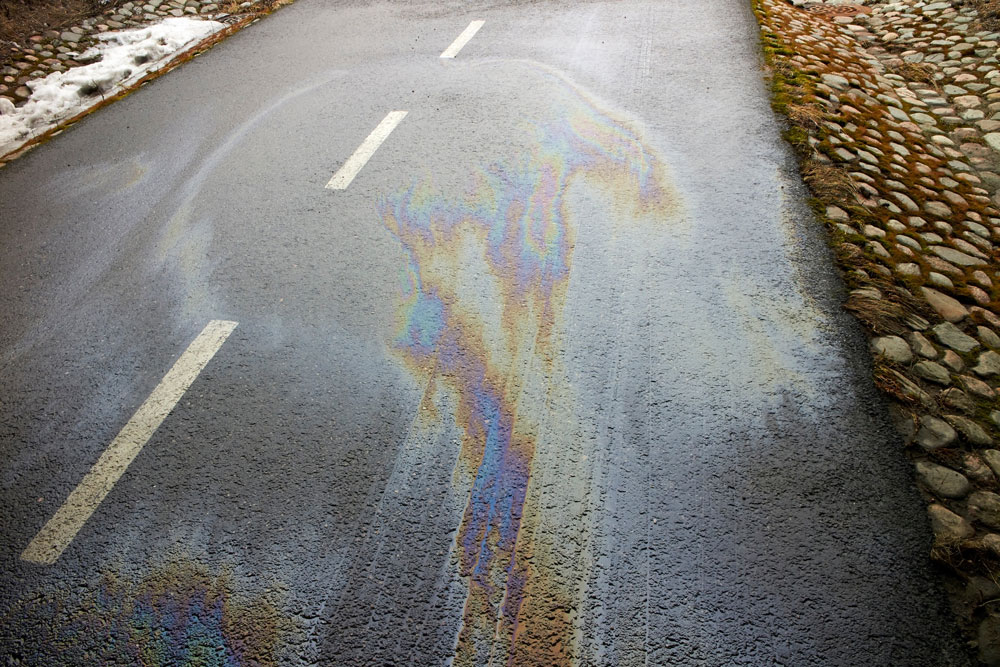
Fuel and chemicals that reach the ground do not simply dry up. They soak into the soil, run into roadside drains and canals, and can reach wells and rivers. Farmland next to the highway can lose its fertility. Well water can become unsafe to drink. Fish in a stream can die when oil or chemicals poison the water.
Most of this is never seen on the news. It shows up later, in a farmer’s poor crop or a village well that smells of diesel.
What different spills do
| Type of spill | Immediate danger | Longer-term harm |
|---|---|---|
| Petrol, diesel or oil | Fire risk; coats soil and water, harms fish and birds | Can stay in soil for years and reduce crop yields |
| Acids and other chemicals | Burns skin and plants; toxic fumes | Can change the chemistry of soil and groundwater |
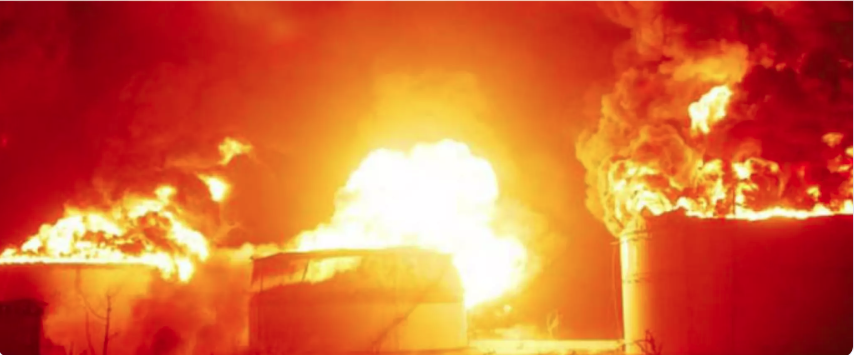
| LPG and other flammable gases | Gas cloud can spread and catch fire or explode far from the tanker | Fire damage to nearby homes, trees and crops |
| Hot bitumen | Severe burns | Sticky residue that blocks drains and smothers soil |
The hidden costs
- Air: soot and vapour from tanker fires pollute the air for people living nearby.
- Soil: hydrocarbons can stay in the soil for years and cut crop yields.
- Water: oil spreads a long way in water. In the United States, the Environmental Protection Agency notes that the used oil from a single oil change can contaminate one million gallons of fresh water (about 38 lakh litres).
- Wildlife: small animals, insects and plants along the roadside and in nearby ponds are killed, and nobody counts them.
If you come across a tanker accident
- Stay well back. Keep at least the length of a few buildings between you and the tanker, and stand uphill and upwind if you can.
- Never collect leaking fuel. People gathering petrol or diesel from overturned tankers in buckets have been killed when it caught fire. No amount of free fuel is worth it.
- No flames, no smoking. Do not light a match, a beedi or a stove nearby. Switch off vehicle engines close to the spill.
- Call for help. Dial 112 or 101 and give the exact location, the tanker’s hazard label or number if you can read it from a distance, and whether there is a fire or a smell of gas. For an LPG leak, the emergency helpline is 1906.
- Keep others away. Warn other vehicles and stop crowds from gathering to take videos.
- If someone is splashed, help them take off soaked clothing if it is safe, wash the skin with plenty of clean water and get them to a hospital.
Preventing spills and limiting damage
- Enforce the existing rules for transporting hazardous goods under the Central Motor Vehicles Rules, including hazard labels and the emergency information card each tanker must carry.
- Check tanker drivers’ training and rest hours, and take unsafe, overloaded or poorly maintained tankers off the road.
- Track hazardous tankers by GPS so help knows exactly where to go after a crash.
- Keep absorbent material and containment equipment at points along national highways, and train highway police and fire services to use it.
- Give state fire services trained, equipped teams for chemical and fuel spills.
- Make the polluter pay for cleaning up and restoring the soil and water, not only for the road repairs.
What needs to change
- Treat hazardous transport crashes as environmental incidents as well as road accidents.
- After a major spill, pollution control officials should inspect the site along with the police and fire services, and test nearby wells and fields.
- Publish data on tanker accidents and spills, so routes with the most crashes can be made safer.
The next time you see an overturned tanker, keep back, keep others back and make the call. Then tell your panchayat or ward office if the soil or water nearby is not cleaned up.
References
- National Crime Records Bureau, “Accidental Deaths & Suicides in India 2024”, Chapter 1
- US Environmental Protection Agency, “Managing, Reusing, and Recycling Used Oil”
What needs attention
- Some of India's road crashes involve tankers carrying fuel, gas or chemicals
- A spill can poison soil, wells and rivers long after the road is cleared
- India does not publish a national count of tanker spills, so the damage is not tracked
- Crowds collecting leaking fuel or filming a tanker crash put themselves in danger
- Spills from LPG and flammable liquids can catch fire far from the tanker
Controls that reduce risk
- Enforce hazardous goods rules under the Central Motor Vehicles Rules
- Track hazardous tankers by GPS
- Keep spill containment material along national highways
- Train highway police and fire services for fuel and chemical spills
- Test nearby wells and fields after a major spill
- Make the polluter pay for cleaning up soil and water
Common unsafe practices
- Going close to an overturned tanker to watch or film
- Collecting leaking petrol or diesel in buckets
- Smoking or lighting a flame near a spill
- Delaying the call to 112 or 101
- Leaving contaminated soil and water uncleaned after the road is cleared
- Running overloaded or poorly maintained tankers
Leave a comment