
Quick answers
Why do wild animals come into villages after floods, fires or cyclones?
Disasters flood or burn the places animals live, so they move in search of food, water, shelter and higher ground. At the same time people move into the same areas for rescue and rebuilding, which brings both closer together.
What should I do if I see a wild animal near my home after a flood or fire?
Keep your distance, keep children and pets indoors, and do not chase, corner or feed the animal. Inform the local forest office, and call 112 if someone is hurt or in danger. The animal is usually looking for safety, not trying to attack.
What diseases should I watch out for after a flood?
Leptospirosis spreads through floodwater or soil contaminated with the urine of infected animals such as rats and livestock, so avoid wading barefoot, cover cuts and see a doctor if you get fever. Rabies spreads through animal bites, so wash any bite or scratch well with soap and water and get medical care the same day.
How can communities reduce human-wildlife conflict after a disaster?
Train local people to spot, report and avoid conflict, mark animal crossing points and enforce speed limits on forest roads, restore habitat early and include the forest department in disaster plans.
Every monsoon, when the Brahmaputra floods Kaziranga National Park, wild animals leave the flooded park for higher ground in the Karbi Anglong hills to the south. To get there, they have to cross National Highway 715. In June 2026, the Kaliabor Co-District Administration issued prohibitory orders for the Kaziranga stretch for the whole monsoon, from 1 June to 30 September: a 40 km/h speed limit, no stopping or parking, no gatherings in animal corridors, and no bright lights, loud music or needless honking at night.
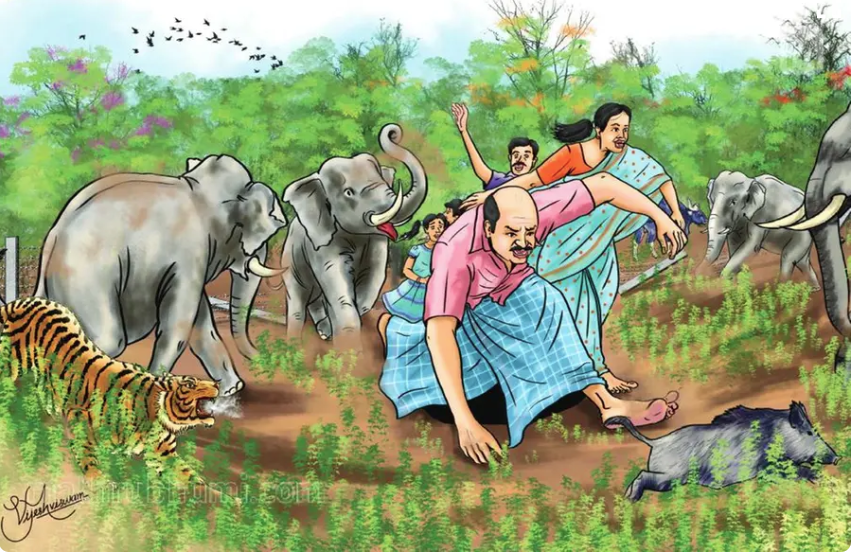
That is what human–wildlife conflict after a disaster looks like on the ground. Floods, fires and cyclones push animals out of their homes, and they run into people, roads and villages.
Why this matters
When a disaster strikes, wild animals leave flooded forests and burnt hillsides looking for food, water and shelter. At the same time people move into the same areas for rescue, relief and rebuilding. Both sides are under stress, and that is when accidents and attacks happen.
We could not find an official national count of human–wildlife conflict caused by disasters. Forest staff see the same pattern again and again: animals leaving flooded or burnt habitat and meeting people on the way.
What drives conflict after a disaster
1. Habitat lost to floods and fire
Floods and forest fires destroy or cut off the places animals live, and push them towards villages and highways. Kaziranga’s yearly crossing of NH-715 is the best-known example.
2. Shortage of food and water
After a drought or a bad flood, elephants, wild boar and monkeys raid farms for food. Angry farmers then try to drive them away or harm them, and people get hurt too.
3. Rebuilding into the forest edge
Houses, roads and embankments rebuilt in a hurry after a disaster often push further into the forest fringe and close off the paths animals use.
4. Reopening tourism too soon
Opening safari zones again soon after a fire or cyclone disturbs animals that are still stressed and scattered.
What it does to people and wildlife
- Road kills: animals crossing highways to reach higher ground are hit by vehicles.
- Attacks: frightened or hungry animals near homes and fields can injure people.
- Disease: leptospirosis spreads through water or soil contaminated with the urine of infected animals, including rats and livestock, and the risk goes up after floods. Rabies spreads through bites from infected animals.
- Disturbed food chains: predators and scavengers turn up in unexpected places, following displaced prey.
What helps
- Put wildlife in the disaster plan. District and State disaster management plans should include the forest department, so animal movement is planned for, not dealt with in a panic.
- Protect the corridors. Mark animal crossing points with signs and enforce speed limits, as Assam does on NH-715 every monsoon.
- Train local people. Teach villagers how to spot, report and avoid conflict, and whom to call.
- Restore habitat early. Replant native trees and restore waterholes soon after the disaster so animals can return.
- Use drones and patrols. Track displaced herds and big cats so they can be guided back safely.
What should change
- Include wildlife protection in NDMA and SDMA plans and drills.
- Set up joint wildlife and disaster teams at district level in conflict-prone areas.
- Use satellite and weather data to forecast where animals are likely to move during floods.
- Act firmly against revenge killing of animals after a disaster.
- Keep animal corridors and forest edges in mind when rebuilding.
What you can do
- If you see a wild animal near your home after a flood or fire, keep your distance and do not chase, corner or feed it. Keep children and pets indoors.
- Inform the local forest office. In Uttarakhand, call the Forest Department’s toll-free helpline 1926. If someone is hurt or in danger, call 112.
- Drive slowly through forest stretches during the monsoon, do not stop to take photos, and never get out of the vehicle near animals.
- Avoid wading through floodwater barefoot, and cover cuts and wounds. See a doctor if you get fever after contact with floodwater.
- If any animal bites or scratches you, wash the wound well with soap and running water and get medical care the same day.
An animal in your village after a flood is almost always looking for dry ground, not for a fight. Give it space and a way out.
References
- Northeast Now, “Assam: Prohibitory orders imposed on Kaziranga highway as floods trigger wildlife movement”, 29 June 2026
- US Centers for Disease Control and Prevention, “About Leptospirosis”
- Uttarakhand Forest Department, Integrated Command and Control Centre, toll-free helpline 1926
What needs attention
- Floods and fires push animals out of their habitat and onto roads and into villages
- At Kaziranga, animals cross NH-715 to reach higher ground every monsoon
- Assam now protects that crossing with a seasonal speed limit and other restrictions
- No official national count of disaster-linked human-wildlife conflict was found
- Leptospirosis risk goes up after floods because floodwater carries the urine of infected animals
Controls that reduce risk
- Include the forest department in district and State disaster plans
- Mark animal crossings and enforce speed limits on forest roads during floods
- Train villagers to spot, report and avoid conflict
- Restore habitat and waterholes soon after a disaster
- Act against revenge killing of animals after a disaster
Common unsafe practices
- Chasing, cornering or feeding a displaced wild animal
- Crowding around an animal to take photos or videos
- Speeding or stopping on forest highways during floods
- Wading through floodwater barefoot with open cuts
- Ignoring an animal bite or scratch
- Rebuilding homes and roads across known animal paths
Leave a comment