
Quick answers
Should the pillion rider also wear a helmet?
Yes. In 2023 more than 15,000 pillion riders were killed without a helmet. Rider and pillion should both wear an ISI-marked helmet that fits, with the strap fastened.
Do I need to wear a seat belt in the back seat?
Yes. Rear belts matter as much as front ones, and an unbelted person in the back can be thrown into the people in front. Make it a family rule before the car moves.
When should I replace my helmet?
After any hard knock, even if you cannot see a crack, because the foam inside may already be crushed. Throw away fake or "style" helmets too.
How do helmets and seat belts protect you in a crash?
A helmet's shell spreads the force and the foam absorbs it, protecting your skull and brain. A seat belt stops you being thrown out or into the windscreen and holds you in place so the airbag can work.
In 2023, 54,568 people killed on India’s roads were not wearing a helmet, and 16,025 were not wearing a seat belt (MoRTH, Road Accidents in India 2023). That is more than 70,000 deaths in one year where the simplest protection was missing.
A helmet and a seat belt are not about avoiding a challan. They are what keeps your head and body in one piece when something goes wrong.
Why we still skip them
It takes two seconds to fasten a helmet or a belt. Yet across India:
- many riders wear a helmet only when they spot a traffic policeman;
- back-seat passengers in cars almost never buckle up;
- families ride three or four to a scooter, with small children in front and no protection.
And every time someone says, “Bas paas hi jaana hai” (it’s just nearby), they take the same risk as on a highway. Most crashes happen close to home.
What the data shows
| Group, 2023 | Killed while not using the protection |
|---|---|
| Two-wheeler drivers without a helmet | 39,160 |
| Two-wheeler passengers (pillion) without a helmet | 15,408 |
| Total without a helmet | 54,568 |
| Drivers without a seat belt | 8,441 |
| Passengers without a seat belt | 7,584 |
| Total without a seat belt | 16,025 |
Source: MoRTH, Road Accidents in India 2023, as reported by PTI on 28 August 2025. Two-wheeler riders made up 44.8% of all road deaths in 2023.
Look at the passenger rows. More than 15,000 pillion riders and 7,500 car passengers died without protection. Passengers often think safety is the driver’s job. It is not.
How much protection do they give?
According to the World Health Organization:
- wearing a helmet correctly can cut the risk of death in a crash by more than six times, and the risk of brain injury by up to 74%;
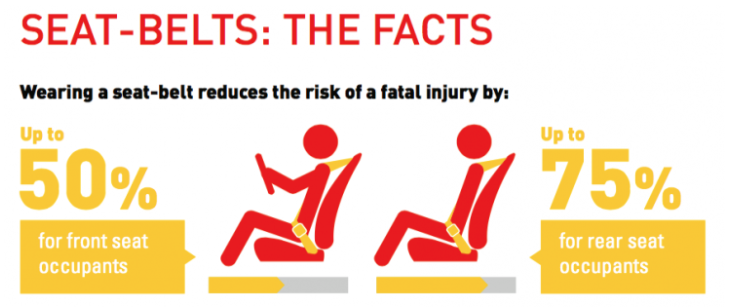
- wearing a seat belt can cut the risk of death for people in the vehicle by up to 50%;
- using child restraints can cut deaths among infants by 71%.
How a helmet saves you
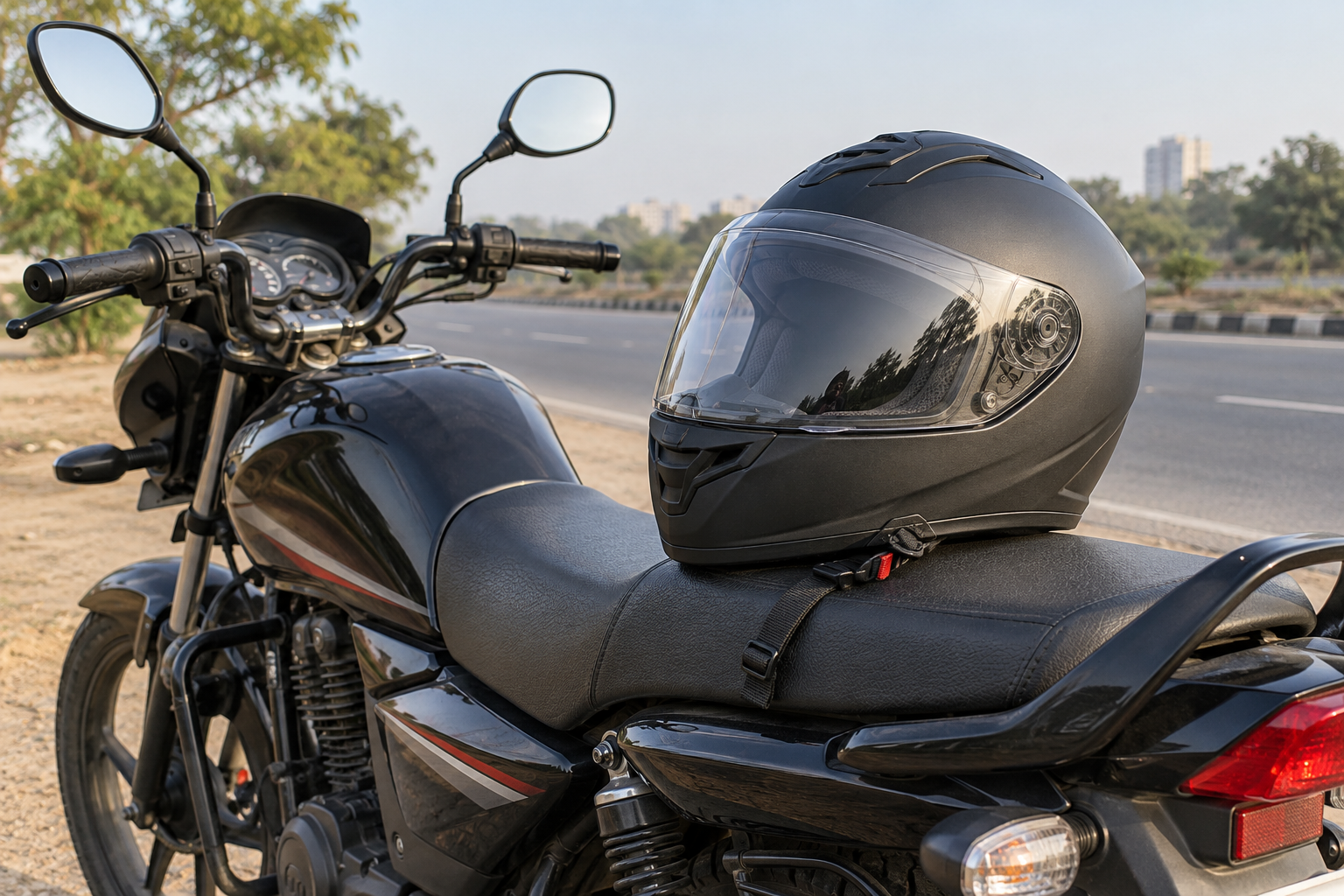
- The hard shell spreads the force of the hit, and the foam inside absorbs it.
- It protects against a fractured skull and bleeding in the brain.
- A full-face helmet also protects your face and jaw.
- It only works if the strap is fastened. With an open strap, the helmet comes off before your head hits the road.
How a seat belt saves you
- It stops you being thrown out of the vehicle, or into the windscreen.
- It holds you in the right place so the airbag can protect you. An airbag without a belt can itself cause injury.
- It spreads the crash force across the strong bones of your chest and hips.
- Rear-seat belts matter just as much. An unbelted person in the back can be thrown forward into the people in front.
What you should do
- Rider and pillion both wear helmets, every trip. Buy ISI-marked helmets that fit, and fasten the strap.
- Everyone in the car wears a seat belt, front and back. Make it a family rule before the car moves.
- Small children on two-wheelers: under rules notified in February 2022, a child under four riding pillion must wear a crash helmet and be tied to the rider with a safety harness, and the motorcycle must not go faster than 40 km/h.
- Small children in cars should sit in a proper child seat in the back, not on someone’s lap.
- Replace a helmet after any hard knock, even if you cannot see a crack. The foam inside may already be crushed.
- Do not buy fake or “style” helmets. They may look good but give little protection.
- Check that seat belts work and that no airbag warning light is on.
What needs to change
- Helmet and seat belt rules enforced everywhere, in small towns and villages too, not only in big cities.
- Seat belt reminders for every seat in new cars.
- School and college campaigns that make wearing a helmet normal, not uncool.
- Insurance discounts for safe riders and drivers.
- Strict action against the sale of non-ISI helmets.
A good helmet costs less than a phone, and a seat belt takes two seconds. Before your next ride, check every helmet in the house, fasten the straps, and tell the family: nobody rides or sits in the car without one.
What needs attention
- More than 70,000 people killed in 2023 were not wearing a helmet or seat belt
- More than 15,000 pillion riders died without a helmet
- Nearly half of seat belt non-use deaths were passengers, not drivers
- A correctly worn helmet is one of the most effective life-savers on the road
- Seat belts let airbags work; without a belt an airbag can injure
- Most crashes happen on short, familiar trips
Controls that reduce risk
- Buy ISI-marked, well-fitting helmets for every rider and pillion
- Make seat belts for every seat a family rule
- Get a child seat for young children in the car
- Buy a child helmet and harness if you carry a child under four on a two-wheeler
- Replace any helmet that has taken a hard knock
- Ask your children's school to run a helmet awareness session
Common unsafe practices
- Wearing a helmet only to avoid a fine
- Leaving the helmet strap unfastened
- Letting the pillion rider go without a helmet
- Not wearing rear seat belts
- Carrying a small child on a scooter with no helmet or harness
- Using a cheap "style" helmet without ISI marking
Leave a comment