
Quick answers
Can I wear a bicycle or industrial helmet while riding a motorcycle?
No. Choose a helmet made for two-wheeler motor vehicle riders and check the applicable Indian standard; the BIS compulsory-certification list identifies IS 4151:2015. Do not substitute a bicycle or industrial helmet because it looks similar.
How should a motorcycle helmet fit?
It should sit level and firmly, should not shift freely during a gentle check, and the chin strap must be fastened as designed. Pick a size and model that allows clear vision and compatible hearing without loosening the fit.
Is a BIS sticker on a helmet enough proof that it is genuine?
No. A sticker alone is not proof of a genuine compliant product. Check the seller and product details through official BIS information, and inspect the shell, liner and strap.
Should I remove an injured rider's helmet after a crash?
Do not remove a helmet merely to inspect the rider. Prioritise scene safety, call 112 for serious injury and tell the operator if the person is unresponsive or not breathing normally, then follow their instructions about airway access and CPR.
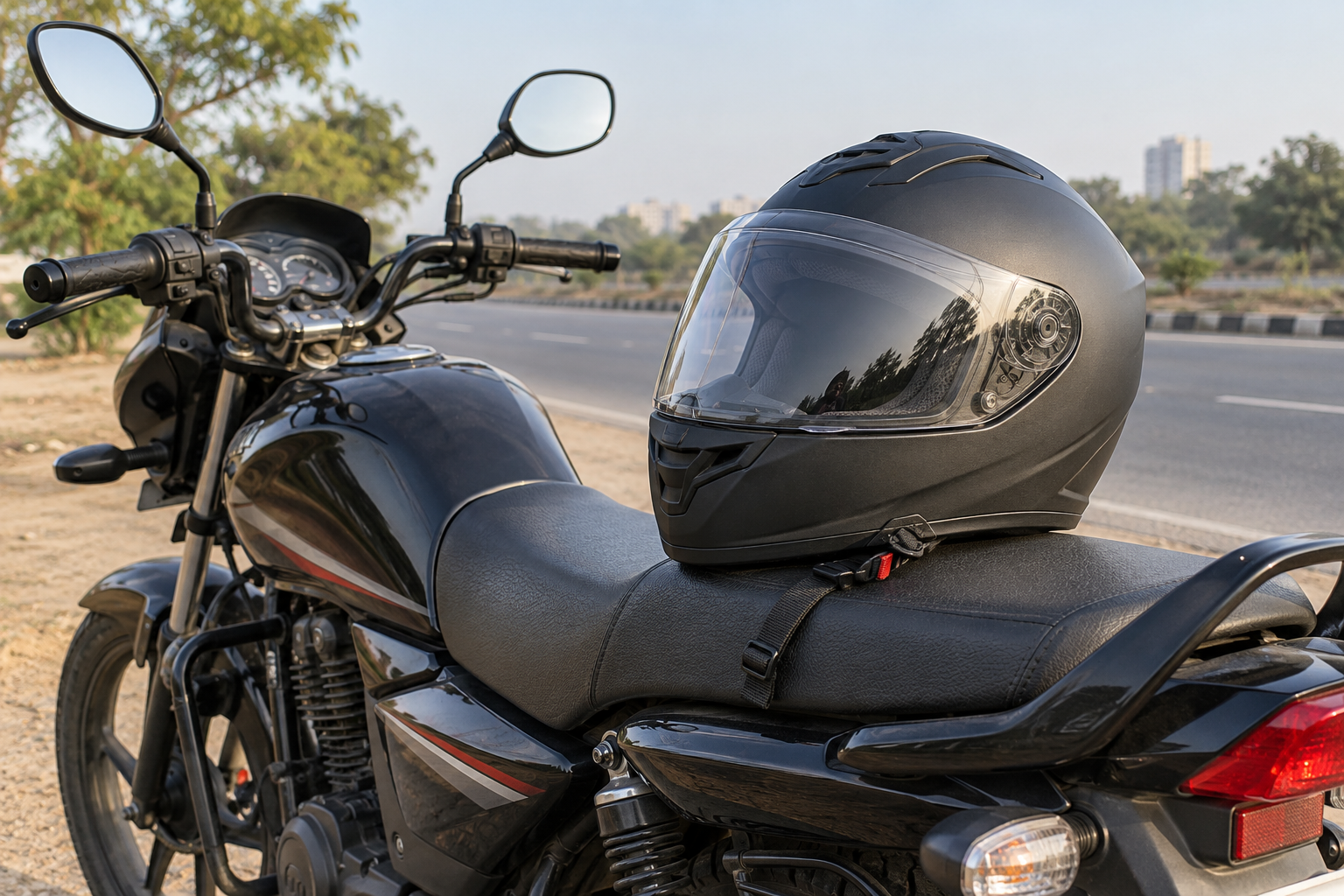
Cover image: AI-generated editorial illustration, not a real product certification or crash photograph.
Choose a helmet made for a motorcycle
A motorcycle helmet is intended to reduce head-injury risk, not make a crash harmless. Check the applicable Indian standard and certification for the product offered. The Bureau of Indian Standards’ compulsory-certification list identifies IS 4151:2015 for helmets for riders of two-wheeler motor vehicles. Do not substitute a bicycle or industrial helmet because it looks similar.
Fit and fastening matter
Try the helmet on, confirm it sits level and firmly, and fasten the chin strap as designed. It should not shift freely with a gentle check. Choose a size and model that allows clear vision and compatible hearing without loosening the fit. Inspect the shell, liner and strap; replace a helmet after a significant impact or when the manufacturer advises replacement. A sticker alone is not proof of a genuine compliant product; check the seller and product details through official BIS information.
Pair the helmet with safer riding
Use the helmet on every ride, including short trips, and combine it with appropriate speed, attention, sober riding and other protective measures. The WHO motorcycle-helmet manual supports quality, correct use and enforcement as parts of road safety. After a crash, prioritise scene safety and emergency help. Call 112 in India for serious injury. Do not remove a helmet merely to inspect the rider; tell the emergency operator immediately if the person is unresponsive or not breathing normally and follow their instructions about airway access and CPR. The American Red Cross first-aid guidance advises leaving a helmet in place unless CPR requires its removal; it is a general training reference, not an India-specific emergency protocol.
India emergency number: MHA ERSS confirms 112.
What needs attention
- Protection depends on quality, fit, fastening and crash circumstances. WHO global estimates must not be presented as India-specific case data.
Controls that reduce risk
- Choose a helmet that meets the applicable Indian standard, fits correctly and is fastened; avoid damaged equipment; pair helmet use with safer speed and riding.
Common unsafe practices
- Treating a bicycle/work helmet as a motorcycle helmet.
- loose chin strap.
- relying on a sticker alone.

Leave a comment