
🚗 Role of Helmet & Seatbelt Usage in Saving Lives
What needs attention
- The article topic must be linked to the actual occupancy and hazard
- Prevention and early warning provide more safety margin than last-second intervention
- Equipment is effective only when correctly selected, accessible and maintained
- People need short practised actions and a clear decision to stop and escape
- Children, visitors and people needing assistance require explicit planning
- Records, drills and inspections matter only when defects are corrected
Controls that reduce risk
- Complete a task- and site-specific hazard assessment
- Verify applicable Indian, state and local requirements
- Use competent inspection for installed systems and specialist hazards
- Keep alarms, exits, signs and emergency access usable
- Train intended users and practise evacuation
- Record defects with an owner and completion date
- Review the plan after changes, incidents or near misses
Understand and apply the guidance
🔴 Truth Drop
Every year, India loses over 56,000 two-wheeler riders and 25,000 car occupants in road accidents (MoRTH 2024).
👉 Nearly 70% of them could have survived — if they were wearing helmets or seatbelts.
Helmets and seatbelts aren’t restrictions — they’re survival tools.
📖 Why This Matters
A two-second habit can mean the difference between life and death.
But still, across India:
- Riders wear helmets only to avoid fines.
- Car passengers ignore seatbelts, especially in the back seat.
- Families ride 3–4 people on a scooter, with kids exposed to risk.
Every time someone says, “Bas paas hi jaana hai (it’s just nearby),” another preventable death gets added to NCRB data.
⚠️ What the Data Shows
| Category | Deaths (2024) | % Without Safety Gear | Survival Impact |
|---|---|---|---|
| Two-wheeler riders | 56,000+ | 43% without helmet | Helmet use reduces fatal injury risk by 70% |
| Two-wheeler pillions | 25,000+ | 87% without helmet | Head injury deaths double without helmet |
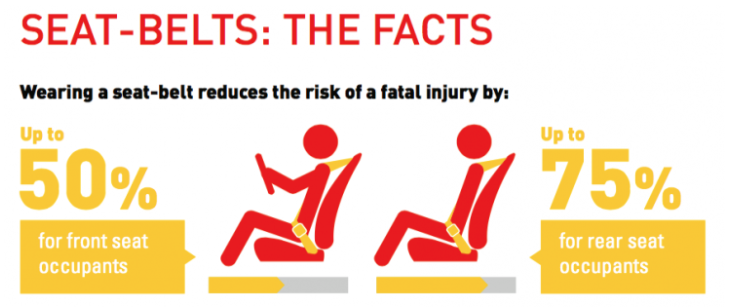
| Car occupants | 25,000+ | 70% without seatbelt | Seatbelts reduce fatal injuries by 45–60% |
| Rear-seat passengers | — | 90% without belt | Fatality risk triples during collisions |
(Source: MoRTH 2023–24, WHO Global Road Safety Report)
🧠 How Helmets & Seatbelts Save Lives
🪖 Helmet Protection
- Absorbs impact force during crashes.
- Prevents skull fractures & brain hemorrhage.
- Reduces facial and neck injuries.
- ISI-certified full-face helmets = 6x better protection than half-caps.
⛓️ Seatbelt Protection
- Prevents ejection from vehicle.
- Keeps passengers aligned with airbags.
- Reduces internal organ injuries by 40%.
- Rear seatbelts are equally critical — yet most ignored.
📊 Key Insights
- India has 1.5 crore two-wheeler riders daily, but less than 40% wear helmets properly.
- Rear seatbelt compliance in Indian cities = below 5%.
- In 2023, 43,000 people died only due to not wearing helmets, and 15,000 died for not wearing seatbelts.
- WHO: Universal helmet & seatbelt enforcement could save 1 lakh lives annually in India.
🛡 Survival Lessons for Citizens
✅ Always wear a helmet — both rider and pillion.
– ISI-marked full-face helmets only.
✅ Fasten your seatbelt — even in the back seat.
– Make it a rule in every family car.
✅ Children under 4 years must wear safety harnesses on bikes (new MV Act rule).
✅ Replace helmets after every major impact — protection weakens even if cracks aren’t visible.
✅ Avoid fake or cosmetic helmets — they look stylish but offer zero protection.
✅ Check airbags and seatbelts regularly — don’t compromise for comfort.
📢 Systemic Lessons
India must:
- Enforce universal helmet and seatbelt laws, not just urban fines.
- Mandate helmet locks and rear-seat sensors in all vehicles.
- Launch mass campaigns in schools & colleges (like “I Wear Because I Care”).
- Incentivize safety gear with insurance discounts and rewards.
- Improve helmet and safety gear quality regulation — ban non-ISI products.
📣 Call to Action
🚨 A helmet costs ₹1,000.
A seatbelt takes 2 seconds.
A life lost — costs everything.
👉 Protect your head, protect your family.
Wear your safety — not your excuses.
Because every journey should end with a smile, not a siren.
🔚 Closing Line
India doesn’t lack awareness — it lacks action.
The next person saved by a helmet or seatbelt could be you, or someone you love.
This is why we built HowToSurvive.in — to make safety a culture, not a choice.
Common unsafe practices
- Relying on equipment without a hazard assessment
- Blocking or compromising escape routes
- Delaying the alarm or emergency call
- Attempting a response beyond training or safe conditions
- Re-entering before authorised clearance
- Treating a checklist as a substitute for competent inspection