
🌪️ Cyclones Hitting Indian Coasts – 5-Year Patterns (2019–2025)
What needs attention
- The article topic must be linked to the actual occupancy and hazard
- Prevention and early warning provide more safety margin than last-second intervention
- Equipment is effective only when correctly selected, accessible and maintained
- People need short practised actions and a clear decision to stop and escape
- Children, visitors and people needing assistance require explicit planning
- Records, drills and inspections matter only when defects are corrected
Controls that reduce risk
- Complete a task- and site-specific hazard assessment
- Verify applicable Indian, state and local requirements
- Use competent inspection for installed systems and specialist hazards
- Keep alarms, exits, signs and emergency access usable
- Train intended users and practise evacuation
- Record defects with an owner and completion date
- Review the plan after changes, incidents or near misses
Understand and apply the guidance
🔴 Truth Drop
Between 2019 and 2025, India faced over 30 cyclonic storms, of which 10 were severe or very severe cyclones, hitting both east and west coasts.
👉 India ranks among the top 3 most cyclone-affected countries globally (IMD, 2025).
The damage is not just coastal — it travels inland through floods, power collapse, and displacement of millions.
📖 Why This Matters
More than 5,700 km of India’s coastline faces moderate-to-high cyclone risk.
But the real crisis is that coastal population density has doubled in two decades — with cities like Mumbai, Chennai, and Visakhapatnam expanding right into danger zones.
Every cyclone leaves two kinds of marks:
- On the land — destruction of homes, infrastructure, crops.
- On the people — trauma, migration, and years of economic loss.
🌀 Major Cyclones in India (2019–2025)
| Year | Cyclone Name | Category | Landfall | Affected States | Key Impact |
|---|---|---|---|---|---|
| 2019 | Fani | Extremely Severe | Odisha (Puri) | Odisha, WB | 89 deaths, ₹24,000 cr loss |
| 2019 | Vayu | Very Severe | Gujarat coast (missed landfall) | Gujarat | Large-scale evacuation, no major loss |
| 2020 | Amphan | Super Cyclone | West Bengal | WB, Odisha | ₹1 lakh crore loss, 100+ deaths |
| 2020 | Nisarga | Severe | Maharashtra | Mumbai, Konkan | First in decades to hit Mumbai coast |
| 2021 | Tauktae | Extremely Severe | Gujarat | Gujarat, Maharashtra | 150+ deaths, major coastal damage |
| 2021 | Yaas | Very Severe | Odisha–WB border | Odisha, Jharkhand | 50 lakh affected |
| 2022 | Asani | Severe | Andhra Pradesh (off coast) | AP, Odisha | Minor damage, heavy rainfall |
| 2023 | Biparjoy | Very Severe | Gujarat (Kutch) | Gujarat, Rajasthan | 100+ injured, 94,000 evacuated |
| 2024 | Michaung | Severe | Andhra–TN coast | Tamil Nadu, Andhra | Chennai flood emergency, 20+ deaths |
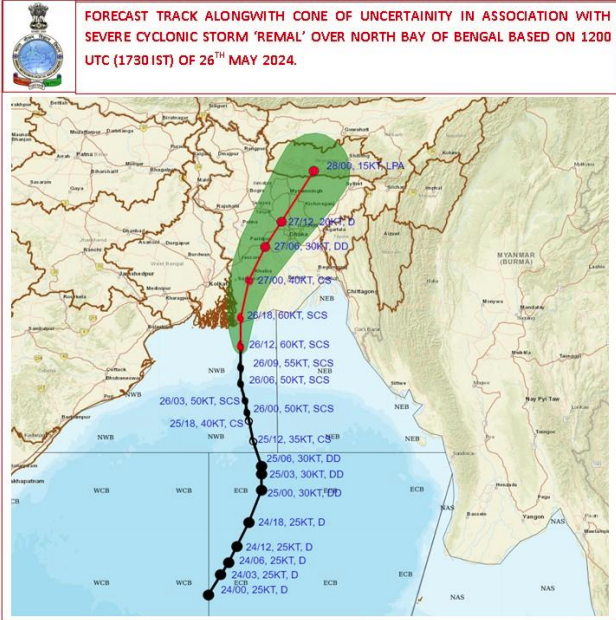
| 2025 | [Cyclone Remal / tentative upcoming] | Expected (Pre-monsoon 2025) | East coast | TBA | IMD warning under climate pattern shift |
(Sources: IMD Annual Cyclone Reports 2019–2025, NDMA, CWC)
📊 Cyclone Trend Summary (2019–2025)
| Parameter | East Coast (Bay of Bengal) | West Coast (Arabian Sea) | Total |
|---|---|---|---|
| Cyclones Formed | 22 | 8 | 30 |
| Landfall Events | 15 | 5 | 20 |
| Major Deaths | 500+ | 200+ | 700+ |
| People Affected | 4 crore+ | 1.2 crore+ | 5.2 crore+ |
| Economic Loss | ₹1.8 lakh crore | ₹60,000 crore | ₹2.4 lakh crore |
👉 Bay of Bengal remains 3 times more cyclone-active than Arabian Sea — but the west coast is catching up fast due to climate warming.
🧠 Why Cyclones Are Increasing
- Rising Sea Surface Temperature (SST) — fuels stronger cyclones.
- Climate Change — shifts in wind and ocean currents.
- Urban Coastal Expansion — more people, ports, and industries in risk zones.
- Poor Coastal Infrastructure — weak embankments, drainage collapse.
- Deforestation of Mangroves — natural storm barriers disappearing.
📈 Visual / Infographic Ideas
1️⃣ Bar Chart:
“Cyclones in India (2019–2025): Bay of Bengal vs Arabian Sea”
Bars for each year → East Coast always higher, West Coast rising sharply post-2020.
2️⃣ Map Chart:
Highlight India’s coastline showing red dots for landfall areas (Odisha, WB, Gujarat, Tamil Nadu, AP, Maharashtra).
🛡 Survival Lessons for Citizens
✅ Track IMD alerts — trust official warnings, not social media.
✅ Keep emergency kit: torch, battery, dry food, medicines, documents.
✅ Charge phones & store water 24 hrs before expected landfall.
✅ Move livestock & valuables to higher ground early.
✅ Never step out or drive during landfall winds.
✅ After cyclone: avoid fallen power lines, report gas leaks, check news before returning home.
📢 Systemic Lessons
India must:
- Expand coastal radar and early warning systems.
- Strengthen embankments & mangrove buffers.
- Relocate high-risk settlements to safer zones.
- Upgrade shelter infrastructure (like Odisha’s cyclone shelters model).
- Train community volunteers (under NDMA & VFF India-type programs).
📣 Call to Action
🚨 Cyclones can’t be stopped, but their damage can be reduced.
👉 Follow alerts. Educate others.
👉 Don’t underestimate “moderate” warnings — nature doesn’t repeat, it reminds.
📎 References
- India Meteorological Department (IMD) Annual Cyclone Reports 2019–2025
- National Disaster Management Authority (NDMA) Cyclone Preparedness Reports
- Central Water Commission (CWC) Climate Vulnerability Atlas, 2024
- UNDRR South Asia Disaster Outlook 2025
- Odisha State Disaster Management Authority (OSDMA) success models
🔚 Closing Line
Cyclones don’t just test coastal cities — they test how prepared a nation is.
This is why we built HowToSurvive.in — to ensure that no storm, no disaster, ever catches Bharat unready again.
Common unsafe practices
- Relying on equipment without a hazard assessment
- Blocking or compromising escape routes
- Delaying the alarm or emergency call
- Attempting a response beyond training or safe conditions
- Re-entering before authorised clearance
- Treating a checklist as a substitute for competent inspection