
Quick answers
What do IMD's cyclone warning colours mean?
In IMD cyclone bulletins, a Cyclone Alert (at least 48 hours ahead) is yellow, a Cyclone Warning (at least 24 hours ahead, with the landfall point) is orange and the Post-Landfall Outlook (at least 12 hours before landfall) is red. They follow a Pre-Cyclone Watch about 72 hours ahead. IMD's district warnings in the Mausam app use a separate scale: yellow means keep updated, orange means be alert and red urges authorities to take action.
When should my family evacuate before a cyclone?
As soon as the administration orders it, and earlier if you live in a low-lying coastal area, near a river mouth or in a weak or kutcha house. Leave before your route to high ground or the shelter floods; do not wait to see how bad the storm becomes.
Is it safe to go outside when the wind suddenly stops?
No. If the eye of the cyclone passes over you, the wind and rain may stop for half an hour or more, and then very strong winds return suddenly from the opposite direction. Stay inside until officials announce that the cyclone has passed.
How do I get official cyclone alerts on my phone?
Install IMD's Mausam app for colour-coded district warnings, keep emergency alerts enabled for SACHET SMS and Cell Broadcast messages, and follow your state disaster management authority and district administration. Keep a battery radio as a backup for All India Radio.
What should a cyclone emergency kit contain?
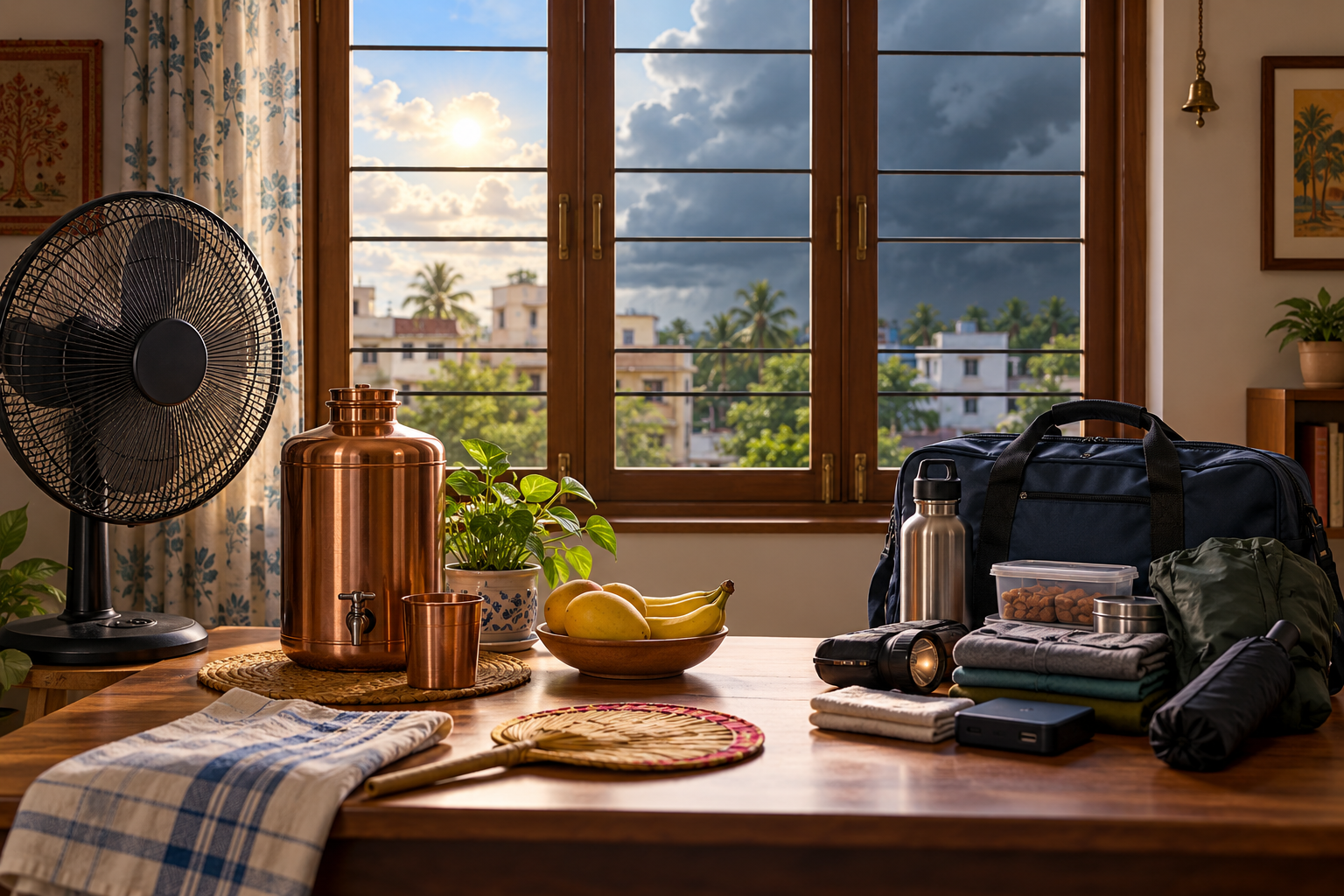
NDMA lists a battery torch and radio with extra batteries, a first-aid kit and essential medicines, dry food and sealed drinking water, chlorine tablets, important papers and cash in a waterproof bag, candles and matches in a waterproof container, a knife, strong ropes and shoes.
What should we do after a cyclone passes?
Wait for the all-clear, keep away from fallen or dangling wires, do not enter damaged buildings or walk or drive through floodwater, drink only boiled or chlorinated water, watch for snakes in debris, and run any generator only outdoors because of carbon monoxide.
Which numbers should I call in a cyclone emergency?
Call 112, India's single emergency number. Many states also run toll-free disaster control rooms, commonly 1070 for the state and 1077 for the district; check your own state's numbers. Use 101 for fire and 108 for an ambulance where available.
Cyclones hit India’s coasts every year, mostly in two seasons: May and June, and October and November. The India Meteorological Department (IMD) says about five tropical cyclones form over the north Indian Ocean in an average year, about four times as many over the Bay of Bengal as over the Arabian Sea, with the main peak in November. Odisha, Andhra Pradesh, Tamil Nadu, Puducherry, West Bengal and the Andaman and Nicobar Islands face the Bay of Bengal; Gujarat, Maharashtra, Goa, Karnataka, Kerala and Lakshadweep face the Arabian Sea. This guide explains what IMD’s warnings mean, where to get them and what your household should do before, during and after a cyclone.
IMD says storm surge, the sea rising and flooding the coast as a cyclone comes ashore, is by far the biggest killer in a cyclone. Wind, flying objects, falling trees, fallen power lines and heavy rain flooding add to the danger. NDMA notes that loss of life from cyclones in India has declined because of better early warning, even as damage to property keeps rising, so acting on warnings early matters.
Know IMD’s four-stage cyclone warnings
IMD issues cyclone warnings to state officials in four stages, which also reach the public through the media and state governments:
- Pre-Cyclone Watch, about 72 hours ahead: a cyclonic disturbance is developing and could become a cyclone; it names the coastal belt likely to be affected.
- Cyclone Alert (yellow), at least 48 hours before bad weather starts on the coast: the storm’s position, strength and likely path, the coastal districts at risk, and advice to fishermen and the public.
- Cyclone Warning (orange), at least 24 hours ahead: the forecast landfall point and time, with expected rain, wind and storm surge. These bulletins are updated every three hours.
- Post-Landfall Outlook (red), at least 12 hours before landfall: where the cyclone is likely to move after landfall and the bad weather expected inland.
IMD has used these colours for cyclone bulletins since 2006. Separately, IMD’s district weather warnings, shown in its Mausam app, use their own colour scale: yellow means keep yourself updated, orange means be alert, and red, the most severe, urges authorities to take action. A red district warning is the time to follow evacuation orders, not to start planning. Inland districts can also get heavy rain and strong wind after a cyclone crosses the coast.
IMD names systems by wind strength: a cyclonic storm has winds of 62 to 88 km/h, a severe cyclonic storm 89 to 117 km/h, a very severe cyclonic storm 118 to 166 km/h, an extremely severe cyclonic storm 167 to 221 km/h, and a super cyclonic storm 222 km/h or more.
Where to get official alerts
- IMD: the IMD website and the Regional Specialised Meteorological Centre, New Delhi carry cyclone bulletins. IMD’s free Mausam app shows colour-coded district warnings for the next five days.
- SACHET SMS alerts: the National Disaster Management Authority’s (NDMA) integrated alert system sends geo-targeted SMS alerts in all 36 states and union territories. The SACHET portal also lists current alerts.
- Cell Broadcast: in 2026 the Department of Telecommunications and NDMA began rolling out Cell Broadcast, which sends an alert to every phone in an area at the same time. Keep emergency alerts enabled on your phone.
- Radio and television: All India Radio and Doordarshan broadcast warnings. Keep a battery radio, because power and mobile networks can fail.
- Your state and district: the State Disaster Management Authority, district collector and local police announce evacuation orders and shelter locations.
Rely only on official warnings, and do not forward rumours or old cyclone videos as current news.
Before the cyclone season
- Check and repair your house: fix loose roof tiles, sheets, doors and windows. Remove dead branches and dying trees near the house.
- Secure loose objects: in strong wind, tin sheets, bricks, tools, signboards and even kerosene tins can become deadly missiles. Tie them down or store them inside.
- Know your risk: find out whether your home is in a low-lying coastal area, near a river mouth or in a kutcha or weak building. If it is, plan to leave early when warned.
- Know your nearest cyclone shelter or high ground and the route to it. Ask your panchayat, ward office or district administration.
- Plan for everyone: older people, people with disabilities, pregnant women, young children and anyone who depends on medicines or electricity need help to leave early. Plan for pets and livestock too.
Pack an emergency kit
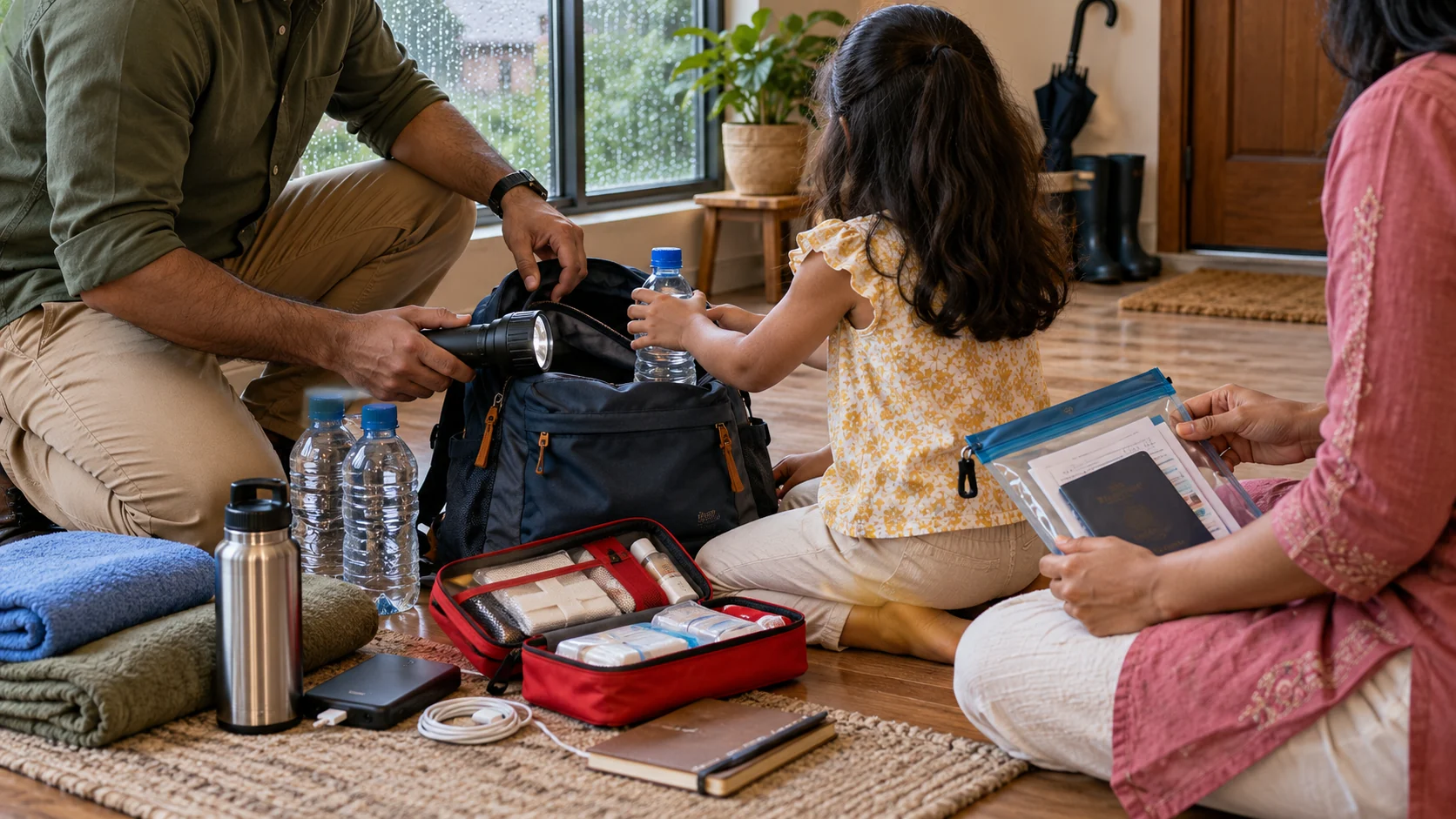
NDMA’s cyclone kit list includes:
- a battery torch, a battery radio and extra batteries;
- a first-aid kit and essential medicines;
- dry food that needs no cooking, and packed, sealed drinking water;
- chlorine tablets or water purifier powder;
- important papers such as Aadhaar, ration card and voter ID in a waterproof bag, plus some cash;
- candles and matches in a waterproof container, a knife, strong ropes and shoes.
Use torches rather than candles or kerosene lamps where you can, and never leave a flame unattended. Keep phones and power banks charged.
When a cyclone alert or warning is issued
- Follow every IMD and state update. NDMA advises carrying on with normal work during a cyclone alert while staying alert to warnings.
- Store extra drinking water in covered vessels and food that needs little or no cooking.
- Board up glass windows or put storm shutters in place, and support outside doors.
- Move valuables, documents and food grain to a higher shelf or upper floor.
- Bring in or tie down everything that could blow away.
- If your home is in a low-lying coastal area or is unsafe, leave early, before your route to high ground or a shelter floods.
Evacuating to a cyclone shelter
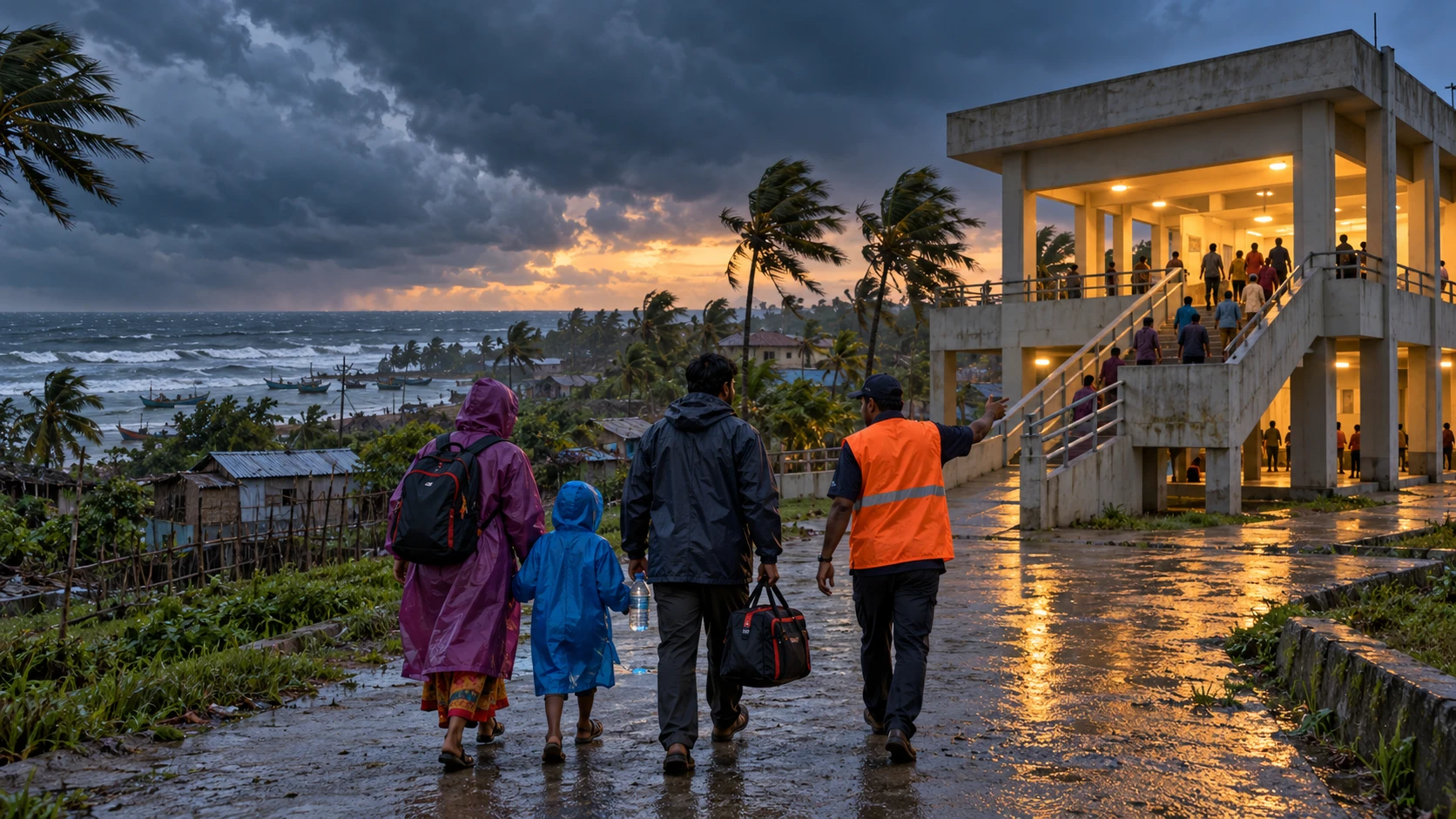
When the administration orders an evacuation, go. Do not wait to see how bad the storm becomes; roads can flood and trees can block them hours before landfall.
- Pack essentials for a few days: your emergency kit, medicines, documents, water, and special food for babies, children and older people.
- Go to the shelter or evacuation point named for your area, and help neighbours who need it.
- Do not worry about your property; your life comes first.
- At the shelter, follow the instructions of the person in charge, and stay there until you are told it is safe to return.
Odisha’s experience shows how much early evacuation matters. Before Cyclone Phailin in October 2013, the Odisha government evacuated 9.84 lakh people; it reported 44 deaths from the cyclone and the floods that followed, while IMD’s report for that year counts 21 deaths from the cyclone itself. Before Cyclone Fani in May 2019, the state began evacuating on 1 May, two days before landfall near Puri, and moved 15,57,170 people from 19 districts to multi-purpose cyclone and flood shelters, schools and other safe buildings; it reported 64 deaths. Lives were still lost, so every warning deserves action.
Fishermen and boat owners
IMD issues special warnings for fishermen four times a day in normal weather and every three hours when a cyclone is active, through state officials, All India Radio and Doordarshan. When a warning says do not go to sea, do not go, and return to the coast if you are already out. Tie up boats and rafts in a safe place, keep a radio with spare batteries and use SMS to save phone battery.
During the cyclone
- Stay indoors in the strongest part of a well-built house or in the shelter. Keep doors and windows shut.
- Switch off the electrical mains and the gas supply.
- Keep a battery radio on for official updates.
- Beware the calm of the eye. If the centre of the cyclone passes over you, the wind and rain may stop for half an hour or more. Do not go out: very strong winds return suddenly from the opposite direction.
- If you are caught outside, do not panic. Keep clear of broken poles, wires and sharp objects, do not enter damaged buildings, and get to a safe shelter as soon as possible.
After the cyclone
- Wait for the all-clear. Stay in the shelter until officials say you can return, and check that the roads to your home are open.
- Fallen wires: never touch loose or dangling wires; they may still be live. Report them to the electricity utility.
- Damaged buildings: do not enter a building that is damaged or has cracks until it has been checked.
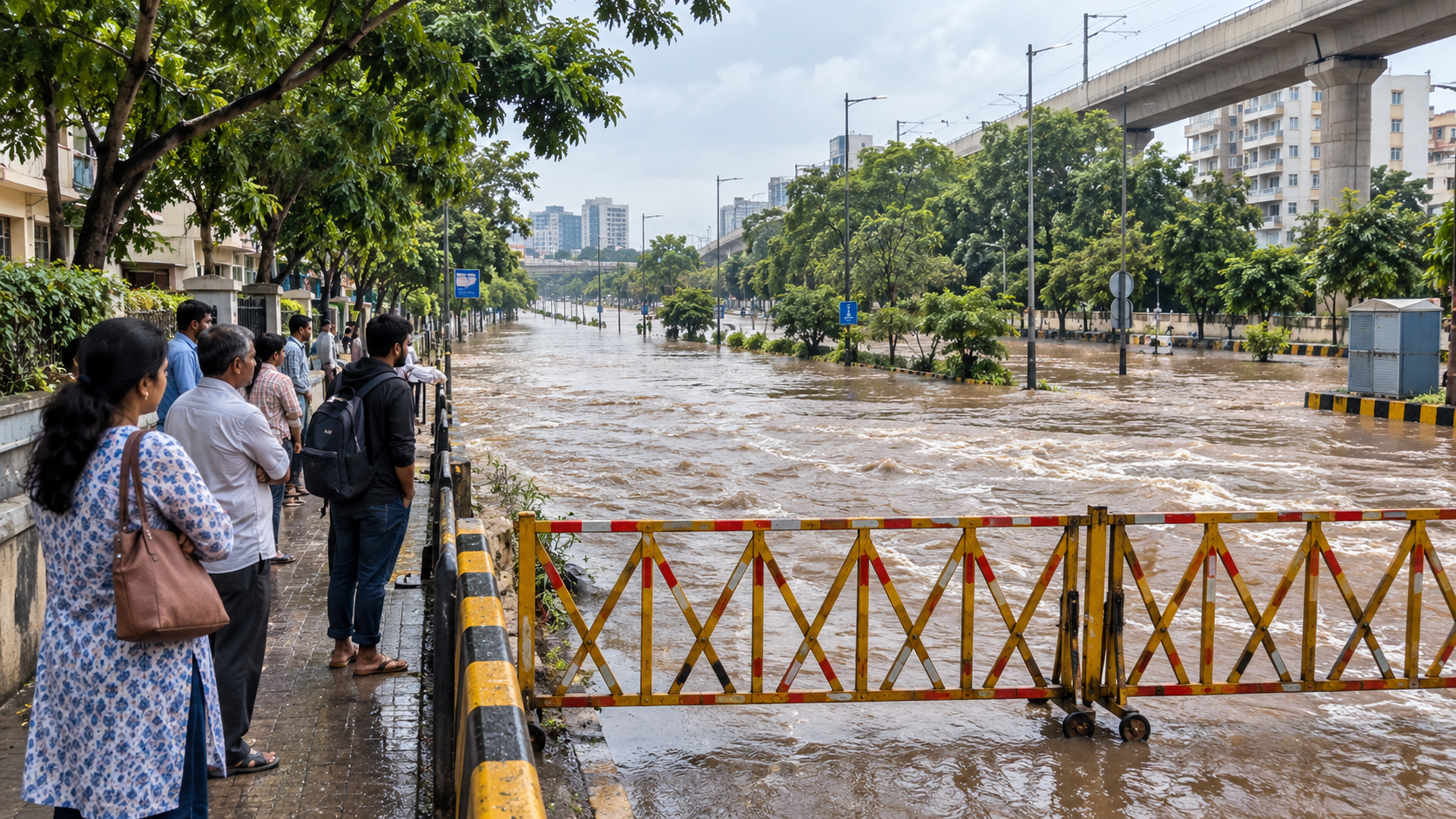
- Flooded roads: do not walk or drive through floodwater. It can hide open drains, debris and live wires. See our guide to floodwater safety.
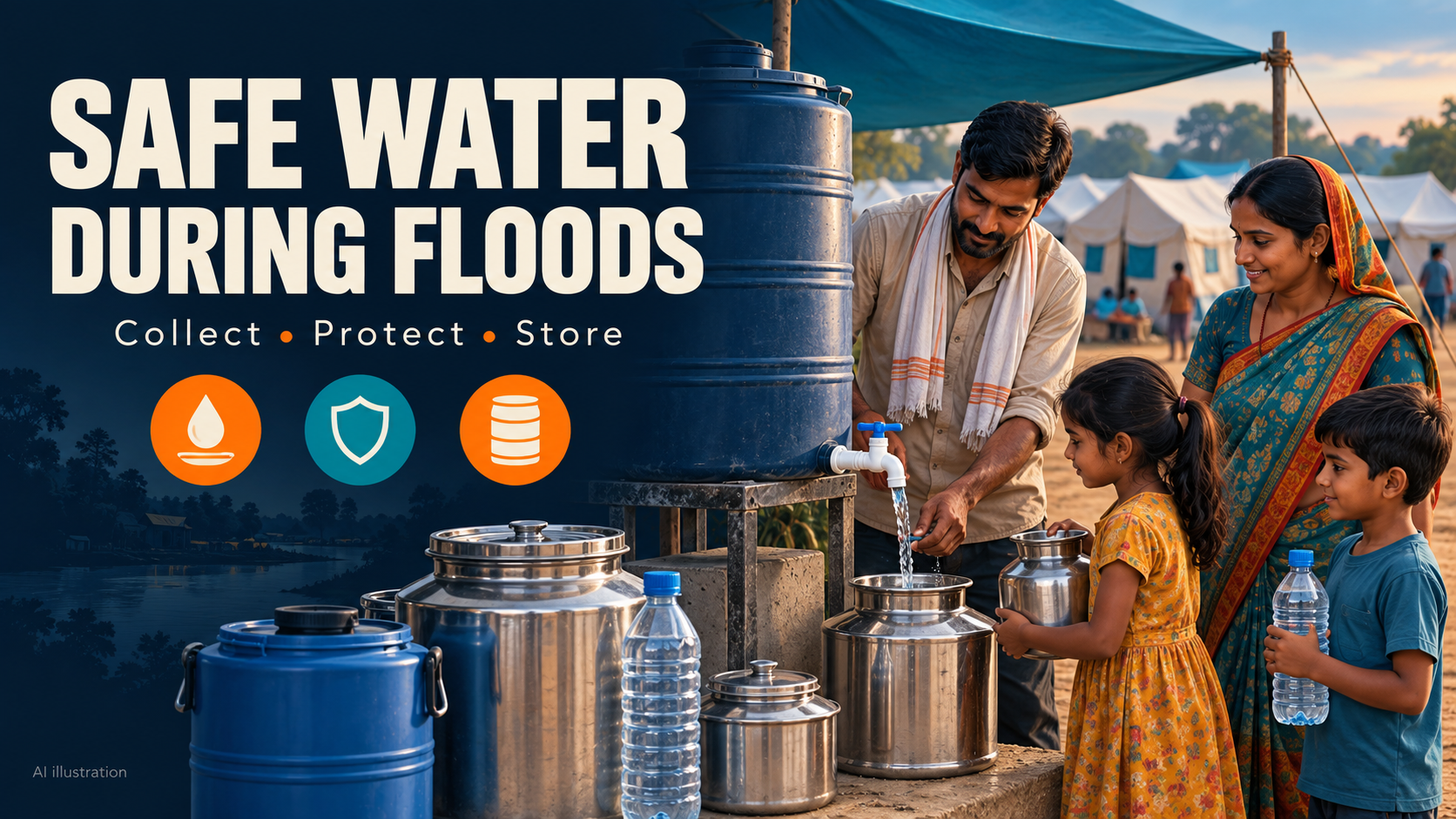
- Drinking water: drink only boiled or chlorinated water until the local authority says the supply is safe. See our guide to safe water during floods.
- Snakes and other animals can shelter in homes and debris after a storm. Use a torch and a stick, wear footwear, and check shoes, cupboards and corners. If someone is bitten, keep them still and calm, keep the bitten limb still, remove rings and tight items near the bite, and take them to hospital at once; they should not walk or drive. Do not cut, suck or wash the bite, apply herbs or tie a tourniquet.
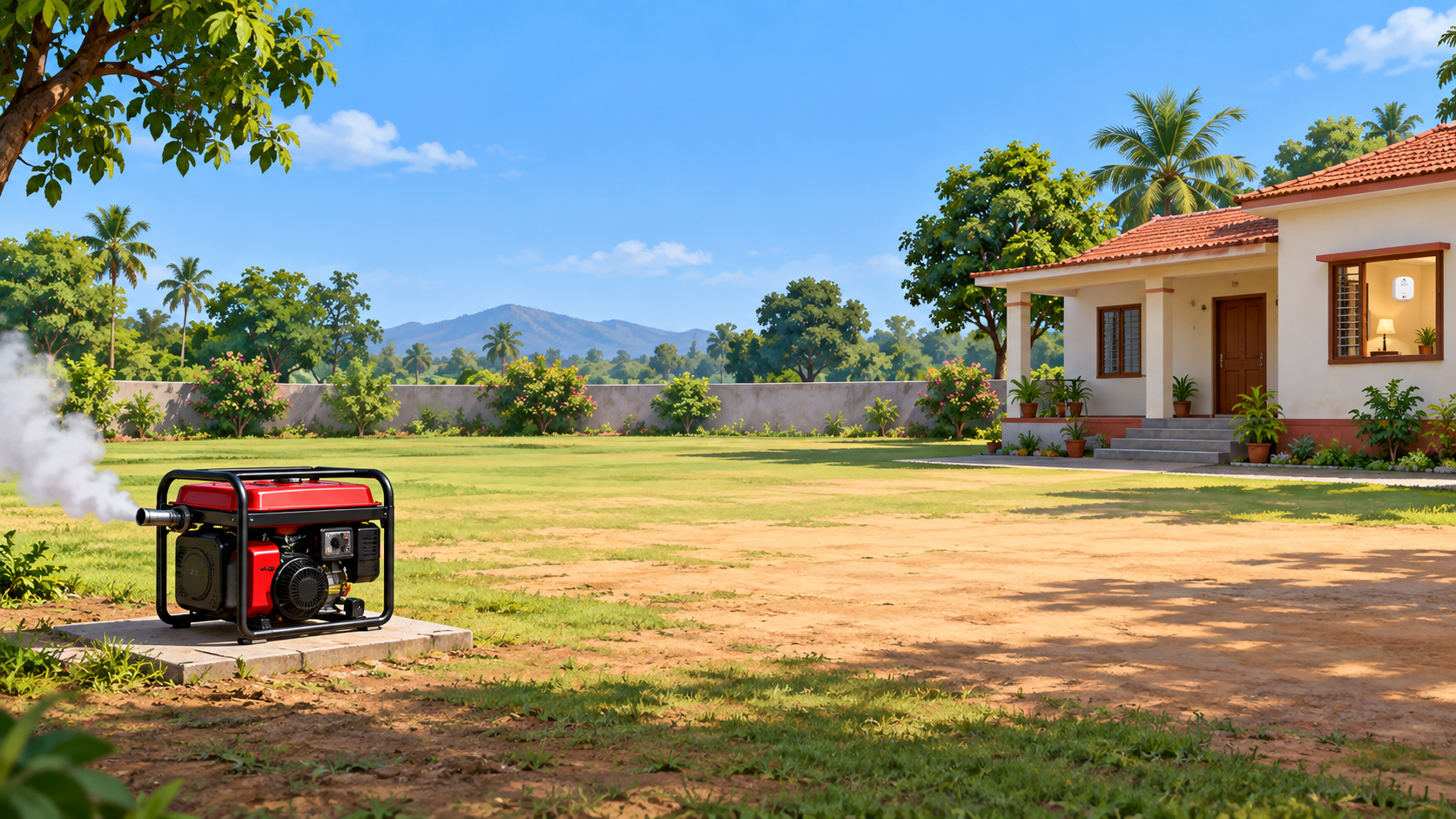
- Generators: run a portable generator only outdoors, away from doors, windows and vents, because its exhaust contains carbon monoxide. See our guide to generators and carbon monoxide.
- Drive carefully, clear debris with gloves and footwear, follow health department advice on preventing disease, and report losses to the authorities.
Emergency numbers
- 112 is India’s single emergency number for police, fire, ambulance and other help.
- Many states also run toll-free disaster control rooms, commonly 1070 for the State Emergency Operation Centre and 1077 for the district control room. Check and save the numbers for your own state and district before the season.
- 101 for fire, and 108 for an ambulance where available.
Save these numbers, and keep a written copy in case your phone dies.
What this guide does not cover
This is general cyclone-preparedness information for Indian households, not a forecast for any storm. Always follow the latest IMD bulletin and the instructions of your state and district administration, which take priority over this guide.
What needs attention
- Storm surge floods low-lying coastal areas within hours of landfall and is the main cause of cyclone deaths, according to IMD.
- In high wind, loose tin sheets, bricks, tools and signboards become dangerous missiles.
- The calm of the eye can last half an hour or more, and the wind returns suddenly from the opposite direction.
- Fallen and dangling power lines may still be live after the storm.
- Floodwater after a cyclone can hide open drains and debris, and drinking-water sources can be contaminated.
- Portable generators used during long power cuts produce carbon monoxide.
Controls that reduce risk
- Install the Mausam app, keep emergency alerts enabled on your phone, and keep a battery radio.
- Before the season, repair the roof, doors and windows and remove dead branches near the house.
- Pack an emergency kit to NDMA's list and keep documents in a waterproof bag.
- Find your nearest cyclone shelter or high ground and the route to it.
- Plan how older people, people with disabilities, children, pets and livestock will be moved early.
- When a warning is issued, tie down or bring in loose objects, store water and food, and charge phones.
Common unsafe practices
- Waiting to see how bad the storm becomes before leaving a low-lying or unsafe home.
- Going outside during the calm of the eye.
- Trusting forwarded messages or old cyclone videos instead of official alerts.
- Leaving loose sheets, tools or other objects outside.
- Returning home before the all-clear, or touching fallen wires.
- Walking or driving through floodwater after the storm.
- Running a generator indoors, in a garage or near open windows.

Leave a comment