
Quick answers
What should a home emergency kit contain?
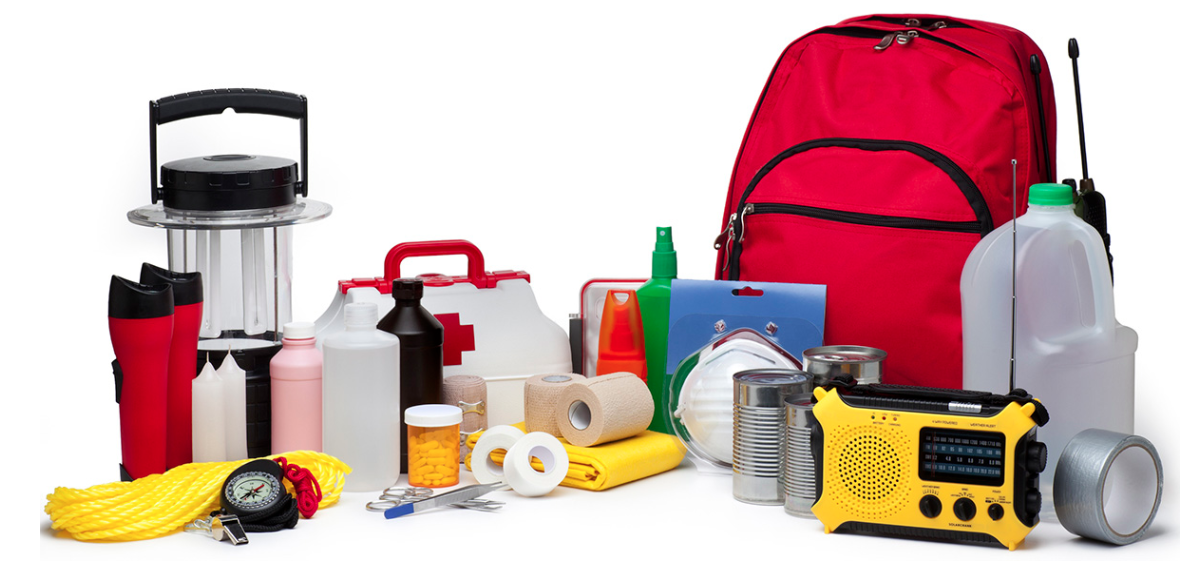
Include drinking water, non-perishable food, a torch with spare batteries, a whistle, a first-aid kit, personal medicines, masks, a battery radio, a charged power bank, ID photocopies in a waterproof pouch, some cash and a printed contact list.
Where should I keep my family emergency kit?
Keep it near the main exit or family gathering point, in a waterproof backpack or plastic box, clearly labelled. A smaller version can be kept in the car or at work.
How often should I check my emergency kit?
Check it regularly to replace expired medicines, food and batteries, refill water, update contacts and ID copies, and recheck the torch and power bank charge.
What special items should families add to an emergency kit?
Add baby food and formula for children, spare glasses and walking aids for older people, pet food and records for pets, and a doctor's note and medicines for family members with medical needs.
Most of us only think about an emergency bag when the water is already at the door or the building is shaking. By then there is no time to hunt for a torch, the medicines or the Aadhaar copies. A kit packed on a calm Sunday afternoon does that thinking for you.
Plan for the first three days (72 hours). After a flood, a cyclone or an earthquake, roads can be cut, shops shut and power out, and help may take time to reach your street. Your kit should keep the family going until it does.
What the kit is for
- Leaving the house quickly in a fire, flood or earthquake with the basics in one bag.
- Looking after small injuries and regular medicines until you reach a doctor.
- Staying in touch and getting news when the power and mobile network are patchy.
- Proving who you are and paying for things when ATMs and UPI are down.
What to pack
1. Water, food and light
| Item | How much | Why |
|---|---|---|
| Drinking water | About 3 litres per person per day, for three days; more in summer | The Sphere humanitarian standards put basic survival needs at 2.5 to 3 litres a day for drinking and food |
| Dry food that keeps (chana, peanuts, biscuits, khakhra, dates, ready-to-eat packets) | Three days | Needs no cooking or fridge |
| Water purification tablets or a small filter | 1 pack | When the bottled water runs out |
| Torch with spare batteries | 1 | Power cuts and night evacuation |
| Whistle | 1 per adult | A whistle carries further than a shout and saves your voice |
| Small multi-tool or knife and a can opener | 1 | Opening packets and tins, small repairs |
2. Medicines and hygiene
| Item | How much | Why |
|---|---|---|
| First-aid kit | 1 | Cuts, small burns, sprains |
| Regular medicines with a copy of the prescription | At least a week | Blood pressure, sugar, thyroid and other daily medicines must not stop |
| Soap and hand sanitiser | 1 each | Clean hands when water is short |
| N95 masks | A few per person | Dust after a collapse, smoke |
| Sanitary pads, nappies, baby items | As per family | These run out first in relief camps |
| Thermometer and disposable gloves | 1 each | Checking fever, handling wounds |
3. Safety and communication
| Item | How much | Why |
|---|---|---|
| Charged power bank and charging cable | 1 | Your phone is your link to 112 and to family |
| Battery or wind-up radio | 1 | Official warnings when mobile data fails |
| Spare keys for the house and vehicle | 1 set | No time wasted searching |
| Strong rope, 10 to 15 metres | 1 | Tying, hauling, holding a group together in water |
| Small fire extinguisher (kept at home, not in the bag) | 1 | Only for a small, just-started fire, and only if you know how to use it |
4. Papers and cash
| Item | How much | Why |
|---|---|---|
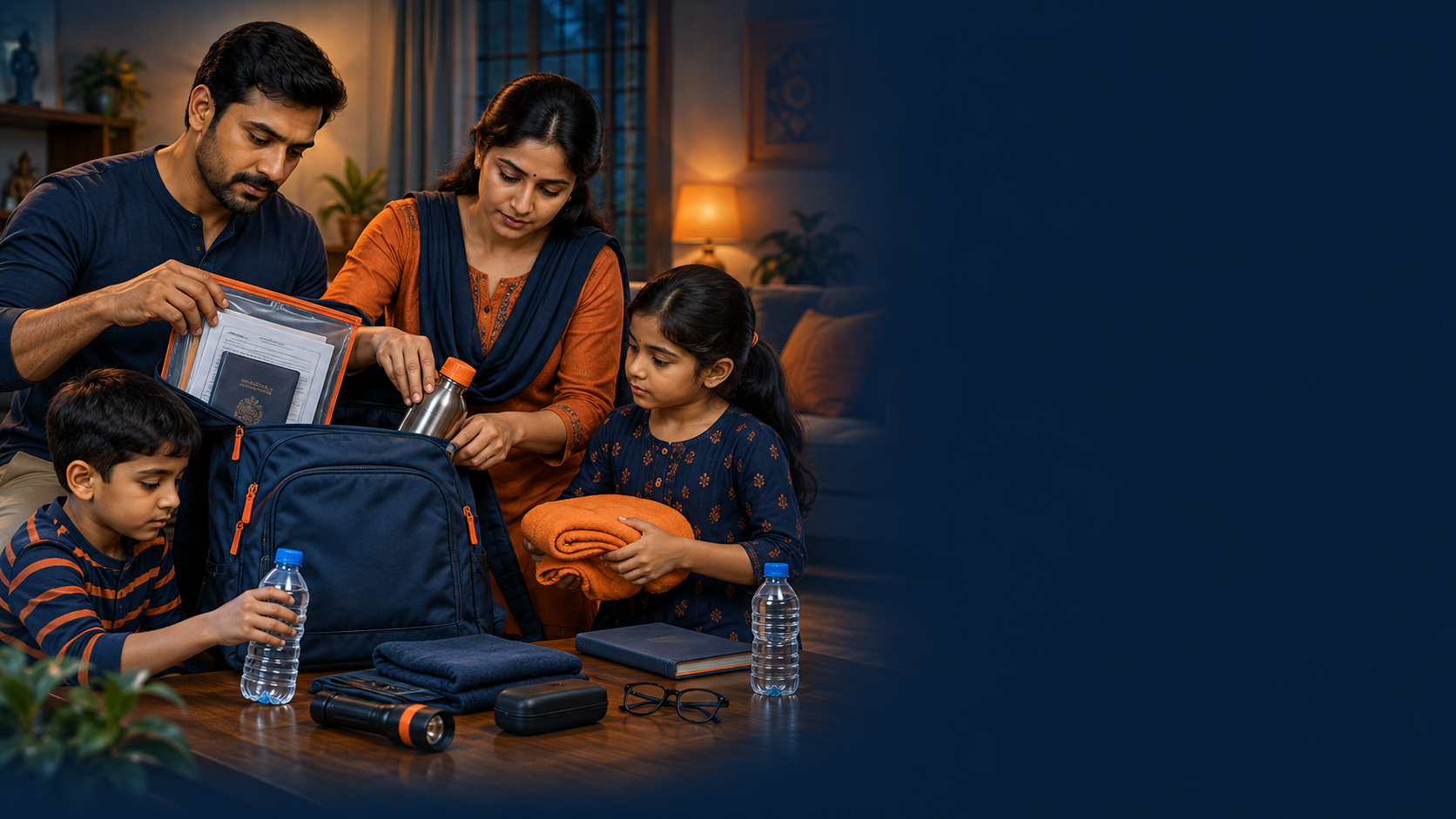
| Photocopies of Aadhaar, PAN, driving licence, bank passbook, insurance and property papers | In a waterproof zip pouch | Relief, claims and hospital admission need ID |
| Cash in small notes | ₹2,000 to ₹5,000 | Shops may not take cards or UPI without power |
| Printed list of family and emergency numbers | 1 copy | Phones die; paper does not |
| Passport-size photos | 2 or 3 per person | Forms and identification |
5. Extras for your family
| Who | Add |
|---|---|
| Small children | Baby food or formula, feeding bottle, a small toy or book |
| Elderly parents | Spare spectacles, dentures, walking stick, hearing-aid batteries |
| Anyone with a medical condition | Doctor’s note, medicines, glucose tablets for diabetics |
| Pets | Food, leash, vaccination card |
Where to keep it
- Near the main door, where anyone can pick it up on the way out.
- In a backpack or a plastic box with a lid, not a heavy metal trunk.
- Write “Emergency Kit: do not use” on it so it does not get raided for batteries.
- Keep a smaller bag in the car and one at work if you can.
Check it every three months
- Replace medicines, food and batteries that are near their expiry date.
- Change the water bottles.
- Update the phone list and the ID copies.
- Charge the power bank and test the torch.
- Run a five-minute family drill.
The five-minute family drill
- Call out the drill: “Fire!” or “Earthquake!”
- Each person picks up the item they are responsible for. One adult takes the kit.
- Leave together and walk to your meeting point outside.
- Count heads and check the kit.
- Talk about what slowed you down and fix it.
Do it every three months. The first time feels silly; by the third time everyone knows what to do without being told.
Mistakes we see often
- The kit is buried behind suitcases in the loft.
- Medicines and batteries expired a year ago.
- Nothing for the baby, the elderly parent or the pet.
- A heavy metal box that nobody can carry down six floors.
- A torch with dead cells and a phone with no charge.
Ask your society
Bring it up at the next RWA or society meeting. A notice board in the lobby with the 101, 108 and 112 numbers, the nearest hospital and the meeting point, and one evacuation drill a year, cost very little. A few families packing kits together is often how a building starts taking this seriously.
Do this tonight
Take one bag. Put in a torch, a power bank, a week of everyone’s medicines, a water bottle, some cash and copies of your ID. That is a start. Add the rest over the next two weekends.
What needs attention
- In a flood, cyclone or earthquake, shops, ATMs, power and roads can all be out for days
- A kit packed in calm saves the minutes you would waste searching in a crisis
- Daily medicines, baby items and spectacles are the things families most often forget
- Cash and ID copies matter when UPI is down and relief needs identification
- A kit only works if it is checked; batteries, food and medicines expire
- A short drill makes sure everyone knows who carries what
Controls that reduce risk
- Pack water, dry food, torch, power bank, radio and a first-aid kit in one bag
- Add a week of everyone's regular medicines with prescription copies
- Put ID photocopies and a printed phone list in a waterproof pouch
- Keep ₹2,000 to ₹5,000 in small notes in the kit
- Add items for children, elderly parents, patients and pets
- Keep the bag near the main door and label it
- Set a reminder to check the kit every three months
Common unsafe practices
- Keeping the kit buried behind luggage or in the loft
- Not checking expiry dates on medicines, food and batteries
- Forgetting baby food, spectacles, dentures or pet food
- Using a heavy metal trunk that nobody can carry
- Storing a torch and power bank without charge
- Packing only originals of documents, or no ID at all
Leave a comment