
What happened here
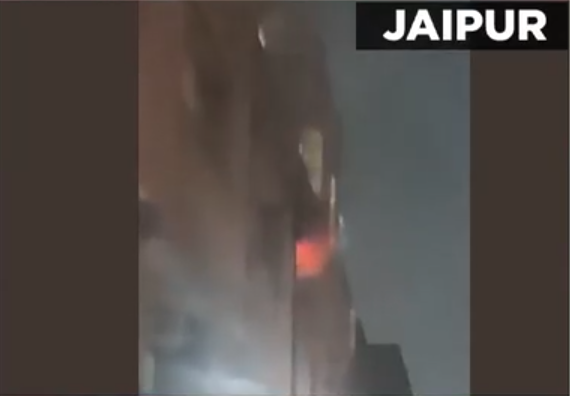
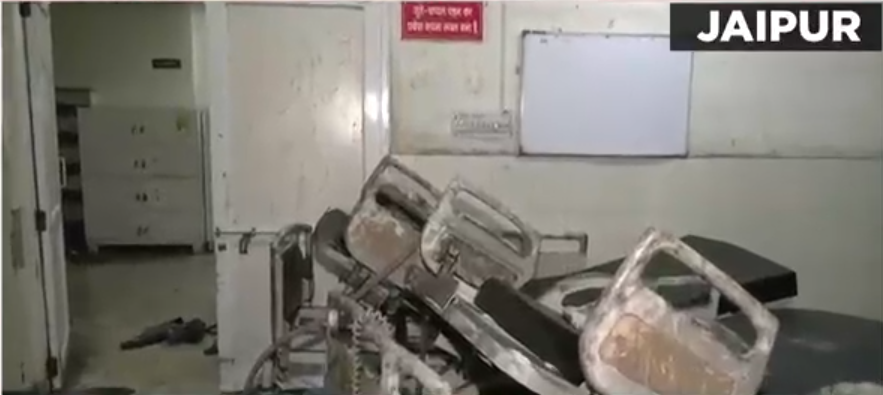
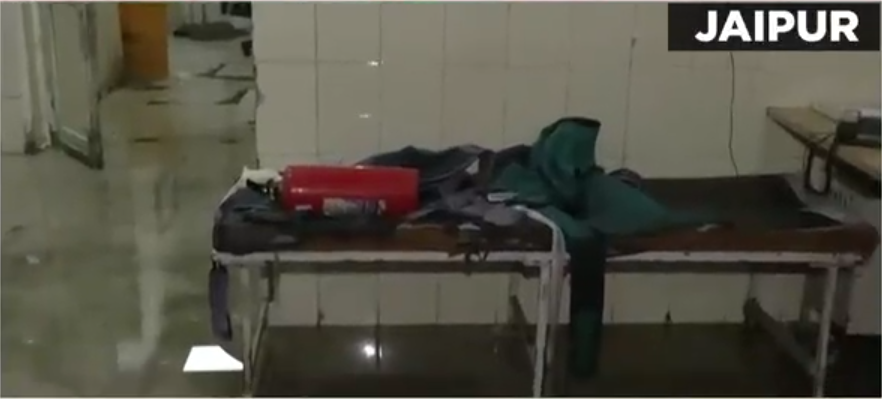
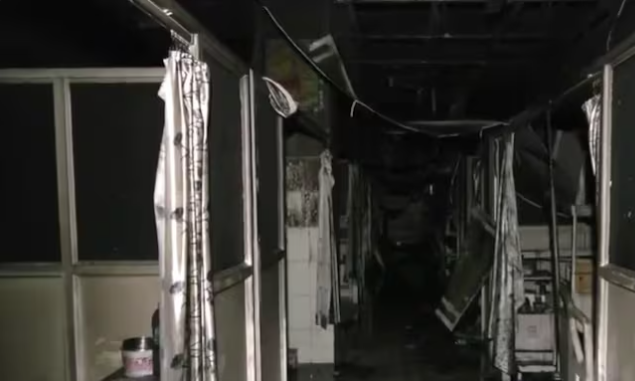
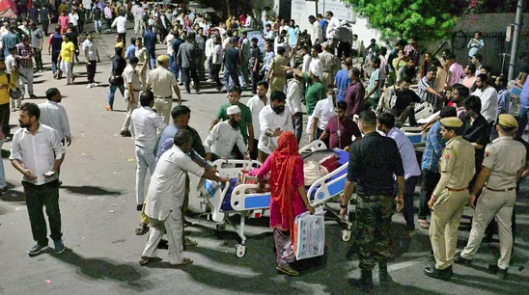
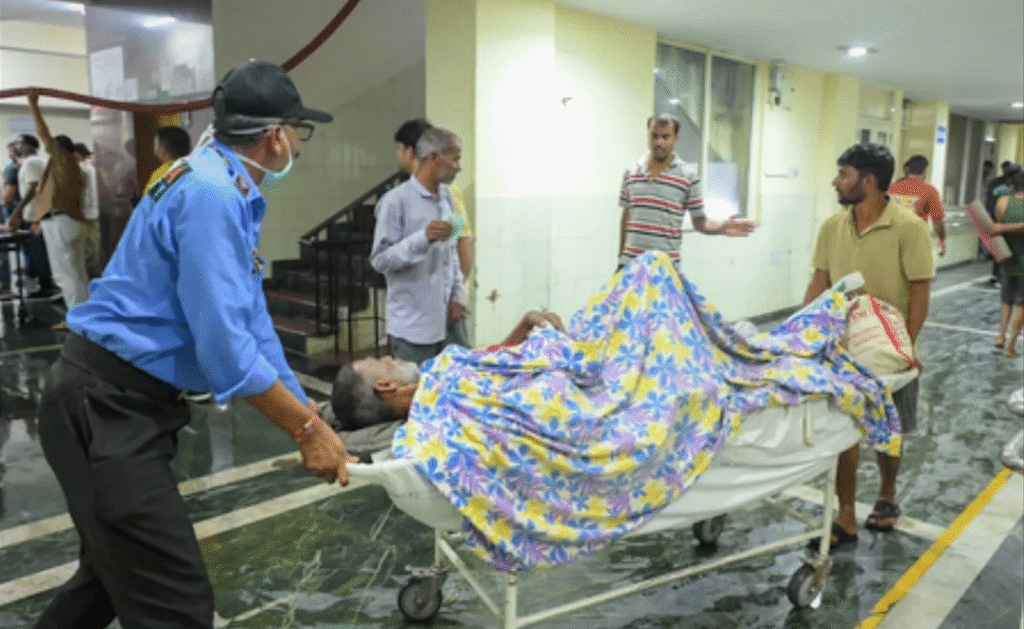
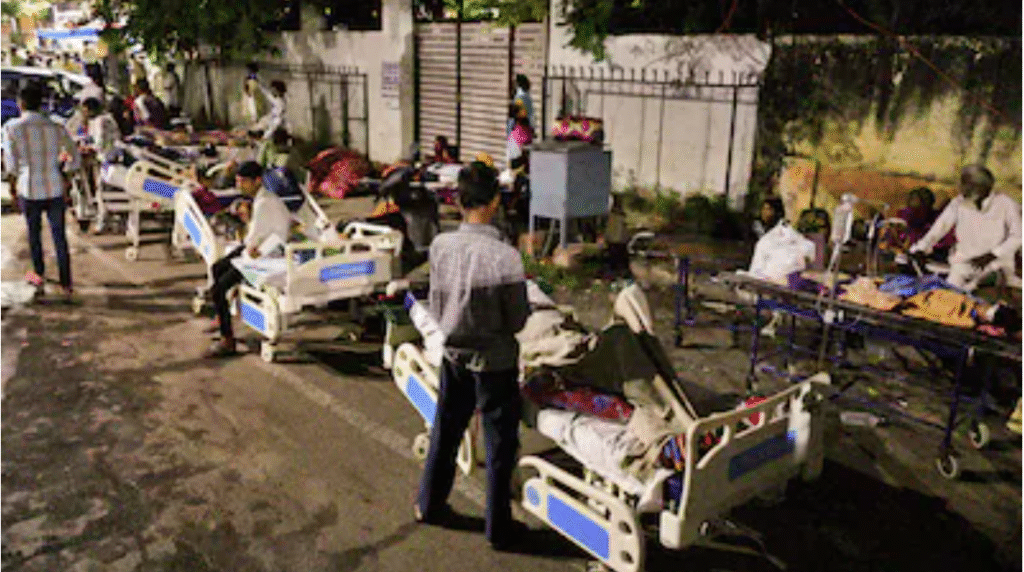 1 / 11
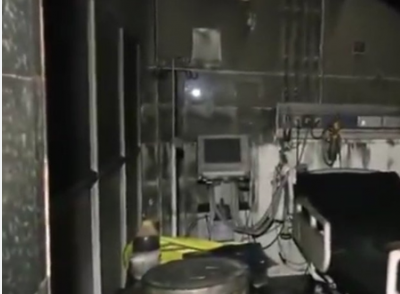
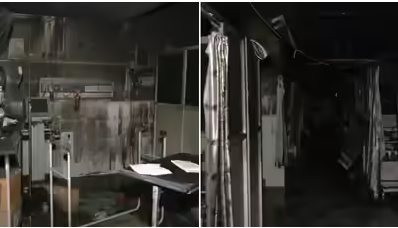
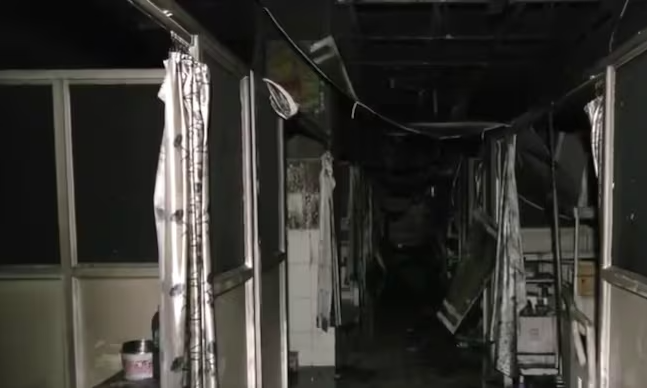
 A late-night ICU fire and toxic smoke killed critically ill patients at Jaipur’s government SMS Hospital; later NHRC reporting recorded eight deaths and three critical injuries.
📅 Date & Location of Incident
Date: 5 October 2025
Location: Sawai Man Singh Hospital (SMS), Jaipur, Rajasthan, India
🕯 What Happened?
On the night of October 5, 2025, a devastating fire broke out inside the Medicine Department of the old building at SMS Hospital, Jaipur — one of Rajasthan’s largest and busiest government hospitals.
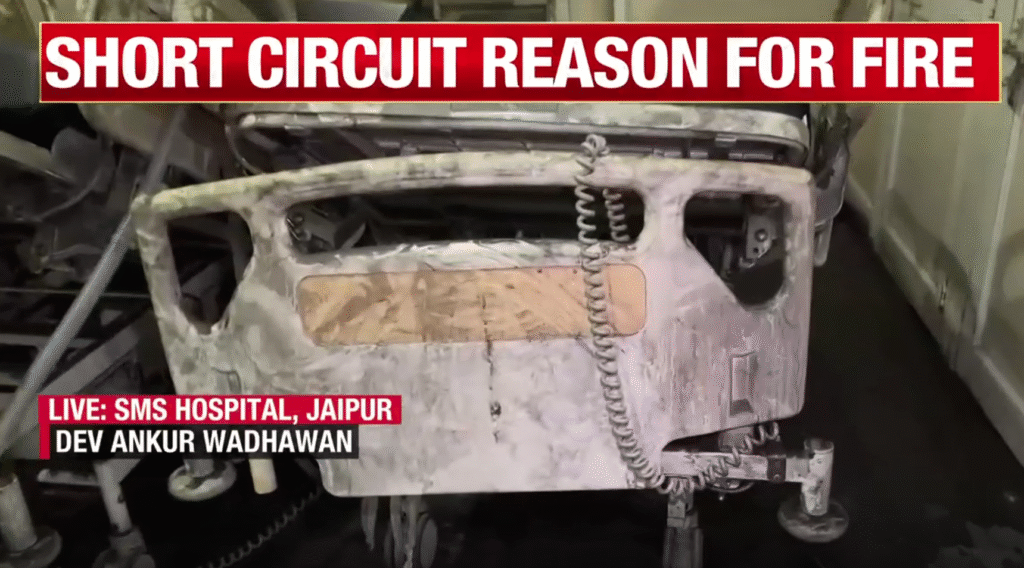
- The fire began around 11:30 PM on the second floor, reportedly due to a short circuit in the AC system.
- It quickly engulfed wards 1 and 2, where patients on oxygen support were asleep.
- Thick smoke spread rapidly, suffocating patients in adjacent rooms.
- Staff and guards panicked; fire alarms failed to ring, and many patients were not evacuated in time.
- By the time firefighters reached and doused the blaze, 6 patients had died — not due to burns, but due to suffocation from smoke inhalation.
- Several others are being treated for respiratory distress.
🔍 Core Mistakes / What Went Wrong?
- ❌ No functional fire alarm or smoke detector in the building
- ❌ No evacuation SOP or trained emergency response in place
- ❌ Lack of oxygen supply shut-off — oxygen-fed fire risk
- ❌ Negligent wiring and overloaded circuits — known issue ignored
- ❌ Staff panicked, no chain of command during crisis
- ❌ No fire blanket, LSBs, or emergency kits near the ward
- ❌ Patients on beds left unattended for minutes during chaos
⚖ Truth You Must Know
🔴 This fire didn’t spread much — but smoke killed 6 patients in their sleep.
🔴 The building was old, had no fire NOC, and had faced complaints before.
🔴 No safety audit was conducted despite being a public hospital with thousands of footfalls daily.
🔴 Families were not informed immediately — many heard of deaths via media before official confirmation.
🔴 Most government hospitals in India lack basic fire safety protocols — including SMS.
🧯 How This Could Have Been Prevented
- ✅ Proper fire audit and fire NOC renewal
- ✅ Smoke detectors and alarms installed and tested
- ✅ Emergency oxygen shut-off systems in place
- ✅ Fire safety training and mock drills for staff
- ✅ Placement of Safety Equipments and fire extinguishers in every ward
- ✅ Clear emergency signage and evacuation plans on every floor
- ✅ Redundant power & AC systems with surge protection
🛡 How to Survive This Situation (For Patients & Caregivers)
🚨 If you’re inside a hospital during fire/smoke:
- Cover mouth and nose with cloth (wet if possible)
- Crawl low to avoid smoke rising above
- Unplug oxygen or electric devices if fire is near
- Avoid elevators, use stairs
- Stay close to windows if stuck — shout or signal
- Learn how to lift and move bedridden persons using blankets
- Know 101 (Fire), 108 (Ambulance), hospital emergency extension
📊 Stat/Data Box
| Metric | Data |
|---|---|
| Deaths in SMS fire | 6 (All from suffocation) |
| Time of fire | 11:30 PM |
| Fire dept arrival time | ~20–25 mins |
| Fire safety compliance in Indian govt hospitals | <25% (MoHFW unofficial estimate) |
| Fire deaths in Indian hospitals (2020–2025) | 80+ across 40+ incidents |
| Prior fire drills at SMS | None in last 1 year (as per staff quotes) |
📽 Visuals











🙏 Voices That Matter
“My father died in his sleep — not a single nurse came for 20 minutes.”
— Son of one of the deceased patients
“There was no fire alarm, no warning. We saw smoke and started running.”
— Hospital staff member, anonymous
“Old building, poor wiring, no preparedness — this was a tragedy waiting to happen.”
— Fire safety expert, Jaipur
📢 Systemic Lesson
- Fire doesn’t just burn — it suffocates first.
- Public hospitals must be legally bound to have fire NOC, drills, and active detection systems.
- Government audit mechanisms are broken — a special state-level Fire & Health Joint Taskforce is needed.
- No new hospital should open without complete fire readiness, and existing ones must comply within 6 months.
💡 What You Can Do Today
✅ If you’re in a hospital: ask about the nearest exit & safety protocol
✅ If you’re a hospital administrator: conduct safety audit within 30 days
✅ If you’re a policymaker: make fire safety NOC mandatory with real-time audits
✅ Educate your family on survival basics
✅ Share this case with health officials, hospital heads, and citizens
🔚 Closing Line
“They went to the hospital to live — but died because no one knew how to protect them.”
🛡 This is why we started HowToSurvive.in — so no life is lost due to silence or ignorance.
- Critically ill patients occupy trauma wards
- Fire develops in the neuroscience/trauma ICU
- Rescue and patient movement become difficult
- Staff and responders shift patients on trolleys
- Officials are removed; contractor action and inquiry follow
Why consequences escalated
- ICU evacuation depends on trained staff and available trolleys
- Smoke control and compartmentation are as important as extinguishment
- Electrical systems in equipment-dense ICUs require continuous inspection
- Alarm and maintenance complaints need accountable closure
- Hospital incident command must identify every patient immediately
Failures and risk multipliers
- Allowing ignition work near fuel or vulnerable occupants
- Failing to maintain alarms, pumps, suppression and protected exits
- Relying on one escape or external rescue
- Failing to provide responders with accurate hazard information
- Leaving defects open without an accountable owner
People closest to the evidence
““Safety lesson””
Detection, maintained systems, protected escape and accurate emergency information must work together.
Actions that reduce risk
- Test alarms, pumps and emergency lighting
- Walk every exit to open air
- Separate hot work from combustible or flammable material
- Confirm assisted-evacuation roles
- Keep responder access clear
- Record defects with owners and deadlines



Leave a comment