
What happened here
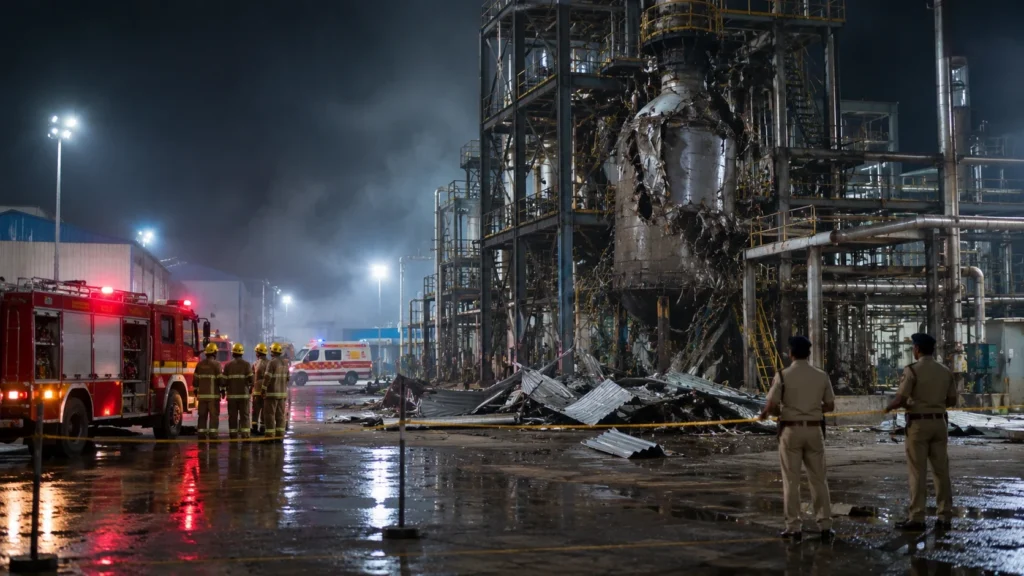
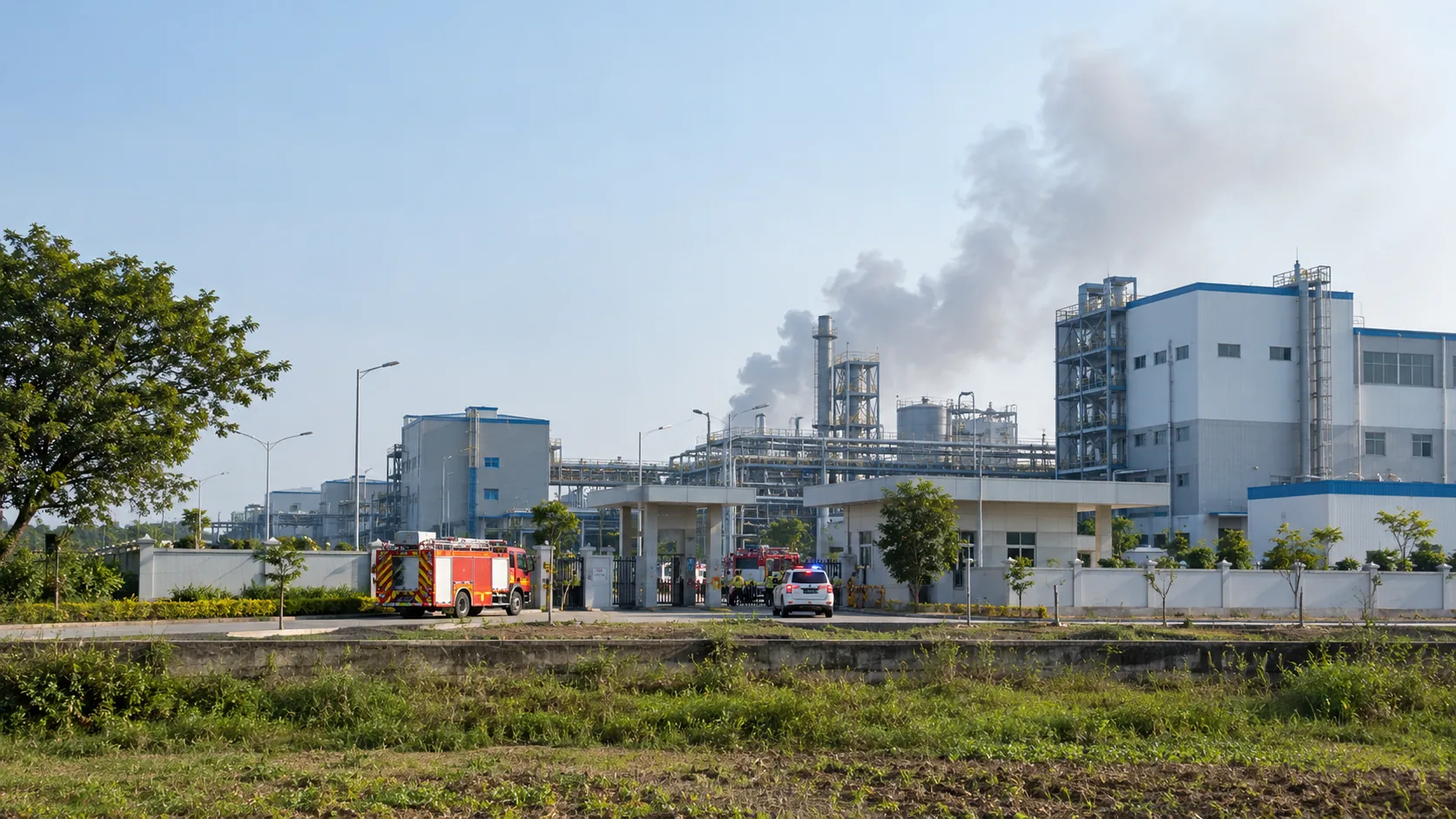
A reactor exploded during a hydrogenation process at SynZeal Pharmachem in Saykha GIDC, Vagra taluka, Bharuch, at about 10 pm on 16 October 2026, killing five workers and injuring five, according to the Bharuch SP. A DISH official said the blast set off a leak of methylene dichloride gas. The unit has been served a closure notice; the cause is still under investigation.
Quick answers
How many people died in the Saykha GIDC blast?
Five workers, according to Bharuch SP Akshyaraj Makwana (PTI). He said five more were injured; some reports put the injured at six or four.
What exploded at SynZeal Pharmachem?
A reactor, reported as 15 kilolitres, during a hydrogenation process, according to Bharuch SDM Manisha Manani and IANS. The exact cause has not been established.
Which gas leaked after the blast?
A DISH official told PTI the blast triggered a leak of methylene dichloride (MDC), a solvent. Workers reported eye irritation.
Has any action been taken against the company?
The authorities served a closure notice and police registered an accidental death case at Vagra police station. No FIR naming anyone or arrest had been reported by 19 October 2026.
Has Saykha GIDC had blasts before?
Yes. On 12 November 2025, a blast at Vishalyakarni Pharmachem in the same estate killed at least two workers and injured about 20.
What happened
Late on Friday, 16 October 2026, a reactor exploded at the SynZeal Pharmachem unit in the Saykha GIDC industrial estate, Vagra taluka, Bharuch district, and five workers were killed. Officials quoted by PTI put the time at about 10 pm. Other reports differ: Loktej and The Blunt Times said between 10.30 and 11 pm, and The New Indian Express said 11 pm.
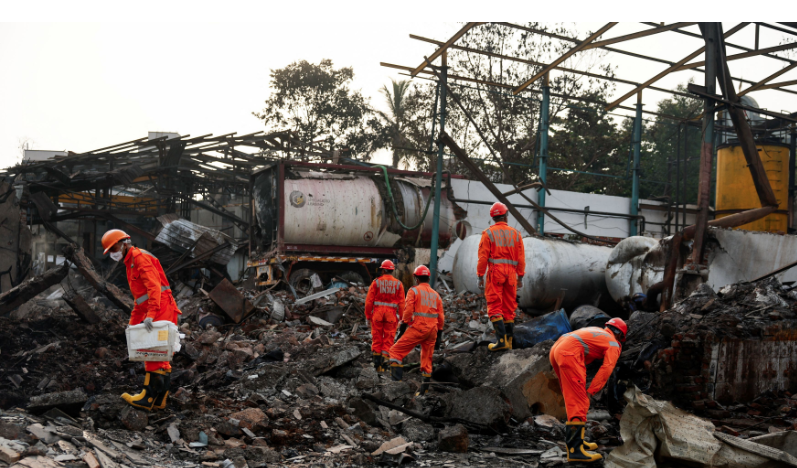
Bharuch Sub-Divisional Magistrate Manisha Manani told PTI that the unit was set up in Saykha only about a year ago and makes pharma intermediates. She said the blast, suspected to have happened during a hydrogenation process, was so strong that it ripped the reactor tank apart and scattered machinery parts across the premises. IANS and Gujarat Samachar reported that the reactor held about 15 kilolitres (15,000 litres).
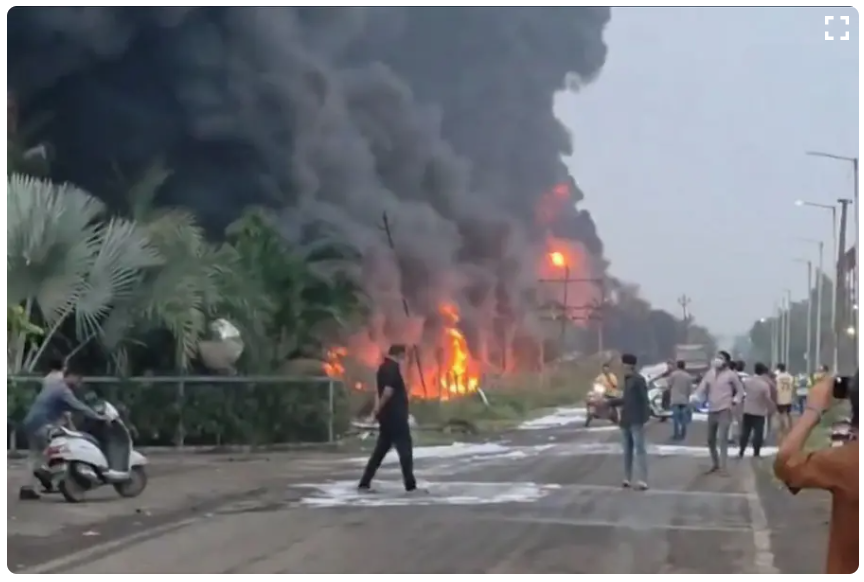
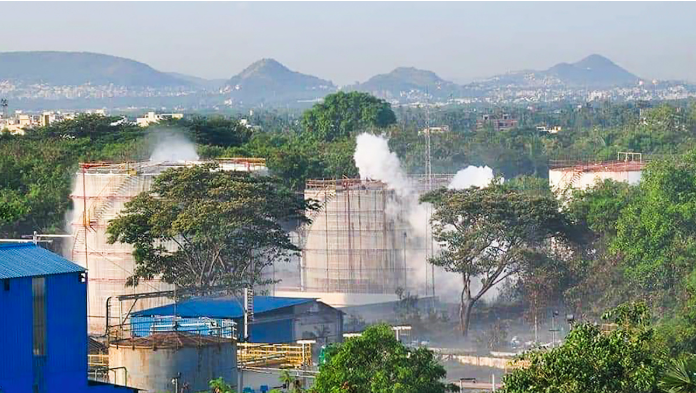
An official of the Directorate of Industrial Safety and Health (DISH) told PTI that the blast triggered a leak of methylene dichloride (MDC), a solvent also called dichloromethane. IANS reported that the area was covered in dust and haze and that workers complained of severe eye irritation. Several Gujarati and English outlets said the bang was heard up to 15 km away. Connect Gujarat reported that heavy pieces of the hydrogenator and reactor were thrown up to about 500 metres, breaking glass at nearby units and bursting the tyre of a tractor parked about half a kilometre away.
The people
Bharuch Superintendent of Police Akshyaraj Makwana told PTI that five people were killed and five were injured. Police released the names. Two of the dead were from Amod in Bharuch district, one was from Talala in Gir Somnath district and two were from Uttar Pradesh. Navgujarat Samay reported that one of them was a shift in-charge and that the dead included permanent staff and young contract workers. The five injured workers are from Bihar and Uttar Pradesh, the SP said.
Reports of the injured differ: five (the SP, via PTI), six (IANS, Gujarat Samachar and Deccan Chronicle) and four (Connect Gujarat). The bodies were taken to Bharuch Civil Hospital and the injured to private hospitals in Bharuch and Vadodara, according to IANS and Navgujarat Samay. The first night’s reports were confused. The Times of India and Sandesh first reported one death before the count rose to five, and The New Indian Express said about 20 workers were reportedly on duty. We are not publishing the names of the workers on this page.
Response and investigation
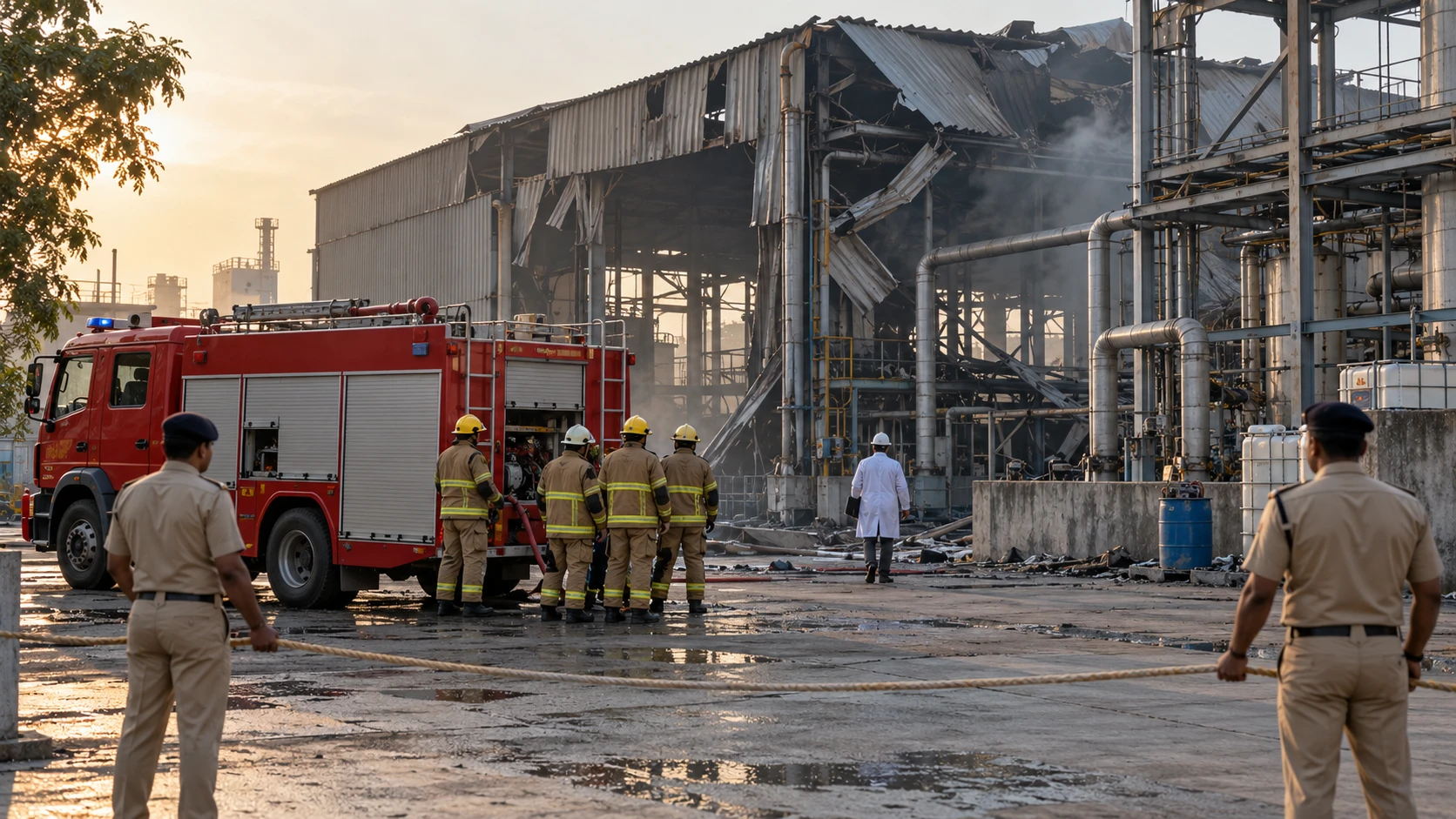
Police, the Mamlatdar, fire tenders and ambulances reached the site, The New Indian Express reported. Officials from DISH, the Gujarat Pollution Control Board (GPCB) and the police began a joint inquiry into the cause and into whether safety rules were followed.
All India Radio’s News On Air reported on 17 October 2026 that the authorities had served the company a closure notice and that a case of accidental death had been registered at Vagra police station. Connect Gujarat also reported the closure notice, with all plant processes ordered to stop. The reports we read did not name the authority that issued the notice.
When we checked on 19 October 2026, we found no report of an FIR naming anyone, an arrest, a compensation announcement by the company or the state, or a published finding on the cause. Gujarat Pradesh Congress general secretary Sandeep Mangrola demanded Rs 75 lakh for the family of each worker who died and Rs 25 lakh for each injured worker, The New Indian Express reported. A 78-year-old local resident alleged to the paper that the full picture had not been disclosed; his claims have not been independently checked.
Why this matters
Hydrogenation means reacting a chemical with hydrogen gas, usually inside a closed reactor under pressure and with a catalyst. Hydrogen catches fire very easily, and solvents such as MDC are often used in the same batch. When a reactor like that fails, people nearby get the blast, flying steel and a toxic cloud at the same time. Officials have not yet said what went wrong at SynZeal, so none of this is a finding about this unit. It is the reason such work needs strict pressure control, relief devices and a tested emergency plan. Our guide to boiler explosions and factory fires covers the warning signs.
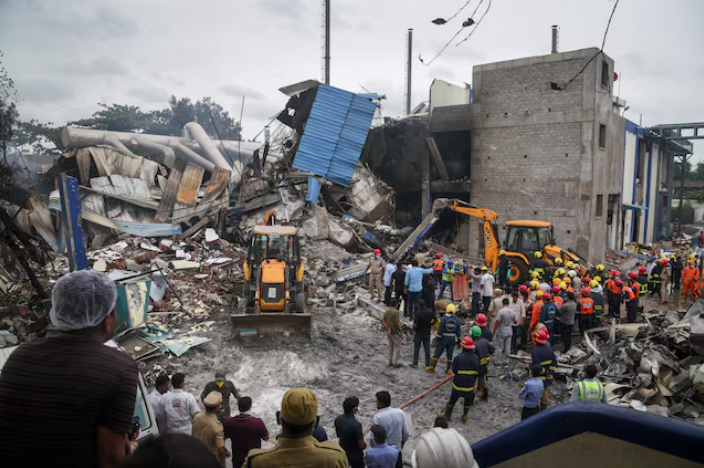
This was not the first blast at Saykha. On 12 November 2025, an explosion at Vishalyakarni Pharmachem in the same estate killed at least two workers and injured about 20, and the factory structure collapsed, according to The Hindu (PTI) and The Times of India. At the time, local industrialists told ETV Bharat that such accidents had increased at Saykha in the past few years. The SynZeal blast also came a day after four workers died at a dye unit in Gandhinagar district, in the Chhatral GIDC blast on 15 October 2026. Our earlier case on the Panoli GIDC factory fire covers another fire in the Bharuch-Ankleshwar belt.
Gujarat reported 221 deaths in registered factories in 2023, the highest of any state that sent data, according to the DGFASLI Standard Reference Note 2024. It also reported 407 dangerous occurrences that year, out of 975 across India. Our explainer on risks in Gujarat’s GIDC estates looks at what this means for workers and for the villages around them.
Lessons for chemical and pharma units
- Treat every hydrogenation batch as high-risk work. Run it to a written procedure, with pressure, temperature and hydrogen flow watched throughout, and stop the batch if a reading drifts.
- Keep relief devices working. Safety valves and rupture discs on reactors must be tested and replaced on schedule, and never blocked or bypassed to keep production going.
- Keep people away from a running reactor. Only the operators who are needed should be in the reactor area during a pressure batch, especially at night when staff numbers are low.
- Plan for the gas as well as the blast. Every unit handling solvents should have a toxic release plan, a wind sock, a clear assembly point upwind and breathing protection that workers have practised with.
- Keep a headcount that works at night. Shift in-charges should know exactly who is inside each block, so rescuers are not left guessing after a blast.
- Train contract and migrant workers in their own language. They often run the night shifts with the least induction.
If there is a blast or gas leak where you work
- Move away from the damaged plant at once, across or into the wind, never downwind into the haze.
- Cover your nose and mouth, and do not go back inside to collect anything or to search for people.
- If your eyes or skin are burning, rinse them with plenty of clean running water and get medical help. Move anyone who is coughing or dizzy to fresh air.
- Call 112, the fire brigade on 101 or an ambulance on 108. Tell them which chemicals are in the plant and who is still missing.
- People living near an estate should shut doors and windows and follow police instructions if a toxic gas leak is reported.
What is still not known
The exact cause of the blast, what was in the reactor apart from the reported MDC, how much gas escaped, the condition of the injured, and whether the unit’s licences, safety audit and emergency plan were in order have not been officially confirmed. The authority behind the closure notice, any FIR sections and any compensation are also not public. Reports differ on the time of the blast and the number injured. We will update this page when DISH, GPCB or the police publish findings.
- Earlier blast at Vishalyakarni Pharmachem in Saykha GIDC kills at least two workers and injures about 20 (The Hindu, TOI)
- Four workers die in the Chhatral GIDC blast in Gandhinagar district
- Reactor explodes during hydrogenation at SynZeal Pharmachem, Saykha GIDC; MDC gas leaks (PTI)
- Police, Mamlatdar, fire tenders and ambulances reach the site; first reports give one death
- Bharuch SP confirms five dead and five injured; SDM and a DISH official describe the hydrogenation blast
- Closure notice served and accidental death case registered at Vagra police station (News On Air)
- No FIR naming anyone, arrest, compensation or cause finding located in published reports
Why consequences escalated
- Five workers died and at least four to six were injured; the SP's figure is five injured.
- Officials say the blast happened during a hydrogenation process and tore the reactor tank apart.
- A DISH official said the blast caused a leak of methylene dichloride gas.
- The unit had been running in Saykha for about a year.
- The authorities served a closure notice and police registered an accidental death case.
- Saykha GIDC had a fatal pharma-unit blast less than a year earlier, in November 2025.
Failures and risk multipliers
- The cause is not yet known; no official finding has been published.
- The New Indian Express reported confusion on the night over how many workers were trapped, evacuated or taken to hospital.
- Workers and people nearby were exposed to a solvent haze after the blast.
Actions that reduce risk
- Units: run every hydrogenation batch to a written procedure with pressure and temperature alarms.
- Units: test safety valves and rupture discs on schedule and keep the records.
- Units: keep only essential operators near a reactor during a pressure batch.
- Units: keep an accurate night-shift headcount for each block.
- DISH and GPCB: publish the inquiry findings so other units in the estate can learn from them.
Leave a comment