

Quick answers
Why do fires happen so often in GIDC and other industrial estates?
The usual reasons are chemicals stored badly, overloaded wiring, welding without a permit, untrained workers, fire systems that do not work, units running without valid clearances, and homes built right up to the estate wall.
What should people living near a GIDC estate do during a chemical fire?
Go indoors, shut doors and windows, and switch off fans and ACs that pull in outside air. Keep away from the smoke, follow police and fire brigade instructions, and call 108 if anyone has trouble breathing.
What should factory workers know about fire safety?
Know two exits from your section, the assembly point, and where the nearest extinguisher and alarm are. If the alarm sounds, leave at once and do not stop for stock.
How can ordinary people help prevent industrial fires?
Report leaking drums, dry hydrants, blocked exits and units that never hold drills to the factory inspectorate or the fire brigade. Ask for working hydrants and regular drills in your industrial cluster.
Gujarat is one of India’s biggest industrial states, and the Gujarat Industrial Development Corporation (GIDC) runs more than 200 industrial estates across it, from Vapi and Ankleshwar to Bharuch, Vadodara and Saurashtra. Many of these estates handle chemicals, solvents and gases. When something goes wrong in one unit, the workers pay first, and the smoke often reaches the homes and schools that have grown up around the estate.
What the numbers say
In February 2024, Gujarat’s labour minister told the state Assembly that 714 workers had died in industrial accidents in the three years from 2021 to 2023.
| Year | Registered factories | Deaths in industrial accidents |
|---|---|---|
| 2021 | 45,920 | 244 |
| 2022 | 47,762 | 238 |
| 2023 | 49,246 | 232 |
These numbers cover every kind of industrial accident, not only fires, and only registered factories. Deaths in small unregistered units are not in this count. In the same debate, an opposition MLA said Gujarat has 570 hazardous factories, the most of any state, with 98 in Bharuch and 89 in Vadodara.
There is no public, reliable year-by-year count of industrial fires in Gujarat’s estates. Earlier versions of this page quoted such figures without a source, and we have taken them out.
Why industrial fires hurt so many people
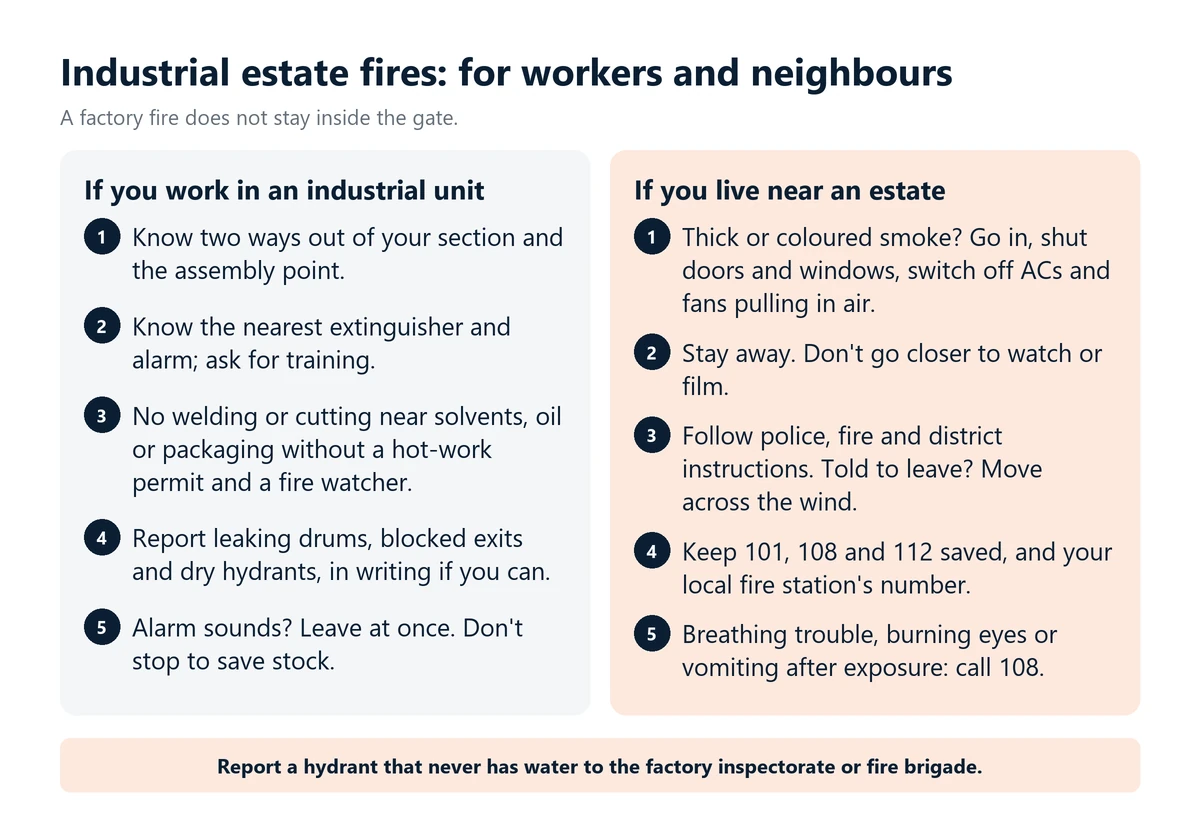
A factory fire does not stay inside the gate.
- Workers get trapped when exits are locked or blocked with stock.
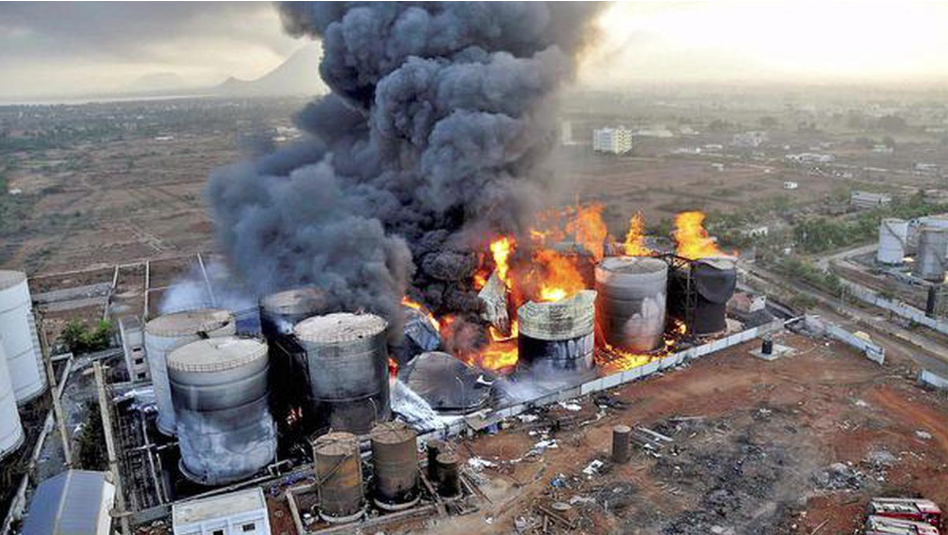
- Smoke from burning chemicals can carry toxic gases over nearby colonies, schools and hospitals.
- Fire water and spilt chemicals can run into drains, soil and rivers.
- Panic and rumours spread when nobody tells residents what is burning.
Visakhapatnam showed this in May 2020. Styrene vapour leaked from the LG Polymers plant at night and spread into the villages around it. The National Disaster Response Force put the toll at 13, and more than 1,000 people were reported ill. It was a leak, not a fire, but it exposed the same gaps: poor upkeep inside the plant, and neighbours who did not know what to do.
Why industrial fires keep happening
- Chemicals stored badly. Solvents kept near heat or sparks, or chemicals that react with each other stored side by side.
- Electrical faults. Machines running on overloaded or poorly kept circuits.
- Hot work without a permit. Welding and cutting near flammable material with nobody watching for fire.
- Untrained workers. Many workers, especially contract and migrant workers, have never been shown an exit route or an extinguisher.
- Dead fire systems. Dry hydrants, capped sprinklers, expired extinguishers.
- Missing clearances. Units running without valid fire and safety approvals.
- Homes too close. Housing has grown right up to estate boundaries, so residents are exposed.
If you work in an industrial unit
- Know two ways out of your section and where the assembly point is.
- Know where the nearest extinguisher and fire alarm are, and ask for training if you have never used them.
- Never weld or cut near solvents, oil or packaging without a hot-work permit and someone watching for fire.
- Report leaking drums, blocked exits and dry hydrants to your supervisor and safety officer, in writing if you can.
- If the alarm sounds, leave at once. Do not stop to save stock.
If you live near a GIDC estate
- If you see thick or coloured smoke from a nearby factory, go indoors, shut doors and windows, and switch off ACs and fans that pull in outside air.
- Stay away from the smoke. Do not go closer to watch or film.
- Follow instructions from the police, fire brigade and district administration. If you are told to leave, move across the wind direction, not with it.
- Keep 101 (fire), 108 (ambulance) and 112 saved, along with the number of your local fire station.
- If someone has trouble breathing, burning eyes or vomiting after exposure, call 108.
What needs to change
- Every large industrial cluster needs a well-equipped fire station of its own, close enough to reach any unit quickly.
- Fire and safety compliance of factories should be published for the public to see.
- Workers, including contract workers, should be trained as first responders and should practise drills.
- Chemical stores need monitoring for temperature, pressure and leaks.
- Owners and officials who let unsafe units run should both be held to account.
Speak up
A fire in an estate touches workers, their families and whole towns. If you see drums leaking into a drain, a hydrant that never has water or a unit that has never held a drill, report it to the factory inspectorate or the fire brigade. One report can stop the next fire.
What needs attention
- Gujarat recorded more than 230 industrial-accident deaths in each year from 2021 to 2023
- The official count covers registered factories only, so the real toll is likely higher
- There is no public year-by-year count of fires in GIDC estates
- Bad chemical storage, electrical faults and unsafe hot work are common starting points
- Housing built close to estates puts residents in the path of smoke and gas
- Vizag 2020 showed how a plant incident at night can harm whole villages
Controls that reduce risk
- Train every worker, including contract staff, on exits, alarms and extinguishers
- Use hot-work permits and a fire watch for all welding and cutting
- Store chemicals apart as their safety data sheets say
- Test hydrants, pumps and sprinklers on schedule and fix faults at once
- Share an off-site emergency plan with nearby residents and schools
- Report unsafe units to the factory inspectorate or fire brigade
Common unsafe practices
- Storing solvents and incompatible chemicals together or near heat
- Welding or cutting without a hot-work permit and fire watch
- Leaving contract workers untrained on exits and extinguishers
- Letting hydrants run dry and sprinklers stay capped
- Running a unit without valid fire and safety clearances
- Residents going closer to film the smoke instead of sheltering indoors

Leave a comment