
What happened here
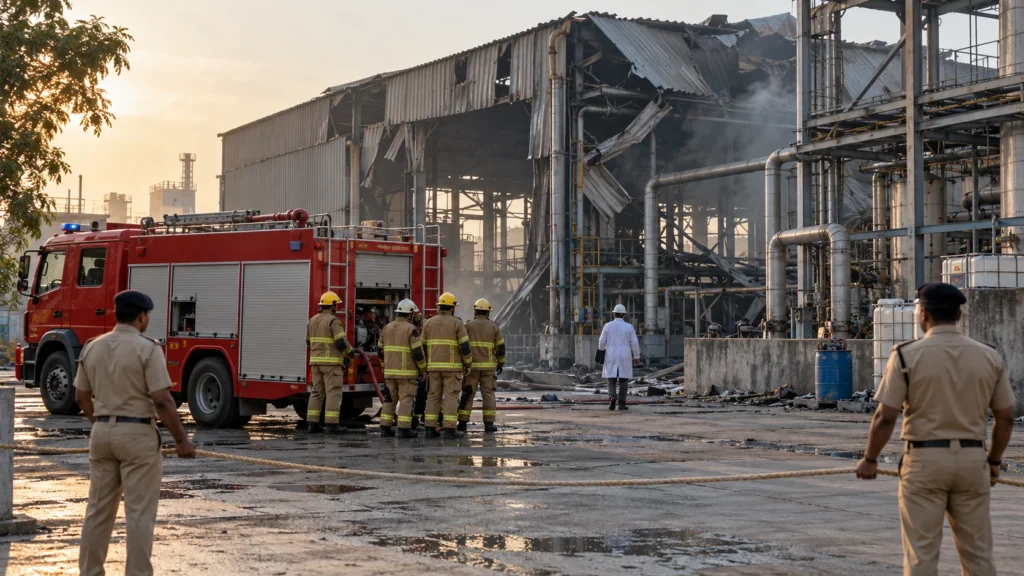
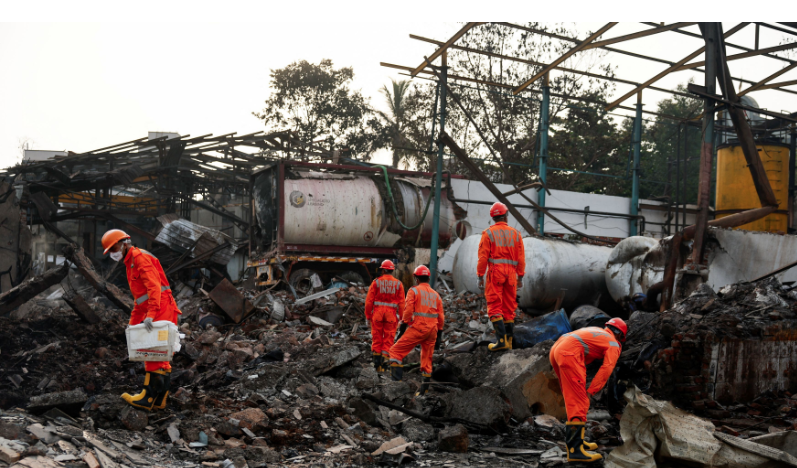
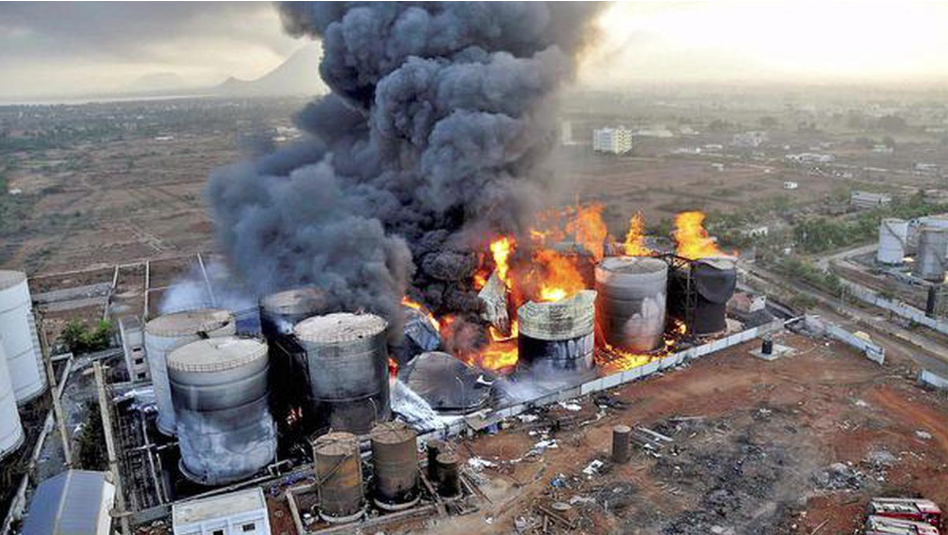
An explosion at a dye-making unit in Chhatral GIDC Phase-4, Kalol, on the afternoon of 15 October 2026 killed four migrant workers on the spot. Police say a pipe or a reduction vessel may have failed under excess pressure during pipe-fitting work; a fire followed and was controlled. The FSL report will decide the cause.
Quick answers
How many people died in the Chhatral GIDC blast?
Four workers, confirmed by Gandhinagar SP Ravi Teja Vasamsetty on 15 October 2026. All were migrant workers, three from Jharkhand and one from Rajasthan. No other injuries were reported in coverage reviewed through 16 October 2026.
Was it a boiler blast?
Early headlines called it a boiler blast. Police said a pipe may have burst under pressure during pipe-fitting work near a boiler vessel, and that a mechanical failure in a reduction vessel is suspected. The cause will be confirmed only after the FSL report.
Which company was involved?
Kovika Dyes & Intermediates, a textile-dye maker in Chhatral GIDC Phase-4, Kalol taluka, Gandhinagar district. Some reports call it Kovika Color Company.
Has anyone been arrested?
No FIR naming anyone and no arrest had been reported by the morning of 16 October 2026. Police said an accidental death case was being registered.
What should workers do before fitting work on a pressure line?
Get a written work permit, make sure the line is isolated and locked, vent it, and check that the gauge reads zero before any joint is opened.
What happened
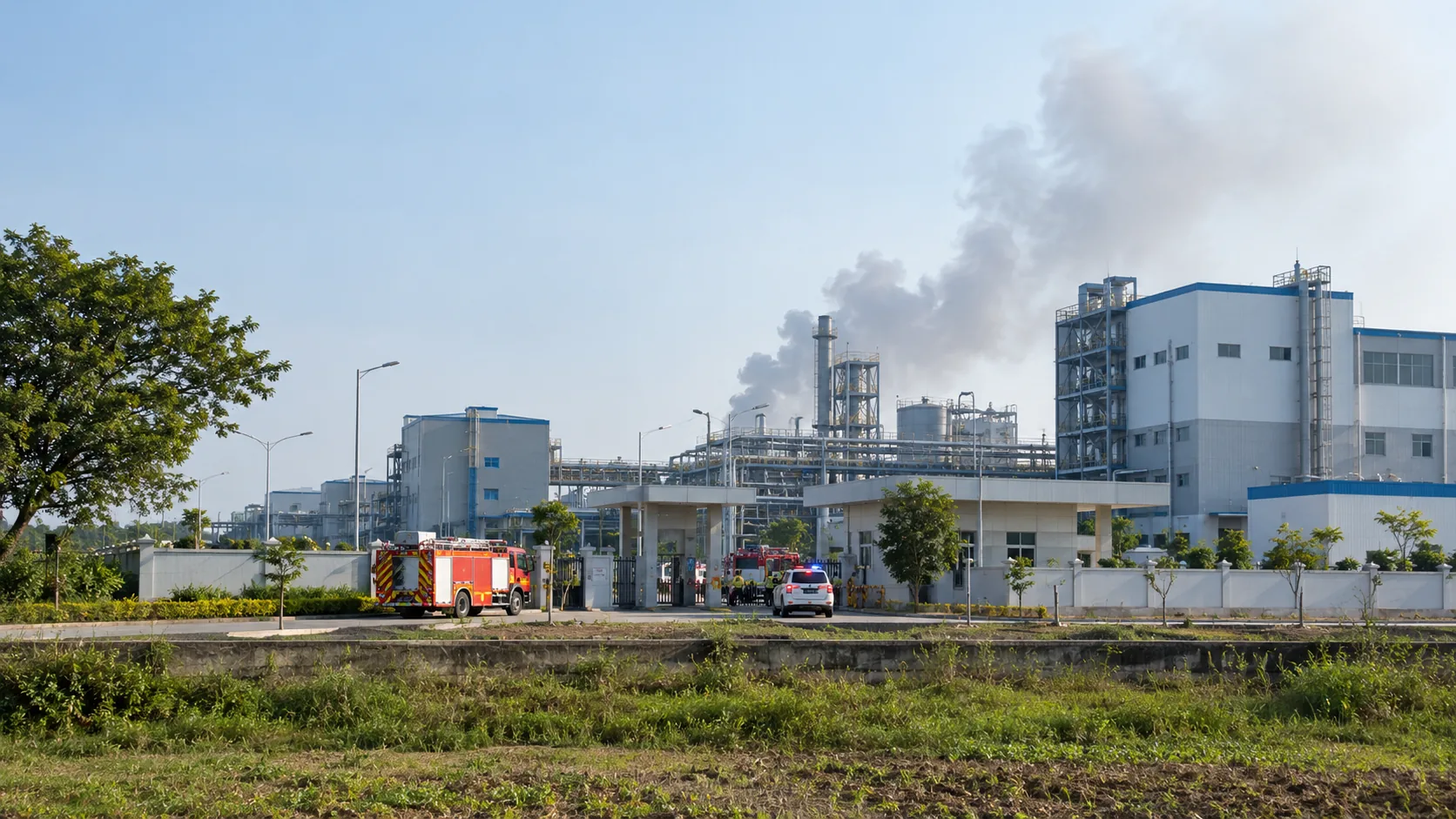
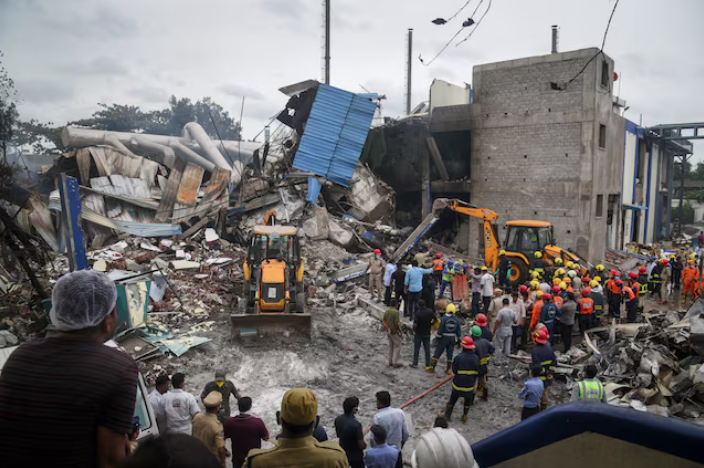
On the afternoon of Thursday, 15 October 2026, an explosion at the Kovika Dyes & Intermediates unit in Phase-4 of the Chhatral GIDC industrial estate, Kalol taluka, Gandhinagar district, killed four workers. The unit makes textile dyes. Some reports call it Kovika Color Company.
Gandhinagar Superintendent of Police Ravi Teja Vasamsetty confirmed the four deaths. According to PTI, Inspector J J Gadhavi of Kalol Taluka police station said the blast happened while pipe-fitting work was going on near a boiler vessel, and that preliminary findings suggest a pipe may have burst under pressure. Speaking to ETV Bharat, the same officer said preliminary checks point to a mechanical failure in a reduction vessel, with excess pressure inside it suspected.
Most early headlines called it a boiler blast. The police descriptions point to a pressure vessel and pipework rather than a steam boiler, so we call it an explosion until the forensic report is out. Reports also differ on the order of events: most say the blast came first and a fire followed, while Dainik Jagran reported that the fire broke out first.
The workers who died
All four were migrant workers, three from Jharkhand and one from Rajasthan. PTI, quoting Inspector Gadhavi, named them as Vinodkumar Nandlal Singh, 42, of Jharkhand; Teda Dehari, 18, of Jharkhand; Sikandar Lakhan Dehari, 40, of Jharkhand; and Laxman Meena of Udaipur. Other outlets give different spellings and ages: Amar Ujala gave Teda Kalu Dehari’s age as 25 and listed the fourth worker as Laxman Bheel, and NewsX gave one age as 29. Treat these details as provisional until an official list is published.
Local reports said the four died on the spot. No other injuries had been reported when this page was checked on 16 October 2026.
Response and investigation
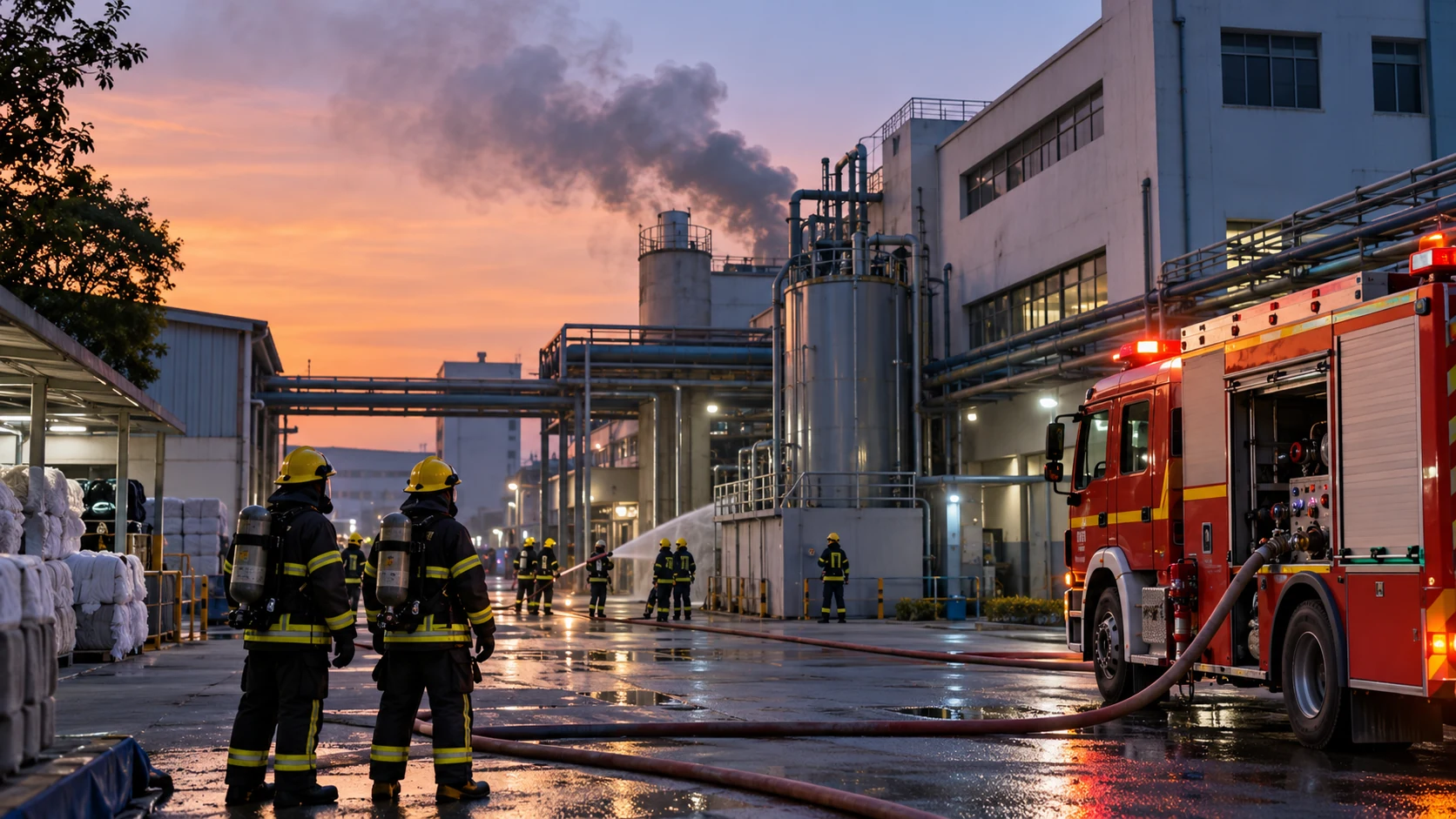
Kalol Taluka police, the fire brigade, the Prant officer (SDM), the Mamlatdar and a Forensic Science Laboratory (FSL) team reached the site, and the fire was brought under control. Kalol MLA Laxmanji Thakor also went to the spot, according to Gujarat First.
Inspector Gadhavi told PTI that post-mortem examinations and the process of registering an accidental death case were under way. SP Vasamsetty said the FSL would collect samples to check whether flammable substances or negligence were involved, and that Gujarat Pollution Control Board officials would also visit. Gadhavi told ETV Bharat that, as per preliminary information, the company held a fire NOC and other required approvals. He said the exact cause would be clear only after the FSL report.
By the morning of 16 October 2026 we could not find any report of an FIR naming anyone, an arrest, a compensation announcement or a published finding on the cause.
Why this matters
Explosions at chemical and dye units in Gujarat’s industrial estates are not rare. Pressure vessels, reactors and the pipes connected to them hold a huge amount of stored energy. When a pipe joint, valve or vessel gives way, the people standing closest have almost no time to react. Maintenance and fitting work on or near such equipment is one of the riskiest jobs in a plant, especially if the line has not been fully isolated and depressurised first.
Registered factories in India reported 5,308 deaths between 2019 and 2023, according to the Directorate General Factory Advice Service and Labour Institutes (DGFASLI). That figure does not include every state for every year, so the real number is likely higher.
Lessons for factories and workers
- Isolate before you open a line. No pipe-fitting on a line or vessel that may still be under pressure. Close and lock the valves, vent the pressure, check the gauge reads zero, and use a written work permit.
- Keep relief devices working. Safety valves, rupture discs and pressure gauges on vessels must be tested and calibrated on schedule, and never blocked or bypassed.
- Keep people away during start-up and pressure tests. Only the people needed should be near equipment when it is being pressurised.
- Train migrant and contract workers in their own language. They often do the riskiest jobs with the least induction.
- Workers can refuse unsafe work. If you are asked to open a line that is hot, hissing or showing pressure, stop and report it to the supervisor or safety officer.
What is still not known
The exact equipment that failed, why the pressure rose, whether the line was isolated before work began, and whether safety procedures were followed have not been officially confirmed. The FSL report, any Directorate of Industrial Safety and Health (DISH) inquiry and police action are awaited. We will update this page when official findings are published.
- Explosion at the Kovika Dyes unit in Chhatral GIDC Phase-4 during pipe-fitting work near a vessel (PTI); four workers die on the spot
- A fire follows the blast and is brought under control; police, fire brigade, Prant officer, Mamlatdar and an FSL team reach the site
- SP Ravi Teja Vasamsetty confirms four deaths; Inspector J J Gadhavi says post-mortems and an accidental death case are under way
- Police say a pipe or reduction vessel may have failed under excess pressure; FSL to test samples and GPCB officials to visit
- No FIR, arrest, compensation or cause finding located in published reports
Why consequences escalated
- Four workers died in the blast; no other injuries were reported.
- Police say the blast happened during pipe-fitting work near a pressure vessel.
- The preliminary police account points to excess pressure in a pipe or reduction vessel, not yet confirmed.
- Headlines called it a boiler blast, but the police description points to a process vessel.
- The company had a fire NOC and other approvals, according to preliminary police information.
Failures and risk multipliers
- Doing fitting or repair work on a line or vessel that may still hold pressure.
- Too many workers standing close to equipment during work under pressure.
- Relief valves, rupture discs or gauges that are not tested on schedule.
- Safety training for migrant and contract workers that is not in their language.
Actions that reduce risk
- Use a written work permit and lock-out for any work on pressurised lines or vessels.
- Vent and confirm zero pressure on the gauge before opening a joint or flange.
- Test safety valves and calibrate gauges on schedule, and keep the records.
- Keep everyone not needed for the job away from the equipment while it is pressurised.
- Train every worker, including contract staff, in a language they understand.
Leave a comment