
Quick answers
Should I put turmeric, chilli or oil on a dog bite?
No. The national guidelines call chilli, oil, turmeric, lime, salt and similar home remedies unnecessary and damaging. Wash the wound with soap under running water for 15 minutes, apply an antiseptic and go to a government health facility the same day. If something was already applied, wash it off gently with soap and water.
How long should I wash a dog bite wound?
For 15 minutes, with soap and running water, as soon as possible after the bite. If you have no soap, use plenty of running water. Then apply povidone-iodine or another antiseptic. Wash the wound even if you reach a tap or hospital late.
Do I need the rabies vaccine for a small scratch?
Usually yes. Under the national guidelines, a scratch or graze that does not bleed is a Category II exposure, which needs wound washing and the anti-rabies vaccine. Only a lick or touch on unbroken skin is Category I. The doctor decides the category.
The dog is our pet and has been vaccinated. Do I still need treatment?
See a doctor anyway. The national guidelines say post-exposure care should be given whatever the vaccination status of the biting animal, because a dog's vaccination does not prove it is protected. The doctor will decide what you need.
Can I wait 10 days to see if the dog stays healthy?
No. Treatment should start immediately. Watching the dog or cat for 10 days only helps the doctor decide whether the course can be shortened later. The 10-day watch does not apply to monkeys or other animals.
How many rabies injections are needed after a dog bite?
It depends on the route the hospital uses. The 2019 national guidelines give four visits on days 0, 3, 7 and 28 for vaccine into the skin, or five visits on days 0, 3, 7, 14 and 28 for vaccine into the muscle. Category III bites also need immunoglobulin, as the doctor decides.
Is the rabies vaccine safe in pregnancy or for a small baby?
Yes. The national guidelines say there is no contraindication to post-exposure care, and pregnancy, breastfeeding, infancy and old age are not reasons to skip it. Rabies itself is almost always fatal.
What should I do after a cat or monkey bite?
Exactly the same as for a dog bite: soap and running water for 15 minutes, an antiseptic and a government health facility the same day. Rabies in India has followed bites by cats, monkeys, mongooses and jackals.
I was bitten weeks ago and did nothing. Is it too late?
Go to a doctor now. The national guidelines say people who come even months or years after a possible exposure should be assessed and treated as if it had just happened.
A street dog snaps at your child on the way back from school. It is only a scratch on the shin, a little red, with no blood. Many families would put some haldi on it and forget about it. Under India’s national rabies guidelines, that small scratch still needs soap, running water and a doctor the same day, because once rabies starts, it is almost always fatal.
Rabies is still a real danger here. The National Rabies Control Programme (NRCP) says about 96% of rabies deaths and illness in India follow dog bites, and its national action plan notes that children make up about 40% of people bitten by dogs where rabies is common. States reported 37,15,713 dog bite cases to the national disease surveillance portal in 2024, up from 21,89,909 in 2022. The World Health Organization (WHO) puts it plainly: once symptoms appear, rabies is fatal in virtually 100% of cases, but deaths can be prevented with prompt care after the bite.
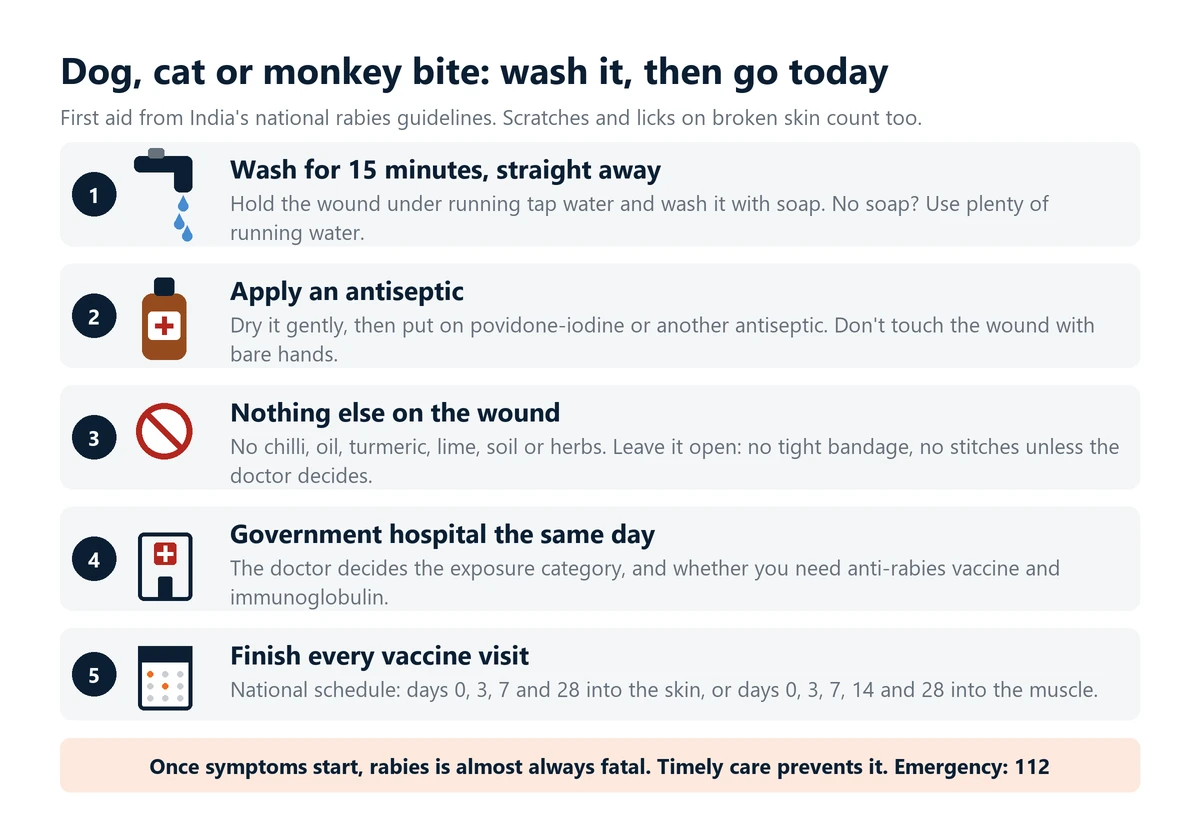
First aid in the first few minutes
This is the same for a bite, a scratch, or a lick on broken skin, whether it came from a dog, a cat or a monkey.
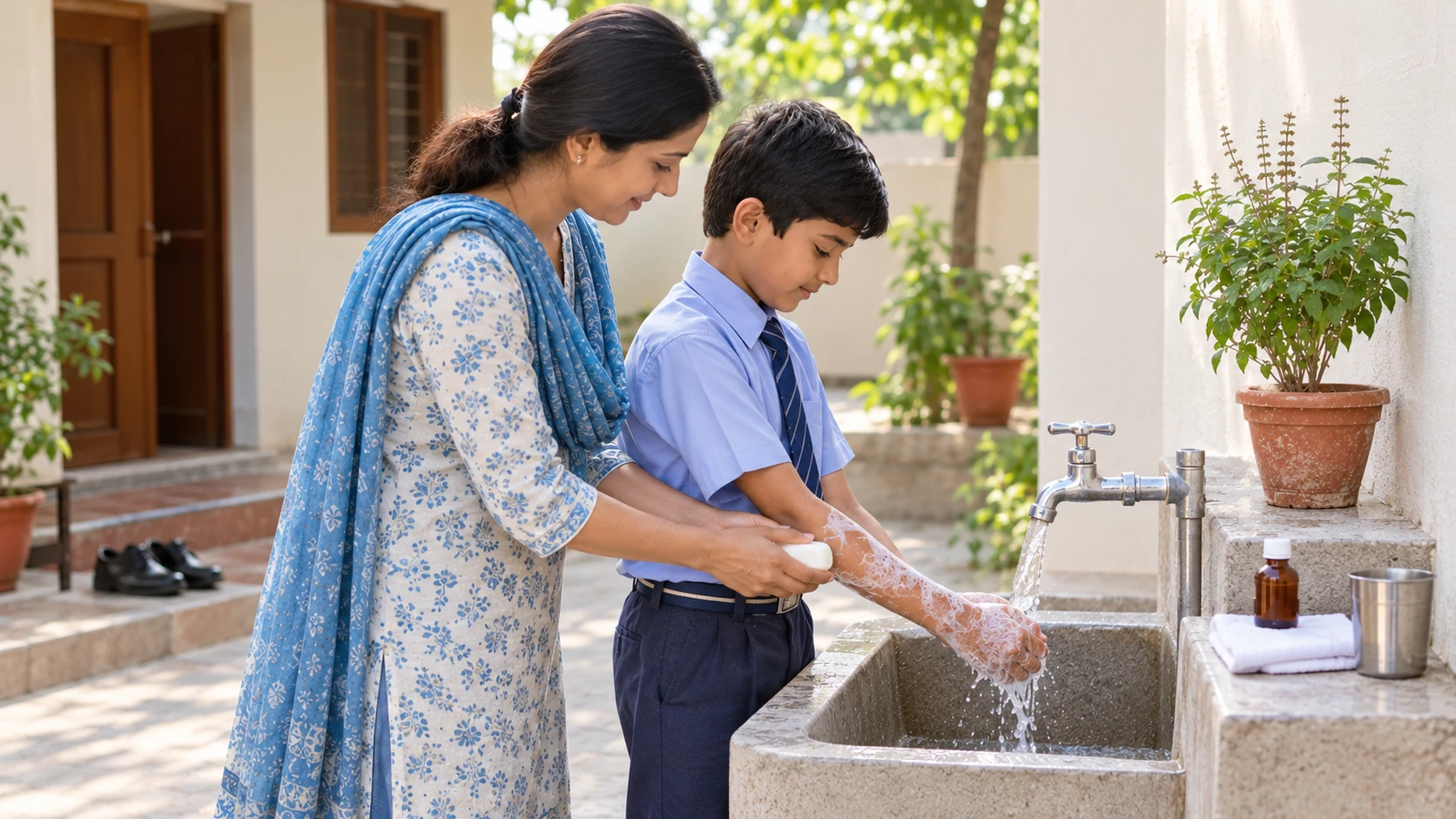
- Wash it at once, for 15 minutes. Hold the wound under running tap water and wash it with soap. The water flushes the animal’s saliva out and the soap helps to kill the virus. No soap at hand? Use plenty of running water and add soap as soon as you can. If saliva got into the eyes or mouth, rinse them well with water.
- Then apply an antiseptic. Pat the area dry with a clean cloth or gauze and put on povidone-iodine or another antiseptic. Do not touch the wound with bare hands.
- Put nothing else on it. No chilli, oil, turmeric, lime, salt, soil, herbs, chalk or betel leaves. The guidelines call these unnecessary and damaging. If someone has already applied them, wash them off gently with soap and plenty of water. Never burn the wound with acid, heat or a flame.
- Leave it open. Do not tie a tight bandage over the bite, and do not get it stitched at a local clinic. If stitches are really needed, the doctor will decide when, after giving the injections that go into the wound.
- Go to a government health facility the same day. Washing is only the first step. If the wound is bleeding heavily or the person is badly hurt, call 108 or 112.
For bleeding, shock and other emergencies, keep our basic first-aid guide handy as well.
Go to a government health facility the same day
Care after a possible rabies exposure is called post-exposure prophylaxis, or PEP. It has three parts, and all three matter equally: cleaning the wound, a course of anti-rabies vaccine and, when needed, rabies immunoglobulin. Under the NRCP, the government aims to keep anti-rabies vaccine and anti-rabies serum available at all levels of public health facilities, and funds states to buy them under the National Free Drugs Initiative. Ask for the anti-rabies clinic. The NRCP’s toll-free helpline, 15400, gives first-aid advice and tells callers where vaccine and serum are available; the programme currently lists it for Andhra Pradesh, Madhya Pradesh, Assam, Puducherry and Delhi.
- Do not wait to see if the dog stays healthy. The guidelines say treatment should start immediately. Watching the animal for 10 days applies only to dogs and cats, and it can only shorten the course later, as the doctor decides.
- A pet or “vaccinated” dog is no excuse to skip treatment. The guidelines say PEP should be given whatever the vaccination status of the animal, and a provoked bite should be treated like any other.
- Late is better than never. If you were bitten days, months or even years ago and did nothing, see a doctor now. The guidelines say such people should be treated as if the bite had just happened.
- Pregnancy, a small baby, old age or another illness are not reasons to skip it. The guidelines say there is no contraindication to PEP.
- Tell the doctor if you have had rabies vaccine before, or if you have weak immunity because of HIV, steroids or cancer treatment. The plan changes in both cases. Ask about a tetanus injection too.
What the doctor means by Category I, II and III
The doctor sorts every exposure into one of three categories. This is what they mean in plain words, from the national guidelines and the WHO.
- Category I: you touched or fed the animal, or it licked unbroken skin. This is not counted as an exposure. Wash the skin with soap and running water; no vaccine is needed if the history is reliable.
- Category II: the animal nibbled bare skin, or left small scratches or grazes that do not bleed. Wash, apply an antiseptic and start the anti-rabies vaccine.
- Category III: one or more bites or scratches that break through the skin, licks on broken skin, or saliva in the eyes or mouth. Wash, apply an antiseptic, start the vaccine and get rabies immunoglobulin. A bleeding wound anywhere on the body counts as severe, and all bites by wild animals are treated as Category III.
Only the doctor can decide the category. If you are unsure whether it “counts”, go anyway. The guidelines say that when in doubt, treatment should be started.
Vaccine and immunoglobulin, as decided by the doctor
The anti-rabies vaccine teaches your body to make its own antibodies, which takes time. Rabies immunoglobulin, also called anti-rabies serum, gives ready-made antibodies and is injected into and around the wound. The guidelines give it for Category III exposures, and for people with weak immunity in Category II as well. Whether you need it, and which kind, is the doctor’s call.
The National Guidelines for Rabies Prophylaxis 2019 set two vaccine schedules after a bite. Into the skin (intradermal): on days 0, 3, 7 and 28, which means four visits. Into the muscle (intramuscular): on days 0, 3, 7, 14 and 28, which means five visits. Day 0 is the day of the first injection, which should be as soon as possible after the bite. People who completed a rabies vaccine course before usually need only two visits, on days 0 and 3. The hospital decides the route and the amounts; your job is to turn up on every date.
Write the dates down and keep the vaccination card safe. The guidelines say most failures of treatment come from late vaccination, missing immunoglobulin in Category III, or a course left incomplete. The vaccine cannot give you rabies, because the virus in it is inactivated.
Cat bites and monkey bites
Dogs cause most cases, but the NRCP says human rabies has followed bites from cats, monkeys, mongooses, jackals, foxes and wolves. The first aid is exactly the same: soap and running water for 15 minutes, an antiseptic, and a government hospital the same day.
- Cats: a cat scratch can carry rabies just like a bite. The WHO also notes that a cat bite is about twice as likely as a dog bite to become infected.
- Monkeys: the WHO says two Indian studies found monkey bites to be the most common bite after dog bites, and that monkey bites can also pass on other infections. The 10-day watch does not apply to monkeys or any animal other than dogs and cats. Read more about monkeys and other wild animals coming close to homes after floods and fires.
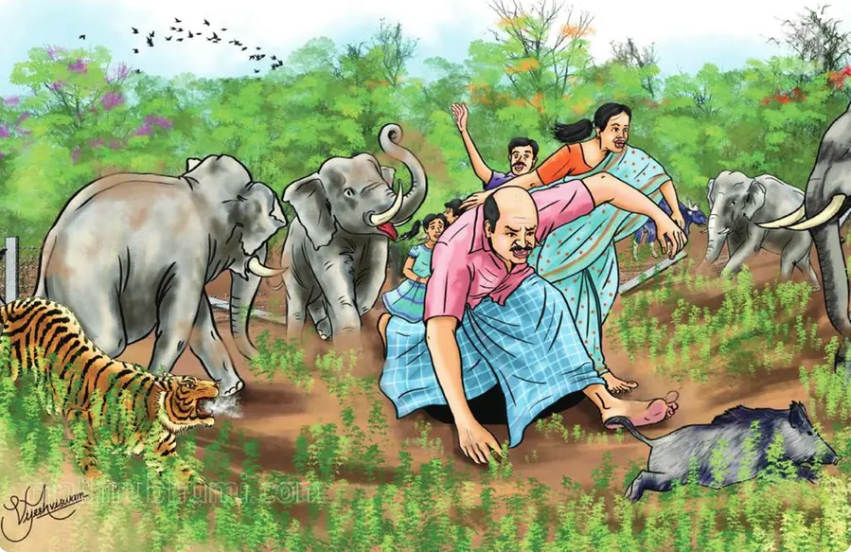
- In the forest: the guidelines treat bites by wild animals, and all bites in forest areas, as Category III. If you go trekking or camping, find out where the nearest hospital is before you set off.
- Rats: a domestic rat bite does not usually need rabies vaccine, but wash it the same way and see a doctor about tetanus and infection.
Keeping children safe around stray dogs
The WHO says children are the largest group bitten by dogs, and their bites are more often on the head and neck, which makes them more serious.
- Never leave a small child alone with any dog, including the family pet.
- Teach children to keep away from stray dogs, and not to feed or handle animals they do not know.
- Ask them to tell you about every bite, scratch or lick, however small. A scratch without blood is already Category II and needs the vaccine.
- Get pet dogs and cats vaccinated on time, keep them under watch outdoors and away from stray animals.
- Keep garbage from piling up around your home and the children’s school. The Supreme Court has noted that food waste dumped near public places draws stray dogs.
For burns, choking and other emergencies with children, see our first aid every Indian parent should know.
Tell your panchayat or municipality
The NRCP’s public booklet asks people to tell their nearest panchayat or municipality officials if animal bites keep happening in their area. Local bodies are responsible for controlling the stray dog population and run the Animal Birth Control programme. In its order of 7 November 2025, the Supreme Court recalled its August 2025 directions that municipal authorities must keep sterilising and vaccinating stray dogs under the Animal Birth Control Rules, 2023, must not release dogs suspected of rabies or showing aggressive behaviour, and must set up municipal helplines.
If your own pet changes its behaviour, its bark sounds different, it bites without reason, drools heavily, seems afraid of water or becomes paralysed, keep everyone away from it and inform the nearest veterinary doctor or municipal officer, as the NRCP booklet advises.
Do this today
- Teach everyone at home the rule: soap and running water for 15 minutes, an antiseptic, nothing else on the wound.
- Find out which government hospital near you runs an anti-rabies clinic.
- Check your pet’s rabies vaccination card and book the next date.
- Tell the children to come straight to you after any bite, scratch or lick.
- Save 112 and 108 on every phone at home.
What needs attention
- Many families treat a small bite or scratch at home with turmeric, chilli or oil, which the national guidelines call unnecessary and damaging.
- A scratch that does not bleed is already a Category II exposure that needs the anti-rabies vaccine.
- People wait to see whether the dog stays healthy, though the guidelines say treatment should start immediately.
- Treatment usually fails because of late vaccination, missing immunoglobulin in Category III or an unfinished course.
- Cats and monkeys can also pass on rabies, and the 10-day observation applies only to dogs and cats.
Controls that reduce risk
- Wash the wound with soap under running water for 15 minutes at once.
- Apply povidone-iodine or another antiseptic and leave the wound open.
- Go to a government health facility or anti-rabies clinic the same day.
- Follow the doctor on vaccine and immunoglobulin, and attend every vaccine date.
- Tell the doctor about earlier rabies vaccination or weak immunity.
- Report repeated animal bites in your area to the panchayat or municipality.
Common unsafe practices
- Putting chilli, oil, turmeric, lime or soil on the wound.
- Washing for a few seconds instead of 15 minutes.
- Tying a tight bandage or getting the bite stitched straight away.
- Waiting 10 days to see if the dog dies before seeing a doctor.
- Skipping treatment because the dog is a pet or was vaccinated.
- Missing later vaccine dates once the wound heals.
- Ignoring a small scratch or lick on broken skin, especially in children.


Leave a comment