
Quick answers
Which berth is safest on a sleeper bus?
A lower berth close to the main door or the emergency door is the quickest to get out of. Heat and smoke rise to the roof first, so upper berths are harder to escape from in a fire. Book lower berths near an exit for children and elderly family members if you can.
How many emergency exits must a sleeper bus have?
Under AIS-119, at least four: an emergency door, two roof escape hatches and one more exit. Sleeper coaches longer than 12 metres built from 1 July 2025 need five, with three roof hatches. Older buses were built to earlier versions of the rule.
Is a hammer compulsory at every berth?
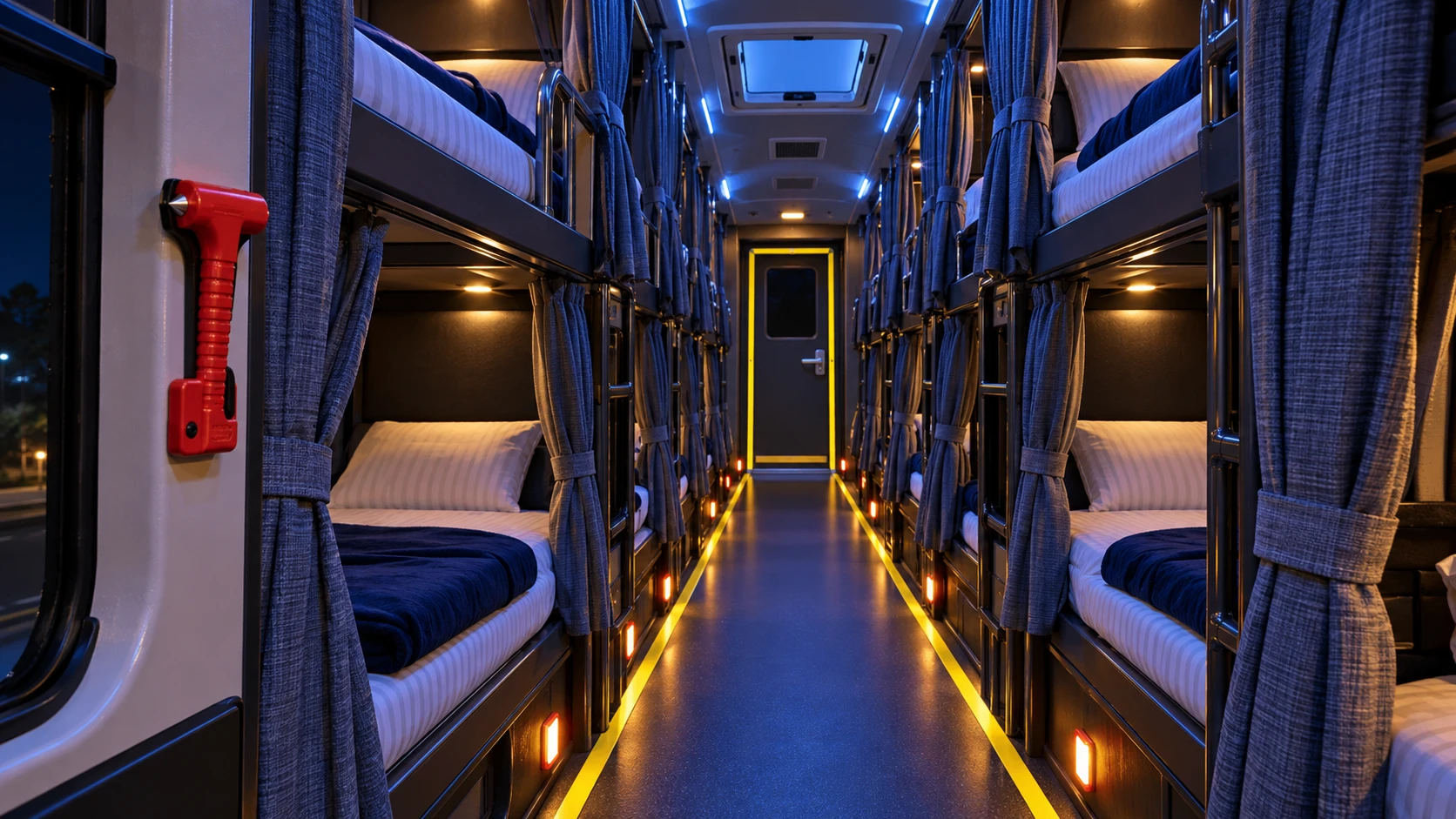
For sleeper coaches built from December 2023, yes. AIS-119 requires a window-breaking hammer at each berth, whether the window slides or is fixed. Older buses may have fewer hammers, so look for them before the journey.
How do I break a bus window in an emergency?
Use the hammer at your berth and hit the glass hard with the pointed end; many guides advise striking near a corner. Push the broken glass out with a bag or your foot, run the hammer round the frame to clear sharp edges and climb out feet first.
What should I do first if the bus catches fire at night?
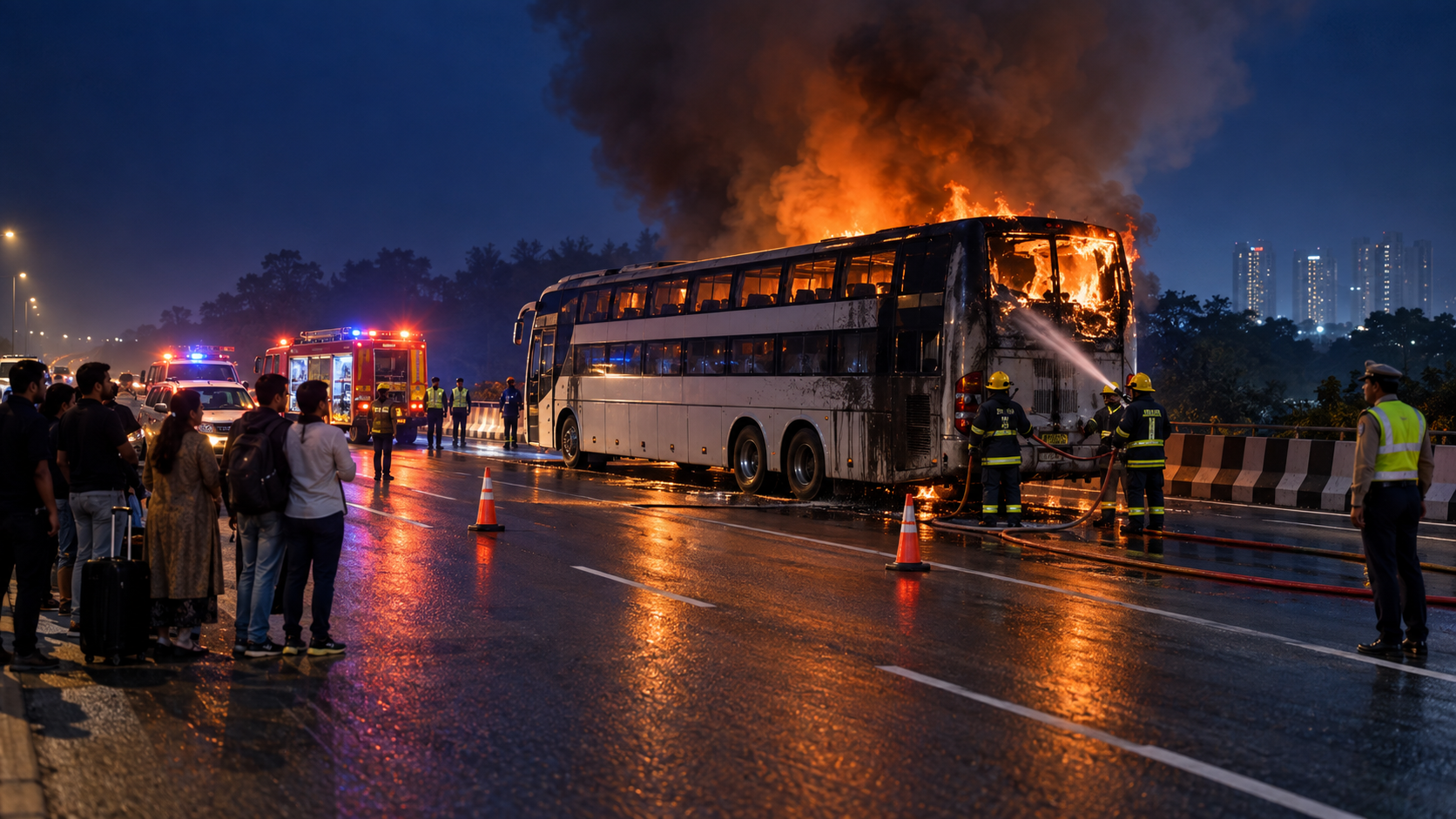
Shout to wake everyone and get the driver to stop and open the doors. Stay low under the smoke, cover your nose and mouth, and use the nearest working exit. Leave your bags, help children and the elderly out, move well away from the road and call 112.
What if the emergency door is blocked or locked?
Tell the conductor before the bus leaves and ask for it to be cleared. If the crew will not fix it, get off and take another bus. Blocked and bolted emergency doors have been found in official checks after fatal fires.
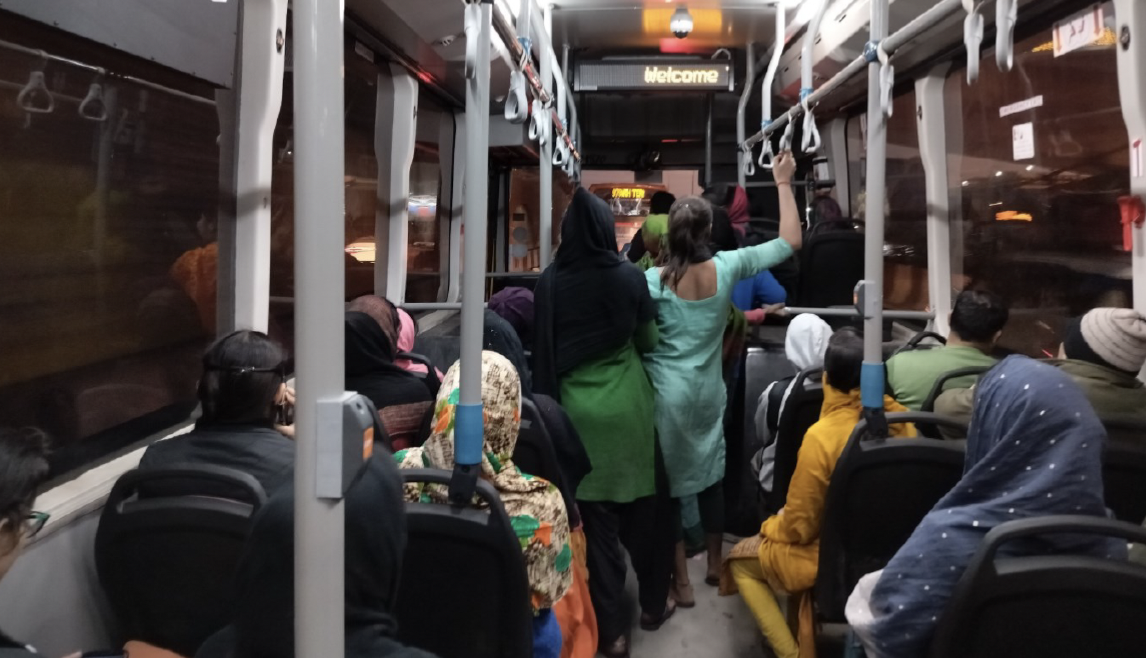
It is ten at night, the bus has just left the city, the lights go off and the curtains come across. Within half an hour most people on a sleeper bus are fast asleep, shoes under the berth, phone charging in a bag, glasses somewhere near the pillow. That is exactly when a crash or a fire is most dangerous. People wake up confused, in the dark, in a narrow aisle with smoke coming down from the roof. This guide is about the few things you can do before the bus leaves, so that you can get out quickly if something goes wrong.
Most bus journeys end safely. Still, the National Crime Records Bureau (NCRB) recorded 4,903 deaths of people travelling in buses in road accidents in India in 2024, and 22,432 injured. In the same year, NCRB recorded 27 deaths in accidental fires in passenger vehicles such as buses, taxis and autos. In February 2026 the Ministry of Road Transport and Highways (MoRTH) told Parliament that 49,616 sleeper coaches were registered in the country.
What the rules say a sleeper bus must have
Sleeper coaches are built to the bus body code AIS-052 and the sleeper coach standard AIS-119, both issued under the Central Motor Vehicles Rules. The standard has been tightened in stages, so an older bus may not have everything listed here. Knowing what a newer bus should have helps you spot a bad one.
- Emergency exits. At least four. One must be an emergency door, at the end of the gangway at the back or in the middle of the bus opposite the main door. Two must be roof escape hatches. For sleeper coaches built from 1 July 2025, a bus longer than 12 metres needs five exits, including three roof hatches.
- A hammer at every berth. Sleeper coaches built from December 2023 must have a window-breaking hammer at each berth, and toughened safety glass in the side and rear windows.
- Markings you can find in the dark. Yellow reflective tape or a glow-in-the-dark band along the edge of the gangway and around the inside of the emergency door.
- No driver partition door and an emergency lighting system, for sleeper coaches built from 1 July 2025.
- Fire detection and suppression. AIS-119 requires sleeper coaches to carry a fire detection and suppression system (FDSS) under AIS-135. Since 1 October 2023 this requirement has also covered the passenger compartment of long-distance buses and school buses, with a fire alarm and a water mist system meant to hold the cabin temperature within 50 °C and buy people extra time to get out.
- Fire-retardant materials. Berth cushions, upholstery and curtains must meet the flammability requirements of IS 15061.
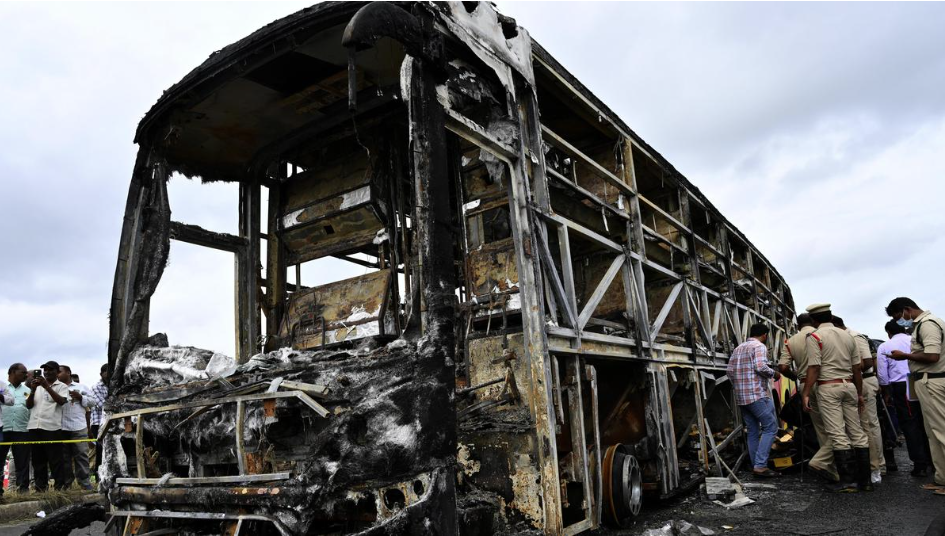
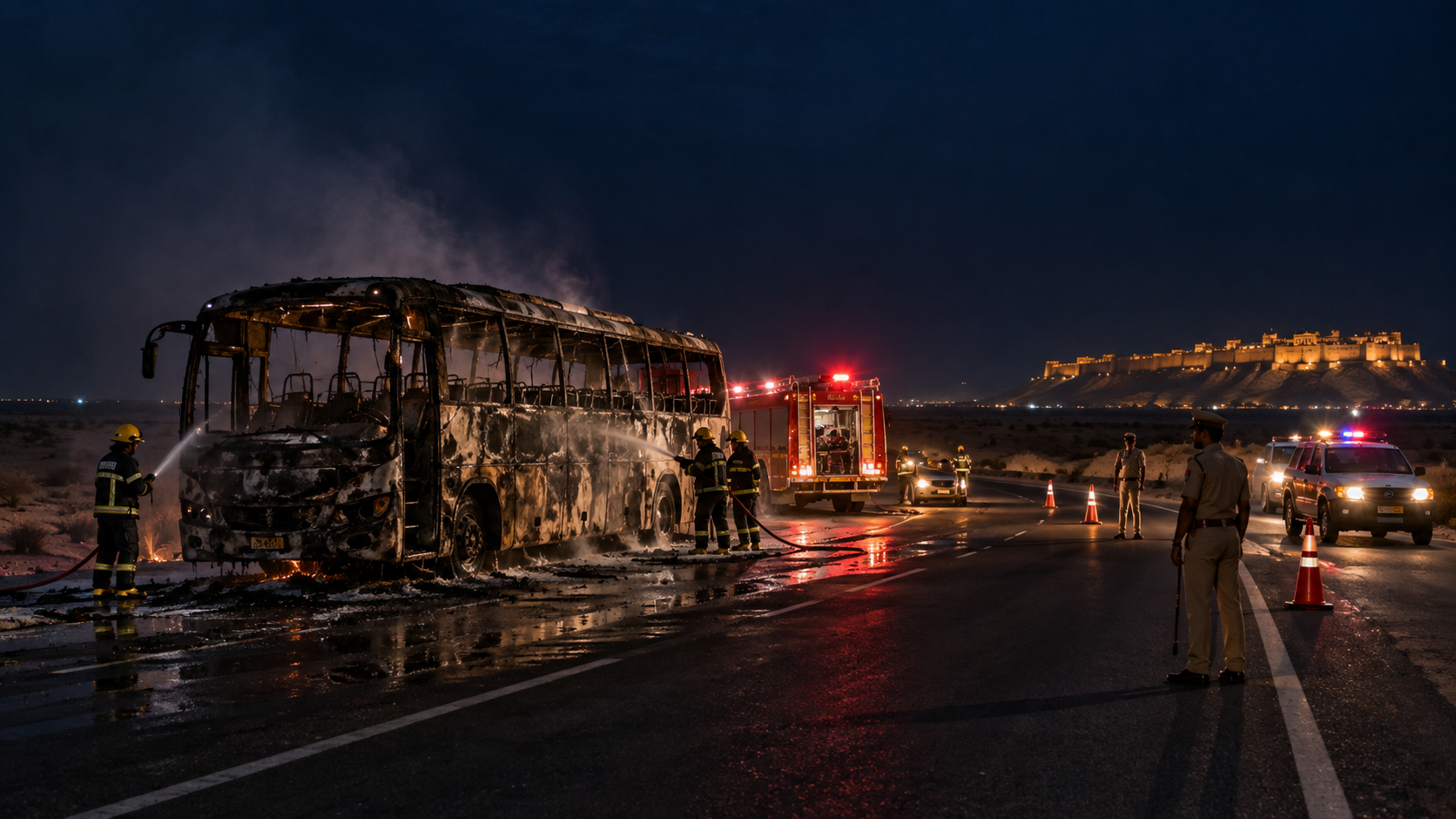
Rules on paper do not always match the bus at the stand. After the sleeper bus fire on the Jaisalmer–Jodhpur route in October 2025, MoRTH found that the emergency doors were too small, seats blocked the way to the emergency door, there was one roof hatch instead of two, the driver’s cabin had a partition and the fire detection and suppression system was not fitted as required. In the Kurnool–Bengaluru sleeper bus fire, the registration certificate showed the bus as a seating bus only. The Ministry has asked all States and UTs to check AIS-052 and AIS-119 at registration and at every fitness inspection. In January 2026, Union Minister Nitin Gadkari was reported as saying that existing sleeper coaches would have to be retrofitted with fire detection, emergency exits with hammers, emergency lighting and driver drowsiness alerts, and that new ones would be built only by vehicle makers or government-accredited body builders. We could not find the final notification for that retrofit order, so treat it as announced, not yet confirmed.
Before you board
- Book with an operator you can name. Note the bus number, the operator and the driver’s and conductor’s phone numbers before the bus leaves. Share the bus number and your berth with someone at home.
- Find the exits before you find your berth. Walk the aisle once. Where is the emergency door? Is it at the back or in the middle? Can you see the roof hatches? Count the berths between yours and the nearest exit, because you may have to find it in the dark.
- Look for the hammer at your berth and check whether your window slides open or is fixed glass. If there is no hammer, ask the conductor where they are kept.
- Look for warning signs. An emergency door blocked by a berth or bolted shut, luggage or extra passengers in the gangway, a locked cabin partition, a fire extinguisher kept in the luggage hold, loose wiring or a strong smell of fuel. Ask the crew to fix it. If they will not, it is fair to get off and take another bus.
- Choose your berth if you can. A lower berth is quicker to get out of than an upper one, and heat and smoke rise to the top first. A berth near the main door or the emergency door saves precious seconds. Families with small children or elderly parents should try to book lower berths close to an exit.
- Do not carry anything that can burn or explode in the cabin or in the hold: loose petrol or diesel, gas cylinders, firecrackers or chemicals. Keep power banks in your hand luggage where you can see them, not charging under the pillow.
Once the bus is moving
- Keep your shoes where your feet can find them, ideally right next to the berth ladder or on your feet. You may have to walk over broken glass.
- Keep your phone on you, charged, with the torch ready. Put your ID, money and medicines in a small pouch you can grab without thinking. Everything else stays behind in an emergency.
- Keep the gangway clear. Bags go under the lower berth or in the hold, never in the aisle.
- Use the seat belt or berth rail. In a seater bus, wear the seat belt wherever one is fitted. On a berth, keep the side restraint in place so you are not thrown out on a sharp turn or braking.
- Keep the curtain easy to open. Do not tie or tuck it so that you have to fight it to get out.
- Speak up early. If you smell burning plastic, rubber or fuel, see smoke, or the driver seems sleepy or is driving dangerously, tell the conductor at once and ask the driver to stop. Call 112 if they ignore you.
If there is a crash or a fire
You have very little time. The National Fire Protection Association in the US warns that in a home fire people may have as little as one or two minutes to get out; a bus full of curtains, cushions and luggage is no slower.
- Wake everyone. Shout “Fire! Get out!” loudly and keep shouting. Bang on the berths next to you. Ask someone near the front to make the driver stop and open the doors.
- Get low under the smoke. Smoke and heat collect under the roof first. Cover your nose and mouth with a cloth and move along the aisle as low as you can.
- Use the nearest exit that works. First the main door, then the emergency door, then a window. If the bus has tipped onto its side, the roof hatches and the windows now facing the sky may be the only way out.
- Breaking a window. Pull out the hammer and hit the glass hard with the pointed end; many guides advise striking near a corner. Toughened glass breaks into small pieces. Push the rest out with a bag or your foot, run the hammer around the frame to clear the sharp edges, then climb out feet first.
- Help the people who cannot help themselves: children, elderly people, anyone on an upper berth or anyone injured. Pass children out through the window to someone already outside. But once you are out, do not go back in.
- Leave everything. Bags, laptops and phones still on charge are not worth your life.
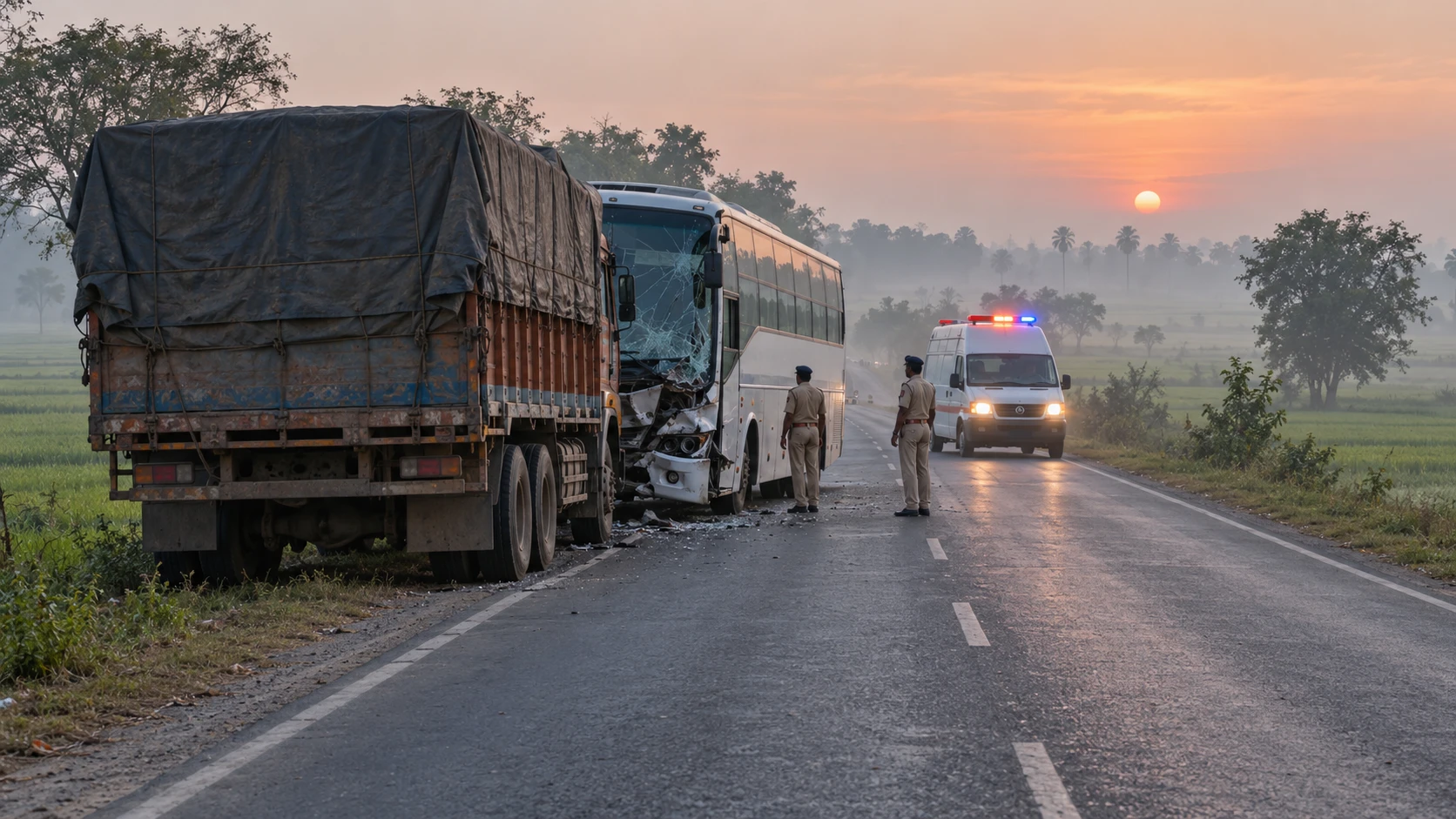
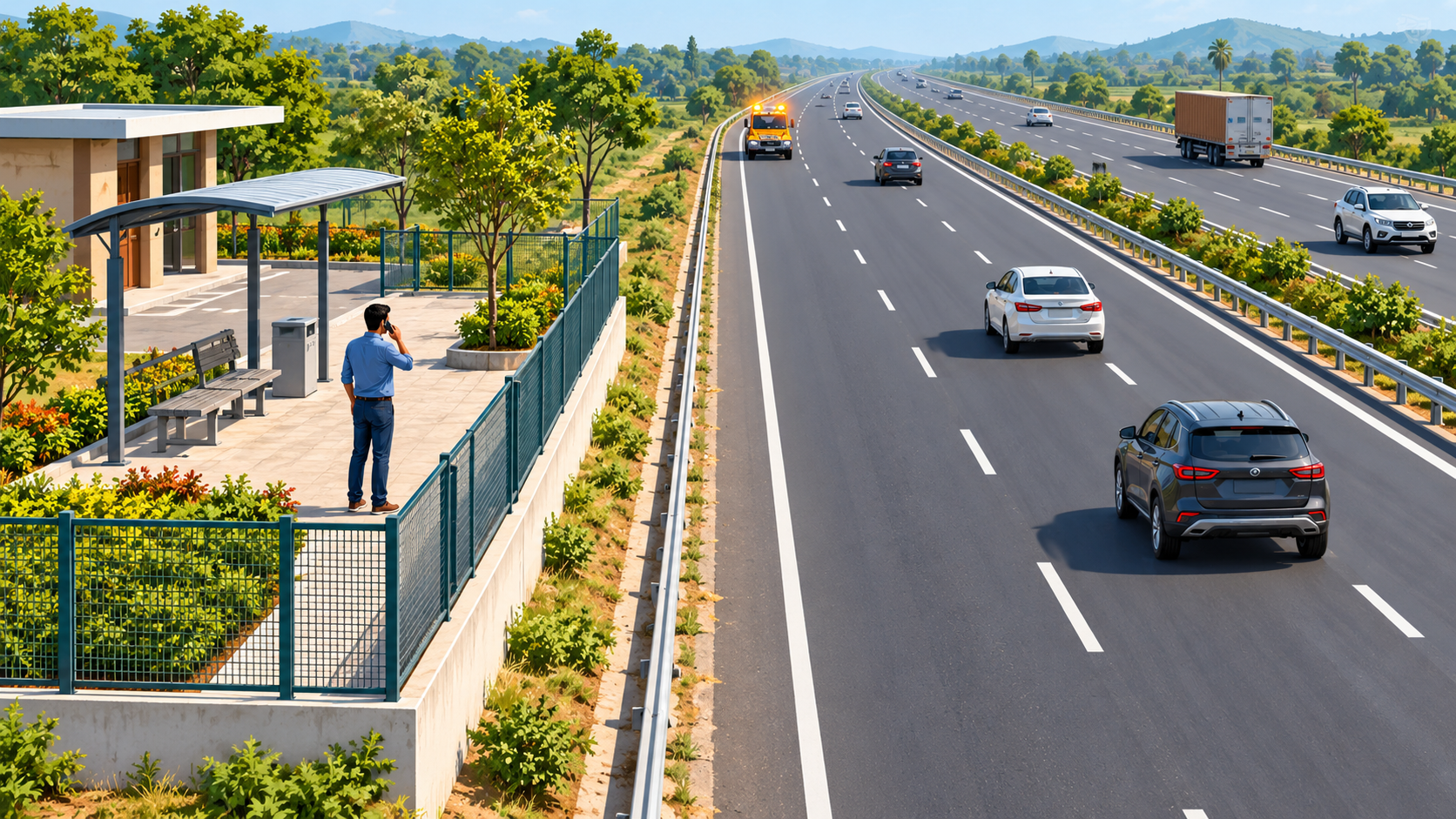
- Move well away from the bus, off the road and upwind of the smoke. On a highway at night, traffic is the next danger. Get behind the crash barrier or onto the verge and use your phone torch so drivers can see you.
After you are out
- Call 112 (all emergencies), 101 (fire) or 108 (ambulance). Give the highway or road name, the nearest kilometre stone, town or dhaba, the direction the bus was travelling, the bus number, and how many people may still be inside.
- Count heads. Ask the conductor for the passenger list and check who is missing. Tell the fire brigade, do not go looking yourself.
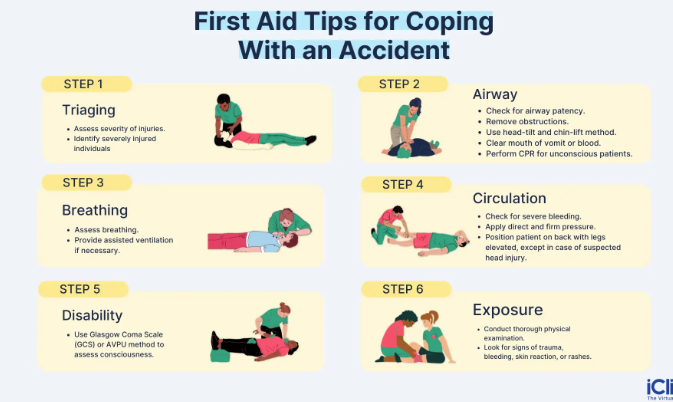
- Burns: Cool the burn under cool, clean running water for 20 minutes. Even 10 minutes helps if that’s all you can manage. No ice, toothpaste, oil or butter. Cover the burn loosely with a clean cloth and get medical help for any large burn, or any burn on the face, hands or groin, or on a child or elderly person.
- Smoke: anyone who breathed in a lot of smoke, or is coughing, hoarse, breathless or confused, needs to be seen at a hospital even if they say they feel fine.
- Do not move a person with a possible neck or back injury unless the bus is burning. If they must be moved, keep the head and neck in line.
Do this on your next night journey
- Before you sit down, find the emergency door and the roof hatches, and count the berths to the nearest exit.
- Find the hammer at your berth, and check whether your window opens.
- Keep shoes, phone and a small pouch with ID and medicines within reach of your hand.
- Teach the children one line: “If there is smoke, stay low and follow me to the door.”
- If the emergency door is blocked or bolted, say so before the bus leaves.
What needs attention
- In a sleeper bus most people are asleep, lying down and in the dark, so the first minute is lost unless someone wakes everyone at once.
- Smoke and heat collect under the roof first, which makes upper berths the hardest place to get out of.
- Official checks after the Jaisalmer–Jodhpur fire found undersized emergency doors, seats blocking the emergency door, a missing roof hatch, a cabin partition and no proper fire suppression system.
- The rules have changed in stages since 2016, so an older bus may lawfully have fewer exits and no hammer at each berth.
- Passengers who know where the exits and hammers are before the lights go off can get out faster.
Controls that reduce risk
- Find the emergency door, roof hatches and your berth hammer before the bus leaves.
- Book a lower berth near an exit for children and elderly family members.
- Keep the aisle clear and your shoes, phone and ID within reach.
- In a fire or crash, shout to wake everyone, stay low and use the nearest working exit.
- Break a side window with the hammer if the doors are blocked, and clear the glass before climbing out.
- Move well off the road, upwind, and call 112, 101 or 108.
Common unsafe practices
- Going to sleep without finding the emergency door, the roof hatches or the hammer.
- Leaving bags in the gangway or sitting extra passengers on the floor.
- Keeping shoes, phone and ID in a bag in the hold.
- Standing up in thick smoke instead of moving low.
- Going back into the bus for luggage or a phone on charge.
- Standing on the carriageway in the dark after getting out.
- Travelling on a bus whose emergency door is blocked or bolted shut.
Leave a comment