
Quick answers
Did a rider die after a bike slipped on the Utran–Mota Varachha bridge in Surat?
A local Gujarati report said so, about a 25-year-old artisan on 10 October 2026. We found no second report, so it is unconfirmed, and the cause is not known.
Why do bikes skid on flyovers and bridges?
Reports and guidance name sand and loose material, oil or diesel, rain, wet steel plates and joints, slippery painted markings, speed and hard braking on a slope. Most reports give no proven cause.
How can I ride a flyover more safely?
Slow before the ramp, brake early and straight, keep to the cleaner tyre track, cross plates and joints upright and treat the first rain as slippery.
How many two-wheeler riders die on Indian roads?
In 2024 two-wheeler riders were 46.2 per cent of 1,77,175 road deaths, according to the MoRTH report as carried by PTI.
How many road deaths involve no helmet?
In 2023, 54,568 people killed were not wearing a helmet, including 39,160 riders and 15,408 pillion riders.
Which helmet should I buy?
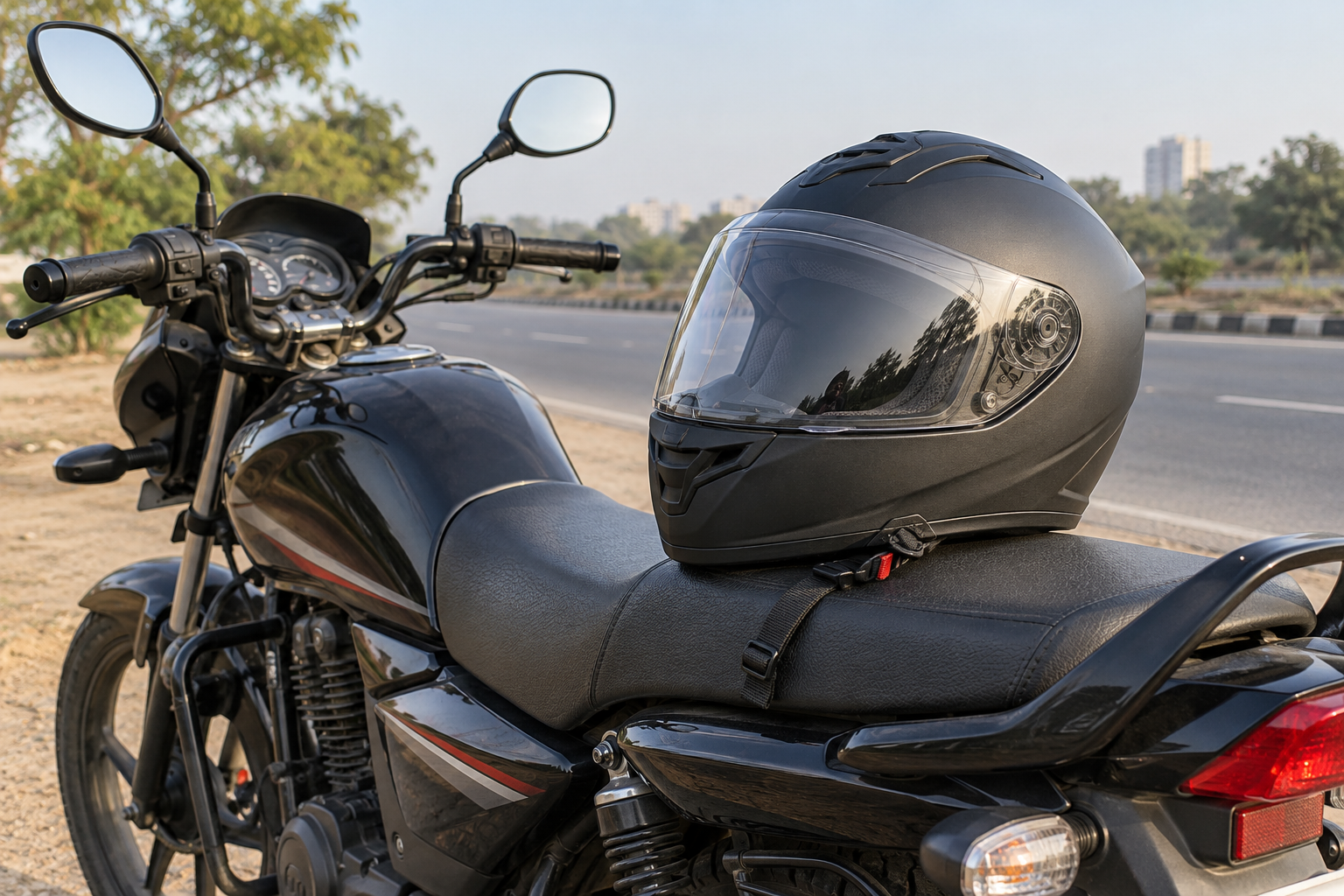
One marked for two-wheelers under IS 4151:2015, that fits well and is fastened. A sticker alone is no proof, so buy from a reliable seller.
Who do I call if I see a crash?
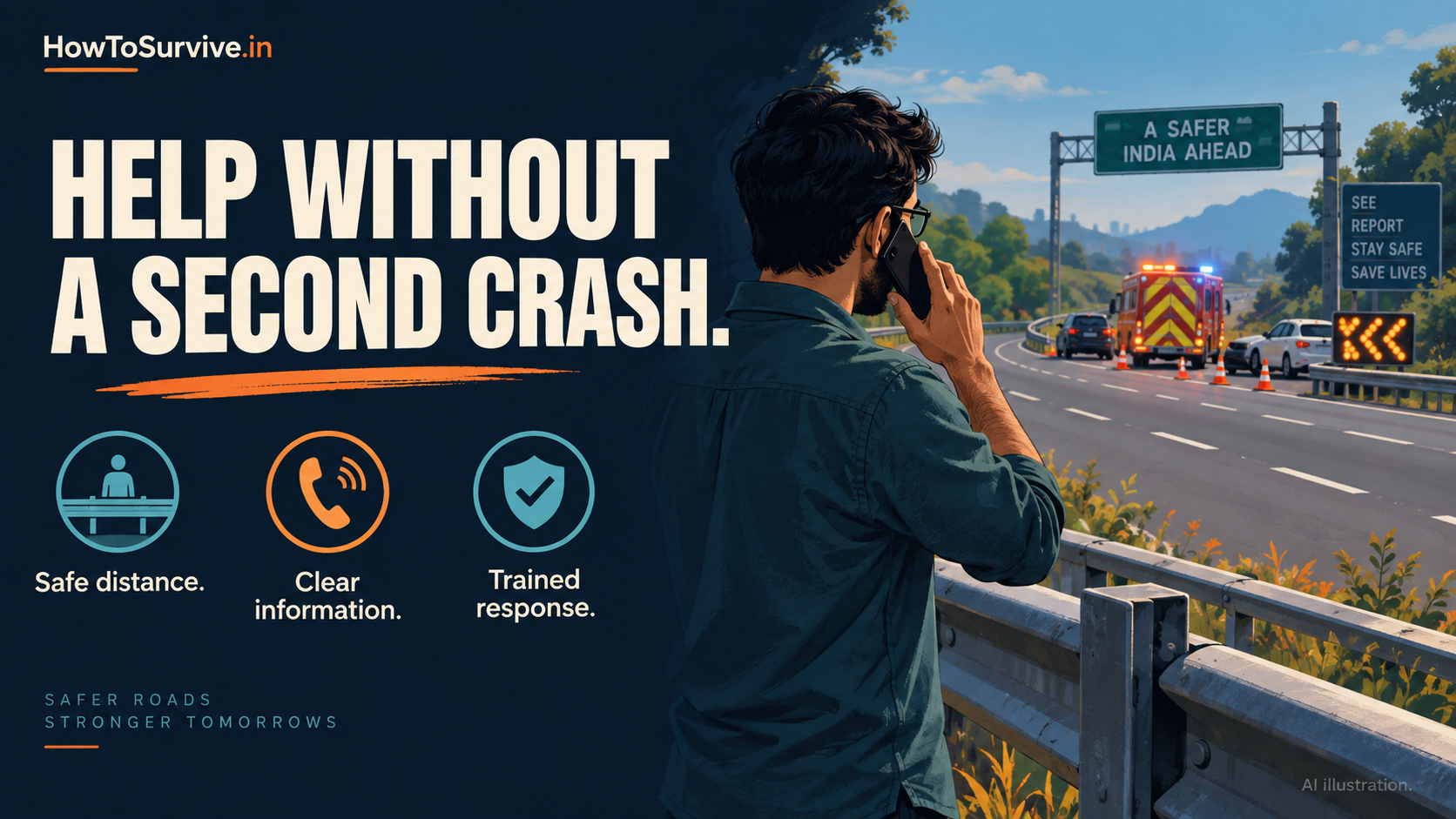
112 for any emergency and 108 for an ambulance. Say the place, the landmark and how many are hurt.
Who do I tell about sand or oil on a flyover?
The road owner. NHAI 1033 covers NHAI tolled stretches. In Surat, Surat Municipal Corporation lists 1800-123-8000 and a WhatsApp chatbot on +91 63599 30020.
A local Gujarati news graphic, which we could find as a single report only, said a 25-year-old jewellery artisan from Limbayat in Surat died after his bike slipped while going up the Utran–Mota Varachha bridge on the night of 10 October 2026. According to that graphic he was treated at a private hospital, died the next evening, and police had begun an investigation. We searched in English, Hindi and Gujarati and found no second report, so please read it as unconfirmed. What we can confirm is the bigger picture. Two-wheeler riders were the largest single group among India’s road-crash dead in 2024, and in the last twelve months reporters have recorded riders skidding or losing control on flyovers and bridges from Delhi and Kolkata to Surat itself. This page sets out what we could verify, why a bike loses grip on a bridge or ramp, how to ride one more safely, what to do if you see a crash, and who to tell about a dangerous stretch. Last checked: 21 October 2026, around 4 pm IST.
In short
- The Surat report is single-source. A local Gujarati report said a young artisan died after a bike slip on the Utran–Mota Varachha bridge on 10 October 2026. We found no second outlet and could not confirm the date, the cause or any police finding. We do not name him.
- Official data. India recorded 4,87,707 road accidents and 1,77,175 deaths in 2024. Two-wheeler riders were 46.2 per cent of the dead and pedestrians 20.6 per cent (MoRTH report, as reported by PTI).
- Helmets. In 2023, 54,568 people killed on India’s roads were not wearing a helmet, 39,160 of them riders and 15,408 pillion riders (MoRTH, via PTI).
- Flyover and bridge counts. We could not find a published national count of two-wheeler skids on flyovers or bridges, so we give none.
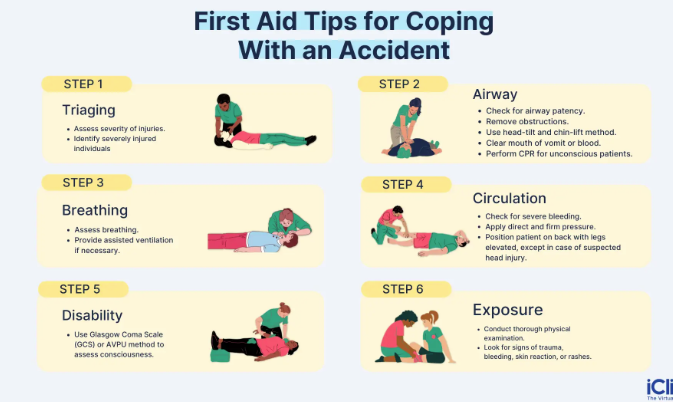
- If you see a crash: call 112 (and 108 for an ambulance), keep clear of traffic, do not move the injured person unless there is fire or another immediate danger, and press firmly on heavy bleeding.
What we could and could not verify about the Surat report
The report reached us as one Gujarati local news graphic. It said the rider was from Vishal Nagar in Limbayat, originally from Patna in Bihar, that his bike slipped on the night of 10 October on the Utran–Mota Varachha bridge, that he was treated at Sameer Hospital and died the next evening, and that police began an investigation. We searched for the incident in English, Hindi and Gujarati on 21 October 2026. The searches turned up no matching report from any other outlet. So we cannot say what made the bike slip, whether the rider wore a helmet, or whether the bridge surface played any part. A police finding, if one exists, has not reached us.
Two other Surat-area bridge crashes are on record, and they are different events. In December 2025 a rider on the Great Liner Bridge near Breadliner Circle died; CCTV cited by NDTV showed the bike at about 140 km/h, and police said initial inquiries suggested he was not wearing a helmet. On the night of 20 October 2026, three of four youths riding one motorcycle died when it hit the safety wall of a railway overbridge at Kudsad in Olpad taluka and they fell more than 50 feet. Both are covered below. Neither tells us anything about the Utran bridge.
What recent reports say, place by place
These are the cases we found from the last twelve months where a two-wheeler rider fell, skidded or lost control on a flyover, a bridge or a highway stretch. We opened each report. Most give no cause beyond the police’s first view, and none shows that the road surface was to blame, except where we say so.
Kolkata, Chingrighata flyover, 13 or 14 October 2026. After light rain, videos showed motorcycles skidding on a flyover stretch that had been painted in rainbow colours for Durga Puja. PTI said it could not verify the videos. No injuries were reported. The minister said anti-skid paint was used, later said the cause could not be established and called it premature to blame the paint. The state ordered a probe, the Kolkata Municipal Corporation fixed reflective studs at 10-metre intervals on the painted stretch, and the top coat of the Gariahat flyover was scraped to add friction (ThePrint, The Week). Reports differ on whether it happened on Tuesday 13 or Wednesday 14 October and on how many bikes fell (three, or two per the minister).
Chennai, flyover on Sardar Patel Road near IIT-Madras, a Saturday night in early October 2026. A 21-year-old rider lost control, hit the flyover’s parapet wall and fell to the ground below. He was declared dead on arrival at hospital. His pillion rider had minor injuries. Police said he was overspeeding. Whether he wore a helmet was not reported (DT Next).
Surat district, Kudsad railway overbridge, night of 20 October 2026. Four youths on one motorcycle hit the safety wall and fell over 50 feet; three died, one was seriously hurt. The injured rider told police an oncoming truck’s headlights affected his vision at a sharp curve, which police have not confirmed (Daijiworld). The sarpanch said the rider lost control in the dark, and villagers want street lights, speed breakers and stronger railings (ETV Bharat Gujarati). Helmet use was not reported.
Delhi, Shahdara flyover, reported 22–23 June 2026. A 26-year-old woman riding pillion on a hired bike taxi died after, police allege, the two-wheeler skidded on the flyover. Police were checking CCTV; the rider was apprehended and a case registered. Whether helmets were worn was not reported (The Tribune).
Hyderabad, near the PJR flyover, Gachibowli, about 4 am on 13 April 2026. One of two friends riding home lost control; police said the rider’s “rash and negligent driving” was the cause. The bike skidded and hit a divider. His 25-year-old friend died of head injuries; the rider was critical (Deccan Chronicle).
Odisha, NH-316 near Pipili, early January 2026. A scooter carrying two women skidded on sand spread across the road; a bus then hit it. Both women died. OdishaBytes, reporting on 6 January, attributed the skid on sand to “sources” and said the cause was under investigation. This was a highway, not a flyover. A secondary report of the Odisha State Transport Authority’s circular dated 10 January 2026 says every road-owning agency must step up mechanical sweeping, clear sand and construction debris promptly, keep logbooks and send weekly compliance reports. That report gives 3 January as the crash date; we could not open the EdexLive article it cites.
Surat, Great Liner Bridge near Breadliner Circle, about 1 December 2025. An 18-year-old rider died while descending the bridge. CCTV cited by NDTV showed about 140 km/h. Police said initial inquiries suggested he was not wearing a helmet, and the bike dragged along the divider. We read Gulf News; the exact date is inferred from its “Monday morning” and its 3 December update.
What the national data says
The Ministry of Road Transport and Highways’ Road Accidents in India 2024 was reported in June 2026. Its headline figures, as carried by PTI and others, are 4,87,707 accidents, 1,77,175 deaths and 4,71,441 injured. The ministry’s own reply to the Rajya Sabha on 11 March 2026 gave the same accident and death totals, which we already use in our road-deaths explainer. Two-wheeler riders were 46.2 per cent of all deaths and pedestrians 20.6 per cent. About 70 per cent of deaths were linked to over-speeding (Policy Edge); our explainer gives 70.3 per cent. We read these through PTI and secondary reports, not the PDF itself.
For helmets, the latest figure we could confirm is from the 2023 report: 54,568 people killed were not wearing a helmet, made up of 39,160 two-wheeler drivers and 15,408 pillion riders (PTI, as in our helmet and seat belt data page). A summary of the 2024 report says “over 54,000”, but we did not find the exact number. Neither report, as far as we could read, counts skids on flyovers or bridges separately. Do not read the national totals as a measure of flyover risk.
Why a bike loses grip on a bridge or a ramp
A two-wheeler stays upright on two small patches of rubber. When one of them loses grip, the rider has very little time. These are the hazards that reports and road-safety guidance name. Some come from Indian reports and some from foreign guidelines.
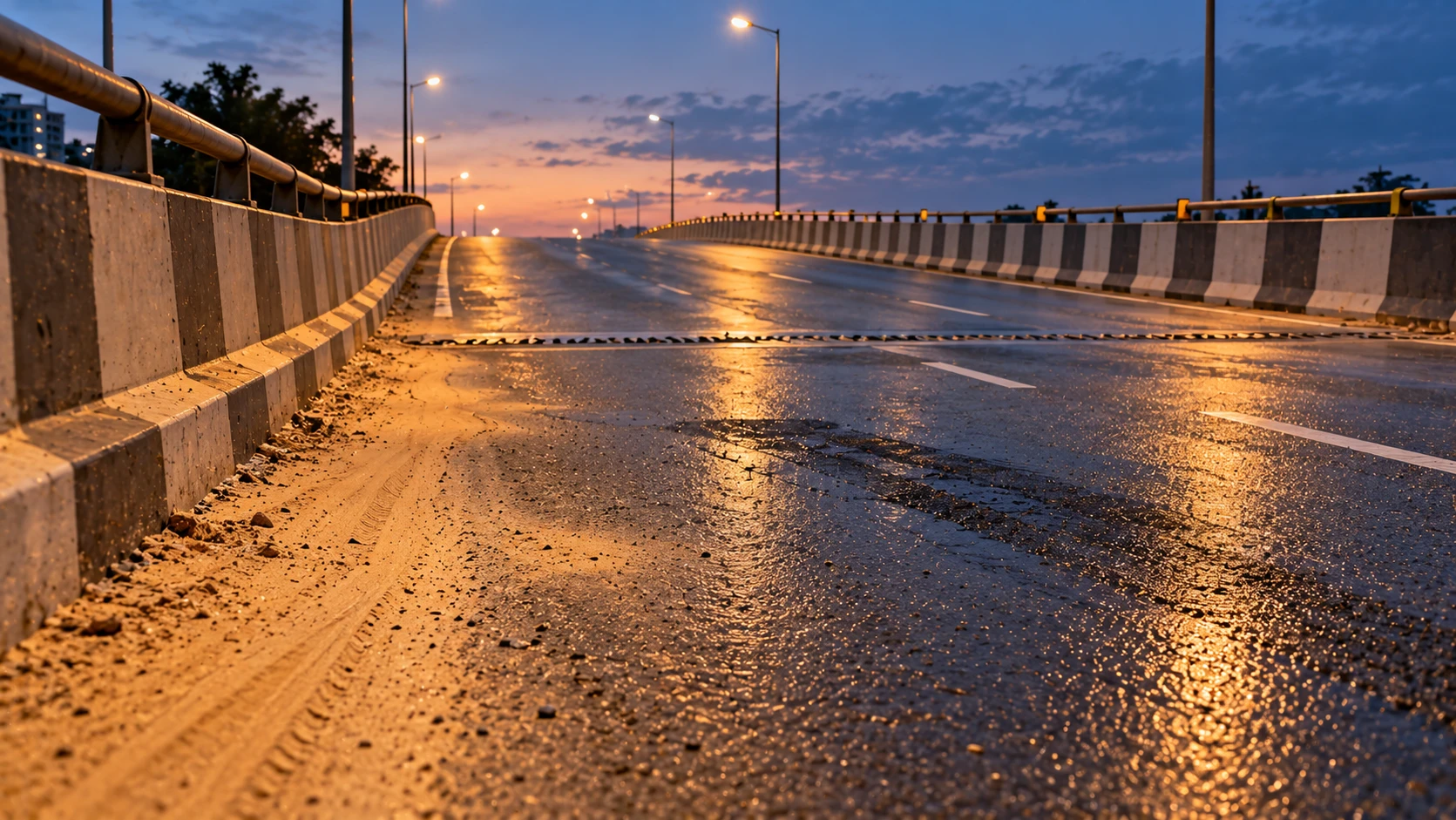
- Sand, dust and loose gravel. Odisha’s circular and the Pipili crash show how spilled sand is treated as a road hazard. US work-zone guidance for riders says loose gravel, sand or soil left after road work, spilled from trucks or washed onto the road after heavy rain can cause loss of control. Wind and passing traffic push dust to the edges of a flyover, and the ramp, which is where a rider tends to be.
- Oil and diesel. Cycle World notes that oil drips collect in the centre of the lane, so a rider should stay in the cleaner tyre track. A diesel patch is easy to miss at night.
- Rain. Kolkata’s skids happened in light rain. Our own advice is to treat the first rain after a dry spell as slippery, because it brings oil and dust up to the surface.
- Steel plates and expansion joints. The US guidance says steel plates can become very slippery when wet, and that loose or rough bridge joints can create height differences that a two-wheeler feels far more than a car. Cycle World says steel decking can be very slippery, especially when wet or oily.
- Painted lines and markings. The same guidance says large pavement markings can be quite slippery for riders in wet weather, especially where the rider is leaning. In Kolkata the cause of the skids on painted road is not established, and officials said so.
- Speed, and braking on a slope. Over-speeding is linked to about 70 per cent of road deaths. Hard braking on a ramp, especially a downward one with sand or a wet patch, can lock a wheel. This is our own explanation, not a finding from any of the reports.
- Tyre condition. Worn or poorly inflated tyres grip less. No report above says tyres were a cause.
How to ride a flyover or bridge more safely
This is practical advice, not a quoted rule. Slow down before the ramp, not on it.
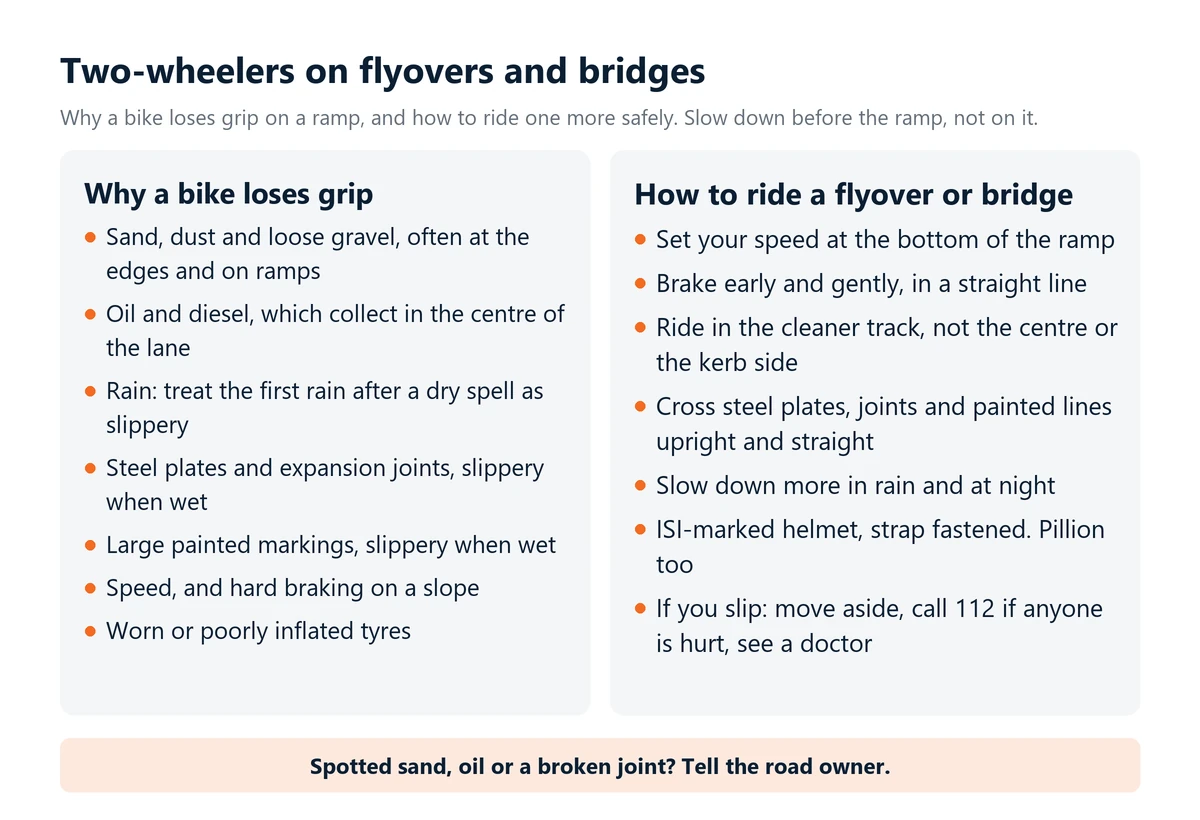
- Set your speed at the bottom. Slow before you enter the climb or the descent so that you do not need to brake on the ramp. Keep a steady speed and a smooth throttle.
- Brake early and gently, in a straight line. Use both brakes together and avoid braking hard while leaning. If you see sand, wet paint or an oil sheen, ease off the throttle, keep the bike as upright as you can and roll over it without braking or accelerating.
- Choose your line. Ride in the cleaner track where car tyres have swept the road, not the centre of the lane where oil drips collect and not the kerb side where sand piles up.
- Treat steel plates, joints and painted lines as slippery when wet. Cross them upright and straight, not in a lean.
- Wet weather. Slow down more than you think you need to, leave a longer gap, and avoid sudden moves.
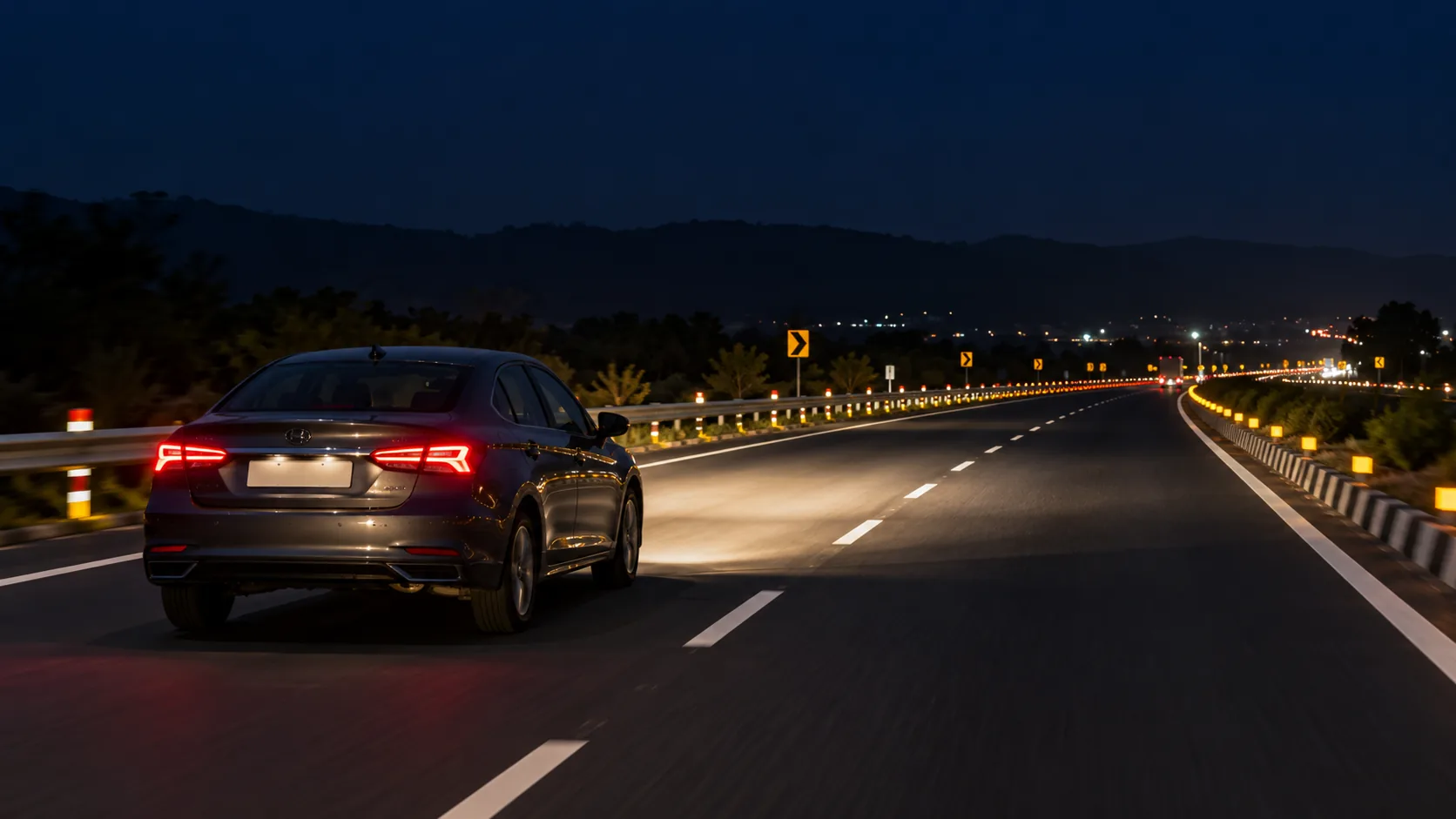
- Night. A sand patch or oil sheen is hard to see. Slow down on ramps you do not know, and keep your headlight clean. Our night driving plan has more.
- Tyres. Check the tread and pressure before the monsoon and before long trips.
- Helmet. Wear one that carries the BIS ISI mark for two-wheelers (IS 4151:2015), fits snugly and has the chin strap fastened. See our helmet guide. A sticker alone is no proof, so buy from a reliable seller. Pillion riders need a helmet too.
If you slip. Stay down for a moment and check yourself before standing. If you can, move to the side of the road or the footpath, switch on your hazard lights or ask a passer-by to warn traffic, and call 112 if anyone is hurt. Even if you feel fine, see a doctor, because head and internal injuries do not always show at once. Tell the road owner or a nearby shopkeeper about the patch that dropped you, because it will drop the next rider too.
If you see a crash
Our witness guide and road accident first-aid page have the full steps. In brief:
- Stop well clear of traffic and switch on your hazard lights. Do not stand in a live lane.
- Call 112, which works across India, and 108 for an ambulance. How these calls are routed differs by state, so if one number does not connect, try the other. Say the name of the bridge or flyover, the nearest landmark, how many are hurt and whether anyone is trapped.
- Do not move an injured person unless there is fire or another immediate danger.
- Do not take the helmet off just to look. Tell the operator at once if the person is unresponsive or not breathing normally, and follow their instructions about the airway and CPR.
- Press firmly on heavy bleeding with a clean cloth. Do not give water or food.
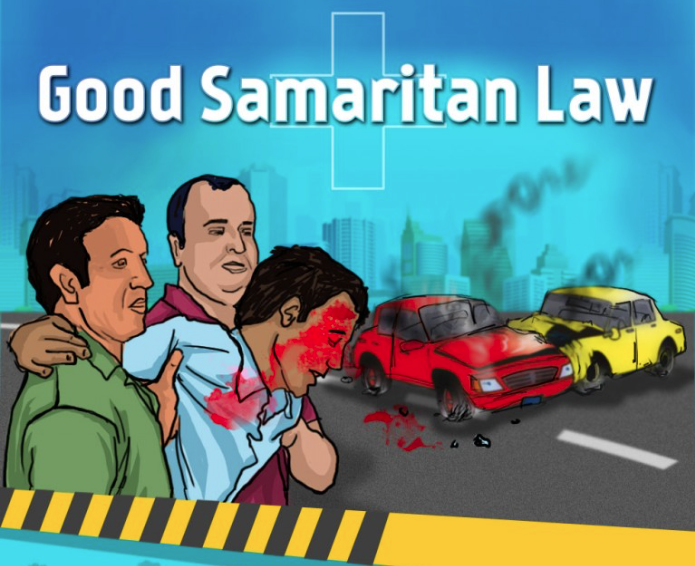
- Under the Good Samaritan rules you cannot be forced to give your name or pay hospital charges for helping. Our page on bystanders and the law explains this.
- If you notice sand, oil or a broken joint at the spot, note the place for the hazard report below.
What authorities should do
The Odisha circular, as reported second-hand, sets out one model: mechanical sweeping on arterial roads, emergency clean-up within hours of a spillage, cleaning schedules and logbooks, weekly compliance reports, and more frequent cleaning near construction sites, quarries and mining belts. We would add, as our own suggestions rather than any rule: sweep flyover edges and ramps and carry the sand away instead of heaping it at the side; cover or repair steel plates and joints and sign them for two-wheelers; keep spillages from trucks off the road; light the ramps; and test any anti-skid or painted surface in the wet before it opens. Kolkata’s reflective studs and scraped surface show that some bodies act within a day of a viral video, but acting only after a video is not a plan.
Residents in Kudsad asked for street lights, speed breakers and stronger railings. Whether that gets done is for the road owner to say.
How to report a road hazard
- Know who owns the road. A national highway belongs to NHAI; a city flyover usually belongs to the municipal corporation or the state works department. Report to the owner.
- National highways. The NHAI helpline 1033 is a 24×7 toll-free line. NHAI’s operator page says it covers NHAI’s tolled stretches, for emergencies and for issues such as potholes, street lights and road conditions. It is not for city flyovers.
- Surat. Surat Municipal Corporation lists a toll-free complaint number, 1800-123-8000, and an official WhatsApp chatbot on +91 63599 30020 where you send “Hi”, register a complaint and track it. We did not find a number made only for road sweeping or sand on a flyover, so describe it as a road hazard and give the exact location. The Surat safety guide lists the SMC emergency numbers.
- Elsewhere. Look for your own city’s official complaint line or app on the corporation’s website. Do not trust a number copied from a forwarded message.
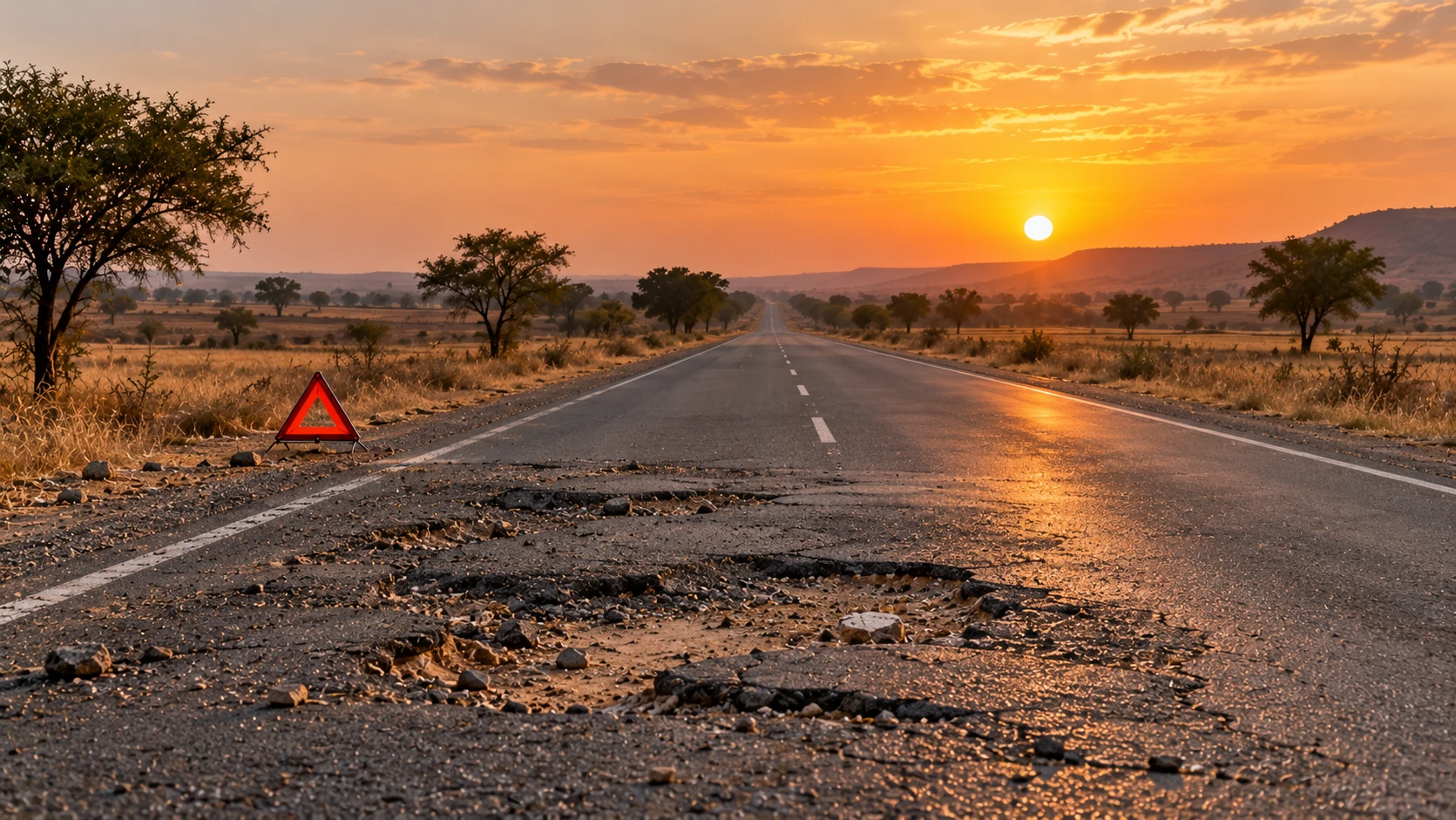
- What to say. The name of the bridge or flyover, which direction and ramp, what you saw (sand, oil, a broken joint, a missing sign), the time, and a photo if you took it from a safe spot. Do not stop on a flyover to take one.
What is still not known
- Whether the Utran–Mota Varachha incident of 10 October is confirmed by police or a second outlet, and what made the bike slip.
- How many two-wheeler skids happen on India’s flyovers and bridges each year. We found no such published count.
- Why the bikes skidded in Kolkata. The probe has not reported.
- Whether helmets were worn in Chennai, Kudsad, Delhi and Hyderabad. The reports do not say.
- The exact date of the Odisha crash and the original text of its circular.
We will update this page if a second report on the Surat incident appears. Last checked: 21 October 2026, around 4 pm IST.
What needs attention
- Reports of bikes skidding on flyovers and bridges rarely give a proven surface cause. In Kolkata, Hyderabad, Chennai and Delhi the cause is either unconfirmed or given as speed or loss of control.
- Sand spilled on the road is a documented skid hazard: it was named in the Pipili crash and in Odisha’s circular on road sweeping.
- Riding guidance names steel plates, wet markings, loose joints, oil and loose material as grip hazards for two-wheelers.
- Two-wheeler riders were 46.2 per cent of India’s 2024 road deaths; helmet non-use accounted for 54,568 deaths in 2023.
- We found no published national count of flyover or bridge skids, so none is given.
- The Surat 10 October report is single-source; it supports no conclusion about the Utran–Mota Varachha bridge.
Controls that reduce risk
- Rider: set your speed before the ramp, brake early and straight, keep to the cleaner tyre track and cross joints and plates upright.
- Rider: wear a BIS-certified two-wheeler helmet with the strap fastened, and make your pillion do the same.
- Rider: check tread and tyre pressure before the monsoon and long trips.
- Witness: call 112 and 108, stay clear of traffic, do not move the injured unless there is danger, press on heavy bleeding.
- Citizen: report sand, oil, broken joints or missing signs to the road owner with the exact location.
- Road owner: sweep flyover edges and ramps and carry the sand away, repair or cover joints and plates, light the ramps and test painted surfaces in the wet.
Common unsafe practices
- Braking hard on a ramp, especially on sand, a wet patch or a painted marking.
- Entering a flyover too fast and trying to slow down on the slope.
- Riding through the centre of the lane where oil collects, or hugging the kerb where sand piles up.
- Crossing steel plates, expansion joints or wet paint in a lean.
- Riding without a helmet, or with the chin strap loose; letting a pillion rider go without one.
- Riding on worn or under-inflated tyres in the rains.
- Stopping on a flyover to photograph a hazard.
- Moving an injured rider unnecessarily or taking the helmet off without need.
Leave a comment